World

What Hamas promised to its electorate

From our UK edition

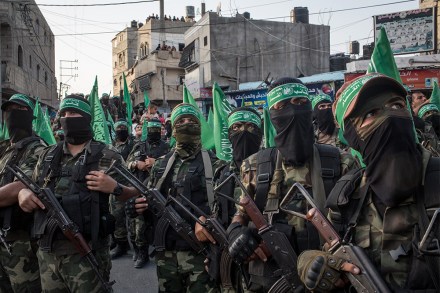
Things you do not hear very often, number one: a pro-Palestinian protestor denouncing Hamas for the barbarity of its incursion into Israel on 7 October, appalled at the savagery of those attacks upon children, grandmothers, etc. It may seem as if, in saying this, I am stating the obvious – because support for that pogrom was, I would suggest, strong among some of those carrying Palestinian flags on marches through London and elsewhere. Six Arab language journalists were suspended by the BBC when it was discovered that they retweeted messages glorifying in that day’s murder. They were not members of Hamas. Ordinary Palestinians interviewed, cowering in the rubble of Gaza, were not quoted condemning the attacks which led directly to their present misery.

Britain should back a ceasefire

From our UK edition

Six weeks ago, I invited Ahmed Alnaouq, a young diplomat who recently joined the Palestinian mission in London, to stay for a cricket weekend in Wiltshire. He resisted all entreaties to play the game but was in every other way a delightful guest. On Sunday, Ahmed learnt that his family in Gaza has been wiped out by an Israeli bomb. His father, siblings, and more than 15 nieces and nephews had all been killed. Twenty-three dead, no injuries. Another brother was killed by an Israeli bombing in 2014. His mother died three years ago because, he says, Israel denied her medical treatment. When I sent him a text message saying that he and his family were in my thoughts and prayers – it felt hopeless, but what else can one say? – he replied: ‘My family is gone Peter. All of them.

Why I don’t trust the BBC’s Trusted News Initiative

From our UK edition

You almost certainly haven’t heard of the Trusted News Initiative (TNI), although you probably should have. It’s a BBC-led consortium of the world’s most powerful news, social media and technology companies that seeks to cleanse the internet of ‘disinformation’. It carries out this mission by doing its best to discredit sites that challenge the prevailing narrative on topics like lockdowns, Covid vaccines, electoral fraud, the Ukraine war and climate change. It was founded in 2019 by Jessica Cecil, a senior BBC executive who, in 2021, was part of the Counter Disinformation Policy Forum, a shadowy group of ‘experts’ convened by the Department for Culture, Media and Sport to monitor criticism of the government’s pandemic response.

Politicians can’t win on illegal migration

From our UK edition

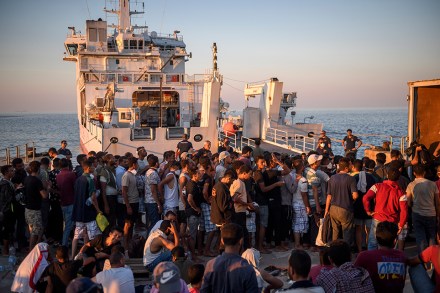
It is eight years now since The Spectator sent me to Lampedusa to see the boats coming in. That was at the start of the 2015 migrant crisis. The island, which is home to just 6,000 locals, had just buckled under the weight of another 1,300 arrivals. I followed them to Sicily and then on up and across the continent. If I may be self-referential for a moment, it was on Lampedusa that I realised the scale of the problem and got the opening lines of my resulting book, The Strange Death of Europe: ‘Europe is committing suicide. Or at least its leaders have decided to commit suicide. Whether the European people choose to go along with this is, naturally, another matter.

Australia’s disastrous indigenous voice referendum

From our UK edition

My partner and I have just returned from the most magical trip. As guests of Western Australia’s tourist board we’ve driven almost 1,500 miles across the top left-hand corner of the Australian continent. This is the north-west: a landscape like nowhere else on the planet. Three times the size of England, they call it the Kimberley. I had expected to find Aboriginal people living in these landscapes. They used to, for 60,000 years Starting from a town called Broome (easy to fly there) we made it overland to Darwin in the Northern Territory. We took about ten days in an all-singing, all-dancing Toyota camper van, sometimes sleeping under the stars, more often staying in comfortable chalets at a string of cattle stations turned campsites dotted along our route.

Will China blockade Taiwan?

From our UK edition

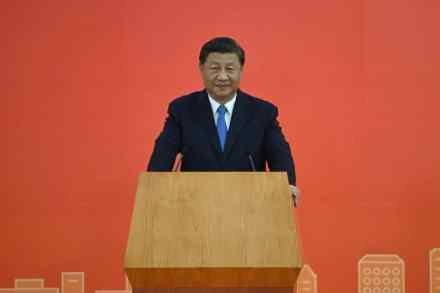
Xi Jinping has made it very clear over the years that he is determined for China to reunite with Taiwan. He has staked his legacy and his legitimacy on it. The problem for Beijing is that the polls in Taiwan continually show that only one per cent of the population is in favour of reunification now. If Xi wants Taiwan then he will almost certainly have to take it by force. Although some western commentators argue that Russia’s travails in Ukraine have made an invasion less likely, there is no evidence to support a change in policy in Beijing. Even though Taiwan’s military is undertrained and equipped with tanks and planes from a half-century ago, three-quarters of its citizens say they are prepared to fight to keep the island free from mainland rule.

Easter traditions from around the world

From our UK edition

You know where you are with Christmas. Trees, carols, nativity plays, holly and ivy, presents, mince pies, crackers, Dickens, It’s a Wonderful Life. Easter is the more important festival in religious terms, but it can’t compete with Christmas for sheer cultural and commercial dominance. In contrast to jolly Father Christmas, the Easter Bunny is aloof and, frankly, a bit weird. His (her?) origins are elusive. German Lutherans are probably to blame for the Easter Bunny, as for so much else. The concept of mythical ‘Easter hares’ laying eggs for children was first mentioned in 1682 by Georg Franck von Franckenau, a physician and botanist, but he gives no hint as to how the custom came about.

Why Russian tactics won’t win the war

From our UK edition

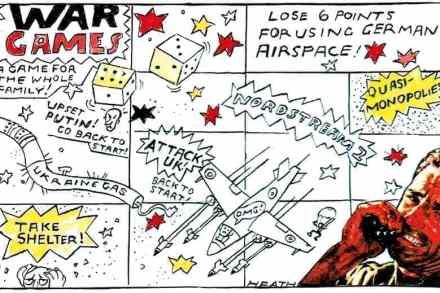
As the Russian invasion of Ukraine enters its second month, the war has settled into a largely attritional struggle – and the picture is very different across the various fronts. Russian forces have been forced on to the defensive in many areas. The Russian ministry of defence has announced that the ‘first phase’ of the invasion is over, to be replaced with a more limited focus on Donbas in the east of Ukraine. The reason for this is simple: Ukrainian forces have not only stopped the Russian advances around Kyiv in the north and Mykolaiv in the south-west but have begun to regain towns and cut key Russian supply routes.

The myth of white exceptionalism

The British government’s new white paper on immigration has been shaped by a social norm which argues that the white British ethnic majority’s interest in limiting the pace of cultural change and facilitating assimilation is racist. The emphasis on skills rather than numbers, on economic over cultural considerations, and on rebalancing immigration away from Europe speaks to this. The document reflects the thinking of both Brexit and Remain politicians. Yet it does not align with the motives of many who voted Leave, or a considerable chunk of those who voted Remain. These voters seek lower levels of immigration, and research shows that this is driven more by identity threat than by economic considerations.

exceptionalism

John Paul Getty: a life of miserliness, mistresses and hotel hopping

From our UK edition

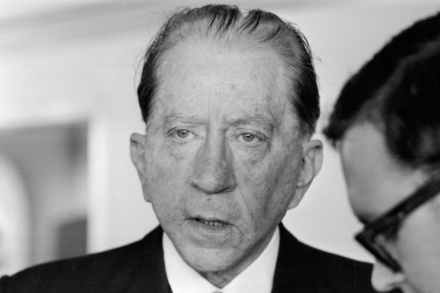
I grew up watching re-runs of ‘Thelma and Louise’ on VHS and mouthing Geena Davis’s line, ‘I don’t remember ever feeling this awake’, in the bathroom mirror, so when my agent rang to tell me that Ridley Scott had ‘responded’ to my audition tape I was a little excited. The audition in question was for the part of John Paul Getty’s mistress in Ridley’s new biopic, All the Money in the World, about the aforementioned oil billionaire who was initially played by the substantially younger Kevin Spacey in full prosthetics. Just a few months later there I was in full 70s costume shooting in Hatfield House, blissfully unaware that the film would become a huge talking point, even before its release date.