World war one

A classic monument for World War One

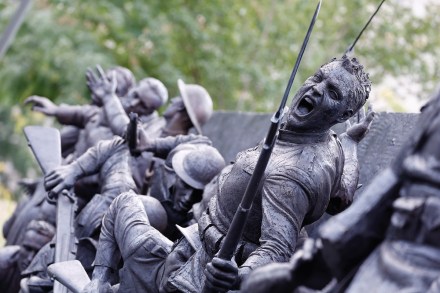
I was standing in front of “A Soldier’s Journey,” the centerpiece of the new National World War One Memorial in Washington, DC, chatting with its creator, sculptor Sabin Howard, when I raised a question. “So, are you the new Saint-Gaudens?” I asked. “No! No, God no!” exclaimed Howard. “That guy sucks.” Sabin Howard is nothing if not direct in expressing his opinions, which are refreshingly free of the artspeak that saturates most of the contemporary art world. It’s a frankness that is best appreciated by examining his current commission as well as trying to understand the artist himself.
Memorial

Nick Lloyd takes you through the horrors of the Eastern Front

Ten years ago David Cameron, as the British prime minister, pledged $65 million for the centenary of World War One. The focus was on “capturing our national spirit in every corner of the country, something that says something about who we are as a people.” Beyond a celebration of the Tommy on the Western Front and a belated acknowledgement of colonial Britain’s sacrifice, it was a missed opportunity. There was little attempt to better understand the region where the war began — and where, according to Nick Lloyd’s exhaustive The Eastern Front, it never really ended.

Lloyd

Trump’s Reich stuff

Former president Donald Trump’s social media account shared a video Monday that sparked a Blitzkrieg among his harshest critics. The video featured hypothetical news headlines about Trump winning the November election, overlaid on newspapers with smaller, less visible headlines. One of those other headlines touted a “unified reich,” which was too perfect for some Trump haters to resist. Trump shared a Nazi-esque headline on his own social media account? Pounce and seize, friends! “This man is a stain, a Nazi, a pure a simple garbage of a human being. And ANYONE who supports him now will be ASHAMED to ever admit they did someday,” former congressman Adam Kinzinger wrote. The president responded to the incident as well.

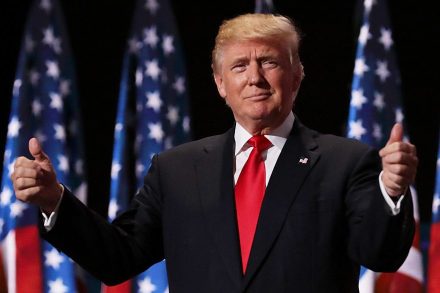
Republican presidential candidate Donald Trump gives two thumbs up (Photo by Chip Somodevilla/Getty Images)

Forbidden love in the Great War

Alice Winn’s beautifully written and engrossing debut, In Memoriam, comes hot on the heels of Tom Crewe’s debut The New Life, which followed the tortured relationship between two men at the turn of the century, and was loosely based on the life of the scholar John Addington Symonds. Winn has turned her impressively attuned eye to World War One, and two young men who fall in love at their public school (old money, military and aristocratic connections, tailcoats and buggery), before heading off to the front; the flower of their generation, doomed to die as the mechanistic future tears apart chivalric ideals, and society starts to question its very nature.

Winn memoriam

German patriotism collides with All Quiet on the Western Front

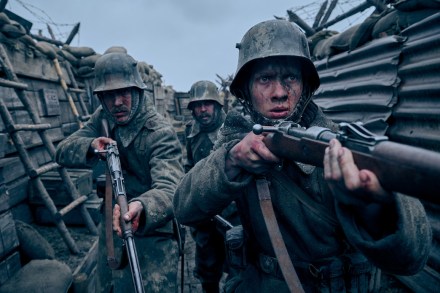
As the bewilderingly overpraised Everything Everywhere At Once continues its inevitable march to Best Picture at the Oscars, many of the films that were once tipped to defeat it have slipped away. The Banshees of Inisherin, Top Gun: Maverick, Tár — all have settled into their time-honored place of being forever the Academy’s bridesmaid and not the triumphant bride. Yet almost out of nowhere, Netflix’s All Quiet on the Western Front has emerged as a serious contender. It swept the BAFTA awards in February, and with nine Oscar nominations, including Best Film, Best Foreign Language Film and Best Adapted Screenplay, it looks certain to win at least a couple of them. Not bad for a two-and-half-hour adaptation of a 1929 German novel.

all quiet on the western front

Titanic was the original White Lotus

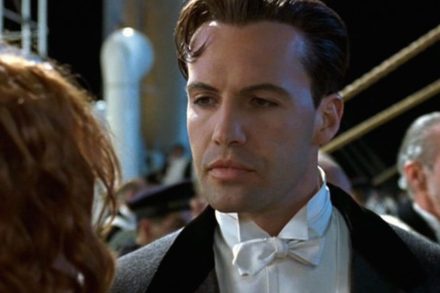
When James Cameron’s Titanic sailed into US theaters twenty-five years ago, smashing box office records in the process, it subversively made the argument that the villain in the film was not the iceberg, but its first-class passengers. While it wasn't a satire like The White Lotus, Cameron's film feels like one of the pioneers of the over-the-top "eat the rich" criticism that produced the viral "send them to White Lotus" memes. One of those memes should have included the cartoonishly repellent Cal Hockley, played perfectly by Billy Zane — the epitome of bourgeois arrogance.

titanic

Amsterdam explores friendship in a complicated world

David O. Russell is one of a small handful of directors whose involvement with a project is enough to get me to see it immediately. From the offbeat energy of Silver Linings Playbook to the tangled period drama of American Hustle, his films are tightly edited and always thick with talented actors. Amsterdam, his latest, is no exception. While it’s thematically fluffy and periodically tends toward the indulgent, it's never anything less than entertaining. There are far worse ways to spend a few hours, especially in the midst of a cinematic drought. Picking up in 1933, Amsterdam is the tale of two injured World War I veterans, slightly disreputable doctor Burt Berendson (Christian Bale) and successful attorney Harold Woodman (John David Washington).

Faces off

Humankind’s ability to destroy itself has always outweighed its desire to fix the broken pieces. Conflict and war create great suffering, anguish and death, but they also lead to discoveries in technology, industrialization and, we learn from Lindsey Fitzharris’s The Facemaker, the invention of cosmetic and reconstructive surgery. At the dawn of the Great War, it became painfully evident to those in the trenches that contemporary developments in warfare had far exceeded those in the world of medicine. These ghastly developments are illustrated in great detail in Fitzharris’s book, which tracks the military career and early life of Harold Gillies, the man who is largely credited as the father of modern plastic surgery as well as with having performed the first phalloplasty.

facemaker fitzharris

Et in Arcadia ego

"Oxford I do not enjoy,” wrote T.S. Eliot to Conrad Aiken in February 1915. “The food and the climate are execrable, I suffer indigestion, constipation, and colds constantly.” The poet was clearly having one of his bad days. Since arriving at the university the previous October, he had found himself in and out of love with the place, which was hardly surprising, given the timing. Most of the undergraduates at Oxford had either left or were on the verge of leaving to fight for their country, meaning that the lecture and tutorial rooms were almost empty, the sports fields green through lack of use, and the centuries-old traditions stalling like motor cars on the long stretch of the High.

Oxford

The marvels of the Connaught Hotel

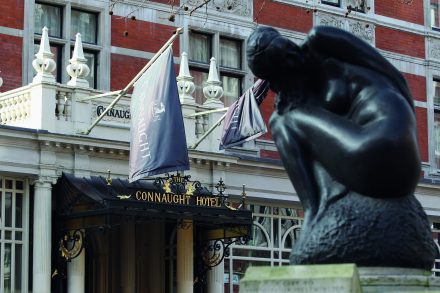
You may have noticed the Connaught Hotel a little more since 2011, when ‘Silence’, the steamy fountain by Japanese ‘architect philosopher’ Tadao Ando, was installed outside the entrance. But actually the hotel doesn’t want to be noticed. It prides itself on guaranteeing famous guests their privacy. Eric Clapton added his own layer of protection by checking in as ‘Mr W.B. Albion’ (he’s a fan of the soccer club West Bromwich Albion). Alec Guinness valued its discretion, and was annoyed when Jack Nicholson’s stay during the filming of Batman attracted the paparazzi. The hotel in turn had its own issues with Jack and his entourage. As the star put it to a friend: ‘They have a shit fit every time we walk through the lobby with jeans on.

connaught

How the Atlantic twisted the truth

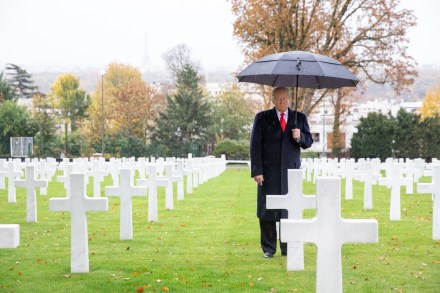
The Atlantic has stunk up an otherwise beautiful Labor Day weekend with a uniquely ugly story. Anti-Trump editor-in-chief Jeffrey Goldberg claims that Donald Trump snubbed a World War One American cemetery in France because ‘it’s filled with losers’, and the Doughboys buried there are ‘suckers’. Goldberg also asserts that ‘Trump rejected the idea of the visit because he feared his hair would become disheveled in the rain’ on November 10, 2018.President Trump categorically rejected the Atlantic’s tale. He called it a ‘total lie. It’s fake news. It’s a disgrace.’‘I was ready to go to a ceremony,’ Trump told journalists at Joint Air Base Andrews Thursday night.

cemetery losers atlantic

Does COVID-19 mean socialism or social collapse?

Inequality is the price we pay for civilization. Property rights, inheritance customs and unequal gains from technological innovation have long divided us into haves and have-nots. Because stability favors such disparities, it usually took powerful shocks to flatten them. The collapse of states wiped out elites. The World Wars slashed returns on capital and imposed heavy-handed regulation and confiscatory taxation. Communist regimes equalized by force and fiat.The greatest plagues also turned into levelers, by killing so many that labor became dear and land cheap. For a while, the rich became less rich and the poor less poor: Europe after the Black Death is the best-known example.

covid