Work

What Boomers get wrong about Neets

From our UK edition

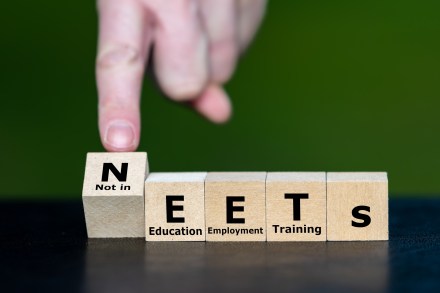
The UK has a Neet epidemic: those aged 16 to 24 classed as not in employment, education, or training. At various times in my life, I have counted myself among their number. It’s an easy status to fall into, yet it’s not the land of sunshine and roses one sometimes imagines jobless youth to be. The numbers grow year by year, and many of those entering the status fall further into Neetdom, whether it be by a conspicuous gap on the CV that leaves them even more behind, the realisation that you can live just as well on benefits or mere feelings of hopelessness after hundreds of failed job applications.   The truth is, it’s bloody tough out there getting a job.

‘LinkedIn speak’ is a disgrace

From our UK edition

The past few years have seen a slew of devastating style assaults on the English language known as ‘LinkedIn speak’. You know the type of word salad: ‘synergise’ instead of ‘combine’, ‘ideated’ instead of ‘thought of’, ‘holistic’ instead of – well – looking at something as a whole. Alarmingly, there is now an app, Kagi Translate, that allows you to type any sentence and it will deliver it for you in this wretched patois. For instance, write ‘I went to the zoo,’ and Kagi gives you: ‘I had an incredible opportunity to observe high-performing teams in a diverse ecosystem and reflect on the importance of adaptability and strategic positioning.’ Go on, try it.

What has become of the Wellcome Collection?

From our UK edition

In 2022 the Wellcome Collection caused a stir by closing its Medicine Man exhibition on the grounds that it was ‘based on racist, sexist and ableist theories and language’. Director Melanie Keen had previously talked of reinterpreting the collection but had now evidently decided it was beyond redemption. ‘We can’t change our past,’ she said in a statement at the time. ‘But we can work towards a future where we give voice to the narratives and lived experiences of those who have been silenced, erased and ignored.

Why China’s nostalgia industry is booming

From our UK edition

Nostalgia is a thriving industry in China. I first noticed this while walking around Nanjing last summer. There were shops with names like ‘Finding Childhood’ or ‘Childhood Memories’, selling sweets and toys that had long been discontinued. There were posters of TV shows and celebrities from the 1980s and 1990s. The customers were like me – misty-eyed millennials, often women, looking for their lost childhoods. ‘Oh my god, remember that!’ We relished every moment. The shops have sprung up suddenly in the past two years, mostly catering to my generation, who spend more on high-street tat than our elders. But older Chinese have been seeking nostalgia too. They get their hit from remembering a more rural way of life.

Trade like a tradwife

From our UK edition

I love to complain about my phone. It has ruined everything, from friendships to childhood to my memory. But if I stop the bitching and think clearly for a moment, I must admit that my phone is a far more liberating bit of kit than the washing machine or the contraceptive pill. Largely that’s because my phone allows me to work from anywhere. For many women, particularly those with children, this is a dramatic and radical change. Claire Roscoe’s story is a good example. Both she and her husband lost their City jobs in the wake of the pandemic. Pregnant with her second child, Claire needed to find work again promptly.

Be more tiger mum!

From our UK edition

‘What’s it to do with me if your boyfriend wants to break up with you? Or if you cried, or had a fight, these are not things that I as a supervisor care about. I’m not your mother. All I care about is results. Our relationship is just employee-employer.’ In a series of videos posted on Douyin (China’s version of TikTok), Chinese tech executive Qu Jing was a little too candid about her management style. Sharply dressed and with hair cut formidably short, she said she expected her staff to be on call 24 hours a day, including at weekends, even at the cost of their personal relationships. If Qu thought these videos would give her a ‘girlboss’ image, she was wrong. They went viral and she became a national hate figure.

Why bad jobs are the root of America’s problems

Low wages are bad for everyone in the United States — not just for the working poor. Every major social crisis Americans face today — falling fertility, the loneliness epidemic, bitter conflicts over racial and gender identity, and growing partisan polarization in politics — is worsened if not caused by the proliferation of low wage jobs caused by the collapse of worker power. For centuries, children in the English-speaking countries have learned a proverb that has equivalents in other European languages (“want of” in this context means “lack of”): For want of a nail, the shoe was lost. For want of a shoe, the horse was lost. For want of a horse, the rider was lost. For want of a rider, the battle was lost. For want of a battle, the kingdom was lost.

west

The death of the phone call

Scientifically, the jury is still out on whether women are better multitaskers than men. A 2013 study suggested that women do, in fact, outperform men, while a 2019 German study found no demonstrable differences between the sexes. In my entirely unscientific opinion, I think the stereotype is real. Women are engaged in all kinds of things at the same time. At any given moment, I’m engrossed in my work while also contemplating the contents of my freezer, making a mental note to order more diapers, and simultaneously clipping my daughter’s toenails. A New York Times piece on why women do the household worrying described a woman’s mental load as a “combination of anxiety and planning that is part of parenting.

zoom

A podcast that listens to what anti-vaxxers think rather than lecturing them

From our UK edition

Work is our new religion. There are people whose primary job is writing listicles of celebrity gossip, illustrated with gifs from the Fast & Furious franchise, who refer to being a writer as a ‘calling’. If I think about this for too long my brain simply shuts down to protect itself. What we used to do for God we now do for our work. In a secular culture, it seems totally normal — admirable, even — to sacrifice the possibility of having a family, to give up all leisure time, to starve yourself or live on insane, totally made-up diets like intermittent fasting or paleo for the sake of your job as an Instagram beauty influencer or whatever. But to wear a habit and be celibate and fast out of a religious devotion? That must be a cult!

#MeToo has hurt women in the workplace

About a year ago, I found myself at an eclectic dinner party. In our mix were men and women of all ages in all stages of their careers. Conversation turned to the #MeToo movement and the way it had changed the national conversation about sexual harassment and assault. A high-powered lawyer at the table confided in us that several of his male friends and counterparts had come to him after noticing a troubling pattern. These men — who were working for different companies, across a wide array of industries — were committed to mentoring men and women. They were eager to ensure that their colleagues were being treated equally and being afforded equal opportunity, regardless of gender.

#metoo women workplace

Women don’t need big government’s help to climb the corporate ladder

Publicly-traded companies in California are now required to have a woman on their board of directors thanks to Gov. Jerry Brown, who signed a bill enacting the new mandate on in September. Although they intended to diversify corporate boardrooms, California legislators actually revealed that they believe adult women should be treated like helpless children. Ostensibly ‘feminist’ policies that give women an advantage based solely upon their gender will in fact undermine women’s equality. Women do not need hand-holding from the government to get ahead in their careers, and such legislation is counterproductive and patronising.

jerry brown women corporate ladder