Work from home

How DOGE is planning to cut down the feds

President-elect Donald Trump’s appointees for his new Department of Government Efficiency (DOGE) are planning to crack down on employees who work from home — those who are left, anyway, after the duo’s round of “large-scale firings.”In an op-ed published by the Wall Street Journal Wednesday, Elon Musk and Vivek Ramaswamy laid out “the DOGE plan to reform government,” in which they purport to “reverse a decades-long executive power grab” while “following the Supreme Court’s guidance.


2023 is the year of the vagabond

They say moving is one of the most stressful life events, but I’ve come to quite enjoy it. Last year alone, I lived in six different houses and moved across Wales, England, Scotland and the Channel Islands. So it’s really a good thing that the thought of packing up my belongings doesn’t give me palpitations. I’d be long dead if it did. As the world descends into a bleak new year, with recessions looming and nothing mildly positive to look forward to, more and more people are adopting this lifestyle. Some are not doing it out of choice. Sofa surfing and moving back in with parents are their only options to escape the multiple crises: cost of living, energy bills, housing, war. For others, there’s an air of "what’s the point?

Sleepy Joe leads the work-from-home crusade

Rejoice, slackers of America! For there is a new figurehead leading your crusade for lunchtime naps, camera-off Zoom meetings and sea-level productivity. Yes, Joe Biden has, finally, excelled at something: he is the president that has spent most time at home. According to CBS News White House correspondent Mark Knoller, who has been meticulously keeping tabs of Biden's days off, since taking the White House as his official residence, the president has traveled to his home in Delaware fifty-five times. Whether he’s practicing his cycling skills, injuring himself while playing with his dogs naked or lounging in his $2.

work

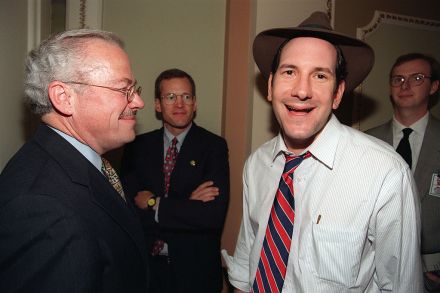
Matt Drudge was ahead of his time

There are two new movies in the works about internet provocateur Matt Drudge, and with the mic dropping on Roe v. Wade, today, they couldn’t come at a more appropriate time. Drudge has been dictating the national news conversation for decades, but he wasn’t always doing it out of the limelight. The tale of how a CBS Studios gift shop clerk came to inform the most powerful leader of the free world (Trump used to be a big fan) and the likes of the late Rush Limbaugh has been documented in articles, books, and a television series. Drudge went dumpster diving, found a discarded contract, and was the first to report that Jerry Seinfeld was negotiating for $1 million an episode for his show. Drudgereport.

Telework is making government even lazier

Cockburn spent his long weekend the same way most Americans did: reading the Functional Government Initiative’s recent report. It found that “on any given day from March-December 2020, between 20-30 percent of HHS employees did not appear to be working.” Government inefficiency is nothing new, but in this case teleworking is exacerbating the problem. And that isn’t about to improve — at least not under this administration. Biden continues to push for more teleworking options, even as the pandemic finally begins to fade. The Washington Free Beacon reports that Brian Harrison, the former HHS chief of staff who commissioned the investigation of telework participation, speculates that many recent federal agency errors may be due to an inactive teleworkforce.

How working from home threatens authoritarian regimes

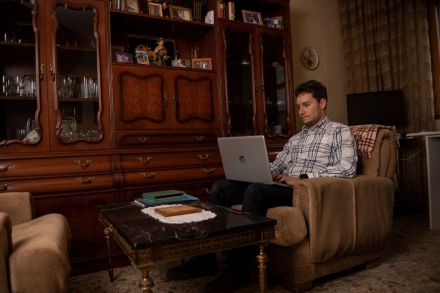
One of the few good things to come out of the pandemic has been the option to work from home (WFH). According to a Stanford University study of 17,000 employees, 50 percent of respondents who stayed at their jobs without commuting wanted to keep working from home at least part-time after Covid. And a September 2021 survey by OwlLabs, a video conferencing platform, found that one in three people who have worked remotely since the outbreak would likely quit if they could not continue to do so. While undoubtedly pressured by the current worker shortage to accept WFH as an employment benefit, companies have come to appreciate how decentralized staffing can improve productivity and substantially lower overhead.

The death of the phone call

Scientifically, the jury is still out on whether women are better multitaskers than men. A 2013 study suggested that women do, in fact, outperform men, while a 2019 German study found no demonstrable differences between the sexes. In my entirely unscientific opinion, I think the stereotype is real. Women are engaged in all kinds of things at the same time. At any given moment, I’m engrossed in my work while also contemplating the contents of my freezer, making a mental note to order more diapers, and simultaneously clipping my daughter’s toenails. A New York Times piece on why women do the household worrying described a woman’s mental load as a “combination of anxiety and planning that is part of parenting.

zoom

The city that never dies

Peggy Noonan, in a recent Wall Street Journal column, offers a bleak take on the pandemic’s impact on American society, or at any rate the subset that lives in New York. New York vies with London as one of the most prodigious aggregations of talent on the planet, and has survived a previous pandemic, multiple financial crises and a terrorist assault. Noonan’s argument — and she’s far from the only one to make it — is that NYC is headed over a cliff because corporate managers have awakened to the advantages of the Zoom call. I can understand how such dark notions arise. Given the breadth and scale of the present catastrophe, it’s not unreasonable to think the world has changed irreversibly for the worse. But I don’t think it has, at least not due to coronavirus.

new york