Women

Cuba is a lovesick country

When I first moved to Cuba, an ex-girlfriend said: “That sounds lovely, Ruaridh. What next, Thailand?” The Caribbean island has always come with a certain reputation – the writer A.A. Gill noted that the Cubans are the “most libidinously choreographed people in the world.” It wasn’t the revolution that made Cuba known for sex. The sleaze goes way back, probably to 1492 and beyond (naughty Tainos), but by the 1950s, Havana’s infamous Shanghai Theater was putting on live sex shows, performed by a gentleman called “Superman” – and not because he could fly. Such libertine ways – and the mob that controlled then – were part of the reason Fidel Castro gave for tumbling the then dictatorship.


Who’s the most underrated American?

Bill Kauffman Luther Martin: a voluble and drunken Maryland attorney who walked out of the Constitutional Convention of 1787 after warning his fellow delegates that their handiwork provided the framework for a centralized and militaristic empire that would efface regional distinctions and erode the liberties for which American patriots had fought and bled a decade earlier. An unheeded prophet who breathed the Spirit of ’76. Lionel Shriver Edith Wharton. Hardly unrecognized, but under-taught and too little familiar to the international literary readership (e.g., in Britain). A spectacular stylist, she wrote novels that still sound modern and perfectly accessible 100 years later – and she was a real feminist before the days the word meant humorless pill.

American

Did Plato invent women’s lib?

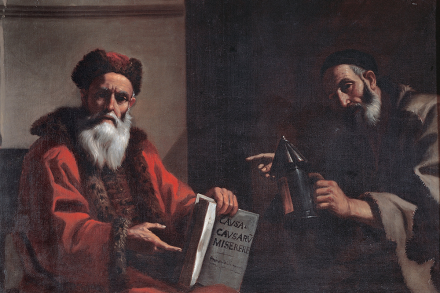
One could go on endlessly about what the ancients have done for us, but one of the most interesting things is that Plato could be said to have invented women’s lib, though it seems to have taken 2,500 years to catch on. Since most ancient states were at war much of the time, putting the male population especially at risk, women had to commit to the production line as soon as possible if the state were to survive. But Socrates, in Plato’s dialogue The Republic, portrays a utopia in which women shared the same status as men. The ruling class of this state are called Guardians and Plato likens them to dogs hunting and protecting the flock, an activity in which female dogs engage just as much as male dogs (though the males are stronger).

plato

The politics of long hair

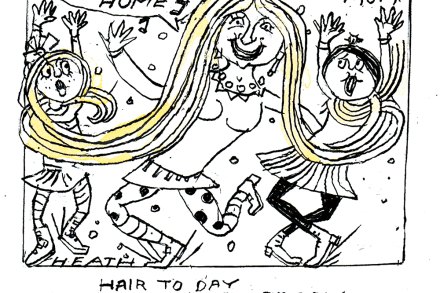
What is the literal cut-off point for women having very long hair (and by “long” I mean where it almost goes into the toilet bowl)? Thirty? Forty? Fifty? Try 65 – the age I turned this year. If this strikes you as grossly inappropriate, in theory I’m with you. The unspoken rule is that the older you get, the shorter your hair should be. Nobody within ten or even 20 years of me has hair as long as mine. What can I say? As with wearing inappropriately colored nail polish, it is just another small act of defiance women d’un certain age can employ to remind this cruel world that we do actually still exist. My hair has been this length for so long it has become a part of my identity: how I see myself in the universe. I am my hair and thus find it hard to imagine life without it.

Why I can’t resist a red-light district

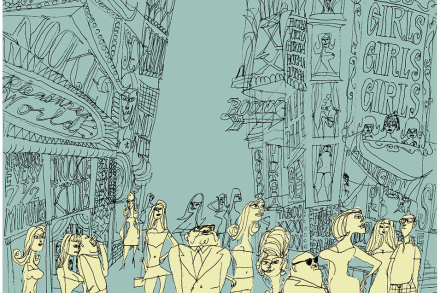
I am writing this on the 17th floor of the Novotel Sukhumvit, on Soi 4, aka “Soi Nana,” in Khlong Toei, Bangkok. For anyone that knows the Big Mango, they’ve already guessed where I am, psychogeographically: from that tell-tale word “Nana.” For those still in the dark, I am on the rude, ribald, rambunctious street that is Soi 4, which is full of tattoo parlors, 7-Elevens, dried-squid-sellers, fake Italian winebars, blaring “British” pubs, slightly dodgy pharmacists, hair salons that do laundry as well – it culminates in Nana Plaza, a multitiered al fresco mall of gaudy and noisy go-go bars that probably constitutes the single largest collection of sex workers on the planet.

sex

Enough with the woman-loathing sex-confessionals

The first thing you learn as a young woman, without anyone telling you a word, is that men love sex. Men want to have sex with you and men want to have sex with every woman. They love sex so much they will do anything to get it. They will trick you into having sex with them. They will flatter. They will lie. They will do whatever they can to get you into bed. This is the foundational myth on which the fantasy of male vitality is built – the red-blooded American man, always on the verge of losing control. Now it may be true that our late-liberal order has neutered this impulse. Blunted it. We may be seeing a new generation of dysfunctional, BlueChew-popping eunuchs.

The Last Westerner captures the American Southwest

 The epigraph to this novel is from Chretien de Troyes’s Lancelot, one of the French author’s Arthurian romances. It is fitting because The Last Westerner is a medieval romance, as well as an epic set in the American Southwest in the closing years of the 20th century. The dedication is to the author’s wife and to the late Edward Abbey, a personal friend. It is equally fitting because The Last Westerner is a western novel in setting and theme and will bring to mind other western novels such as Abbey’s The Brave Cowboy (1956) and Cormac McCarthy’s All the Pretty Horses (1992). Abbey’s book is subtitled, An Old Tale in a New Time. That could be the subtitle for The Last Westerner too, and as for pretty horses, Chilton Williamson, Jr.’s novel is full of them.

horseback last westerner

Are America’s women heading for the exit?

Life is apparently so disagreeable in Donald Trump’s America that 40 percent of women aged between 15 and 44 want to leave. That is four times higher than the 10 percent who wanted to quit the US in 2014. According to Gallup, which conducted the poll, nearly half the nation’s younger women have “lost faith in America’s institutions.” This disenchantment accelerated after the Supreme Court’s 2022 decision to overturn Roe v. Wade, which enshrined the constitutional right to abortion. Younger American men are bearing up better. Only 19 percent share women’s distaste for the Donald, a 21 percent differential which is the largest recorded by Gallup since it began asking the question in 2007.

Women
Punctuation

Down with exclamation points!

Punctuation is a gendered thing. I’ve been trying to stop myself overusing exclamation points and it’s been difficult. Exclamation points are girly because they’re a way of taking the sting out of what you say; they make any pronouncement seem more tentative, less serious. They’re the equivalent of a disarming smile, a marker that says: “No offense!” You add them to the end of a sentence to prevent anyone thinking you’re being bossy or critical. They’re an economical form of non-confrontation. Women use them far more than men. Almost 20 years ago, a study in the Journal of Computer-Mediated Communication found that women used nearly three-quarters of the exclamation marks in electronic messages, but it identified the tic as “markers of friendly interaction.

Republicans need to bring it home for me and my three cats 

I am forty, I’m perpetually single, I have no kids, and I own three cats. No, this isn’t a reboot of Bridget Jones’s Diary; it’s my life. And I also happen to be a lifelong conservative who votes in every election.   I’m not so sensitive that I thought J.D. Vance’s now-widely circulated comments about “cat ladies” from 2021 were directed specifically at me — but the words hurt all the same. Like so many women in my shoes, I did not set out to be single and childless forever to make a hallow political gesture. I dreamed of a family, true love and the white picket fence. But thus far, that simply hasn’t been the course mapped out for me by the Author of all things.

cats

The ups and downs of the long road toward workplace parity

In late 2019, for the first time ever, American women outnumbered men in the college-educated labor force. Women now earn bachelor’s degrees and doctorates at a higher rate than their male counterparts, and they account for more than 56 percent of law students. They lead more than 10 percent of Fortune 500 companies. Has the United States come a long way in equalizing opportunities for men and women? Definitely. Do we still have a long way to go? Absolutely, says Josie Cox in Women Money Power, her compelling analysis of the ups and downs of the long road toward workplace parity.

women

The curious case of Botox babies

"You look great,” my friend beamed at me as she opened her apartment door a few months ago. “Have you had Botox?” Of course I hadn’t. I’d had something that’s almost certainly far rarer — especially as a parent — in this age of ubiquitous beauty-on-demand services: eight solid hours of sleep, followed by a strong cup of coffee, followed by a ten-minute power walk through a New York City downpour replete with gale-force winds blowing in off the Hudson. Take that, injectable dermal fillers. Botox, it seems, is everywhere. Many of my acquaintances, even those barely old enough to remember Tamagotchis or Princess Diana’s funeral or that AOL dial-up tone, casually drop into conversation how overdue they are for an appointment with Doctor So-And-So.

Botox
single cat lady

A paean to the single cat lady

In recent years, Republican candidates and media figures have become increasingly critical of one portion of the population. At the same time, this same demographic has turned against them at the ballot box. As the GOP became the party of men — married or unmarried — they drove away the single women, who voted against them en masse in the 2022 midterms. It's not hard to see why.

The new wave of woman hate

It was in the late 1990s, during then-President Bill Clinton’s scandal, when I first concluded that neither major political party actually cared about women. I watched — in horror — as the Democrats downplayed the allegations and defended Clinton’s actions rather than fully supporting Monica Lewinsky. Republicans exploited her testimony in order to discredit and weaken the president. Both parties used her to advance their own agendas at the expense of Lewinsky’s dignity and well-being. While the adults around me were concerned with the political fanfare, I only saw a young woman caught in the crossfire, enduring public scrutiny, humiliation and personal trauma while the media feasted on the spectacle.

woman

Why ladies really should leave their man at home

A handsome male is now an accessory. Even the not-so-handsome ones: women dress them up, choose their haircuts, and put them in silly little outfits that compliment ours for the silly little events we fill our evenings with. Like a gender reveal party. Honestly, whose idea was that? They should be held accountable. Some time over the last twenty years, we have decided that a man is no longer someone we choose to have around. He's an extension of ourselves. He doesn’t agree with you on literally everything? Sounds like a narcissist. He forgot your half-a-year-aversary? Honey, he’s gaslighting you. Or maybe his mercury is in retrograde or he has a different love language. At least you know he’s not screwing the neighbor. Men don’t do that anymore.

man

Women Talking bludgeons itself with its message

Sarah Polley’s Women Talking begins with a genuinely bone-chilling premise. Within a remote Mennonite “colony,” the women find themselves awakening from drugged slumbers, bearing the marks of violent sexual assaults in the night — blood, bruises, and mysterious pregnancies. Who’s responsible? Based on the promotional material, I expected this to be a story about secrecy and community. And that would be a very compelling story: women trapped in isolation form whisper networks among themselves, which finally reveal their common experience and allow them to bring their attackers to justice. Thematically, this would get at the intractability of human evil, even within “intentional communities,” and the harms of a subculture that treats bodies as shameful.

So much for #MeToo

Five years have passed since Jodi Kantor, Megan Twohey and Ronan Farrow’s Pulitzer-winning reporting on sexual misconduct in Hollywood and beyond. Harvey Weinstein, #MeToo’s Perv Patient Zero, is in prison. Bill Cosby spent three years there as well. Woody Allen — Farrow’s estranged father, one-time accused child molester and husband of his ex-partner’s adult daughter — still walks free (not having actually been charged with anything), but a bunch of A-list actors won’t work with him, and you now have to preface every mention of Annie Hall with a handwringing disclaimer. Donald Trump, well, he wasn’t reelected, which has to count for something. The world, we were assured, would never be the same.

#MeToo

The scissor sisters

I needed a quick cut and shave, my usual guy was closed, and the shop down the road was a tinge more masculine, or so I thought, than the other joints nearby. It was still one of those Brooklyn neo-barbers, complete with tatted-up staff, dark walls, steel accents with live edge countertops, trailing golden pothos and old-timey photographs of men sporting dramatic mustaches. On the Brooklyn scale of pretension, it ranked low compared to the rest, where you’ll find a bundle of demure waifs stationed in leather aprons as they balance brass clippers with outstretched pinkies, like martini glasses, delivering fades with delicate upward flicks of the wrist — that’ll be $150. “She’s running a little late,” the owner said of the barber to whom I’d been assigned. She?

barber

Why don’t men read novels?

It’s hard to move on the literary internet — or that nest of inky vipers, literary Twitter — without coming across a piece that expresses one of two opinions: the first, that men don’t read literary fiction and that this limits their understanding and experience of the world; and the second, that the figure of the heterosexual white man has been crudely and cruelly excluded from the literary debate. “Bring back our Roth, our Amis, our Updike,” these commentators cry, as if they hadn’t received enough acclaim and attention in the past few decades, and if reading them had become illegal rather than just moderately unfashionable.

I am woman. Watch me push

My husband and I recently attended the virtual childbirth classes offered by the hospital where I am registered to deliver our first child. We are classic first-time parents. We have no idea what to expect. Excited and terrified, we’re aware that no matter how much we prepare, there is really no way to. So we signed up for the six-hour class on a Saturday, hoping to get some sense of what labor would be like and the standard procedures at the hospital. The three nurses who taught the class had been bringing babies into the world for well over a decade. They seemed funny and capable. However, it wasn’t long into the training before they started referring to us as variations on a theme of pregnant: “pregnant people,” “pregnant persons,” “birthing persons.

women