Wine

Where to drink Tuscany’s finest summer tipples

From our UK edition

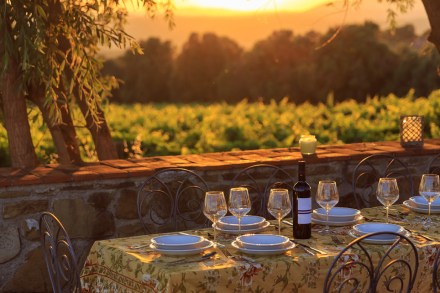
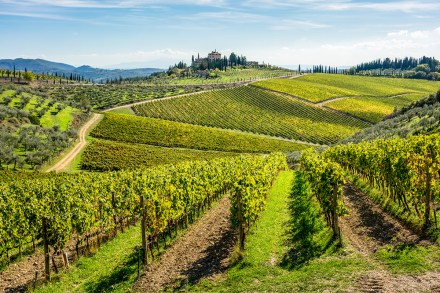
Some subjects invite an eternal recurrence. One such is Tuscany. The other day, I wrote about that glorious region: its mastery of la dolce vita, its almost effortless command of civilisation. Indeed, Tuscan civilisation is a tautology. Since then, I have paid a brief visit. There was only one shadow. How can one find the words to equal the subject matter? Wine was produced here long before we Brits had even discovered woad My host was Grahame McGirr, a successful banker who has always been fascinated by wine, which led him to buy a vineyard near Monte-pulciano. I commented on some of his wines after a tasting in London. They were impressive: promise, stimulated by ambition. He pressed me to report on the promise in situ – the things one does for friends.
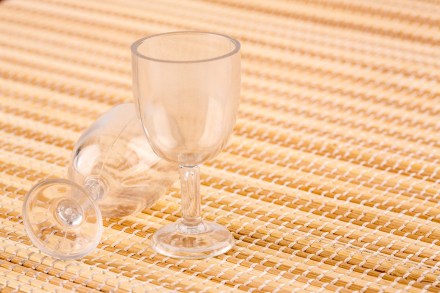
The insidious creep of plastic glasses

From our UK edition

It was the afternoon of the first day of the second Ashes test at Lord’s. In the brief lull between overs, the camera panned, as it often does, to a recognisable face in the crowd: Jacob Rees-Mogg. The traditionalist Tory presented exactly as you’d expect: Savile Row suit, tie and cufflinks. But there was one wrong note: he was drinking from a plastic glass.  Say what you like about Mr Rees-Mogg – and people do – but one attribute that I think we can all agree he possesses in abundance is that he’s in touch, almost viscerally, with his own sense of how things should be done. And this sense, as I perceive it, would very much preclude drinking from a plastic cup.

What’s so super about Super Tuscans?

From our UK edition

In Fellini’s La Dolce Vita, the hopes embodied in the title dissolve into grimness and black irony. It was all Mussolini’s fault. Despite the endless opportunities Italy offered for enjoyment, Fellini never trusted his own country, or his countrymen. He could not relax into dolce far niente. For decades, many Italian wine-makers churned outa mass-market product to sell cheaply Perhaps he should have spent more time in Tuscany, surely the most civilised region on earth. Venice may claim to be La Serenissima, but among Tuscany’s gentle hills, hill villages and glorious cities, nature and man are in a harmony so serene that one can almost hear the music of the spheres.

The 10 best wines for a summer barbecue

From our UK edition

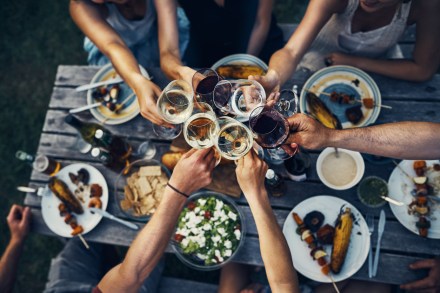
The days when ‘barbecue’ meant a lukewarm beer, bun and burger are long gone.  We’re putting more effort than ever into our outdoor dining – from whipping up zingy marinades with ingredients you’d barely heard of five years ago to diligently waiting for that perfect halloumi char.  All this extra effort on the food front surely warrants some attention to your drinks choices, too. Here are the ten best wines to whip out for a summer barbecue – and the foods to pair with them.  A Growers Touch Durif 2020 Wickhams, £12.20 (or £10.

A drinker’s diary

It is a crisp, beautiful spring day as I write. The air is light and clear. The skies are a color I have always thought of as Virgin Mary blue, punctuated here and there by attractively arranged puffs of clouds at their whitest and least threatening. The greens of the verdure are at their most flashing and emerald-like. That freshness will be enveloped by summer fullness by the time you read this, a contingency that makes me conclude that something like an abbreviated wine-diary — some of what Kimball drank during the month of May — might appeal to the connoisseurs and aficionados of the column. Let’s start at the tip-top.

wine drinkers diary champagne

The beauty of rosé and roses

From our UK edition

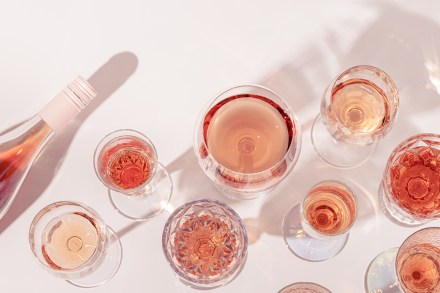
What an idyllic setting. We were amidst the joys of high summer in England, with just enough of a breeze to save us from the heat of the sun, and the further help of a swimming pool. Water without, wine within. We were also surrounded by roses, England’s flower, luxuriating in their beauty and innocence. Experts have applauded my friends’ rose-husbandry. It seemed to this non-expert that they have not merely created a good rose garden; they have triumphed with a great one. Yet other thoughts intruded. Godparents are supposed to abjure the devil. Might Satan not sue for breach of contract? Roses makes one think of Henry VIII. I have recently been reading C.J. Sansom: so much better than Hilary Mantel. His Henry is wholly convincing as a study of corruption and evil.

The Britishness of Bordeaux

From our UK edition

Burgundy or Bordeaux? We were discussing that unending question during dinner over the weekend. I think that there is only one answer: ‘Yes.’ ‘But which, you clot?’ ‘Either. Better still, both.’ It is so much a matter of sentiment, and of which great bottle you have been lucky enough to drink most recently. But there is an argument, which is nothing to do with quality, that Bordeaux – claret – is more British. This is as true in North Britain as in England. There are various versions of a well-known piece of doggerel. My favourite is: ‘Proud and erect the Caledonian stood / Auld was his mutton but his claret good.

What to do when you only have modest wine on hand for a decorous guest

So, I’ve have been rooting around in Horace’s Epistles, which are full of amusing things. They really are not “epistles” in the conventional sense, since they were make-believe letters, artfully wrought jebux d’esprit that employ the convention of addressing a friend in order to entertain not (or not only) that friend (who may or may not exist) but one’s readers. Horace wrote two books of Epistles, one circa 21 BC when he was in his early forties, one a decade later, a few years before his death in 8 BC at the (it seems now) tender age of fifty-six. One that caught my eye when sitting down to write this column was Epistle 1.

horace

Tinta de Toro: the Spanish red that helped Columbus make waves

From our UK edition

I am assured that this is not a legend. But a few years ago, an Irishman’s life was twice saved by a raging bull. The Irish fellow was running with the bulls at a town near Pamplona. He tripped and was virtually impaled. The bull’s horn went into one side of the chap’s stomach and out of the other. He was rushed to a neighbouring hospital, which was accustomed to bull wounds, and the surgeons saved his life. While they were doing so, the aeroplane that he should have been catching took off. There were no survivors. Fifteen years later, the Irishman developed gut rot. One doctor wondered whether scar tissue from the horn wound might be causing the problem. So the patient was opened up. Scar tissue was indeed present and was excised, as was pancreatic cancer at a very early stage.

The Loire Valley is the place for bargain hunters

North of Cognac and Bordeaux, due west of Burgundy, the valley of the Loire River, attended on the second half of its journey east by the Cher River, stretches from the Pays Nantes and the Atlantic Ocean to Orléans in the heart of France. It is not quite right to say that this area is like Hamlet’s “undiscovered country from whose bourn no traveler returns,” but it’s my sense that Americans tend to overlook it in favor of its flashier neighbors. This is a pity, not only because the Loire Valley boasts lots of excellent wine, but also because the region still offers many conspicuous bargains, something you will look long and hard for in Bordeaux or Burgundy.

loire

What the Cambridge dons drink

From our UK edition

In June last year, King’s College Cambridge made more than £1 million from an auction of just 41 lots from its wine cellar. Not bad for a college that until just a few years ago had a hammer and sickle flag hanging in its student bar. But the Marxist sympathies of some of its legendary fellows and students stand little chance against the viticultural genius of the cellar’s buyer: Peter de Bolla, a scholar of 18th century literature and aesthetics. Included in the bonanza sale were 12 bottles of 1999 Echezeaux, an apparently legendary grand cru from Henri Jayer, for which someone bid £100,000. De Bolla had bought them on release and, to give some indication of the return on his investment, when he bought the 1996 vintage he had paid £31.11 per bottle.

The hidden charms of Montenegro

From our UK edition

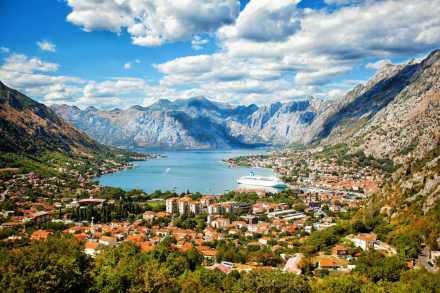
The first thing you should know about Montenegro is that it is wildly more dramatic than you might imagine. It would be frankly rude not to pull up on its precarious mountain roads and gawp. In summer the Adriatic shines; in autumn the mountains compete with New England for glorious, rich colours. The second thing you should know is that there is a relaxing lack of big-hitting sights. And anything you do want to do won’t take long. Even the most beautiful and Venetian of the tiny Balkan state’s towns take an afternoon at most to peruse, leaving plenty of time for lingering coffee stops and long fish lunches in the family konobas strung along the coast (which, if you were pushing it, you could drive end to end in around three hours).

How to wine and dine

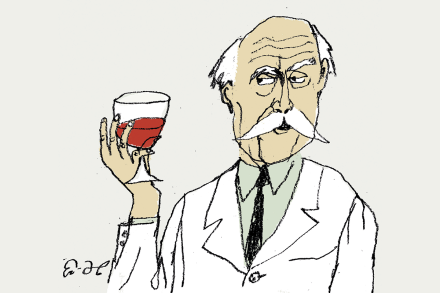
If you dare to host a dinner party, said Brillat-Savarin, you must be prepared to be responsible for your guests’ entire happiness while they are under your roof. It’s not just the victuals you are serving. It’s an entire world. I got that sage bit of advice from the French doctor and food writer Édouard de Pomiane (1875-1964), one of the most engaging writers about the preparation and enjoyment of pain quotidien I know. At least two books by Pomiane have been translated into English, Cooking with Pomiane and French Cooking in Ten Minutes (yes, really). Neither replaces Julia Child’s Mastering the Art of French Cooking or similar nitty-gritty manuals, but both are atmospheric charmers, books that can be read as well as consulted.

host

The rise of women winemakers

From our UK edition

Anna, the daughter of friends of mine, is in her final year at university and keen to enter the wine trade. Clearly, she is wise beyond her years because it’s a hugely engaging career. She will never get rich but will always be happy. Oh, and a glass of something tasty will never be far away, and nor will someone congenial with whom to share it.  Wine is made in beautiful places – just think of Bordeaux, the Douro Valley, Western Cape, Yarra Valley, Napa, Piedmont, Mendoza, Central Otago and even the rolling South Downs of Sussex – by delightful people (well, with just the one exception). It’s a warm, friendly and collaborative world to be in.

German philosophy and German wine: a sumptuous pairing

The best teacher I ever had in graduate school — or anywhere else, for that matter — was also the most dedicated. Most semesters he would offer a not-for-credit seminar one evening a week at his house. There, some half-a-dozen fledgling philosophy students would congregate, bottle of German wine in hand, to parse slowly through one text: Heidegger on Nietzsche, say, or Bishop Tempier’s condemnation of 219 propositions in 1277, a once-famous event that signaled the eclipse of the Aristotelian world view in favor of the Christian. We devoted one full semester to De li non aliud, “Concerning the Not-Other” (i.e., God) by the mystically inclined Renaissance philosopher, churchman and diplomat Nicholas of Cusa (1400-1464).

German

Hungarian wine is Europe’s best kept secret

From our UK edition

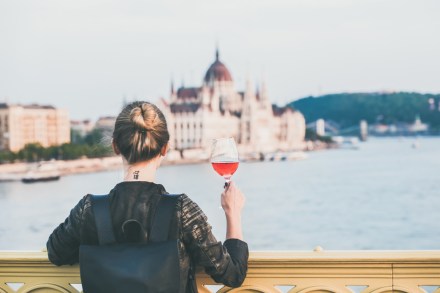
The Ottomans were evicted from Budapest in 1686, but you can still find reminders of Turkish rule if you look in the right places. All these relics are on the western, or Buda, side of the river, for Pest did not really exist in the 17th century. The original Turkish dome crowns the Rudas Baths, which are still in operation, public baths being one of the more salutary legacies of 145 years of Turkish occupation. Just north of the baths, on a slope leading up to the Buda Castle, an out-of-the-way cluster of graves is all that’s left of an old Muslim cemetery. From a distance, the weathered turban headstones look like pineapples. Other legacies of the Turkish era remain outside of Budapest.

There’s a sherry for everyone

On cold nights, a zesty margarita just isn’t going to cut it. You need a bolder tipple: a glass of sherry, the fortified wine favored by retired generals, members of the Diogenes Club and Ordinariate priests swotting up on Thomas Aquinas for the next Sunday sermon. It’s an appropriate drink with which to reflect on the complexity of life itself. You can go from the crispest blanco sherry, through a series of progressively richer flavors, to the most moreish dulce rum-colored sherry. When I passed through Jerez de la Frontera in southern Spain’s Andalucía region, every bar was jammed with great quantities and varieties of sherry. I had stumbled — literally, as I was hiking a hundred miles of the Camino from the coastal city of Cádiz to Seville — upon the Mecca of sherry.

burgundy

Planning world domination, fueled by Burgundy

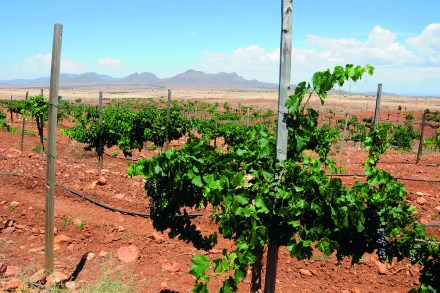
Just because you were born in a manger doesn’t mean you are a horse. I stumbled upon that bit of proverbial wisdom several times in the buildup to Christmas last year. It seems somehow applicable to a recent visit to Arizona where, despite the non-vinous-friendly environs, I had some amazing wines. On the Cabernet front, I finally had the opportunity to taste Alpha Omega. I mentioned this storied Napa Valley wine back in July when I wrote about the wines from its San Luis Obispo cousin, Tolosa Winery. I was with friends at an undisclosed, semi-secure venue, pursuing a plot for world conquest. As a result, my attention was not as focused on this excellent wine as it should have been.

Buried treasures of the Broadmoor

There are many reasons to visit the magnificently storied and illustrious Broadmoor Hotel, in the Rocky Mountain resort town of Colorado Springs. It has a glamorously luxe and gleaming spa. They will do you a superb dry martini with its own cute little carafe. Prince Harry once nipped into this pink-stone Italianate palace for a cheeky pint. But it’s the fantastical history of the Broadmoor that really compels, and which also tells us something possibly rather important about the relationship between politics and alcohol. The owner-founder of the Broadmoor was a failed-at-Harvard bon viveur by the name of Spencer Penrose.

broadmoor hotel
Émilion

Saintly succor

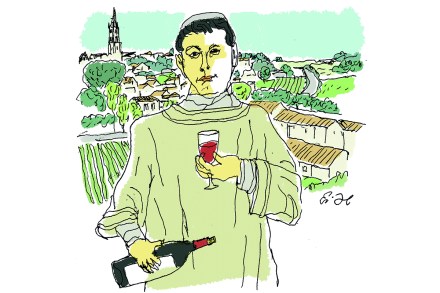
Since you’ll likely be reading this with what Wallace Stevens called “a mind of winter” (needful “to regard the frost and the boughs of the pine trees crusted with snow;... to behold the junipers shagged with ice, the spruces rough in the distant glitter of the January sun”), I thought I would provide something warming to conjure with. I am eventually going to get to one of the world’s most spectacular wines, Château Cheval Blanc, a premier grand crus classé from St. Emilion, but first let’s indulge in a bit of lore. A friend introduced me to Michael Foley’s Drinking with the Saints: The Sinner’s Guide to a Holy Happy Hour (Regnery), a Catholic-heavy but light-hearted topper’s fasti.