Wine

Dear Mary | 9 May 2019

From our UK edition

Q. I was invited to birthday drinks in London. On my way there the name of someone I haven’t heard from for months flashed up on my mobile. My instinct was not to answer — I’d heard the host of the party had gone off this woman and thought it best not to answer in case the woman asked what I was doing that night. I didn’t want to hurt her feelings if she’d been excluded. Nor did I want to lie. However, on arrival at the party my host told me that all was now well between him and her and she’d been invited but couldn’t come. When I rang her the next day, she said she’d been calling to say she was sorry she wouldn’t be seeing me that night. Mary, how could I have handled this better? — Name and address withheld A.
Spare us the new

From our UK edition

There is no new thing under the sun. Over the weekend, I read a book which was alarmingly relevant to our present discontents: The Neophiliacs, by Christopher Booker, written at the end of the 1960s. That decade began well. The country had recovered from the austerities of wartime. It seemed to be an era of social stability. Most couples who married expected to stay married and bring up their children in stable families. Living standards were rising. National service was about to end. The public schools, whose oppressive regimes had created many left-wing dissidents, were liberalising. Politics was also stable. Less than three years after the Suez debacle, Harold Macmillan had won a majority of 100.

Given up hope? Join the club

From our UK edition

During the Middle Ages, some of the monastic halls which evolved into Oxbridge colleges allowed their younger inmates to indulge in jocundus honestus after the evening meal. There is nothing monastic about the clubs around St James’s, least of all at their dining tables. But there is still plenty of jocund. Honestus? That is another matter. The other evening, in a gathering well-equipped with bottles and glasses, someone remarked that we were still in the last lap of Lent and then asked an improbable and unexpected question: ‘So what have you given up, Anderson?’ I was pleased with my reply: ‘Hope.

Three Tories in search of solace

From our UK edition

Three tribal Tories had gathered for a convivial glass, and also a consolatory one. One quoted Huskisson’s verdict after Goderich’s brief and worthless premiership. ‘Never surely was there a man at the head of affairs so weak, undecided and utterly helpless.’ Well, the female sex has now caught up. I said that at least she had refuted Hopkins. ‘No worst, there is none.’ As long as Theresa May is in charge, there could always be a worst. The terrible premier has out-gloomed the Terrible Sonnets. We were hiding away in a club, hoping not to meet any foreigners. Not that any of us is in the least xenophobic. One chap has a house in France; another regularly takes a place in Italy. Our affection for abroad goes well beyond its food and its bottles.

No place like Rhône

From our UK edition

As often, a good glass stimulated good talk. We were drinking some promising young Rhônes and the discussion ranged wide, moving onwards from the Rhône itself, to the differences between the UK and our sweet enemy France, then to the merits of democracy and the challenges facing it. Democracy has the overwhelming merit of providing governments with legitimacy, thus ensuring that conflicts are resolved in the legislature rather than on the streets or the battlefield. Though this does not always work — see Germany in the 1930s — it does so often enough to justify the Churchillian maxim: the worst form of government apart from all the alternatives. Yet there is a problem. If the electoral process is based on PR, governments are likely to be weak.

Brexit and cru bourgeois

From our UK edition

Acouple of lawyers were disagreeing about a matter which could become increasingly relevant. Could a sitting president pardon himself? But there was a further aspect to this question. A friend of mine who has known Mr Trump for 20 years and who likes him detects a weakening in his mental powers. One of our number was a distinguished neurologist. Pressed to overcome his intellectual scrupulousness about television diagnosis, he thought it not impossible. So are we dealing with dementia, or is the President of the United States just demented? Might it be early stage Alzheimer’s, or merely chronic Trump-heimer’s?

Comfort in chaos

From our UK edition

It appeared to be an uneven contest. A few friends were meeting for a festive wine-tasting, to compare and contrast some interesting bottles. The clarets opened with an Angelus ’98, a superb wine from an outstanding year. In response, the Palmer ’04 seemed to be outgunned. But, gaining strength from a bit more time in the decanter, it became increasingly formidable. Words and wine: there is an unceasing struggle to translate wine into language without falling into euphuism or pseudery. This time, I felt drawn to a naval image. In its growing power, the Palmer reminded me of that early scene from Sink the Bismarck!

Either fish or fowl

From our UK edition

It is enough to drive a fellow to the bottle. I am not given to agnosticism. My view is that if the evidence seems to sustain a conclusion, weigh it and arrive at one. On Brexit, I find that impossible. Most of my friends have no problem. From Remoaners to rejoicers, they all deal in certainties. I cannot emulate them. My intellect seems to have turned into a cushion, bearing the imprint of the last person I spoke to. I refuse to believe that the Bank of England has turned into the equivalent of an M.R. James ghost story, a delightful way of giving everyone a good scare on a wintry evening. But friends of mine argue equally forcefully to the contrary. Roger Bootle, David Howell, Nigel Lawson, Peter Lilley, Jacob Rees-Mogg, Matt Ridley: these are serious men, making a cogent case.

The paradox of Burgundy

From our UK edition

I was trying to remember what I once knew about the theology of the Reformation and especially the various factions’ arguments about good works. Some of them thought that good works were a testimony to Grace. To others, they were a route to Grace. To the Calvinists, they were a mere irrelevance. All that mattered was the inexorable, terrifying verdict of predestination. That at least is my recollection. Choosing a via media, if not necessarily Anglicana, I prefer a phrase from the 1990s, ‘the active citizen’. Whatever its relationship to Divine Grace, that sounds a useful goal, and I occasionally try to pursue it, especially in relation to a club of which I am a member. We spend a lot of time worrying about the problems of ageing.

I would drink Trump wine if it were available in France

Donald Trump’s tweet today, au dessous will annoy many people, including me, who are forced to admit he is right. France and the rest of the EU do make it hard to sell American wines in France, and it’s easy for the French to sell wine to the Americans. I’ve a mate here who sells two million bottles a year in the USA and he drives a smart car and lives in a very big house. https://twitter.com/realDonaldTrump/status/1062331024426913792 Mr Trump is famously a teetotaler, yet he can in this instance be said to speak with some authority since he is the proud owner of the Trump Winery, near Charlottesville, Virginia.

trump wine

Birth of a dynasty

From our UK edition

Darkness, but not the blanket of the dark. This was a sinister darkness, beset by smoke and flames, by the clash of steel, by screams, by terror, by horror. The victims were Huguenots on the quayside at La Rochelle in 1688. They had heard the good news. James II had been overthrown, so it was safe for French Protestants to seek refuge in England. Others wished to violate their safety. For the previous three years, since the revocation of the Edict of Nantes (which had helped to cost King James his throne), the Huguenots had been persecuted. Swaggering, bullying dragoons had been billeted in their homes. Now, as the oppressed waited for a sea passage to asylum, their tormentors had a final opportunity to inflict pain. They wielded a branding iron.

Searching for God in the twilight

From our UK edition

My friend Jonathan Gaisman recently gave rise to a profound philosophical question concerning wine. Jonathan is formidably clever. He has a tremendous reputation at the Commercial Bar. Although he brushes aside any compliments from the unqualified, there was a recent case — Excalibur — where his performance won the awed approval of lawyers to whom even he might concede quasi-peer status. They aver that his preparation was exemplary, his cross-examination ruthless and relentless; his triumph total. That said, he is anything but a monoglot lawyer. Not only a music lover but a musicologist, modesty alone would prevent him from claiming that Nihil artium a me alienum. Among the minor arts, he is a practised oenologist.

Is it possible to talk about wine without sounding like a prat?

From our UK edition

There are only two British television wine presenters taxi drivers have heard of, Jilly Goolden and Oz Clarke. Who can forget their double act on Food & Drink in the 1980s and ’90s? Since then innumerable cooks have become household names but there have never been any other wine celebrities who pass the cabbie test. As a child I assumed that Oz was Johnny to Jilly’s Fanny Cradock, looking on in awe as she came up with outlandish wine descriptions. He says in his new book, Red & White: ‘people used to think we were married’. But later I discovered that Oz is a wine expert of startling erudition and eloquence. I’ve tasted with him a few times and his knowledge and recall are astonishing.

Right as rain

From our UK edition

‘The doors clap to, the pane is blind with showers / Pass me the bottle, old lad, there’s an end of summer.’ The paraphrase was justified, for the weather was doing its best to reinforce Housmanic gloom — although the scene through the windowpanes was best described in Scottish, not Shropshire. There is a Scots word, dreich. It may not be quite onomatopoeic, but roll it round your mouth and you will get the message. We certainly did. Before us was a sodden lawn festooned with dead leaves. A few weeks ago, they would have been resplendent in dancing verdancy. More recently, it would have been a stately golden brown, the colour of mature Rieussec.

The depths of tranquillity

From our UK edition

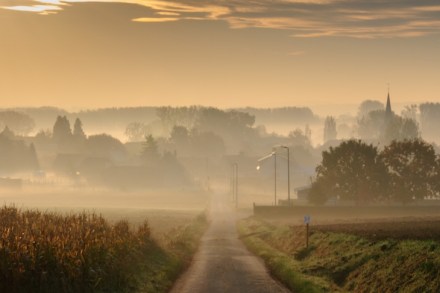
Peace came dropping slow. I have never regarded west Flanders as part of la France profonde, but here we were, only a few miles from Lille, in the depths of tranquillity. Earlier in the summer, there had been an excitement. An enormous wild boar had erupted into the garden. Our host shot him, and excited littlies promptly renamed their grand-père: Obelix. I had entertained Yves at a club table. His reciprocity was embarrassingly more generous than his excuse for it. Inevitably, the conversation meandered into politics. The house had a complex history. Vauban is said to have billeted himself there before fortifying Lille. It suffered some damage in both world wars. The family lost relatives during that cruel necessity, the Allied bombing of Normandy to expedite D-Day.

Letters | 16 August 2018

From our UK edition

Boris mishandled Sir: Your editorial ‘Bravo Boris’ (11 August) suggests that the treatment meted out to Boris Johnson by the Prime Minister and the party chairman makes a leadership challenge more likely. That is correct. This duo have demonstrated a breathtaking lack of political sophistication. Not only have they promoted Boris Johnson’s chances of the leadership, but they have also diverted the media spotlight from the Labour party’s very real anti-Semitism to a fictitious Tory party Islamophobia. Mr Johnson plainly argues a position that is more liberal than those of many European governments, including those of Denmark, France, Belgium and Germany.

That woman’s got me drinking

From our UK edition

It is enough to make a man turn to drink. On a distinctly non-abstemious day, I was sitting in one of my favourite places on earth. It is not a great garden, merely a characteristically English one: roses, benign verdancy and the joyous sunshine of gentle summer. My dear friends have just finished restoring their late medieval house. It is not a great house, merely a classically English one. Chillingham Castle, the Wakefield family’s seat in Northumberland, which resplends in grandeur, was described by Walter Scott as bearing the rust of the Barons’ wars. This place, by contrast, is more a case of the gentle patina of manorial peace over long centuries. You feel that if you caught the house off guard, it would be smiling at its latest owners’ enjoyment.

How to infuriate the French

From our UK edition

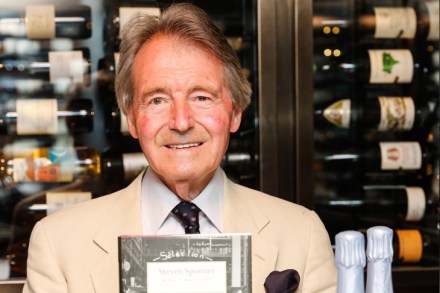
Fine wine rarely makes it into the public consciousness, but one event in 1976 has proved of perennial interest: the so-called Judgment of Paris. It heralded the arrival of wine from the New World, but also tapped into popular prejudice. Who can resist French wine snobs being made to look foolish? So these memoirs by Steven Spurrier, the man behind that notorious tasting, have been keenly anticipated. It was a glass of 1908 Cockburns port that Spurrier tried at the age of 13 that sparked a lifelong interest in wine. Rather than go to university, as expected, he worked in the cellars of a wine merchant, Christopher’s, in Soho. In his early twenties he inherited £250,000 (the equivalent of £5 million today) when the family gravel business was sold.

Farewell to wine every day

From our UK edition

Are there still travelling fairs? In many villages, they used to be part of the annual round. For weeks, the children’s anticipation would mount. Then the great day would come. Clowns, dodgems, candy floss: in those day no one knew about sugar-rushes so the brats grew delirious with excitement while the parents enjoyed themselves more than they let on. Does all that still happen – or do you have to go to Boris Johnson’s office for a similar spectacle? On a smaller scale, I entertain my friends about once a year with a fantasy which does not require so many props. It is called the Anderson diet fair. I announce my determination to lose weight and my audience responds with unalloyed scepticism.

Hungarian rhapsody | 26 April 2018

From our UK edition

The wines of Tokaji run like a golden thread through Hungarian history. There are references to their nectar-like quality in the Hungarian national anthem. Imperial Tokaji, the world’s sweetest wine, has always been prized. As its name implies, much of it found its way to the Habsburgs’ cellars. Emperors often used it as birthday or Christmas presents for fellow monarchs. So I was delighted to taste some non-imperial bottles over dinner at the Hungarian embassy, courtesy of that impressive fellow Kristóf Szalay--Bobrovniczky, the ambassador, a good friend of President Orbán’s. Mr Orbán is much demonised. Along with President Trump and Brexit, he is seen to be a threat to the Fifth International: the pseudo-liberal bureaucratic one.