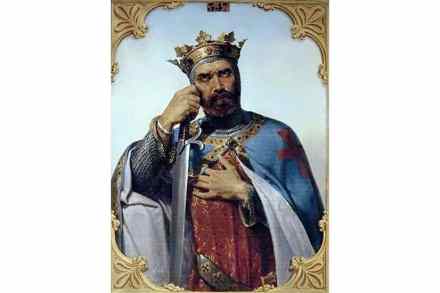
William the conqueror

The wonder of the Bayeux Tapestry

How the Froggies must be laughing. Such a gracious loan. So kind. Like England lending Henry V’s longbows to the Louvre – or sailing HMS Victory up the Seine. Well, let them titter. The Tapestry is home. Nothing else matters. Likely sewed in Canterbury in the 1070s, before being sent across the Channel, it has only ever left Bayeux twice before. In 1803, when Boney was contemplating a pop at the White Cliffs, he displayed it in Paris. (After Trafalgar, it was quietly returned to Normandy.) Then, as the Nazis were retreating from Operation Overlord, it was taken for safe keeping to the cellars of the Louvre and, in late 1944, only weeks after Paris’s liberation, placed on public view. Today’s minibreak from Bayeux comes in rather happier times.

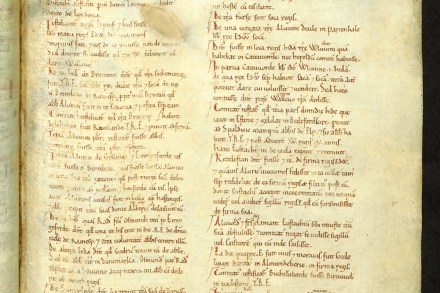
The horror that emerges from the columns of Domesday Book

From our UK edition

The opening of the British Museum’s The Bayeux Tapestry exhibition is not far off now. In early July, a bright yellow truck transported the tapestry from France via Eurostar, arriving in London under cover of darkness. With George Osborne, chair of the museum, posing as the symbol of a new entente cordiale, the display is being hailed both as a diplomatic triumph and as the blockbuster exhibition of a lifetime. Soon many thousands will have the opportunity to experience what Max Adams in his new book describes as this ‘dazzling, cinematic, embroidered strip cartoon’. Speculation that the tapestry (actually an embroidery on linen) is missing a final scene is probably correct.

From pirates to princes — the heroic transformation of the Normans

From our UK edition

The Normans had an astonishingly good run. Not only did they take over England in 1066, of course, but they also triumphed over the Muslims, establishing themselves in southern Italy and founding a principality in the Near East. William the Conqueror’s is one of the most famous names from Europe’s Middle Ages, but the achievements of Robert Guiscard were nearly as astonishing: leaving Normandy with five knights and 30 infantrymen, he became Duke of Sicily, Apulia and Calabria. Meanwhile, his son Bohemond was one of several Norman heroes of the First Crusade, and rose to become Prince of Antioch. These military successes did not surprise contemporaries.