William Boyd

How Queen Camilla is spreading the joy of reading

Queen Camilla loves a book. Almost any book will do. "There’s something so tactile about a book," she says. "I like the smell of the pages when you open the cover. I like turning the pages and folding down a corner ready for next time…" The Queen, 78, has loved books for as long as she can remember. She says her father, Bruce Shand, inspired this lifelong passion: "He read to us as children. He chose the books, and we listened. He was probably the best-read man I’ve come across anywhere. He devoured books." Bruce Shand was a soldier. His father was a writer, about architecture, food and wine. His father was another writer, who, incidentally, was briefly and secretly engaged to Constance Lloyd, who went on to marry Oscar Wilde. This is a family with literary leanings.
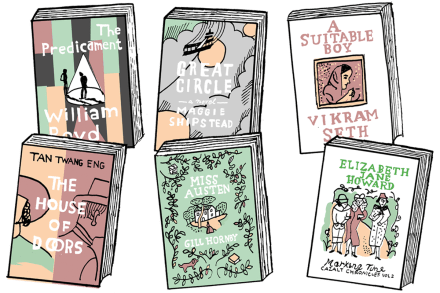
Queen Camilla’s recommended reading list

As Christmas approaches and we wrack our brains to find something that suits everyone, there is no present quite like a book. Whether it’s an unputdownable novel, a heart-stopping crime series, a thought-provoking biography or a collection of beautiful poetry, a book provides an escape, the perfect antidote to the hurly-burly of everyday life and, above all, hours and hours of pleasure. Here are half a dozen of my favorites, previously recommended on my Queen’s Reading Room, which you might like to add to your Christmas present list… or (if preferred) keep for yourself! The Cazalet Chronicles by Elizabeth Jane Howard This is a series of books that I return to again and again, to reacquaint myself with the irresistibly charming Cazalet family.

William Boyd’s latest novel is a smoothly gripping read

Gabriel’s Moon is William Boyd’s eighteenth novel, swiftly following last year’s The Romantic, which delightfully described the adventures of a man living through the nineteenth century in Europe. Though Boyd relates a smaller section of his new hero’s life here, many of his characteristic themes are fully at play: surveillance, deception, honor, love, art, fraud, real historical characters jostling with fictional ones, and relationships between mothers and sons. Essentially, this new book is a spy story, well within the lineage of John le Carré (complete with liberal ambivalence about duty to one’s country), and with skillfully handled layers of double-dealing.

Boyd

The Spectator’s 2024 Books of the Year

William Boyd It makes grim, compelling and minatory reading, but Hitler’s People (Penguin, $35) by Richard J. Evans is not only the only book you ever need to read about Nazi Germany but a salutary example of what happens when crazed populist leaders win power. Twenty-two short portraits of the key players and lesser apparatchiks of the Nazi years manage to encompass the whole history of the Third Reich and its baleful legacy. Evans’s hundred-page chapter on Hitler — the “Boss” — is masterly. Evie Wyld’s fourth novel, The Echoes (Knopf Doubleday, $28) with its edgy and moody supernaturalism (the narrator is a ghost) establishes her growing reputation as one of our finest young writers.

books
Chaplin

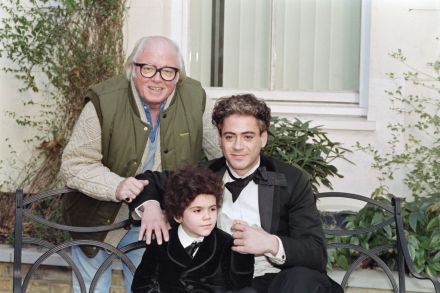
The ups and downs of making Chaplin

The commission Thirty-four years ago, in the summer of 1990, I had a call from my Hollywood agent, Geoffrey Sanford. Lord Richard Attenborough, the film director, would like to meet me to discuss a project. I said “Yes, please,” instantly. The timing was good — I had delivered my fifth novel Brazzaville Beach to my publishers and was awaiting its autumn publication. I met Dickie, as everyone called him, with his co-producer and right-hand woman, Diana Carter, in Blake’s Hotel in west London. The subject of the meeting was a proposed film of the life of Charlie Chaplin, a passion project of Dickie’s. But there was a complication. A script had already been written by Dickie’s old friend, the actor-director-producer Bryan Forbes.

William Boyd’s latest novel is immense fun

William Boyd is perhaps best known for his novel Any Human Heart, which charts the adventures of Logan Mountstuart throughout the twentieth century. Mountstuart marries well, divorces, annoys the Duke of Windsor, is imprisoned, becomes an art dealer in America and has sundry diverting escapades. It’s a warm, impassioned and involving narrative, and Boyd winningly returns to a similar formula in his latest book, The Romantic. The prologue presents The Romantic as a fictionalized biography, reconstructed from notes and maps left behind by its subject. All biography, says Boyd, is by its nature fictional.

Boyd