White fragility

The trouble with ‘white privilege’

This article is an excerpt from Kenan Malik's new book, Not So Black and White: A History of Race from White Supremacy to Identity Politics. In 1935, while writing his masterpiece Black Reconstruction in America, W.E.B. Du Bois pondered the question of why, in the wake of the Civil War, there had not developed working-class solidarity across racial lines. “The South, after the war,” he observed, “presented the greatest opportunity for a real national labor movement which the nation ever saw or is likely to see for many decades.” Yet, he lamented, “the labor movement, with but few exceptions, never realized the situation.

white privilege

Who needs therapy?

If you pull up Twitter and search for “men will therapy,” you’ll find an endless scroll of jokes, many quite funny, about the things men will do before they go to therapy. There’s one for every current event: “men will buy twitter before going to therapy.” And after Samuel Alito’s draft Supreme Court decision was leaked: “Men will overturn roe v wade before going to therapy.” As with any ironic internet utterance, there are multiple layers here. The (genuinely useful!) website KnowYourMeme.com believes that Tweeter Zero for this meme is someone named @SpencerKlavan, who wrote “Men will literally defend an entire civilization from ruin in two world wars, start and provide for a family, produce masterworks of art and culture, and then just NOT go to therapy smdh.

therapy

Identity crisis: how the politics of race will wreck America

This article was originally published in The Spectator’s July 2021 World edition.  The American experiment is fragile. It has always been fragile and always will be fragile because it is so extremely unnatural. ‘Unnatural’ in this context means in conflict with human nature. Jonah Goldberg has described the fragility of the American system by comparing it to a garden hacked out of a tropical jungle. A garden surrounded by jungle is unnatural. The gardeners must tend it with unremitting care lest the jungle return. Treating our fellow human beings as individuals instead of treating them as members of groups is unnatural. Our brains evolved to think of people as members of groups; to trust and care for people who are like us and to be suspicious of people who are unlike us.

race

Purple podcasters

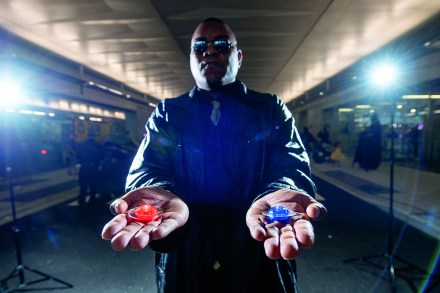
You’re familiar, no doubt, with the term ‘red pill’, the Matrix-inspired metaphor that’s become a catch-all for the type of right-wing thinking that thrives in the dark corners of the internet. Now the journalist Katie Herzog, in an admittedly tongue-in-cheek comment, might well have given us a new term: the purple pill. To take the purple pill, inferring from Herzog’s outlook, is to oppose the dangerous excesses of identity politics, but also the reactionary extremes of the red-pillers. This is, simply, a compromise — or the kind of terminally sensible position that shouldn’t need corny movie metaphors in the first place. But you see her point.

purple pill katie herzog

Gretchen Whitmer’s white fragility

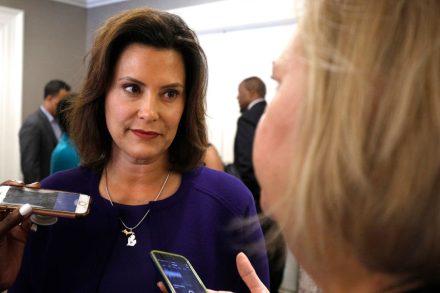
Let’s face it: under the best of circumstances governing is a tricky and difficult task. This is particularly true in a democracy such as ours with its clashing interests, roiling ideological divisions, partisan passions, and a system of government that often places rank amateurs in charge of career civil servants. This is not a recipe for sound decision-making. Perhaps that explains why Gov. Gretchen Whitmer is mandating implicit bias training for all Michigan healthcare workers in the middle of a pandemic?Even for experienced politicians genuinely motivated by the common good, 2020 has offered up daunting challenges. The arrival of COVID-19, the teetering instability of our economy, and a ratcheting up of racial divisions would cause a seasoned professional many a sleepless night.

gretchen whitmer
utopia

Silence isn’t violence

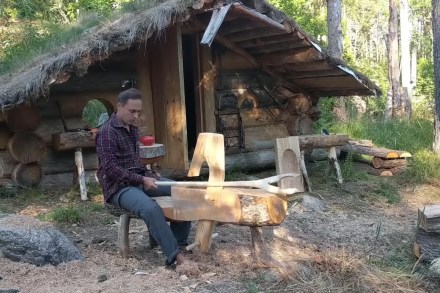
In the evenings, when I want to relax, I watch a Russian named Max build a log cabin. Max is, I suppose, a YouTuber. The log cabin is found on the remote shores of Lake Ladoga, the largest freshwater lake in Europe. The lake was created 40,000 years ago, when a meteorite made landfall between what is now St Petersburg and the Finnish border. Max is a lawyer but his videos are about bushcraft. Years ago he bought a parcel of land near the lake and became a slavic Robinson Crusoe. His dispatches have names like 21 Days Alone in The Northern Wilderness and Two Chainsaw Secrets and Bear-Proofing My Log Cabin. I did not seek Max out. I left YouTube playing and returned to find him on screen, calmly narrating the day he built an overflow valve for his dam.

Let’s ignore online petitions

Another day, another ‘racist’ branding faux pas erupts. Social media goes into overdrive. Legacy media is baited to join in. Somewhere in the middle of the news cycle, the company offers a banal apology, a withdrawal of the offending product in question, followed by a generic pledge to Do Better™. The corporate ritual is by now familiar —  and since Black Lives Matter plunged the country into an orgy of activism, it occurs at impressive speed.

trader joe’s petitions

Forget White Fragility: here are 10 books America should be reading about race

This extraordinary summer of protest and upheaval has sparked the most pervasive and sustained interest in the question of what it means to be black in the United States that I have witnessed. The American people, it can be said in all earnestness, are finally having that proverbial ‘national conversation’ on racism. And yet, one of the more fascinating consequences thus far has been the emergence of White Fragility, a text written by the Italian-American academic and corporate consultant Robin DiAngelo, and How to Be an Antiracist, by the historian Ibram X. Kendi, as the two most sought after (by a wide margin) explanatory aids for understanding our moment. Both books posit race — and racial difference — as something real and practically essential.

Anti-Semitism