Westminster

On Syria, parliament has voted to have no policy at all.

From our UK edition

A muddle and a cock-up. For all the talk of parliament reasserting itself, last night's vote on Syria showed a parliament that voted, twice, to oppose actions it actually supports. David Cameron has been humiliated but this was hardly a banner day for Ed Miliband either. The House of Commons has, for now, cut off its nose to spite its face. Perhaps surgery can repair the damage. Perhaps it can't. Because the longer and more deeply one contemplates yesterday's events the more evident it seems that there were no winners. The government motion was defeated. So was Labour's amendment. Since these motions were, in essence and in most practical respects, identical one wonders what on earth has happened.


Syria is not Iraq (but at least the Iraq War had a clear objective)

From our UK edition

A decade ago, I was sure that going to war in Iraq was the right thing to do. I persisted in that belief for a long time too, well beyond the point at which most supporters of the decision to remove Saddam Hussein from power had recanted their past enthusiasm. The link between 9/11 and Iraq was quite apparent. Not because (despite what some mistaken people insisted) Saddam had any involvement in the atrocity but because removing tyrants and dictators seemed the best way of spreading the pacifying forces of commerce and democracy that might, in time, render Islamist extremism and terrorism obsolete. Why Iraq? Because it was there and because it could be done. Besides, there was unfinished business. Not just from 1991 but from 1998 and Operation Desert Fox as well.

Is Ed Miliband a) hopeless, b) on course to become Prime Minister or c) both?

From our UK edition

I have never quite understood Ed Miliband's appeal. He always reminds me of Cuthbert Cringeworthy from The Bash Street Kids. I find it hard to imagine him becoming Prime Minister. Something just feels wrong about that. I'm not alone in wondering about this. Brian Wilson, the former energy minister, wrote yesterday that Miliband still has a kind of credibility problem. People just don't think he's quite ready for the top job. They may not be able to say exactly why they're unimpressed by Miliband; they just know they are. Not so fast my friend, responds John McTernan today. Ignore all the chattering and blethering about Labour's slide in the polls and focus on the core picture: Miliband is still likely to be leader of the largest party after the next election. Everything is fine.

When party leaders depart from the script, all hell breaks loose

From our UK edition

It is within the experience of even the humblest of MPs that those who oppose what you do will berate you with a great deal more passion than you will ever attract from those who support your plans. Any help you can give may be treated by its beneficiaries as no more than your duty; but the people on the other side will treat your unhelpfulness as a massive personal injury. And if this is true of minor political players, how much more is it true of serious policymakers. As the second Lord Falkland remarked on losing a bill in the upper chamber because not all his supporters had bothered to turn up at an evening sitting, ‘Those who hated it hated it worse than the Devil; while those who loved it loved it not more than their -dinner.

Councils need to reform, not bemoan their lack of money

From our UK edition

We know that local government is looking at a 10% reduction in today’s Spending Review. So the traditional game played by some councils of bemoaning the lack of money is even more pointless than usual. It’s now down to us as local authorities to behave differently when it comes to delivering services, and that covers everything from social finance schemes to early intervention on troubled families. The government has done much in recent years to drive forward public service reform, but today will make it still clearer that we can’t take our foot off the gas.

The Mike Hancock imbroglio

From our UK edition

Mike Hancock last night resigned the Lib Dem whip to fight a court case that includes serious allegations about his conduct. He resigned after a meeting with the chief whip and the party's deputy leader Simon Hughes about the claims, which he strenuously denies. A party spokesman said last night: 'Mike Hancock strenuously denies the allegations made in the civil case and intends to clear his name in court.' But as The Spectator reported, the party has been aware of allegations about Hancock's behaviour for a number of years.

A register of lobbyists has nothing to do with “clean” politics; it’s about protecting stupid MPs

From our UK edition

So, just so we're clear about this: people pretending to be lobbyists appear to be able to persuade parliamentarians to do their bidding (for cash, natch) and this therefore justifies introducing a statutory register of lobbyists. You need no diploma in cynicism to perceive that this is aimed at protecting stupid and greedy politicians rather more than it is a serious attempt at "regulating" lobbying or access to politicians. It's a means of helping MPs avoid embarrassment. Now they can check to see if the people paying them are real lobbyists! Result! Which is fine (and the coalition gains bonus Urquhart points for using the measure to stiff the Trades Unions too). But let's not pretend that it's actually about "cleaning up politics".

Primaries and recall elections may be nice ideas, but they won’t transform British politics

From our UK edition

Say at least this for those twin gadflies Douglas Carswell MP and Daniel Hannan MEP, they are optimists in a political scene often dominated by a certain brand of dreary pessimism.  Their faith in the bracing refreshment of a reformed democracy is as palpable as it is touching. Their article in today's Telegraph, repeating their long-pressed arguments for open primaries and recalling errant MPs. Neither idea is without merit. Even so, it is hard to avoid the suspicion that neither measure would have quite the transformative impact Messrs Carswell and Hannan suggest. They argue, for instance, that open primaries would put an end to safe seats. And they insist that introducing the power of recall would reduce the likelihood of parliamentary corruption.

The Speccie at the heart of Ed Miliband’s operation

From our UK edition

‘Red Ed’ invited the great and good of the media into his Westminster den for hummus and natter last night. No one knew what they were celebrating. Poor local election results? His rescue of a cyclist? Christmas? Who cares; no hack ever passed up a free drink. Ed glided through the room, flirting with friend and foe in an easy manner that does not translate to television. And, unlike Cameron and Clegg, Ed is not one for an early bed. He stayed right to the bitter end, even after the wine and beer had dried up, just as he did at last year's Spectator summer bash. Incidentally, the Labour leader has a soft spot for The Spectator. There, on his is desk, in pride of place, was our Parliamentarian Award.

The Philpott case is horrific; so is the attempt to hijack it for any political purpose

From our UK edition

The sorry truth of the Philpott case is that almost nothing can be learnt from it. Everything would be so much simpler if there were clear public policy conclusions that could be drawn from the horrors of this case. But there are not. How could there be if we're expected to mine a case like this for meaning? It is almost always a mistake to draw firm conclusions from extreme examples of any given phenomenon. The perils of the small sample size should be well enough understood by now to make this clear. It is even dafter to presume too much on the back of a monstrous case such as this. A recap: Mick Philpott had spawned no fewer than 17 children by at least five different women. He did not work. Instead his family relied upon the safety net.

Cameron’s Gay Marriage Victory Showed Him As A Real Leader – Spectator Blogs

From our UK edition

And lo, the battle for British Gay Marriage was in fact a rout. True, half the parliamentary Conservative party voted against the measure. True too, this is now being considered further evidence that David Cameron's leadership skills - or, rather, since they are not the same thing - his party management skills are less than they might be. But, for once, I think focusing on Tory divisions misses the rather bigger, simpler story. Nearly half the Conservative parliamentary party endorsed gay marriage in the House of Commons. And they did it on a free vote. That is quite a thing.

Talk of a leadership challenge to David Cameron is reckless self-indulgence – Spectator Blogs

From our UK edition

For reasons I do not wholly understand, Labour partisans appear reasonably pleased with Ed Miliband. Liberal Democrats may not be especially gruntled with Nicholas Clegg but they do appear to appreciate that there's little point in changing leader now. Which brings us to the Conservative party. And there we discover madness aplenty. Again. For it seems as though more than 50 Tory MPs are sufficiently dissatisfied with David Cameron's leadership that they think a change of leader something worth considering before the next election. This, for all the reasons Robert Colvile suggests and many more he doesn't, would be folly. Madness. Lunacy. Proof that the party is unfit for office. Whatever his shortcomings there are only two things that really matter here: 1.

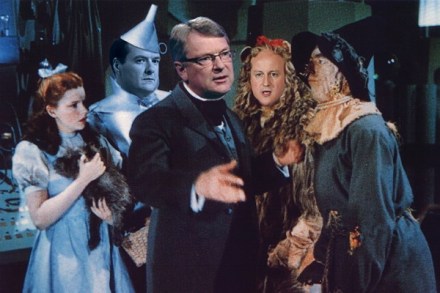
Follow Lynton’s yellow brick briefing

From our UK edition

The benefits debate in Westminster will rage on long after today’s vote in the Commons. It’s not just a straight row between the government and opposition over who is really on the side of hard working people, nor is it just a debate within the two governing parties. It seems that divisions are now opening in the higher echelons of the Tory machine over just how hard to push the rhetoric. More outspoken MPs — like Dr Sarah Wollaston — have taken to the airwaves to decry the term ‘scroungers’ and ‘skivers’, but most surprisingly even Lynton Crosby, who Labour are desperate to paint as a rather rash and extreme antipodean, is calling for things to be toned down. Or at least that’s what someone told the Fiancial Times.

The death of principle

From our UK edition

If you only have time to read one full length newspaper piece today, read this one by George Bridges, the former backroom Tory guru and CPS director. It is a brilliant, scathing meditation on the damage caused by the professionalisation of party politics. And, of course, it is a humble confession. If I had to pick one quotation from it (and there are many possible choices), it would be this one: ‘Opinion research is critical in politics, but only if it is used to tell a politician how to communicate, not what to believe – a point Lynton Crosby, the election guru who will advise the Tories’ 2015 campaign, repeats ad infinitum. It provides a map and a compass, but the leader must set the direction.

Goodbye Nadine Dorries, hello Louise Mensch

From our UK edition

Let me salute Nadine Dorries's principled ambition to bring I'm A Celebrity Get Me Out of Here to a wider audience. For too long this edifying documentary series, which sheds light on the concerns of real voters, has been closed to Westminster’s lumpen commentariat; but no more: by inviting Nadine on the show, ITV has signalled its intention to stop treating MPs, lobbyists and political hacks as if they don't exist. We do exist and we'll be following our plucky heroine as she meets the challenges of the rainforest. We'll be voting as well. (Many times, of course: fixing polls is one of our specialities.

Writing the Tory Wars

From our UK edition

On starting a new job at Westminster in the early 2000s, and despondent about my party’s lot, I began to write a political novel. Aspiring writers are told to write about the world around them, and, as an observer on the ‘inside’, there was no shortage of material. Gloom and frustration hung heavily in those days. The standard question was: why the hell aren’t we in government and whose fault is it? The Duncan Smith leadership was evidently doomed from the moment of its conception, but the ‘quiet man’ stumbled on to his inevitable demise. If the party wasn’t going to find a broadly appealing leader, I’d better write one instead.

Will David Cameron grant Northern Ireland control of corporation tax? – Spectator Blogs

From our UK edition

Monday morning in dreich late October. What more appropriate moment to ponder the questions of corporation tax and Northern Ireland? The question of whether the Northern Ireland Assembly should control the rate of corporation tax payable in the two-thirds of Ulster for which it is responsible won't go away, you know. Nor, despite the fact that the London press has paid little attention to it, is this some local matter of no importance to the rest of the United Kingdom either. On the contrary, David Cameron's decision on this seemingly-arcane or merely local matter is more important than it seems and, in fact, one of the more significant questions demanding his attention right now.

Lady Thatcher’s advice on cross-party friendship

From our UK edition

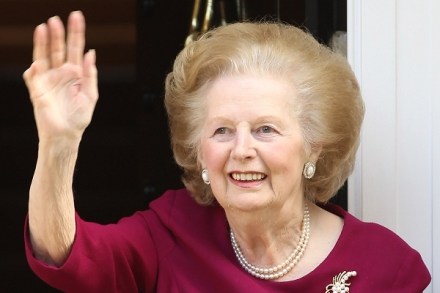
A big-tent turnout on Saturday evening for the fourtieth birthday of Conor Burns, the Tory MP for Bournemouth West. Burns, fresh from his heroic rebellion against Lords reform, packed the State Rooms of the Palace of Westminster with a big crowd of rising Tory stars and some old stagers including Lord Lamont and Sir Mark Thatcher. Burns is a close friend of Baroness Thatcher; and although the great Lady was unable to join, she did some send some pearls of wisdom in her place. Burns reported that when he had told Lady Thatcher that his friend and speech-giver Thomas Docherty, who has been Burns' voting pair since they both arrived in Westminster in 2010, sat on the opposition benches she replied: ‘Good, it means you can trust him.’ Sound words, as ever.

An endangered species

From our UK edition

Last night the BBC aired a brilliant horror-movie (viewable on iPlayer) called ‘Young, Bright and on the Right.’ It followed two young men, one at Oxford the other at Cambridge, trying to make their way in student Conservative party politics. One of the stories – of a young man from a one-parent family in Yorkshire whose father had been in prison – was genuinely interesting. Rather than being happy about himself and his background, he had become someone else. Though he presented this as being essential in order to get on in Conservative party politics, I am not certain he was right. Having never been involved I can’t say for certain, but it does occur to me that William Hague, for instance, never lost his accent.

Campbell vs Iannucci, round two

From our UK edition

Professional funny chap Armando Iannucci is laughing it off his recent internet showdown with Alistair Campbell. Sky lobbyist extraordinaire Lucy Aitken has been doing wonders to repair the reputation of Murdoch spinners. Last night, she treated an assembled crowd of hacks and flacks to a boozy preview of Iannucci's ‘Veep’ — the American ‘Thick of It’ spin off — in Parliament last night. In conversation with press pack doyen Tim Shipman of the Mail, Iannucci, the brains behind Steve Coogan, settled the score with Campbell to a very safe crowd: ‘I woke up on Saturday morning, had a bit fun with two tweets and he is still going. It's two tweets. My mum rang me really worried.