West Bank

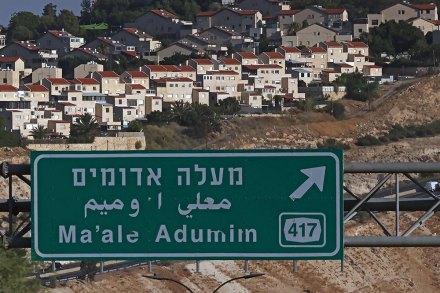
The Israeli settlements lie

From our UK edition

There are few phrases in international affairs repeated with greater confidence or subjected to less scrutiny than ‘illegal Israeli settlements’. It appears in UN resolutions, government statements, NGO reports and news bulletins as though it were an established fact. Add the words ‘under international law’ and apparently further discussion becomes unnecessary. The trouble is not just that this is political rhetoric masquerading as law, but that it is in fact contrary to real international law, properly applied. The claim rests upon a series of propositions about Israel’s borders, the legal nature of occupation and the meaning of provisions of the Fourth Geneva Convention, propositions which have hardened into orthodoxy through repetition.

Stop moaning and do something: the active vs the passive voice

From our UK edition

The Jamaican-American poet and essayist Claudia Rankine won a slew of prizes for her book Citizen (2014). Her blend of emotive prose and personal recollection helped many people understand the challenges of being black in the US, where the experience is qualitatively different to that in the UK – a subject explored with erudition by the Nigerian-British writer Tomiwa Owolade. The murder of the unarmed teenager Trayvon Martin, along with those of George Floyd and Breonna Taylor, made headline news; but many more casual examples of racism or double standards occur every day. In the Netflix true crime documentary The Perfect Neighbor, a white woman in 2023 makes constant complaints to the police about her innocent black neighbours and eventually shoots dead a black mother of four.

Why Britain’s West Bank sanctions are savvy politics

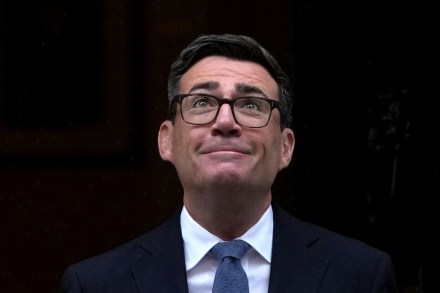
British PM Andy Burnham’s move to impose sanctions on West Bank settlements is politically savvy – but not because it will achieve his purported aim of advancing a two-state solution. For one thing, the impact in Israel will be minimal. Ed Miliband was clear that the new sanctions regime will target those “providing services such as construction or financing for Israeli settlements,” while trade within the Green Line will continue. Yet the principal providers of such services to the settlements are Israeli banks, major companies and the Israeli government itself. Short of Miliband sanctioning them, the policy is unlikely to achieve much. The economies of the West Bank and Green Line Israel are completely intertwined.

west bank sanctions

Inside the ‘next Gaza’

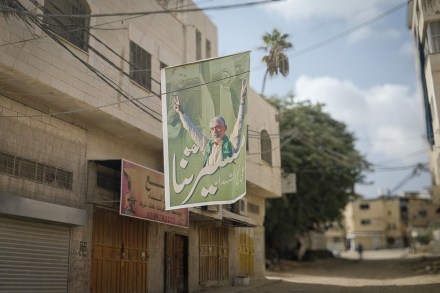
West Bank It’s hard to take someone seriously when they tell you: be extremely careful, that part of the West Bank is just like Gaza now. Hyperbole, surely, but duly noted. It was late August and I was heading to the Tulkarem and Nur Shams refugee camps, two adjacent Palestinian communities in the northern occupied West Bank which are now the site of almost daily fighting between the Israeli military and Palestinian armed groups. The nearby city of Jenin has seen even worse violence. On the approach to Nur Shams, the landscape suddenly turned from an impoverished yet benign Arab countryside into a full-blown urban war zone. Dust filled the air, Hamas propaganda was plastered all around, an Israeli drone circled above us.

Gaza

A Third Intifada looms in Israel

From our UK edition

Peace has never seemed further away for Israel, the West Bank and Gaza. Several dreadful incidents recently have made that point sadly obvious. The most vicious was a terrorist attack: a horrific shooting in which seven people were killed and many injured outside a Jerusalem synagogue on Friday. We don’t know the organisational affiliation of the attacker, Khairi Alqam. He could have been Hamas. He could have been Islamic Jihad. None of those organisations claimed this attack. Some observers – on the basis of speculation, or possibly evidence not in the public domain at the moment – believe that he was a member of the Islamic State. What we know for sure is that this was a dreadful crime – one which shocked the world.