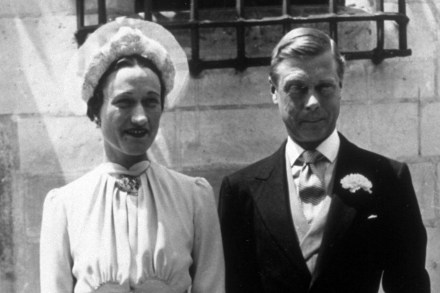
Wallis simpson

Streamlined chic or lacy froth: royal style wars of the 1930s

The semiotics of clothes, especially royal ones, can be fascinating, sending out powerful messages. Think of the jewel-studded, pearl-strewn portraits of Queen Elizabeth I or Princess Diana’s revenge-chic black dress. As a fashion queen herself (Justine Picardie was editor-in-chief of Harper’s Bazaar for more than seven years and has an acclaimed book on Chanel under her belt), no one is better placed to unpick the subtleties of royal public couture. So, judging by this book’s title, I was expecting a shrewd analysis of diplomacy dressing, with perhaps some behind-the-scenes vignettes. What happens if a royal lady unexpectedly gets a ladder in her tights at a crucial moment? Is there a colour code if three of them are out together? How do hats stay on in a gale?
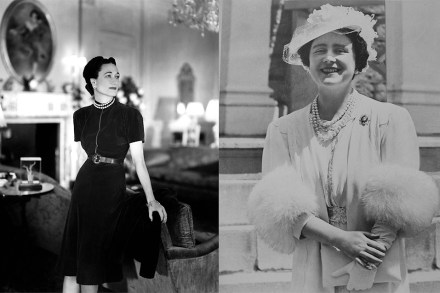
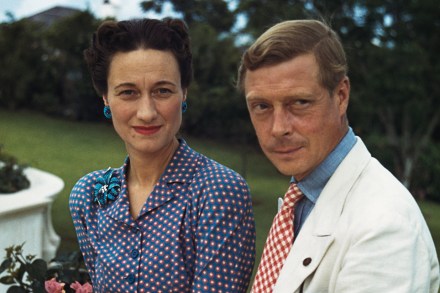
The Duke of Windsor had much to be thankful for

From our UK edition

Once a King is trumpeted as ‘game-changing’, a ‘trove of never-before-seen papers which shed fresh light on the maligned Duke of Windsor’ and will ‘turn on its head long-accepted stereotypes’ about him. These are bold claims, but do they stack up? ‘The lost memoir of Edward Vlll’ actually consists of an early draft of the Duke of Windsor’s self-serving memoir, A King’s Story (1951), which Jane Marguerite Tippett found in the papers of the former king’s ghostwriter Charles Murphy in the Boston University archives. Far from being lost, the papers have been known to historians for 20 years and largely ignored in favour of more important collections elsewhere, not least the Murphy papers at the Virginia Historical Institute, of which Tippett seems unaware.

The king and queen who saved the British monarchy

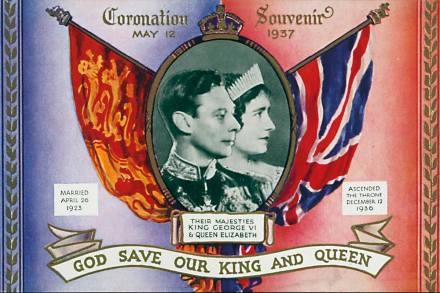
In some ways, the world of George VI and his consort Elizabeth, the future Queen Mother, from 1936-52 was very different from how we envision that of today’s British royal family; its rituals seem to belong to an era of Jurassic antiquity. In George’s day, Britain was still a global power, and its monarch ruled over both an empire and an elaborate court system with a “Page of the Backstairs” and a “Yeoman of the Pantry” — not to mention a fully staffed, oceangoing yacht — at his disposal. His coronation in May 1937 was as protracted as that of any maharajah. The Edwardian braid and sashes on display during more recent military pageantry look sadly Ruritanian by comparison. In other ways, their lives resonate more clearly with our own.

George queen

Paris: the place to be as a royal in exile

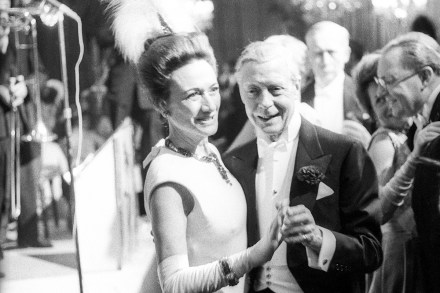
When rulers are thrown out of their countries, they cannot expect all that much. Think of Napoleon, first cooling his heels in Elba, then ending his days in the damp-infested confines of Saint Helena. Which is why the former Edward VIII, later the Duke of Windsor, was comparatively fortunate that the Parisian spot in which he found himself living after his abdication in December 1936 was Le Meurice in Paris: then, as now, a hotel that offers not only glitteringly luxurious accommodation to its well-heeled denizens, but a tangible sense of history — its lavishly appointed suites and restaurants exude an atmosphere that’s simultaneously relaxing and conspiratorial. Turn an unexpected corner, and you half-expect to see the ghost of Wallis Simpson, barking orders at some hapless minion.

Paris

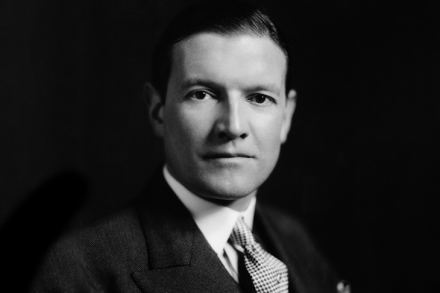
Chips Channon’s diaries can read like a drunken round of Consequences

From our UK edition

Most of the grander 20th-century diarists had a sniffy air about them, looking down their noses at everyone, particularly each other. Henry ‘Chips’ Channon, so snippety in his own diaries, was sniped at in others’. James Lees-Milne thought him ‘a flibbertigibbet’; to Nancy Mitford, he was ‘vain and spiteful and silly’. Kenneth Rose confided to his diary that Channon was ‘a rather stupid man’. When the bowdlerised Channon diaries were first published in 1967, edited by Robert Rhodes James, Rose could not disguise his thrill at how badly they had gone down in his own smart set. At a ‘luncheon party given by Raine Dartmouth at her pretty house in Hill Street...

Aunt Munca’s murky past

From our UK edition

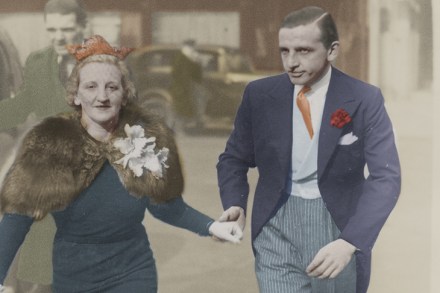
Kiss Myself Goodbye. It sounds a bit like a William Boyd novel. It looks likea William Boyd novel, too: the cover shows an old hand-coloured photograph of a fur-stoled woman, determinedly leading a man in morning dress towards the camera. And, indeed, the raw material would likely make a very good William Boyd novel — only Boyd would have to jettison at least half of the breakneck hairpin bends in the mad, mazy plot for the sake of believability. This could be the ultimate case of a tale too strange to be fiction. Ferdinand Mount has crafted the perfect, custom-made receptacle for his extraordinary story. The (anti)-hero is the millionairess Aunt Munca, self-named after the mouse in the Beatrix Potter story. It turns out to be just one of her many names and identities.

Edward VIII: Unlucky in love, or a Nazi-loving cad?

‘After I am dead, the boy will ruin himself within 12 months,’ King George V groused in his last days about his oldest son and heir, David, Prince of Wales. Never a particularly cheery fellow, by 1935 George V was worn down by a lifetime of non-stop smoking. His gloom might have been understandable, but it wasn’t universal, since he had nothing but good things to say about his second son, the stuttering Bertie. In the prescience that kings sometimes display about their successors, George V suspected that he was about to pass the imperial crown into unsteady hands. When the old king died in January of 1936, David, Prince of Wales became King Edward VIII. As Prince of Wales, he had been phenomenally popular, the House of Windsor’s first full-blown celebrity.

edward viii