Wallace collection

How Winston Churchill painted himself out of the darkness

From our UK edition

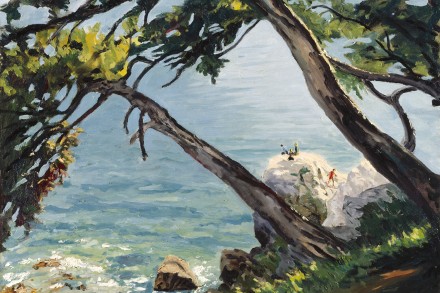
At Chartwell, Sir Winston Churchill’s home of 42 years, now owned by the National Trust, lies his painting studio. Reached by a path through the green-gold gardens, it is a standalone building with a little doorway and a soaring ceiling, clearly a place of refuge, and recreation, but also of serious commitment. The walls display a hundred or so paintings, lit by a big window that gives on to the garden and the purple horizon of the Weald of Kent; his armchair is set at the easel, near his twisted paint-tubes, housed in a former cigar humidor. His bespoke painting overcoat is flung over the armchair, his drink of ‘mouthwash’ (a splash of whisky and a lot of soda) set ready. It was here that Xavier Bray, director of the Wallace Collection, had his revelation.
Disney’s rococo roots

From our UK edition

Extensive research went into the writing of this piece. First, I lay on the sofa watching Disney’s Cinderella. Then, Beauty and the Beast. Then, because I’m assiduous about these things, Frozen. The singalong version. I wish I could tell you that the sofa was a rococo number with ormolu mounts and a pink satin seat, but that would upholster the truth. My excuse – who needs one? – was the Wallace Collection’s delightful exhibition Inspiring Walt Disney: The Animation of French Decorative Arts. It’s not often that I leave a show smiling, humming and near enough twirling my way through the West End. Bibbidi-bobbidi-boo.

The genius of Frans Hals

From our UK edition

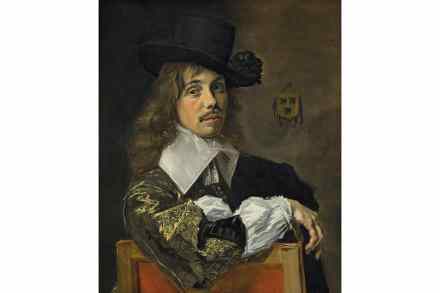
Since art auctions were invented, they have served to hype artists’ prices. It can happen during an artist’s lifetime — Jeff Koons’s ‘Balloon Dog’ — or half a millennium after their death — Leonardo’s ‘Salvator Mundi’. And it can sometimes restore a lost reputation, as happened with Frans Hals. When the picture now famous as ‘The Laughing Cavalier’ came up for auction in Paris in 1865, Hals was all but forgotten. A successful portraitist in his lifetime, he never made much money — with a wife and at least ten children, he remained a renter throughout his career — and after his death his reputation, overshadowed by Rembrandt’s, was tarnished by claims that he was a piss artist.

An immensely rich show – though it consists of only two paintings: Rubens at the Wallace Collection reviewed

From our UK edition

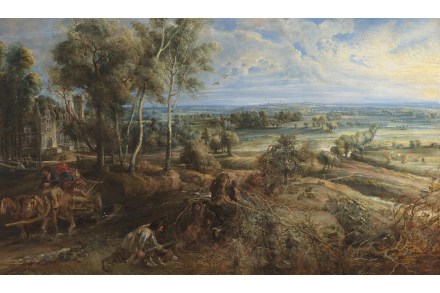
‘When pictures painted as companions are separated,’ John Constable wisely observed, ‘the purchaser of one, without being aware of it, is sometimes buying only half a picture.’ When he said those words at a lecture in Hampstead delivered on 9 June 1833, he had two great paintings by Rubens in mind: ‘A View of Het Steen in the Early Morning’ and ‘The Rainbow Landscape’. At that date they had already been split up, the first going to the National Gallery, the second eventually to be bought by the Marquis of Hertford. Because of the will of Lady Wallace, the eventual heir of the Marquis, or rather the way it was interpreted, the two have not been reunited since — until, that is, the current, marvellous display at the Wallace Collection.

The joy of socially distanced gallery-going

From our UK edition

Not long after the pubs, big galleries have all started to reopen, like flowers unfolding, one by one. The timing reminded me of an anecdote that Lucian Freud used to tell about a Soho painter friend he took into the National Gallery after it had shut (as some senior artists are entitled to do). They arrived after closing time in the drinking holes of Soho, and the painter friend was staggering and swaying so much that Lucian — who was not easily rattled — became alarmed that he was going to put one of his flailing arms through a Rembrandt. I wonder how those art-lovers of yesteryear would have coped with socially distanced visits. I think they may be an improvement, at least in some respects.