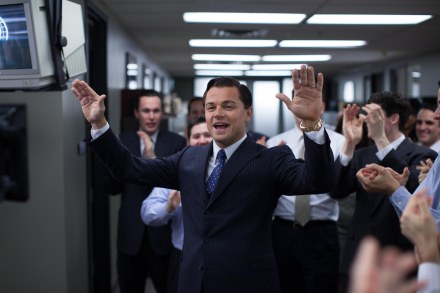
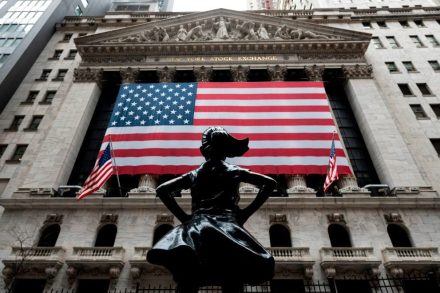
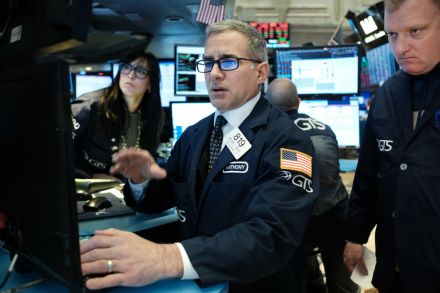
Wall street

Crucible’s complex picture

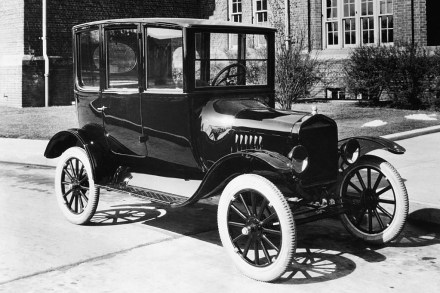
The beginning of Crucible, the writer and Oscar-nominated director John Sayles’s eighth novel, opens with a feint. A couple of journalists are taken for a mock-perilous test drive at the presentation of Henry Ford’s latest automobile. On their return, what starts as a humorous Q&A becomes increasingly restrictive as it becomes clear there is to be one narrative only: the company’s, or rather, the founder’s. This familiar combination of showmanship and control may feel ubiquitous now, but the audacity of Ford and the outrage he provoked was to change the face of American industry.

crucible

What happened to the great American IPO dream?

There is a dark but funny one-act play called No Exit by Jean-Paul Sartre, that gloomy, chainsmoking, wall-eyed French existentialist. The play is about three characters trapped in a room from which they cannot escape. No flames, no pitchforks, no brimstone – it turns out the afterlife isn’t the fourth circle of Hell, but a dinner party you can’t leave. Round and round these characters go, each demanding what the others won’t give. In the end, the worst punishment isn’t torture. It’s just being stuck. “Hell,” goes the famous line, “is other people.” Well, mon Dieu, we now have a sequel.

IPO

Who knew about Trump’s flip-flop?

As a piece of financial punditry, it could hardly be bettered. “THIS IS A GREAT TIME TO BUY”, screamed a post on the platform Truth Social on Wednesday morning. Hours later, the S&P 500 surged by 9 percent – its biggest percentage rise since 2008. The only trouble is that the tipster handing out this invaluable advice was the same man whose announcement caused the surge in the stock market: Donald J. Trump. Unsurprisingly, it has raised questions about who knew that Trump was about to do an about-turn and delay tariffs for 90 days – and whether any of them used the information to their personal advantage. Insider trading has long been treated as a serious issue among corporations.

shares

Who did Bill Ackman think he was electing?

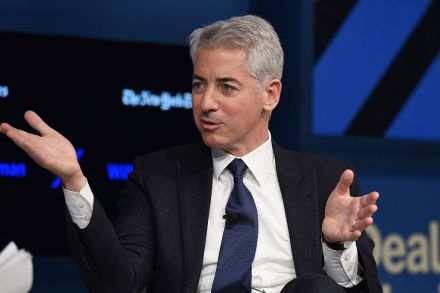
To take on America’s entire governing class and win, Donald Trump proved that he had an inhuman level of willfulness and sangfroid. Those are qualities that cut both ways, however, as the investor Bill Ackman is now discovering.  Wall Street has lost more than $5 trillion in value since the announcement of the new tariff regime last week, but Mr. Trump, speaking on Sunday on Air Force One, appeared deaf to all appeals. How big of a sell-off would the President be willing to endure, a member of the press pool asked. “I think your question is so stupid,” he replied. Many of Trump’s newfound admirers are panicking. Among them is Bill Ackman, manager of the hedge fund Pershing Square and a prominent Democrat defector in last year’s election.

Recession? What recession?

The stock market, traditionally a leading indicator, entered correction territory last week. But does that indicate that a recession is coming? Well, it’s an old saying on Wall Street that the market has predicted ten of the last three recessions. Markets hate uncertainty, and no one knows how President Trump’s efforts to use American tariffs to force our trading partners to lower theirs will turn out. But foreign trade is increasingly important to all countries, so it’s likely that, after some political Sturm und Drang, deals will be struck and international trade will continue the strongly upward path it has been on since the end of World War Two. By definition, a recession is two consecutive quarters of contraction.

shares

The safest bets in Wall Street will be our downfall

It’s not often that anyone — much less an academic — writes a book that launches a revolution, but that’s exactly what Burton Malkiel did in 1973 when the Princeton economist published a short, potent book called A Random Walk Down Wall Street. As of 2023, the book is in its thirteenth edition. Malkiel famously insisted that “a blindfolded monkey throwing darts at the stock listings could select a portfolio that would do just as well as one selected by the experts,” and then he spent his entire career doing his best to prove that hypothesis.

passive

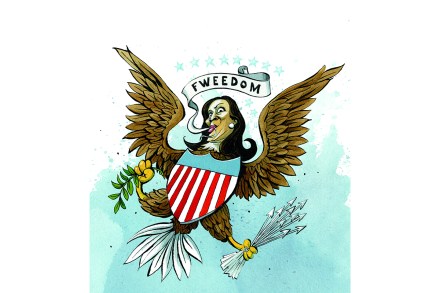
Wall Street wants Kamala. So do Republicans

Texas showdown Democratic congressman Colin Allred is mulling a run against Senator Ted Cruz, Cockburn has learned. No major Democratic candidates have announced yet, with the Castro twins, San Antonio Spurs coach Gregg Popovich and, of course, Beto O’Rourke considered to be names in the mixer. Allred, a former NFL linebacker and civil rights attorney, represents a Dallas district in the House and could steal a march on the field by jumping in early… Hung up on Hunter Cockburn got word from the newsroom of a popular New York tabloid this week, whose staff extensively covered the Hunter Biden laptop story.

kamalamania kamala wall street

The great anti-ESG backlash

For more than thirty years, Scott Adams has captured the absurdity and humor of office life in his popular syndicated newspaper cartoon strip “Dilbert.” The title character, an oblong-headed, cubicle-dwelling everyman, is one of the most familiar cartoon characters in America, but last September he vanished from more than seventy newspapers. Shortly before Dilbert’s partial disappearance, his opinionated creator had set his sights on ESG. Adams’s views on the vogue for “Ethical, Social and Corporate Governance” investment strategies weren’t exactly difficult to discern. In one strip, for example, Dilbert asks, “What is this ‘ESG’ thing I keep hearing about?

esg woke

A brief history of embarrassing economic forecasts

Many are familiar with the old aphorism that in real estate the three most important determinants of value are location, location, location. Things are a bit different in making economic forecasts and predictions, where two variables matter most: accuracy, of course, but also timing. Regarding accuracy: a lengthy list of economists — some quite eminent — have ended up with egg on their faces because of inaccurate predictions and forecasts. In this regard, there’s the observation by the distinguished economist Irving Fisher, 92 years ago today on October 16, 1929, that stock prices had reached 'what looks like a permanently high plateau’. Since the Great Crash occurred two weeks later, Fisher’s timing wasn’t so great either.

forecasts

The stock market isn’t the success story Trump thinks it is

COVID-19 is still raging, with little sign of coming under control. The economy is already a tenth smaller than it was at the start of the year. Joblessness is soaring. And the budget deficit? Don’t even ask. But, hey, perhaps we shouldn’t worry about any of that. As the President of the United States keeps pointing out, the stock market is doing great, and, in his opinion, anyway, that means America, to borrow the kind of slogan that fits neatly onto a baseball cap, is great again as well. There is a problem, however, with Trump’s breezy 21-character analysis. It is not really true. The main equity indices reflect many different things, and the health of the economy is not always one of them. https://twitter.

stock market

Coronavirus’s biggest victim? Money

The first victim of war, they say, is truth. The first victim of coronavirus, by contrast, is fiscal discipline. Yesterday, President Trump started negotiating with the Senate over a proposal to suspend payroll taxes, possibly until the end of the year. Wall Street certainly liked it: markets shot up by five percent. Whether future Americans will enjoy paying the bill is another matter. The government’s proposal is not just targeted help for a few industries like travel and tourism, which stand to lose out heavily as people stay at home. It is not a modest tax cut to encourage Americans to go out and spend a little more. Even to call it a 'stimulus package' — as these things are pat to be called — seems pathetically inadequate.

coronavirus money

Market hysteria is not all down to coronavirus

Is this really about a virus? Oil has plunged 30 percent, the S&P Index seven percent. What is happening on the markets today has less the feel of a rational reaction to world events than one of the periodic panics which grips world markets — with coronavirus a mere excuse for a sell-off which was perhaps coming anyway. The deadliest words for world markets are not ‘coronavirus’ and ‘Covid-19’ but ‘decade-long bull market’. The latter idea has planted in many investors’ heads that the good times could not have gone on much longer — there had to be a correction or crash. It is true, as well, that the US, in common with many developed countries, has not suffered a recession for over 10 years. That, too, feels unnatural.

market

Mass extinction

That the so-called Extinction Rebellion decided to spray Wall Street’s ‘Charging Bull’ statue with fake blood says it all. The protest group, which originated in Britain but whose protests have spread to New York, Washington and Chicago, is fundamentally an anti-capitalist movement. It is merely the latest incarnation of the antiglobalization and Occupy movements. While those groups gained little traction with the general public, Extinction Rebellion has discovered that by mixing up its demands with concern for the environment, it can win support — or at least a passing kind of support — from a much wider band of the population.

extinction rebellion

The Democrats’ phony war on corporate PACs

It is the other litmus test for Democratic candidates for president. As well as embracing Medicare for All, we know by now that the progressive 2020 runner must also oppose corporate political action committee (PAC) donations. What better way to show disdain for Wall Street and the big donors? Cory Booker didn’t need to make his pledge when he tweeted his hat into the ring this morning. He took the vow last year. So too Kirsten Gillibrand, Elizabeth Warren, Kamala Harris, Julian Castro and the rest. Some in that list don’t need to burnish their Leftist bona fides. But Booker, like Gillibrand, has centrist credentials (the horror!) and is frequently accused of being a Wall Street lackey. At one time he received more cash from financial institutions than any other senator.

PACS cory booker

Peter Navarro slams Wall Streeters as ‘foreign agents’ hindering the White House

‘Wall Street and Goldman Sachs…here’s the most important thing,’ said Peter Navarro, the White House trade policy pointman, at a Washington think tank Friday. ‘When these unpaid foreign agents engage in this kind of diplomacy – so-called diplomacy – all they do is weaken this president and his negotiating position.’ The factionalism within the White House itself and the in-fighting over Washington’s China policy was on full display. The president’s encouragement of rival camps battling it out has often spilled over into plain view during the first two years of this administration.

peter navarro

How the Occupy movement saved Wall Street

Amid the slew of articles commemorating the 10th anniversary of the financial crisis there has been a curious silence about the role played by the Occupy movement. And Occupy did play a key role in developments, though not at all in the way its leaders intended. For a few months in 2011-12, Occupy had the attention of the world.

occupy wall street