Wagner

The problem with Siegfried

From our UK edition

There’s one big problem with Wagner’s Siegfried, and the clue’s in the name. None of Wagner’s mature works hangs so completely upon a single individual. The character himself isn’t really the issue either, however troublesome he might superficially appear (a ‘randy overgrown schoolboy’, if you believe the misguided programme note for this Usher Hall performance). As so often, confusion falls away once you assume that Wagner — who, after all, wasn’t a complete amateur — knew what he was doing, and take Siegfried as the life-force his creator intended. Someone’s still got to sing the damn role, though, and that’s an Olympian challenge.

Slippery slope

From our UK edition

Longborough Festival Opera, refuge for British Wagnerians fleeing unidiomatic musical performances and idiotically irrelevant and insulting productions, has rounded off its Wagner canon with its first Der fliegende Holländer. Next year a new production of the Ring begins, so presumably the small stage is considered inappropriate for the three Wagner dramas with indispensably large choruses. Not that Holländer can do without a chorus in Act Three, and very impressive it is in this production by Thomas Guthrie, but we only saw the townsfolk, and I think the Dutchman’s crew was pre-recorded, though perfectly synchronised. The conducting was, as always, in the sure and inspired hands of Anthony Negus, and the orchestra, after some blips in the Overture, was superb.

The last radical

From our UK edition

A spectre haunted the first weekend of the City of Birmingham Symphony Orchestra’s Debussy Festival: the spectre of Richard Wagner. Debussy’s relationship with Wagner began with infatuation, and ended (as so often) in open rebellion. The young decadent who declared Parsifal ‘one of the loveliest monuments of sound ever raised to the serene glory of music’ later ranted that ‘30 million Boches cannot destroy French thought’ even while, tormented by cancer, he laboured to complete three late sonatas of near-infinite subtlety and grace. But there’s always the sense, as Debussy put it as early as 1890, that ‘I don’t see what can be done beyond Tristan’.

Get Carter | 1 February 2018

From our UK edition

Das Rheingold at the Royal Festival Hall was, all told, a disappointment, but it might not have been had there been one or two more rehearsals, and a replacement of one of the singers. Vladimir Jurowski plans to perform the whole Ring cycle in due course with the LPO, but he needs to remember that memories are still very fresh indeed of Opera North’s transcendently wonderful performance at the same venue in 2016. That showed, among other things, that you can semi-stage the Ring cycle with some imaginative lighting, a minimum of meaningful movement and no props.

Hitting the high notes

From our UK edition

Claude Debussy died on 25 March 1918 to the sound of explosions. Four days earlier, the Kaiser’s army had deployed its long-range Paris Gun, and as Debussy’s cancer entered its final hours, artillery shells were bursting in the streets around his home in Avenue du Bois-de-Boulogne. This quiet modernist — who’d transformed music into an art of almost limitless expressive subtlety — died amid the thunder of mechanised war. The funeral was poorly attended, and as the cortège halted, curious shopkeepers glanced at the wreaths: ‘It seems he was a musician.’ The classical music world is morbidly addicted to anniversaries of major composers.

Classy and classic

From our UK edition

The Edinburgh International Festival began with a double helping of incest. Curiously, Greek — Mark-Anthony Turnage’s East End retelling of the Oedipus myth, which was greeted with universal acclaim at its premiere in 1988, and which has gone on to be one of British opera’s biggest export success stories — was tagged on the Festival website as being suitable for ‘risk takers’. Whereas Wagner’s Die Walküre — which ends its first act in ecstatic celebration of a sex act so transgressive that even in 2017 it can draw appalled gasps from an audience — was described as being ideal for ‘traditionalists’. Bizarre. Perhaps brothers and sisters sleep together all the time in Morningside; I couldn’t say.

To call it ‘provincial’ would be an insult to the provinces: Bayreuth Festival’s Parsifal reviewed

From our UK edition

Parsifal Bayreuth Festival, until 28 August In the days leading up to this year’s Bayreuth Festival, Bavaria was rocked by a spate of violent attacks. Security measures ran high for the premiere of a new Parsifal rumoured to be awash in Islamic symbolism. Such reports proved true, with the production set in a contemporary Middle Eastern country under threat, possibly from Isis. Far from being lauded as avant, however, the staging by Uwe Eric Laufenberg was instantly dubbed 'Provinztheater', or 'provincial theater', the worst insult that the well-heeled festival audience could come up with. I disagree.

The morality of conducting

From our UK edition

Now he is the greatest figure for me, in the world. [Toscanini is] the last proud, noble, unbending representative (with Salvemini) of the Risorgimento & 19th-century ideals of human liberty... not just a great conductor but a symbol of discipline and spontaneity in one — the most morally dignified & inspiring hero of our time — more than Einstein, (to me) more than even the superhuman Winston [Churchill]. That is Isaiah Berlin writing in 1952, two years before his hero’s last concert, and as quoted by Harvey Sachs in this magnificent biography. Though Berlin’s encomium is extreme, it isn’t unrepresentative of the kind of things that were being written about Arturo Toscanini for many years before his death in 1957.

New kid on the block

From our UK edition

The new Grange Park Opera at Horsley is amazing, as everyone who visits it must agree. In less than a year a pretty large, comfortable theatre, with excellent acoustics and a large stage, has been erected from nothing, and among the first productions is one of Die Walküre, a demanding work in all respects, and one which, when it is largely successful, as the performance I went to was, provides an exalting and moving experience such as few works can. You probably need to be as difficult and abrasive a personality as Wasfi Kani to bring it off, but there is no doubting that she has. The ‘creative team’ has as its most important members Stephen Barlow conducting, despite his concurrent work at Buxton; Stephen Medcalf directing, and Jamie Vartan designing the sets.

Twin peaks | 22 June 2017

From our UK edition

In an essay called ‘Wagner’s fluids’, Susan Sontag concludes, ‘The depth and grandeur of feeling of which Wagner is capable is combined in his greatest work with an extraordinary delicacy in the depiction of emotion. It is this delicacy that may finally convince us that we are indeed in the presence of that rarest of achievements in art, the reinvention of sublimity.’ For a performance of any of Wagner’s mature works, either we feel we are in the presence of sublimity or the whole thing is a frustrating waste of time, as almost all performances are.

Beyond comprehension

From our UK edition

The London Philharmonic Orchestra’s ‘Belief and Beyond Belief’ season is drawing to a close, without making it in any degree clearer what it was supposed to be about. Many major works have been played, and the season will end with Eschenbach conducting Beethoven’s Ninth. But then any series of concerts with a pretentious name ends in that way; in fact, I have devised several imaginary series of that kind myself, and will gladly forward the details to any orchestra looking for a grandiose rubric. I would be grateful if whoever devised the name of this current season would tell me what ‘Beyond Belief’ means.

A familiar Ring

From our UK edition

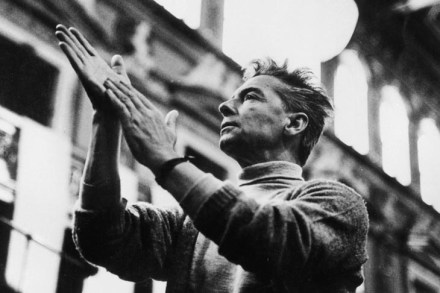
Herbert von Karajan established the Easter Festival in Salzburg 50 years ago with a production of Die Walküre that is now considered legendary. In the sense that legends are rooted in memory, and mythological in substance, that much is true. Which is not to damn it with faint praise. This revival, staged by Vera Nemirova, was an old-fashioned representation of Wagner and many Wagnerians, having endured too many modern presentations of the Master, who has suffered more than any other composer from the curse of Regietheater, would say that that is No Bad Thing. A giant ash tree, in whose hollowed-out trunk reside Hunding and Sieglinde, was the single, simple prop for the first act.

Both sides are missing the point in the row over Dana Schutz’s painting

From our UK edition

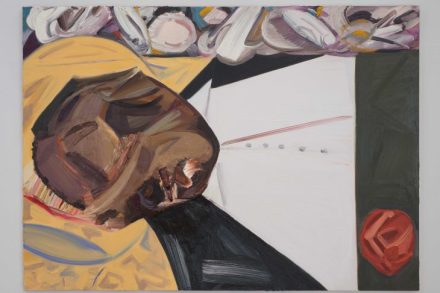
'Let the people see what I have seen', said the mother of Emmett Till. In 1955 her son, a 14-year-old black boy from Illinois, was falsely accused of flirting with a white woman, tortured, murdered and dumped in a river by the woman’s husband and his half-brother, both of whom were summarily acquitted by a white jury. The photographs taken of Till's corpse – battered and bloated beyond recognition – succeeded in shaming and inflaming a nation: he became an icon of the civil rights movement. The recent police shootings caught on camera, and the response from Black Lives Matter, gave Dana Schutz – a New York-based painter of considerable talent – the idea of bringing up Till again.

A matter of life and death | 16 March 2017

From our UK edition

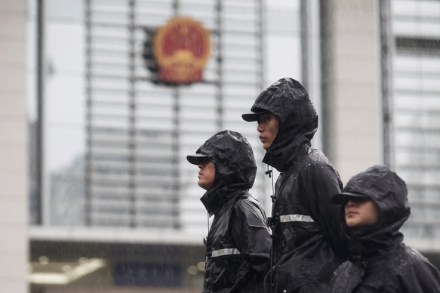
It was the crime story that showed us just how much China has changed since its years of social, political and economic isolation. The discovery on 16 November 2011 of the dead body of the British businessman Neil Heywood in Room 1605 of the Lucky Holiday Hotel in the Chinese city of Chongqing was not in itself so shocking. Sordid maybe, as it was declared by the Chinese authorities that he had died of excessive alcohol consumption. But nothing more than that. The revelations that followed, though, transformed the case into an international cause célèbre, the inner workings of Chinese politics unravelling before the greedy eyes of the foreign media. Heywood, it has been suggested, was if not a spy then at least an ‘informer’ working for the British government.

Fatal distraction

From our UK edition

I don’t think that I have left a theatre many times feeling as depressed and irritated as after the Royal Opera’s Die Meistersinger, in the new production by Kasper Holten. The run of the Royal Opera’s recent productions of Wagner — appalling Tristans, a dire succession of Parsifals, mediocre Rings — hadn’t prepared me for so deep an abyss of irrelevant idiocy as this. I thought I had reached the stage where, having seen so many fearful operatic productions of works I love, I was able to enjoy myself purely on account of the music, almost inured to what I was seeing.

Tough love | 23 February 2017

From our UK edition

Frank Martin is one of those composers whose work seems to survive only by virtue of constantly renewed neglect. His quite large body of work is well represented in the CD catalogues, but rarely performed in the UK. One of his most powerful works is Le Vin herbé, though his fully-fledged opera on The Tempest also deserves revival. Welsh National Opera, ever adventurous, has mounted a staged version of Le Vin herbé, and despite its being more of a cantata than an opera and in English. The text is based on Joseph Bédier’s version of the Tristan myth, so some reference to Wagner, in discussing it, is inevitable.

Gardeners’ world

From our UK edition

For the past few weeks I have been working my way through Decca’s gigantic set of every note Mozart wrote and quite a few that he probably didn’t — 220 CDs in a monumental hernia-inducing box. Chronological listening is not recommended. Mozart was technically a phenomenon, of course, but he didn’t reach maturity of expression, with one or two extraordinary exceptions, until he was in his early twenties. La finta giardiniera (or Die Gärtnerin aus Liebe, in the composer’s singspiel version — both are included in the Decca set) was written when he was 18, by which time he was exceptionally fluent in composition. Uncut it lasts three and a half hours — why do people always go on about how long Wagner’s operas are?

I’m sick of productions like the Met’s Tristan und Isolde

From our UK edition

Tristan und Isolde Met Opera Live I am sick to death of productions of Tristan und Isolde which leave me bewildered, alienated, distracted from the work and its significance, unable to concentrate on the music. I haven't seen a Tristan which didn't do all these things for many years, and had vowed never to go to another, until the Met advertised its new production, with a starry cast and with Simon Rattle, a conductor who at his best, as he has been recently, is quite wonderful, even revelatory. My hopes were soon dashed.

Losing their religion | 21 July 2016

From our UK edition

Scriabin once suggested that the audiences for his music should be segregated according to their degree of personal enlightenment, with the ‘least spiritually advanced’ in the worst seats. Unsurprisingly it didn’t happen. But perhaps the Southbank Centre should take up the challenge. For its 2016–17 season, the centre has devised a series of concerts and talks entitled Belief and Beyond Belief. This ‘festival’, as it grandly styles itself, could have been an exploration of the enormous and neglected influence of faith on the great composers. Could have been — but, predictably, won’t be. Instead, the Southbank has chosen to subsume religious faith into ‘belief’, whatever that is, and then tacked on a smug little cliché.

Longborough’s Tannhäuser is a major relief after ENO’s abysmal Tristan

From our UK edition

Tannhäuser Longborough Festival Opera, until 18 June The Longborough phenomenon continues, indeed if anything gets more remarkable each year. This year they are tackling Wagner's least popular opera, Tannhäuser, and making it actually thrilling, at least when the title role is taken by Neal Cooper. There really is nothing to be done with parts of Tannhäuser except to get a move on, and that is what the great Wagnerian Anthony Negus does. This is one of the shortest performances I have seen or heard: since Wagner never got the opera into the shape he wanted, there are many possibilities, from his alterations over the years, for adding or subtracting a sizeable chunk.