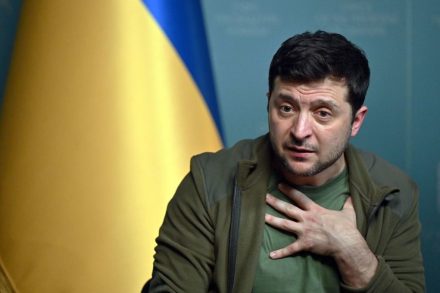
Volodmoryr Zelensky

Ukraine’s own Wagner Group

As peace in Ukraine seems still far and the conflict is witnessing a new escalation of violence, a new breed of private military companies is already emerging, ready for a post-conflict Ukraine. Rooted in a draft legislation “On International Defense Companies” proposed on April 2024, the Ukrainian government aims to channel combat-seasoned veterans into regulated, transparent security firms rather than leave them adrift or, worse, turn them into mercenaries for hire in distant conflicts from the Sahel to the DRC.

Ukraine

The Alaska summit went much as expected

The summit between Presidents Donald Trump and Vladimir Putin ended predictably, without a ceasefire deal or, it seems, assent on much else. Trump said “Many points were agreed to, and there are just a very few that are left,” but failed to offer any details. Even if true, the leftovers are critical, and the gulf between the two governments on the war remains huge. Critically, Putin cares more about security than image or economics, and understandably believes that he would lose leverage by agreeing to halt military operations before winning the concessions he demands from Ukraine. Nevertheless, the summit improved, however slightly, the prospects for negotiating an end to the war.

Trump Putin

How Donald Trump will be impeached

From the election in November to the presidential inauguration in January, media commentators took turns to pronounce the Trump “Resistance” dead. I know I did. The line was too tempting. As Trump stormed back into the White House, his power looked irresistible. His enemies seemed so broken and defeated. We all spoke too soon. “NeverTrumpism” is a reaction to Trumpism, as natural as magnetic repulsion and the urge to defy and destroy his presidency hasn’t vanished. In fact, look closely and you can see a “Resistance 2.0” gathering momentum in response to the second Trump administration.

impeached

Deals, deals, deals vs China, China, China

How was your Liberation Month? It’s been almost 30 days since Donald Trump stood in the Rose Garden of the White House and announced a shocking set of massive tariffs on the world. The event caused huge convulsions in the economic universe: trillions were wiped off the stock market and, under huge pressure, Trump did agree to a 90-day pause on reciprocal tariffs. After that he exempted electrical goods, though his standard 10 percent remains, and the heads of most financial analysts are still spinning trying to figure out what it all means. Yet for all the angst and the apoplexy, yesterday the S&P 500 index closed just 1 percent down from where it was at the beginning of the month.

Will Putin give peace a chance?

At a summit meeting in Moscow, Ronald Reagan was asked about his basic approach. He famously answered, “Here’s my strategy on the Cold War: we win, they lose.” Vladimir Putin has the same strategy for Ukraine. That is certainly his first response to President Trump’s offer to mediate an end to the war and bring a reluctant Ukraine to the negotiating table. If “we win, they lose” is Putin’s final response, then the war cannot end without Ukraine’s surrender or Russia’s collapse. Putin’s initial reply, filled with his maximalist demands, indicates he is still committed to the conquest of his neighbor, whose independence and sovereignty he has long rejected.

putin

Introducing the MAGA-za Strip

President Donald Trump warned Hamas that there would be “hell to pay” when he returned to the White House if the terrorist organization continued to hold the hostages that it and Gazans have held for almost 500 days. Around eighty hostages, living and murdered, remain in Gaza.Last night, Trump laid out what “hell to pay” could look like: a potential American takeover of the Gaza Strip, maximum pressure against Iran and arms shipments to Israel.Trump, who famously compared the Arab-Israeli conflict to a “real-estate deal” in 2015, proposed a radical reshifting of the entire region, alongside Israeli prime minister Benjamin Netanyahu — the first foreign leader he’s hosted in person in the White House in his second term.

Trump’s White House… reloaded

President-elect Donald Trump is slowly revealing who will — and who will not — be a part of his second administration come 2025. As a reminder, last week Trump announced campaign co-manager Susie Wiles as his chief-of-staff.Over the weekend, Trump rebuffed Nikki Haley, who previously served as Trump’s UN ambassador, and Mike Pompeo, who was Trump’s secretary of state. “I will not be inviting former ambassador Nikki Haley, or former secretary of state Mike Pompeo, to join the Trump administration, which is currently in formation,” Trump wrote on Truth Social. “I very much enjoyed and appreciated working with them previously, and would like to thank them for their service to our country.

GOP blasts Kamala for ’too little, too late’ border visit

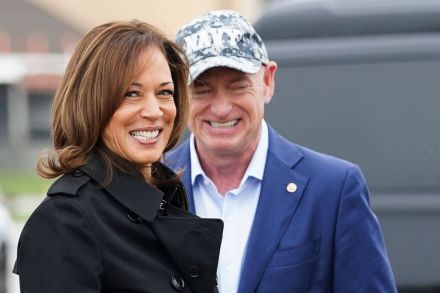
Kamala Harris is aiming to project strength on border security, but her critics aren’t buying it.For the first time in over three years, Harris is visiting the border, following an onslaught of ads from former president Donald Trump’s campaign that have savaged her record as America’s border czar. Her trip also comes after a bombshell report from Texas congressman Tony Gonzales about how tens of thousands of illegal immigrants with murder and sexual assault convictions are freely roaming America.

Seized Russian assets should be used against Putin

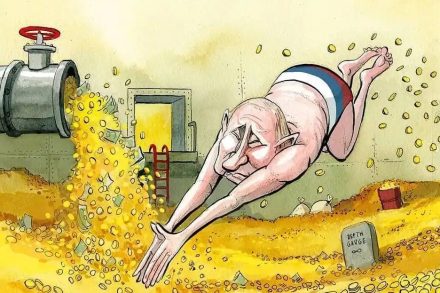
The seizure of enemy treasure, formerly known as plunder and pillage, is an ancient tool of war. Though still practiced in the world’s nastiest conflict zones, it’s a tricky business within a rules-based international order. The G7’s agreement to lend $50 billion to Ukraine — using income from $300 billion of frozen Russian assets to cover interest and repayments on the loan — is a vivid case in point. And some would say, a lily-livered half-measure. The key feature of the deal is that it does not actually claim ownership of Russian loot — which however ill-gotten is mostly held in EU banks in the form of western government bonds. It merely diverts interest payments due on the bonds from the issuing governments.

Russian

Ukraine turns the tables on Russia

Russia’s brutal war on Ukraine has moved into a new phase, a very encouraging one for Ukraine and its western allies. In Phase 1, Russia tried — and failed — to seize the capital city of Kyiv with a blitzkrieg assault. The idea was to decapitate the Zelensky government quickly and install a puppet regime, subservient to Moscow. After that failed, Russia focused on taking the Donbas region of eastern Ukraine and forming a “land bridge” to Crimea, which Russia seized in 2014. Russia has had some success in this Phase 2 of the war, at very high cost, but movement along that front has now stalled.

Don’t blame the West for its Ukraine hesitance

As Ukrainian President Volodymyr Zelensky addressed the UN Security Council today with all the anguish you would expect from a wartime commander-in-chief, he could nonetheless be relatively pleased about several things. Sure, Zelensky and his advisers are constantly making the point that Ukraine needs bigger and better weapons to resist Russia’s invasion, but the West has been quite responsive to Kyiv’s requests. The Biden administration’s latest weapons shipment, announced last week, adds to the $1.6 billion in military aid the US has sent to the Ukrainian military since the war broke out on February 24.