Vodka

The Caviar Kaspia experience

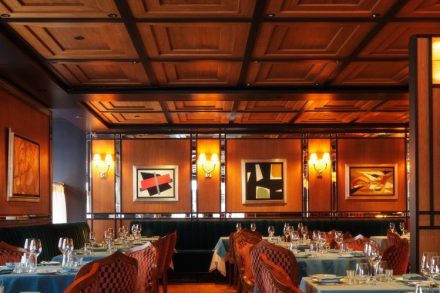
It’s been almost 100 years since Arcady Fixon, a refugee from the Russian Revolution, opened the doors of Caviar Kaspia on Place de la Madeleine in Paris, and began beguiling his fellow exiles and the crème of Paris society with the exotic flavors of his homeland: shiny black caviar, served with blinis or potatoes, and ice-cold vodka. After being passed down through family hands, Caviar Kaspia is now owned by the charismatic entrepreneur Ramon Mac-Crohon, who has ensured that the place has lost nothing of its prerevolutionary charm: Nicolas II’s seal sits alongside antique porcelain in a display cabinet, and Nicolas Swertschkoff’s Troika, depicting a Russian horse-drawn sledge moving through snow, still hangs in the dining room.

There is no best martini

What’s the best suit? To an American, it’s something from Brooks Brothers. Classical, democratic and made with high quality. To a Brit, it might be something from Henry Herbert or Gieves & Hawkes, a tailor-made garment from Saville Row, cut from perfect navy. But a suit can be just as good when rendered in draped, colorful cloth by the late Edward Sexton, or a hot corset-blazer blend by H&M and Mugler. There is no universal best suit. There’s just the best suit for the man or woman who wears it. And so, I come around to the refined blazer of beverages: the martini. In the pages of our July magazine, Chilton Williamson, Jr. wrote about his effort to “search of the perfect martini.

martini

Rise of the dimwit vodka dumpers

Passive news absorbers across the nation haven’t been able to avoid this thing they heard about some guy named Poutine, who’s, like, Russia’s Orange Man, invading Ukraine, which is, like, a peaceful society of hunter-gatherers and supermodels who live harmoniously with nature, talk to animals, and invented Democracy. This is a super important, really bad thing. The Crane people have been forced to take up arms and defend their way of life. Now, Americans across social media are also stepping up to let you Cranes know they’re paying attention, they care, and they’re ready to strike back at the invaders. Yellow and blue are this season’s black square.

After the lockdown, the breakdown

We are told that ‘we’re in this together’ by people who can afford to wait out the epidemic in the way the aristocrats of old retreated to their estates when the plague arrived in the city. It is more accurate to say that we are, as this edition’s cover puts it, ‘together, alone’. The coronavirus has revealed that people today can live in ‘connected solitude’, as Sam Leith describes. It has never been easier to retreat from society if you have the money. But it has never been more vital to sustain real-world connections. We may feel atomized but the truth is we can no more insulate ourselves entirely from other people than we can from the economic effects of an unprecedented shutdown.

breakdown lockdown