Vladimir nabokov

A matter of life and death: Afternoon Hours of a Hermit, by Patrick Cottrell, reviewed

From our UK edition

Patrick Cottrell’s first novel, Sorry to Disrupt the Peace (2017), had a Korean/American returning to her Milwaukee adoptive parents’ home following news of a tragic family event. Afternoon Hours of a Hermit, the author’s second novel, begins: ‘Five years ago I put on my detective hat and my existential black turtleneck in order to solve the mystery of his suicide. I mean the reasons my youngest brother killed himself.’ Readers of the first novel will be aware that the suicide was apparently explained at the time. But now, just before the fifth anniversary of the death, comes an anonymous letter – a puzzling photograph of the dead brother which plunges the surviving sibling back into investigative mode. In the intervening years much has changed.

Blame the Enlightenment for species extinction

From our UK edition

As if she hadn’t got enough on her plate already, the high-powered Danish journalist and mother of three Lea Korsgaard decides to track down all Danish butterfly species in a single summer. She knows nothing about butterflies, claims to be unsure about what has sparked her unusual ambition and sets about learning a new language – of nature, lepidoptera and obsession – with a disarming lack of expertise. The nature-quest narrative is an eccentric but surprisingly well-populated subgenre of nature writing. Midway through my own journey to find all British butterfly species in one year, I was devastated to discover that there was an earlier book on the same undertaking by Robin Page.

Campus antics: Seduction Theory, by Emily Adrian, reviewed

From our UK edition

There is a fine tradition of campus novels that stretches from Evelyn Waugh’s Brideshead Revisited (1945) and Kingsley Amis’s Lucky Jim (1954) through Donna Tartt’s The Secret History (1992) and J.M. Coetzee’s Disgrace (1999) to Chad Harbach’s The Art of Fielding (2011) and Kiley Reid’s Come and Get It (2024). Emily Adrian’s Seduction Theory, her fourth novel for adults, shows the author’s awareness of her predecessors in the genre. One of its main characters even regards Pnin (1957), a campus novel by Vladimir Nabokov, as his comfort book. Ethan, the character in question, feels he needs comfort because he has cheated on his wife with their secretary.

Know better

We live at a time of universal polymathy. We don’t know everything, but there’s not much difficulty in being able to discover any given truth. But it’s also worth remembering just how hard it used to be to find things out. Thirty years ago if you wanted to research it meant a trip to the public library — and perhaps filling out a form for an inter-library loan. Or you could try your luck in a bookshop, new or secondhand. The whole process took a long time, and most people stayed within their professional competence or enthusiasm, frankly admitting to ignorance outside those limits. It was the age of the specialist, memorably captured by Michael Frayn in Donkeys’ Years and the character of Kenneth Snell.

polymath

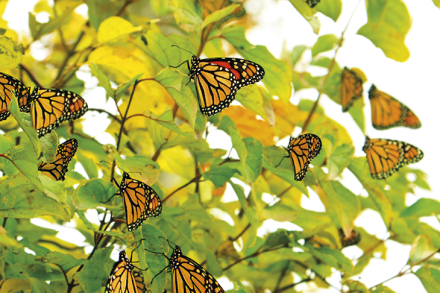
The sex life of the Monarch butterfly is positively wild

From our UK edition

Wendy Williams is an enthusiast, and enthusiasm is infectious. Lepidoptery is for her a new fascination, and it shows. On the plus side, her excitement shimmers as freshly as a newly-hatched Adonis Blue. She marvels, and makes us marvel, at the miracles she discovers. She wonders at the strangeness of a butterfly’s proboscis, which is not, as it appears, a drinking straw (even butterflies cannot suck through a straw longer than their own bodies), but works by capillary action, blotting up fluids and sending saliva down to dissolve sticky or solid secretions.