Violence

Whatever happened to antifa?

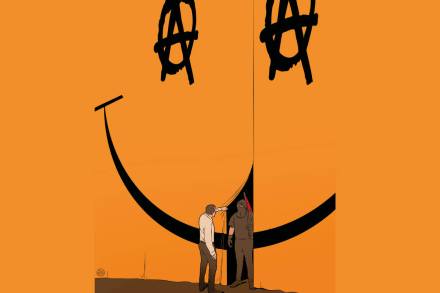
Since the 2024 presidential election, America has been braced for violence from the political far-left — and with good reason. Extremists like antifa, the “anti-fascist” group, are explicitly aggressive. They think looting, arson and intimidation are all acceptable, and until very recently they’ve had the support of the establishment. For a decade their liberal allies gave antifa carte blanche to cause criminal damage in the name of “resisting fascism” or opposing racism. So where is antifa now? What is it planning? It’s an understandable concern. The citizens of Portland remember all too well the bouts of rioting and violence by Black Lives Matter-antifa in November 2016, when Hillary Clinton lost to Trump.

antifa

Not for the faint-hearted: She’s Always Hungry, by Eliza Clark, reviewed

From our UK edition

Eliza Clark’s first novel, Boy Parts, centred on a self-destructive woman taking explicit photographs of men. Her second, Penance, was about a journalist constructing a ‘definitive account’ of a seaside murder. Last year she was named one of Granta’s best young novelists; but she has now produced a sadly uneven short story collection. These 11 tales do not hang together thematically, aside from a broad emphasis on the corporeal. The good ones are full of brio: ‘The Shadow Over Little Chitaly’ is composed entirely of hilarious reviews of a takeway that offers Chinese food alongside pizza. The feedback is bizarre from the start: the first mentions that the restaurant is 125 miles away and the customer complains that they rang 117 times for a refund.

Mysteries and misogyny: The Empusium, by Olga Tokarczuk, reviewed

From our UK edition

Nothing is ever quite as it seems in the world of Olga Tokarczuk. Her latest novel starts with an epigraph taken from Fernando Pessoa: ‘The visible world goes on as usual in the broad daylight. Otherness watches us from the shadows.’ Wild deer were murder suspects in her surreal and beautiful 2018 novel Drive Your Plow Over the Bones of the Dead. This time nature itself plays a significant role. A daily glass or three of schwarmerei restores good cheer, sometimes generating hallucinogenic euphoria Though the novel describes itself as ‘a horror story’, it’s more a salutation to the power of the natural world and a celebration of difference.

A world history of morality is maddeningly optimistic

From our UK edition

The memory of Tsutomu Yamaguchi will be with me for some time. Though wounded, he survived the Hiroshima atom bomb and returned to his home town, Nagasaki. Three days later, he survived another nuclear attack. He died in 2010, aged 93. This fat, complex, good-natured and intriguing book is full of such memorable material. Hanno Sauer is a German philosopher with an all-encompassing mind and a capacity to entertain. His arguments are sometimes clogged and improbable and I don’t find his primary thesis – basically that things can only get better – credible, but then I feel the same about most philosophers. The thesis is based on Sauer’s belief that moral norms are what made us the dominant species and will continue to do so.

The outlets blaming Trump for his own assassination attempt

Within twenty-four hours of the assassination attempt on former president Donald Trump, several outlets were calling on his fellow Republicans to tone down their violent rhetoric. On ABC’s morning show, Martha Raddatz and George Stephanopoulos cited what they called “conspiracy theories going forward” and stated that “President Trump and his supporters have contributed to this rhetoric as well.” On CBS, Margaret Brennan grilled Steve Scalise, who himself narrowly survived the Alexandria, Virginia softball field mass shooting by a Bernie Sanders campaign volunteer.

The Trump shooting is an indictment of the national mood

It was a long, hot, steamy day in Butler, Pennsylvania when someone crawled onto a rooftop that had baked in the sun, set up a rifle and tried to shoot Donald Trump in the head. We don't at this juncture know anything about that person for certain except that he is male, and that his presence on that rooftop surprised the countersniper teams designated with protecting the former president, giving him the split seconds needed to fire off a number of shots, killing at least one rally attendee and injuring others. But the effect this sniper had is immense.

ground assassination attempt trump

Caught in a Venus flytrap: Red Pyramid, by Vladimir Sorokin, reviewed

From our UK edition

Interest in Vladimir Sorokin’s works in translation tends to focus on their extremism and dystopia – trademarks of his fantastically-rendered observations of the Soviet Union and contemporary Russia under an infinite bureaucracy. Less emphasis is placed on the empathy that elevates the stories from violence and a pre-occupation with bodily fluids to a discomforting sense of familiarity. In his introduction to Red Pyramid, Will Self writesthat Sorokin’s detractors accuse him of peddling pornography. But its relevance is without question. If reality is said to be stranger than fiction, Sorokin’s fiction goes further, to make the point that the pornographic, as he writes it, is a way of bearing witness to the past and present.

Thugs in drape jackets: when the Teddy Boys ruled the roost

From our UK edition

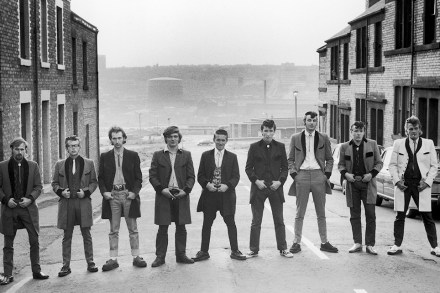
In the wake of wars, youth cults spring up, those too young to have fought behaving in a way to scandalise those who did. The Bright Young People were the younger siblings of those who perished, battalion by battalion, on the Western Front. (Come to that, it was after the end of the Peloponnesian War that Socrates’s corruption of the youth became intolerable to Athens.) So when Max Décharné describes the Teddy Boys as Britain’s first youth counterculture, what he means is that they were Britain’s first working-class youth counterculture. The Notting Hill riots of 1958 were largely blamed on Teddy Boys, possibly incited by Oswald Mosley’s sons  Décharné sketches in the elements that made the Teddy Boys a phenomenon.

Gang warfare in the west of Ireland: Wild Houses, by Colin Barrett, reviewed

From our UK edition

Until now, Colin Barrett has made his name as an artist of the short story. Both his debut collection, Young Skins (2014) and Homesickness (2022) won him acclaim for their depiction of rural Ireland. But his tales stretch beyond the constraints of their size, and his dispossessed drinkers, small-time crooks and depressed teenagers seem too large and real to have their stories end in a matter of pages. Barrett’s first novel, Wild Houses, is, then, a delight, with a wider space for his talent to spread and for his acutely observed characters to linger. In the first few pages he gives us a man whose tattoos appear like ‘the pages of a medieval manuscript’ and another whose face is ‘blue-tinged as raw milk in a bucket’.

Mystery in everyday objects

From our UK edition

‘The surest and quickest way for us to arouse the sense of wonder is to stare unafraid at a single object.’ Cesare Pavese wrote those words in Dialogues with Leucò, one of two quotations that preface Lara Pawson’s deceptively slim third book, Spent Light. When her dog starts killing squirrels, Pawson cooks them, acquiringa Whitby Wild Cat skinning knife Pawson takes the Italian writer at his word, turning to a toaster for inspiration. The electrical appliance, which appears two pages in, is a gift from a neighbour, Reg, after his wife dies. Pawson uses it to launch a deeply empathetic piece of writing exploring the brutality of the world in which we live. ‘What would have had to happen to me to make me be so cruel?

New York Times sweetheart Calla Walsh turns violent

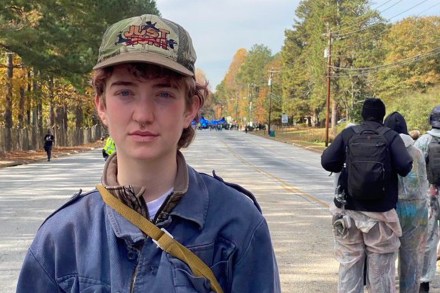
It's not often that the New York Times has a prophetic vision. In 2021, the paper ran a fawning profile of Calla Walsh, a high-schooler leading an "army of sixteen-year-olds" against Massachusetts's Democratic establishment. Now all grown up, Walsh has become a general to a fierce group of agitators. Walsh, now a committed communist, was arrested on Monday morning at a defense contractor facility in New Hampshire along with two other women. The three were arraigned on Tuesday on charges of riot, sabotage, criminal mischief, criminal trespass and disorderly conduct.   The women, along with a larger group of pro-Palestine protesters, had surrounded the Elbit Systems facility, which is allegedly involved in Israel's military campaign.

calla walsh

A multicultural microcosm: Brooklyn Crime Novel, by Jonathan Lethem, reviewed

From our UK edition

Would readers approaching this novel (although novel might not be precisely the right word) without any indication as to the authorship recognise it as the work of Jonathan Lethem? It doesn’t have kangaroo gangsters packing heat, or sentient miniature black holes, or marine drills converted into nuclear-powered limos. It is not set on an alien planet, or in a parallel universe, or inside a simulated game. There are a few hints. It is set in Brooklyn and has a vaguely geeky feel to it; but tonally it seems very different to Motherless Brooklyn or The Fortress of Solitude. Instead of vernal exuberance there is autumnal wistfulness, but certainly not sentimentality.

A horrifying glimpse of Syria’s torture cells

From our UK edition

A young Syrian man is walking down a street in Damascus. He is a computer geek who likes rock music and basketball, and he’s enjoying his summer break from university. A car draws up beside him. He’s shoved inside and blindfolded. Shortly after, he finds himself strung up by his wrists in a dungeon. A thick power cable slices through the air and lands on his back. He screams. ‘You want freedom, right?’ yells the torturer. The lash descends again. ‘Here’s your freedom.’ The victim – the authors of Syrian Gulag protect him with the alias ‘Akram’ – had ‘liked’ a social media post criticising the Assad regime. Akram was to suffer through three months’ incarceration and torture at the Air Force Intelligence prison at Mezze military airport in Damascus.

A potent seam of violence: The Wren, the Wren, by Anne Enright, reviewed

From our UK edition

The Irish novelist Anne Enright is now in her sixties. Her deceptively modest new novel, The Wren, The Wren, opens with a long section narrated by Nell, a woman in her early twenties living in contemporary Dublin. Nell scrapes by, ‘writing content non-stop’: travel pieces about places she’s never been to, stories for a wealthy ‘actress/eco-influencer’. Adrift and vulnerable, she falls into an on-off relationship with a man called Felim, who is emotionally cruel and photographs her naked without her permission. With this extended portrait of a much younger woman, Enright quietly establishes her excellence.

Nostalgia for old, rundown coastal Sussex

From our UK edition

Sally Bayley’s The Green Lady is a beguiling, experimental mixture of biography, fiction and family history. In her excellent memoir Girl with Dove (2018), she wrote about her neglected childhood in the coastal Sussex town of Littlehampton. Here she returns to the same locality, but considers her forebears, embroidering episodes from her own rackety childhood into the lives of her ancestors and local people. The title refers to a hostel on the corner of the lane where Bayley grew up. Its owner, Mary Neal, opened it up to factory girls from London. This is the central image of the book, encapsulating themes of wealth and poverty, town and country, the limitations placed on women throughout the 20th century, and how they worked and cared for each other, or didn’t.

In seven years, Lenin changed the course of history

From our UK edition

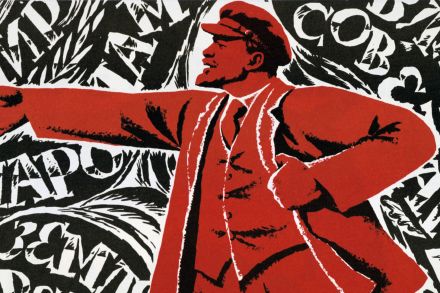
The upheavals convulsing the Russian empire in 1917, Victor Sebestyen argues convincingly, were the seminal happenings of the past century. From them directly stemmed the second world war, the Cold War, the collapse of European imperialism and the dangerous world we inhabit today. There are many weighty modern accounts of these epochal events by historians such as Richard Pipes, Robert Service and Orlando Figes, and it is these that Sebestyen chiefly relies on in this brisk, well-informed and chilling account. He makes no pretence of original research. How did Trotsky’s childlike vision become a nightmare system, dependent on evil, oppression and violence?

Gruesome British folk sports – from cheese-rolling to Hare Pie Scramble

From our UK edition

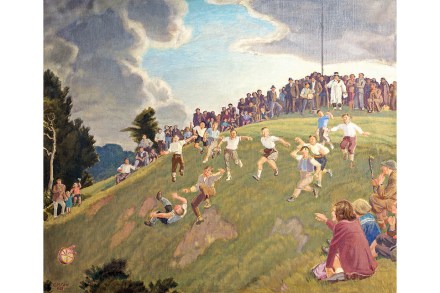
‘Two mobs of men fighting over possession of a ball in a freezing, muddy river in Derbyshire,’ writes Harry Pearson, ‘is the British equivalent of the Rio Carnival.’ He’s not wrong. Brazil may have the sun, but we’ve got the capacity for mindless violence. It’s a trait expressed in many of the folk sports covered in this highly entertaining book. The mass football games (such as the one in Ashbourne), which take place over pitches several miles long, aren’t quite as vicious as they once were. In a Georgian contest between the Men of Suffolk and the Men of Norfolk, nine players died. In Jedburgh, they used an Englishman’s severed head as the ball. Nevertheless, the modern contests are far from gentle.

The dark side of racing: Kick the Latch, by Kathryn Scanlan, reviewed

From our UK edition

Kathryn Scanlan’s second novel Kick the Latch is adapted from the transcript of an interview with a family friend in her native Iowa. Its narrator, Sonia, looks back on her years as a racetrack hand in a series of vignettes. She recounts run-ins with violent men, a freak accident that put her in a coma, and interactions with assorted rural eccentrics, such as Bicycle Jenny, a notoriously pongy gardener who owns 70 chihuahuas, and Johnny Block, who keeps a pet crow and ‘some ferrets’. Animals ran amok on the trailer parks where she lived: ‘As soon as you stepped out your door the goose would come and – bam! – she’d nail you in the back of the leg... When I woke up, a goat was sat next to me, chewing on my sleeve.

When violence was the norm: Britain in the 1980s

From our UK edition

In middle age you’re supposed to feel nostalgia for your youth, but I finished this book marvelling at how dreadful the 1980s were. The decade hit rock bottom in May 1985 when, within 18 days, 56 football fans died in a fire at Bradford City and 39 in crushes before the Liverpool-Juventus match at the Heysel Stadium. All through, though, the 1980s lived up to one of Roger Domeneghetti’s chapter titles, named for The Barracudas’ song of 1981: ‘We’re living in violent times.’  The author, a journalist and academic, has an ambitious premise: sport is the key to understanding what really happened to Britain in the 1980s. The book doesn’t quite live up to that, but it does show how sporting and social dysfunction intertwined.

From she-devil to heroine – Winnie Mandela’s surprising metamorphosis

From our UK edition

Apartheid South Africa created many heroes and villains, and in the heat of battle for the soul of that country it was sometimes difficult to tell which was which. For decades, Nelson Mandela represented righteous liberation for a society enchained by the grim political philosophy of apartheid. Throughout most of this time, his wife Winnie embodied fearless defiance and radical resistance to the system, a charismatic beauty who howled with rage: according to Lord Hain, ‘a quasi-revolutionary to Mandela’s reformism’. A complex Shakespearian tale unfolds of two charismatic figures thrown together by apartheid Today, as South Africa lurches from one crisis to the next, the legacy of the Mandelas is up for grabs.