Viktor orbán

The lesson of Orbán: Trump must tackle corruption

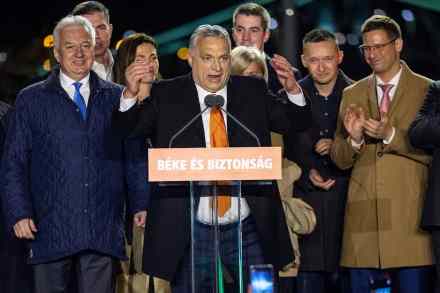
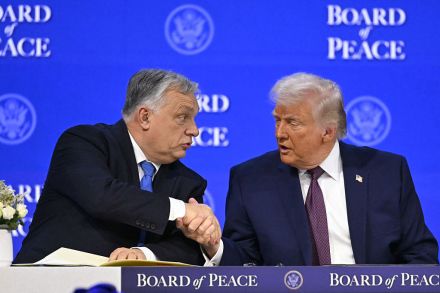
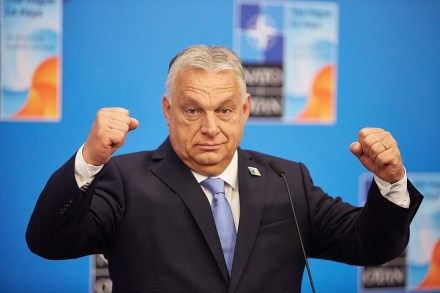
The landslide defeat of Hungarian Prime Minister Viktor Orbán carries lessons across the ocean for Donald Trump and both MAGA and non-MAGA Republicans. Trump pulled out all the stops for his ally, sending Vice President J.D. Vance to Hungary for a three-day endorsement tour and promising the day before the vote to “use the full Economic Might of the United States to strengthen Hungary’s Economy” if Orbán won. Well, he didn’t, and the Democrats are in full gloat mode after Orbán’s Fidesz party fell from 135 seats in parliament down to just 55. Senate Democratic Leader Chuck Schumer quickly made a comparison to the US, writing on X: “Pay attention, Donald Trump. Wannabe dictators wear out their welcome. November 2026 can’t come soon enough.
Trump Orban

Is time up for Viktor Orban?

From our UK edition

For a country of ten million people that spent most of the 20th century occupied and impoverished, Hungary today is thriving. This, in the eyes of his supporters, is down to the 16-year rule of Viktor Orban. Hungary’s Prime Minister has, to use his phrasing, aimed to create an ‘illiberal democracy’. He has reformed the country’s judiciary, given tax breaks to mothers to increase the birth rate and zealously resisted the EU’s refugee policies. The last is illustrated by the 140-mile fence along the Serbian border constructed during the 2015 migration crisis. Proud border guards tell you that 1.1 million migrants have been kept out in a decade. Nevertheless, Orban faces his toughest election yet when Hungarians go to the polls this Sunday.

The White House press corps’ Korean skincare glow-up

In there like skincare President Trump arrived back from the Far East last week with a trade deal or two and an improved relationship with China’s President Xi Jinping. But he’s not the only one benefiting from his visit. A significant chunk of the White House press corps took advantage of the trip to APEC to stock up on sought-after Korean skincare products. “I brought back two face washes, a cream and a hundred masks,” one producer told Cockburn. “Via Google Translate, I asked the workers at a skincare store called Olive Young for some of their favorite products – they showed me this cream, they said it’s very popular in South Korea.” The ROK is “the Turkey of skincare,” she added.

korean skincare

A ‘Trump tornado’ is about to hit Europe

There is a wind of change blowing through the West. It emanates from Washington DC, where President Donald Trump continues to dash off executive orders; more than fifty by the end of last week, the highest number in a president’s first 100 days in four decades. The liberal mainstream media is rattled. The New York Times magazine ran a piece at the weekend in which it described Trump as "the leading light of a spate of illiberal leaders and parties flourishing in democracies around the world." The paper namechecked some of them: Poland, Holland, India, France, Germany, Italy, Brazil, Hungary and Russia. What unites and motivates these "illiberal" parties is their opposition to what the NYT called "liberal creep," which they regard as a civilizational threat.

Trump

The end of the Orbán era

Over the headline “Peace Mission,” a recent cover from the conservative Hungarian periodical Mandiner shows an awkwardly photoshopped Viktor Orbán mediating between a bemused-looking Vladimir Putin and a grim Volodymyr Zelensky. Behind Orbán, a map of the world connects Kyiv, Moscow, Beijing, Washington and Budapest. One of these capitals, as they say, is not like the others. Even before Ukraine’s Kursk offensive, the chances of Orbán’s July trips to Kyiv and Moscow producing a peace settlement were slim. The Mandiner cover, however, is a revealing window into the mindset of Orbán’s conservative fans. The idea of a Hungarian prime minister mediating between squabbling great powers is both attractive and plausible to many of Orbán’s fervent supporters.

Orbán

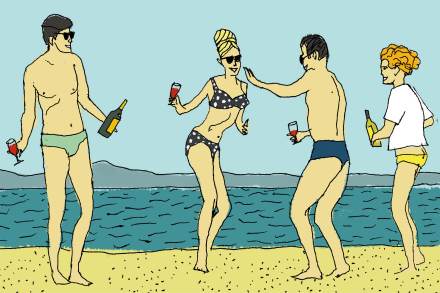
Natural wine and tacos on the Hungarian Riviera

In the summer of 2020, as impatience with quarantine and the urge to get out of town gradually displaced fears of Covid, a joke circulated on Hungarian social media about Lake Balaton, a favorite destination for domestic holidaygoers. The post-quarantine stampede had driven up prices at the lake to such an extent, the joke went, that penny-pinching travelers should consider less expensive destinations, such as Monaco or the French Riviera. Until recently, Balaton had always been the inexpensive Hungarian alternative to pricier (and, during the Cold War, politically restricted) foreign getaways.

Balaton

The Orban acolyte who became his fiercest critic

From our UK edition

All sorts of people are grateful to Peter Magyar for bounding into the arena of Hungarian public life. Journalists, chiefly. Many a grizzled, lugubrious Hungarian hack had tears of gratitude welling as Magyar demolished the tedium and predictability of Hungarian party politics: Viktor Orban trampling a feeble collection of bunglers and chisellers, known as the opposition, again and again. Of course, the foreign correspondents were even more elated. Vilifying Orban? Step this way for your eulogy and hosannas, you smooth-talking cosmopolitan. Magyar is certainly deserving of attention; he’s fought a remarkable one-man blitzkrieg.

Viktor Orbán’s Texas rodeo

From our UK edition

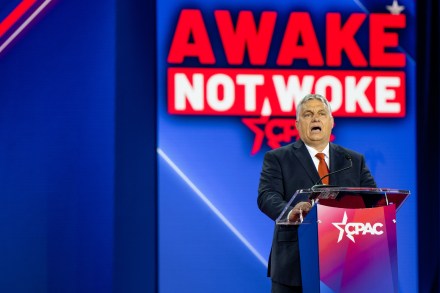
Say what you want about Viktor Orbán, but he gives a good speech. His address on Thursday in Dallas on the opening day of CPAC, the annual jamboree of the American right wing, was wide-ranging, hard-hitting and quite funny. One of his best jokes – paraphrasing Pope Francis – was ‘that Hungary was the official language of heaven because it takes an eternity to learn’. It also happens to be nonsense. Hungarian is recognised as considerably easier to learn than Arabic or Mandarin, but Orbán doesn’t do nuance.

Viktor Orbán won’t save conservatism

From our UK edition

It’s always the ones you most expect. Hungarian prime minister Viktor Orbán, nationalist strongman and post-liberal poster-boy gave a speech over the weekend on the evils of race-mixing. He was speaking on Saturday to attendees at Tusványos summer university in Băile Tușnad, Transylvania, previously an annual forum for Hungarian-Romanian dialogue but now an intellectual pep rally for the ultranationalist Fidesz party. According to the Budapest Times, he told his co-ideologues the West was ‘split in two’ between European nations and those in which Europeans and non-Europeans lived together. He declared: ‘Those countries are no longer nations.

Where does brave, stubborn Hungary stand today?

From our UK edition

‘Deplorable,’ wrote the historian Denis Sinor in 1958 about the state of Hungarian historiography in English. ‘Not only are the interpretations out of date but the facts themselves are all too often erroneous, and a proper name which is not misspelt is received with a sigh of relief by the reader who knows Hungarian.’ That was only two years after the revolution of 1956, when Hungary was on the world’s lips. Today, when the government of Viktor Orbán and the country’s position on Russia and Ukraine makes it equally talked about, this book – from an author born in Budapest in 1956 – is well timed, and its subtitle ‘Between East and West’ pertinently chosen.

Progressives vs populists: Macron, Orban and Europe’s faultline

From our UK edition

As soon as Emmanuel Macron was sure that Joe Biden had won the American election, he tweeted: ‘We have a lot to do to overcome today’s challenges. Let’s work together!’ There was no effusive tweet this week from the Élysée when 54 per cent of Hungarian voters re-elected Viktor Orban as Prime Minister for a fourth term. The silence from Macron was deafening. Not so his principal rival in France’s impending election. On Sunday evening Marine Le Pen tweeted an old photo of the happy couple shaking hands with the declaration: ‘When the people vote, the people win!

Viktor Orbán is no friend of the West

From our UK edition

Viktor Orbán‘s victory speech in Budapest on Sunday night took a curious turn. Speaking after a fourth landslide win, he opined: This victory is one to remember because we had the biggest [opponents] to overpower. The left at home, the international left, the bureaucrats in Brussels… the Soros empire... and even the Ukrainian President. Orbán skipped over the challenge to regional stability caused by the Russian invasion of neighbouring Ukraine. Having refused military aid to Kyiv, and having exchanged barbs with President Volodymyr Zelensky, he reassured ethnic Hungarians in West Ukraine: ‘Don’t be afraid, the motherland is with you’.

Why Hungary’s opposition failed

From our UK edition

Viktor Orbán has now spent a total of 16 years as Hungary’s Prime Minister but he has not lost his hunger for power. Energetically campaigning across the country, exploiting every advantage of incumbency, and excoriating the incompetent opposition, on Sunday he notched up his fourth landslide victory in a row. Crucially, he maintains the two-thirds majority in parliament that he has held since 2010, allowing him him to amend the constitution whenever he chooses. Predictably, the opposition challenged the legitimacy of the election process even before the votes had been counted. They note that the lion’s share of the media supports Orbán. But this is an excuse, not an explanation.

Viktor Orbán has played a perfect game with Putin

From our UK edition

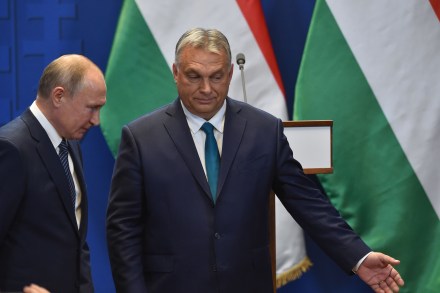
On 3 April Hungarians will have their ninth set of free parliamentary elections since the collapse of the communist dictatorship in 1989. The winner is likely to be Viktor Orbán and his Fidesz-KDNP coalition, which is leading in five of the six major polls. Russia’s invasion of Ukraine will not change that dynamic even though the opposition leader, Péter Márki-Zay has called Orbán a ‘traitor’ for his long-standing friendship with Vladimir Putin. Ever since Viktor Orbán began his second stint as Hungary’s prime minister in 2010, he has repeatedly played the provocateur within the EU, tweaking the eurocrats’ noses with his cultural conservatism and hostility to mass immigration.

Viktor Orbán or: How I Learned to Stop Worrying and Love Putin

From our UK edition

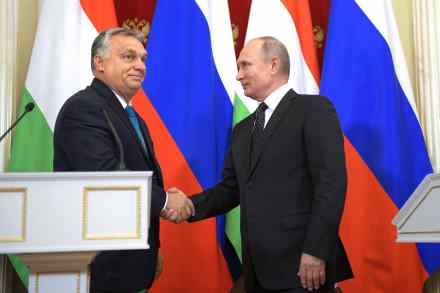
Viktor Orbán first came to prominence when in 1989 he declared on live TV that Hungary must put an end to the ‘Russian occupation’. On the first day of February this year, he held his thirteenth meeting with Vladimir Putin. What’s changed? Like much of his generation, Orbán initially believed that the fall of communism would mean a ‘return to Europe’ — with not only western democracy but also a western standard of living. Yet after a brief and unpleasant stint studying in Oxford, the student politician discovered that Britain’s future elites were ignorant and decadent.

Why Viktor Orbán is fighting a war against ‘LGBT ideology’

From our UK edition

‘Do you support the unrestricted presentation of sexual media content that influences the development of underage children?’ In a national referendum likely to be held in the spring, Hungarians will be asked this question and others about the ‘promotion of gender reassignment’ to children, the holding of sexual orientation classes without parental consent, and whether or not they ‘support the display of gender-sensitive media content’ to kids. Parliament approved the referendum on Tuesday; opposition MPs chose not to vote on what they see as an egregious waste of public money.

Out of nowhere: Viktor Orbán’s new challenger

From our UK edition

Hungarian politics has a lot to offer: sex tapes, offshore bank accounts, police-dodging MEPs hanging off drainpipes, supposedly left-wing parties cheerfully backing anti-Semitic parliamentary candidates. Nevertheless, most observers would admit that there has been stagnation in the past few years. Hungary’s politics have become a stale exchange of insults between familiar faces. Thank goodness, then, for Péter Márki-Zay, who has opened a window and let in some fresh air. He has been chosen by the opposition to the government as their candidate for prime minister in next year’s general election. And that means practically all the opposition parties in the Hungarian parliament working together.

How to beat Orbán? Copy him

From our UK edition

Opposing Viktor Orbán is a formidable task. Support for his coalition hovers at around the 40 per cent mark while the parliamentary system makes it harder for opposition parties to break through. By 2018, all of the opposition parties, most of which are firmly on the left, realised they were individually incapable of breaking through. They began fielding joint candidates and had some early success when Gergely Karácsony won the mayoralty of Budapest. So they agreed late last year to select a common candidate for the prime ministership at next spring’s elections. Last weekend, a political outsider, Péter Márki-Zay, became the candidate.

Hungary, Poland and the EU’s ‘diversity’ problem

From our UK edition

It is quite something when the self-proclaimed ‘illiberal’ prime minister of Hungary, Viktor Orbán, reminds Brussels of its liberal principles. As part of the ongoing row over a Hungarian law which bans the ‘depiction or promotion’ of homosexuality and gender reassignment, Orbán has argued that: ‘If we want to keep the European Union together, liberals must respect the rights of non-liberals. Unity in diversity.’ ‘Unity in diversity’ has been the official motto of the European Union for over 20 years. The idea that the continent can unite in a common political and economic framework without losing the diversity of its constituent nations underpins the very idea of a democratic union of states.

Why the Pegasus spying scandal probably won’t harm Viktor Orban

From our UK edition

‘The EU has a dictatorship growing inside of it,’ proclaimed Guy Verhofstadt on Monday afternoon, while calling for an EU inquiry into the ‘Pegasus’ scandal, which has exposed the potential Hungarian misuse of state surveillance on anti-government journalists, media owners and businesspeople. The ‘Pegasus Project’, a multinational investigation led by the French non-profit organisation Forbidden Stories, suggests that investigative journalists critical of Hungarian Prime Minister Viktor Orbán’s regime (along with independent media owners and government-critical businesspeople) were the subject of phone hacking in recent years.