Venice

Tuscan escapades: Villa Coco, by Andrew Sean Greer, reviewed

From our UK edition

The comic novelist Andrew Sean Greer won the Pulitzer Prize for Less, a chronicle of the longings and humiliations of modern life. But now, he suspects, we’d all like an escape. ‘Whatever happened to the charm novel?’ he asks in his new outing, thinking of the lighter works of Nancy Mitford and Graham Greene. Since they are apparently out of fashion, he has decided to write his own. Villa Coco follows a young American archivist, hired to catalogue the antiques in Tuscany of an aged baronessa, known to her friends as ‘Coco’, only to find himself drawn into increasingly absurd adventures instead. He arrives in late summer, with all the American fantasies of Italy in tow: ‘A confection of movies and food... pasta and accordions and Leonardo and cheese.

The Venice Biennale was just that bit worse than usual

The 61st Venice Biennale arrived freighted with portent. To cut a long story short: Russia and Israel were invited to exhibit, and the prize jurors resigned in protest. Then, on preview day, the city was hit by a storm of biblical force. I sat in the Stansted Wetherspoons for hours, oblivious to the fact that the Ryanair ahead of mine was taking a pummeling that ultimately landed it on the wrong side of the Adriatic. “It was terrifying,” a journalist colleague recounted. “And apparently, Bjork was on board, too.” The bad juju had set in last May when Koyo Kouoh, the program’s curator, dropped dead aged 57. The event was left rudderless, and with all due respect – it shows.

biennale

Riddled with contradictions: the enigma of Jan Morris

From our UK edition

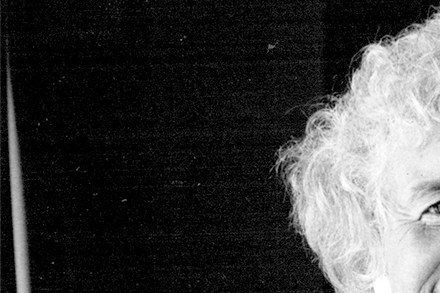
Jan Morris was driven by almost super-human levels of energy and ambition, producing more than 40 books as well as news and travel articles, introductions, interviews, reviews and essays, travelling incessantly and taking on every job that was offered. That’s as far as I can go without a pronoun, because of course Morris’s life is divided into two parts. For the first half he was James, for the second she was Jan. James Morris was born in 1926, aware from early on that she was female, trapped in a male body. The transition to Jan, made in the early 1970s, remains at the heart of our fascination with Morris.

Is my book about Meghan and Harry a ‘deranged conspiracy’?

From our UK edition

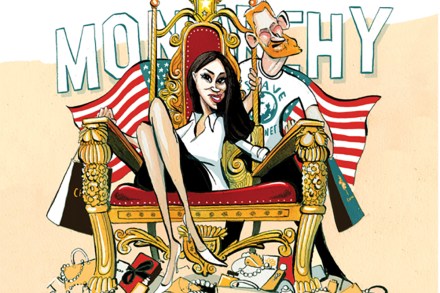
‘Deranged conspiracy’. That’s the Sussexes’ verdict of Betrayal, my second blast at Harry and Meghan, after the serialisation was in the papers at the weekend. Naturally, I’m grateful. The book now ranks No. 1 on Amazon. My biography of Robert Maxwell also benefited from his endless writs. Similarly, Richard Branson sued twice to prevent publication. He lost and was denied the licence to run the National Lottery. The tycoon Tiny Rowland was more subtle and effective. ‘Bower’s book,’ he announced, ‘is boring. He’s missed all the good bits.’ That hurt. My new book exposes the vainglorious Duke and Duchess’s downwards spiral over the past five years towards an inglorious endgame. Dwindling fame and fortune is forcing them to revalidate their royal status.

Carlo Scarpa’s artful management of light and space

From our UK edition

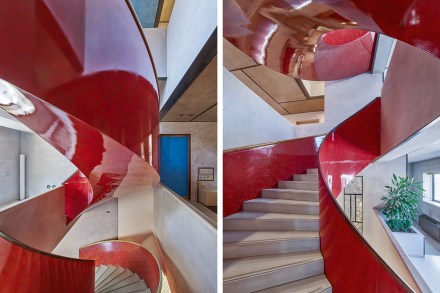
If Carlo Scarpa were as well known as Le Corbusier, modernism might not be so reviled. This architetto poeta grew up in Vicenza, whose 21 buildings by Palladio surely had a formative influence on his fast- evolving artistic intelligence. Scarpa studied building design at university, but, instinctively disobedient, never bothered with a licence to practise as an architect. So connected was he to his native territory that when Frank Lloyd Wright first visited Venice in 1951 he insisted on Scarpa being his guide. Most of Scarpa’s working life was spent in the Veneto, but he died in 1978, aged 72, in Sendai, Japan, after falling down a flight of concrete stairs. This added his own distinctive chapter to the story of curious deaths of great architects.

A glutton’s guide to Venice

I have been writing about restaurants that are in or near cultural landmarks: museums, opera houses, historic sites. This column is an exception, as it is about one of the few restaurants in the world that is a cultural landmark in its own right: Harry’s Bar. It is an even more remarkable fact given that the restaurant is in the midst of probably the most culturally dense city in Europe, Venice. I must declare that I have eaten at Harry’s at least once, sometimes twice, on every one of the many trips I have made to Venice since 1977. I love it. Not everyone does – or maybe it’s more accurate to say that not everyone gets it. I took a friend there on his first visit and he complained that “the chairs are too low, the drinks are too small and the prices too high.

venice

Monet’s Venetian moment

If you crave art that will envelop you, book a ticket, pronto, to Monet and Venice at the Brooklyn Museum. Enveloppe was the term the French impressionist artist Claude Monet (1840-1926) used to describe the “beauty of the air around” the objects and landscapes he painted. “Other painters paint a bridge, a house, a boat… I want to paint the air in which the bridge, the house, and the boat are to be found – the beauty of the air around them, and that is nothing less than the impossible,” he said.

Monet

Honeymoon from hell: Venetian Vespers, by John Banville, reviewed

From our UK edition

‘I am by trade a man of letters,’ Evelyn Dolman tells us as the curtain rises on Venetian Vespers. ‘I had a middling reputation in the period coming to be known, in our increasingly Frenchified age, as the fin de siècle, that is, the 1890s.’ If his writing mostly appears in the review sections, his marriage to Laura Rensselaer, the daughter of an American oil baron, is front-page stuff. But Laura has proved to be a distant, phantasmal partner. Even during the Dolmans’ sole night of physical intimacy, ‘it was as if, clasping me to her breast, she were at the same time looking aside and past my shoulder’. It moreover transpires that T. Willard Rensselaer, dead in mysterious circumstances, has cut his daughter out of his will.

The merchant as global reporter

From our UK edition

Joad Raymond Wren’s ambitious history of early modern European news, capacious in structure, monumental in volume, is named for a witticism by John Earle (c.1601-65). The author of Microcosmography, a compilation of satirical ‘characters’ whose obvious modern heir is Victoria Mather’s ‘Social Stereotypes’, was arguably the funniest member of mid-17th century England’s most likeable clique, the Great Tew Circle. Wren more than once returns to Microcosmography’s comparison of the nave of St Paul’s, where London’s freshest newsletters were to be procured, with the commercial buzz of the Royal Exchange, with news replacing goods and hard cash as a potentially fruitful alternative currency.

Venice was built for Jeff Bezos’s wedding to Lauren Sanchez

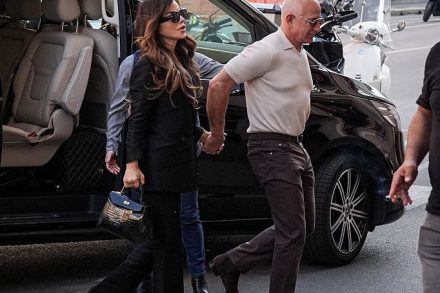
Most cities, especially those whose survival depends on tourism, might welcome the multi-squillion-dollar wedding of the world’s third-richest man. Imagine the $500 million superyacht gliding in like a Bond villain’s aqua-lair. Think of two hundred almost-as-rich guests, spilling vintage Trentodoc. Consider the spectacular press coverage, the endless sparkle, and, not least, the 14,000 Aperol spritzes sold per hour. This event means a thousand cameras trained on the city’s finest hotels and restaurants: providing the kind of advertising that folding money cannot buy. There is probably only one city on earth that would disfavour such an opportunity, and it is, of course, the world’s most exquisite: Venice.

Jeff Bezos

Owen Matthews, Bijan Omrani, Andrew Hankinson, Laurie Penny & Andrew Watts

From our UK edition

29 min listen

On this week’s Spectator Out Loud: Owen Matthews says that Venice’s residents never stop complaining (1:11); Bijan Omrani reads his church notebook (7:33); Andrew Hankinson reviews Tiffany Jenkins’s Strangers and Intimates: The Rise and Fall of Private Life (13:54); as 28 Years Later is released, Laurie Penny explains the politics behind Alex Garland’s film franchise (18:25); and, Andrew Watts provides his notes on Angel Delight (25:09). Produced and presented by Patrick Gibbons.

Venice deserves Jeff Bezos

From our UK edition

Venetians are once again revolting. Not, this time, against cruise ships, wheeled luggage, over-tourism or rule from mainland Mestre. No – according to a small but vocal contingent of the island city’s eternally discontented, it is Amazon’s billionaire founder Jeff Bezos who embodies all that threatens La Serenissima. Bezos’s offence is that he is planning to marry Lauren Sánchez, a former TV journalist, in a three-day celebration in central Venice beginning on 24 June. His 250 guests will include many of the most famous and wealthy people on the planet. The celebrity-obsessed Italian press, deprived of such a world-class spectacle since George Clooney’s Venetian nuptials with Amal Alamuddin in 2014, is in a frenzy of anticipation.

The love that conquered every barrier – including the Iron Curtain

From our UK edition

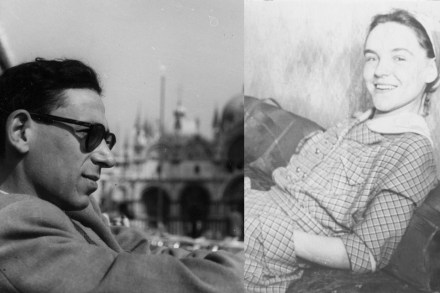
In our age of cosmetic fantasy, a dramatic love story between two bespectacled art historians sounds implausible. But add in the Montague-Capulet effect of the Iron Curtain, along with a fearless Russian heroine who proved that love can conquer every barrier, and you have an enchanting tale: a completely true one, beautifully written by the art historian and novelist Iain Pears, the author of An Instance of the Fingerpost among many other books. Pears, who had been a pupil of Francis Haskell, began to visit his former tutor’s widow Larissa Salmina on a regular basis after 2000. He soon realised from odd remarks just how extraordinary their lives had been. He pointed to a photograph of a boy in naval uniform. ‘Ah,’ Larissa replied, ‘that’s my cousin. He was eaten by a bear.

The sexual escapades of Edmund White sound like an improbably sordid Carry On film

From our UK edition

Edmund White grew up in a world where sex, and gay sex in particular, was an unspoken reality. In 1950s Cincinnati, ‘no one “came out” except drag queens and the campy peroxided waiter at the diner’, he writes in the first chapter of The Loves of My Life. That blanket of near-silence doesn’t seem to have inhibited him much. He was sexually precocious from the age of 12, as his autobiographical novel A Boy’s Own Story (1982) first suggested. But it may account for the determined frankness with which he has treated sex in both his fiction and memoirs. For an author who came of age in pre-liberation America, erotic candour has always been a political act, at least in part – never merely profligate.

An escape from Venice

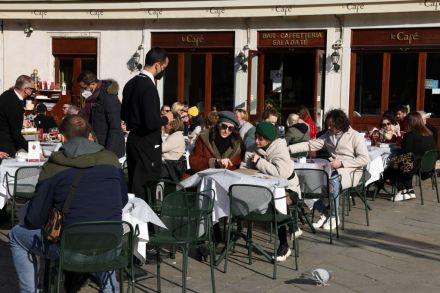
Those who have visited Venice in the summertime will have witnessed the masses who descend into the heart of the labyrinthine islands, clogging their historic stone arteries and beautiful atria in a gormless and sclerotic trance. Meandering along the canals can always lead to some duomo or piazza that merits a standstill and an upward gawp. If you’re at all like me, after sweating through those tight streets with other tourists, one day certainly feels like enough. So it went on my recent visit. After popping my head in for as much of the Biennale that was still on display, a Bellini at Harry’s, lunch at Staffa and an inspiring visit to the Fondazione Querini Stampalia, I decided to get in the car and leave.

Venice

A necklace for the Empress Josephine: The Glassmaker, by Tracy Chevalier, reviewed

From our UK edition

The latest book from Tracy Chevalier, author of 11 novels, including the bestselling Girl with a Pearl Earring, tells the captivating story of Orsola Rosso, whom we first encounter in 1486 as a young girl on Murano, the glassmakers’ island in the Venetian lagoon. Within a few pages, her father, the maestro at the family’s workshop, is dramatically killed by a shard of glass flying ‘like a hot dart straight into his neck’. Orsola’s lazy, impetuous brother Marco, less skilful than their father, must take over, but orders soon begin to dwindle. How will Orsola help her family recover and prosper?

How a market town in Hampshire shaped Peggy Guggenheim

From our UK edition

On 24 April 1937 Marguerite Guggenheim – known as Peggy – of Yew Tree Cottage, Hurst was booked by a certain PC Dore for driving an unlicensed vehicle through nearby Petersfield. What was the founder of the famous Venice museum doing in a market town in Hampshire? It’s a long story, vividly told in an exhibition marking the 25th anniversary of the opening of Petersfield Museum on the site of the former police station and courthouse where she paid her £1 fine. ‘Peggy,’ said a friend, ‘is absolutely revolting about sex. Delicacy is unknown to her’ In the 1930s the Jewish-American heiress, who had lost her father Benjamin on the Titanic, was rattling around Europe with a fast crowd of writers and artists.

Tourists are the new pariahs

From our UK edition

Think of Majorca and what do you picture? Maybe it is elegant tapas bars in the Gothic quarter of Palma, full of yachties and foodies from across the world. Maybe it is literary pilgrims trekking to the house of Robert Graves or noisy parties of Brits and Germans, squabbling over sunbeds in Magaluf. In one Japanese town, residents have erected a screen to block a much-prized view of Mount Fuji Any which way, what you picture is tourists. Lots of tourists. So many tourists that the reality of Majorca as an authentic place is quite obscured, invisible under the weight of visitors. And if you think that sounds bad, so do the Majorcans, which is why they are finally – perhaps belatedly – rebelling.

Bar-hopping, Venetian style

It’s a mist-steeped weekday morning in the Dorsoduro district. The kind when the rising lagoon licks at the old stones as if trying to devour the city, footsteps echo mournfully between peeling palazzi and even the marble statues seem to hang their heads. But not too early nor too dismal, it turns out, for wine. In Osteria Al Squero — named after Venice’s oldest boatyard, which it faces across the narrow canal — the lights are on. A huddle of Venetian men stands beneath the wooden beams with their grocery bags and small dogs, enjoying un’ombra. It means “shade” in Italian but also, here in the Veneto, a small glass of vino.

Venetian

‘You can stare at a cow you will soon eat’: The Newt, Hadspen, reviewed

From our UK edition

The Newt is an idealised country house in Somerset which won the World’s Best Boutique Hotel award last year. It is small, beautiful and mind-meltingly expensive, even for the Bruton Triangle and its mooing art galleries. Poor Somerset! It never wanted to be monied enough to have a triangle, but the rich make their own mythology. Since they paint every-thing grey – and now green, I learn at the Newt – they need it. A triangle fills the day. The Newt is for people who think that Babington House is stupid (it is) and though the Newt has its own issues – like the King, its taste is almost too immaculate – you never feel that the chief executive of a media conglomerate will bounce past you on a space hopper eating a fishfinger sandwich and shouting into an iPhone.