Vegetables

Which countries see more UFOs?

From our UK edition

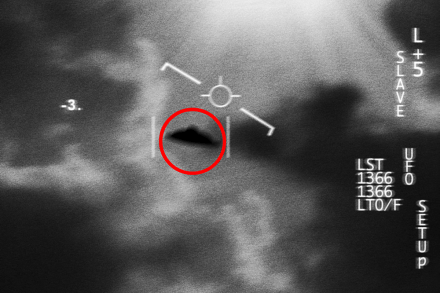
Red Wales Labour lost power in the Welsh Assembly for the first time since it was set up in 1999. Labour’s domination in Wales began early. The party’s founder, Keir Hardie, was born in Lanarkshire and made his name as a trade union activist in the Scottish coalfields. He first won election for the constituency of West Ham South. Yet it was during his second Commons stint, as MP for Merthyr Tydfil, that he established the Labour party in 1900. In the 1922 general election Labour won a majority of seats in Wales, a feat it has repeated in every one of the 27 general elections since – a run unparalleled among political parties in the world’s genuine democracies, but which is unlikely to be extended. Space oddity Donald Trump declassified many files relating to UFOs.
The art of the asparagus

From our UK edition

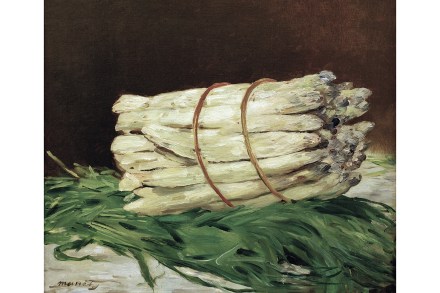
Manet’s ‘Botte d’asperges’ are probably the most famous asparagus in the world. The artist painted the delicious white- and lilac-tinged spears for the collector Charles Ephrussi in 1880 before invoicing him for 800 francs. Ephrussi was so delighted with them that he paid Manet 1,000 instead, to which Manet responded by sending a second picture. ‘One appears to have escaped your bunch,’ the painter quipped in his accompanying note. The new canvas featured a single asparagus. Manet was in the last decade of his life when he began sending small paintings of fruit and flowers to his friends.

There’s more to pumpkins than you might think

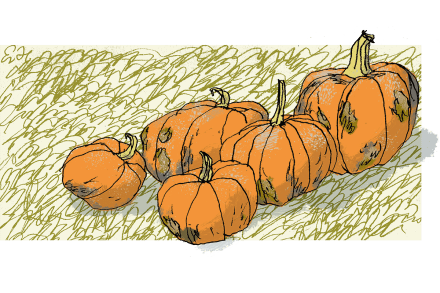
There’s a famously untranslatable expression in Virgil’s Aeneid: lacrimae rerum. Latin scholars, always fond of threshing things out, have devoted reams of analysis to proving just how untranslatable it is. As is typical of academics, however, they go to lots of trouble to establish its utter untranslatability – and then turn around and translate it anyway. When pumpkins aren’t being cozy, they generally denote a sense of emptiness or artifice Word for word, lacrimae rerum means “The tears of things” (or, depending on your school of thought, “The tears for things.”) But each scholar has his slant on the sadness.

pumpkins

My quest for the perfect Christmas broccoli

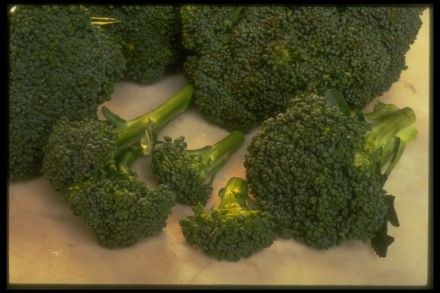
I adore broccoli, but I despise seeing it shrink-wrapped and kidnapped in the grocery store. The sight of those slightly compressed, yellowing florets sweating under fluorescent morgue lighting is a rude tap on the shoulder from dystopia. That’s why I was in my basement in late August, cleaning out the propagation tent while everyone else was still at the beach. My goal each year is to enjoy homegrown broccoli with Christmas dinner. In this corner of the Mediterranean, that’s about as likely as a French civil servant answering the phone after lunch. But with precision timing and bloody-mindedness you can pull it off. And after years of suffering those supermarket specimens, I’m determined to.

broccoli

How to live off the land for a year

From our UK edition

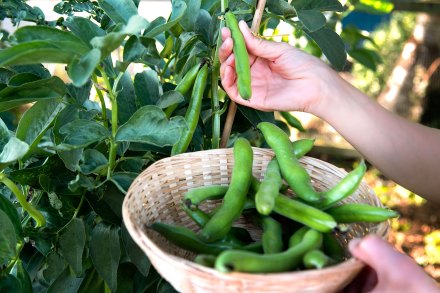
Could you live off the land for a year without buying a single thing to eat? This was the challenge a retired journalist set himself on Radio 4 this week. Max Cotton lives on a five-acre smallholding near Glastonbury in Somerset with his wife Maxine, two pigs, two dozen hens and a Jersey-Friesian cross named Brenda. He also has six adult sons who, as far as this project is concerned, ‘prefer to pontificate than help very much.’ Cotton’s hopes for peas by April were even less realistic than I thought Cotton conceded at the outset that he would allow himself to purchase salt as a necessity.

Don’t spare us the asparagus

Asparagus inspires gentle thoughts, or so said Charles Lamb in an essay about grace before meals. Other vegetables had come to pall on him, but a noble affection for asparagus still lingered in his heart, a reminder of simpler and more innocent times. One can only surmise that he didn’t much care for the vegetable. Who feels melancholically virtuous when eating greens? People who don’t really like them, that’s who.

asparagus

Why do we expect to buy tomatoes and cucumbers all year round?

From our UK edition

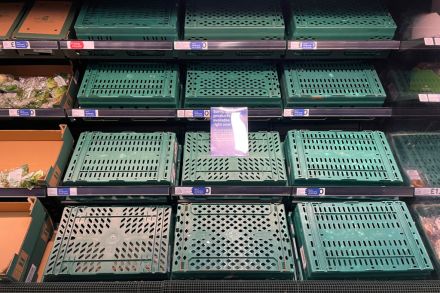
When did it become an inalienable human right for 65 million Britons to have a cucumber in March? When did we suddenly regard the possession, weekly, of a half kilo or so of vine-ripened tomatoes as fundamental to our very being, when our corner of the northern hemisphere is still essentially frozen and has been for months? If we were in southern Italy or if London were transposed with Madrid – so 800 miles closer to the equator – then one might begin to think that a leafy salad or a few tomatoes could or should be a daily staple, even in these darker days. But up here, at 52 degrees north, in an archipelago off the last landmass before you have the void of the swirling Atlantic?

Are John Fetterman’s salad days finally over?

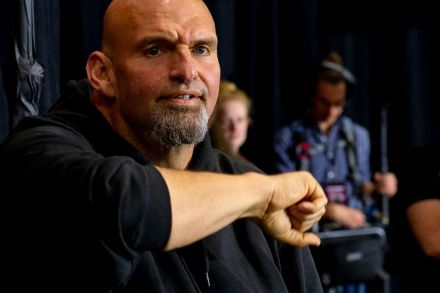
John Fetterman is hungry for victory. The Democratic candidate for Senate in Pennsylvania has taken umbrage with what he perceives as “nasty” comments about his health and diet from his opponent, Dr. Mehmet Oz. But, according to a landmark investigation from the Washington Free Beacon, Fetterman used to hector his constituents to “eat more vegetables” during his tenure as mayor of Braddock, Pennsylvania. Per the Beacon’s Joe Simonson: On the corner of 4th Street in Braddock… sits a city sign likely not seen anywhere else in the United States. The sign doesn’t display the speed limit or parking hours, but rather an order to passersby: "NOTICE: EAT MORE VEGETABLES.

fetterman salad

The little joys of growing corn in Connecticut

They were neighbors and friends. Harold Loeb, an economist, writer and heir to the Guggenheim and Loeb fortunes, and his wife Vera lived down the Saugatuck River from us on Snake Drive, at the end of Buttonball Lane. Harold was better known as having been betrayed by Ernest Hemingway in Paris in the 1930s — Robert Cohn in The Sun Also Rises was modeled after him. Harold got even in The Way It Was, published in 1959. He asked my father to sketch him for the book’s back cover. Among other things they had in common a gift for gardening. My father, known for his charcoal sketches of celebrated locals of Weston, Connecticut, planted a large, Walden-inspired plot surrounded by a white picket fence, where weeds were allowed as long as they didn’t interfere with the crops.

corn

The unfamiliar Orwell: the writer as passionate gardener

From our UK edition

This is a book about George Orwell’s recognition that desire and joy can be forces of opposition to the authoritarian state and its intrusions. To explore the theme, Rebecca Solnit has produced a sequence of loosely linked essays around the roses and fruit bushes the author of Animal Farm planted in 1936 in the garden of his modest Hertfordshire house. A Californian with more than 20 books behind her, Solnit opens this latest with a pilgrimage to Wallington, where Orwell’s Albertine roses have endured. The blooms instigate a reconsideration of the man ‘most famous for his prescient scrutiny of totalitarianism’, which in turn invites the author ‘to dig deeper’ and question ‘who he was and who we were and where pleasure and beauty...

The best podcasts for all your corona-gardening needs

From our UK edition

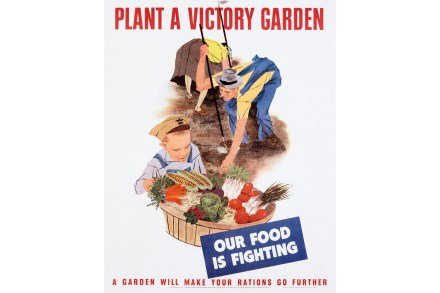
The American diet was probably at its healthiest in the second world war. Fearing interruption to supply chains, Washington launched a national Victory Gardening programme within a fortnight of Pearl Harbor, and saw two thirds of the population heed the cry to fill their backyards, rooftops and window boxes with veg. The scheme was so successful that, by 1943, home-gardeners were producing 43 per cent of all fresh food consumed. ‘Dig for Victory’, the latest episode of Gastropod, a superbly researched food and science podcast, opens with the co-hosts Cynthia Graber and Nicola Twilley rustling bags of manure as they attempt to plant tomatoes, peppers and ‘urbs’ in a tiny patch of earth in New York.