USDA

Farmers are addicted to government subsidies

Farm bankruptcies in the US have risen by 50 percent in the past year. Soybean farmers lost an average of $100 per acre in 2025, according to the Department of Agriculture, while corn growers are set to lose $150 per acre this year. Meanwhile, the national beef herd is at its lowest level since 1950 and retail prices have jumped by 40 percent in the past 18 months. Normal businesses would diversify away from corn or soybeans and try to profit from the rising price of beef, as well as goods such as eggs and tomatoes. They would, in other words, react to the changing realities of the market. But American farms are not normal businesses. Most of my fellow farmers are stuck in a world of perverse incentives, from government subsidy and bailouts to financialized capital and farmland.

subsidy

RFK Jr.’s health rules: eat, drink and be merry!

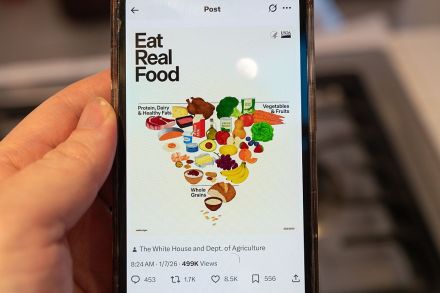
The USDA and Department of Health and Human Services has issued a new food pyramid, and it’s simultaneously great and appalling. On extreme upside, the Trump administration, run by someone who enjoys a quarter pounder with cheese for lunch, recommends a diet rich in protein, vegetables and fruits, while demonizing sugars, processed foods, and empty carbohydrates. On the other hand, it indicates that saturated fats are good for us. The pyramid features a thick juicy steak at the top of the pyramid, next to a roasted chicken, an enormous broccoli floret, a chunk of Emmental, a meatloaf and a packet of frozen peas. The next level down is avocado, olive oil, canned green beans, salmon and a pear.

Food

A road to healthier forests

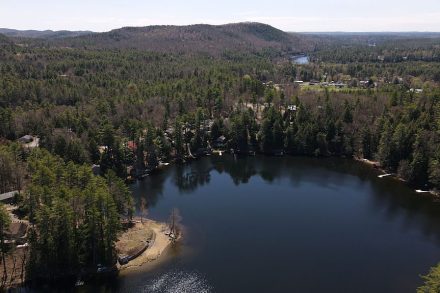
The US Department of Agriculture rescinded the 2001 Roadless Rule last week, a regulation that restricted road building and timber extraction in about 30 percent of land managed by the National Forest System. Judging the pushback from environmentalists, you might think that President Trump was selling Yosemite to a logging company. But the red-tape cutting actually increases public recreation access and opens neglected forests to fire-mitigation projects. Conservationists should be celebrating. On paper, the Roadless Rule preserved America’s most beautiful landscapes. In practice, the regulation proved burdensome and ecologically counterproductive. For instance, some 2,400 Tinglit Native Alaskans reside on islands in the Tongass National Forest.

forests road

MAHA must harness the power of Gwyneth Paltrow

Gwyneth Paltrow may be set to pass her celebrity-everyone-loves-to-hate crown to another out-of-touch elitist. The Goop founder and queen of outrageous “wellness” hacks has announced – gasp! – that she’s begun eating like the rest of us. Paltrow has followed a Paleo diet for years – meaning she cut out virtually all culinary joy for the sake of eating like a cavewoman, though I assume she did more gathering than hunting. Yet on her Goop podcast last week, Paltrow announced, “I’m a little sick of it if I’m honest. I’m getting back into eating some sourdough bread and some cheese. There, I said it. A little pasta. After being strict with it for so long.” Paltrow’s foray into normal-people food is serendipitous; or perhaps it’s ingenious timing.

gwyneth paltrow

Menendez sentenced to eleven years in prison

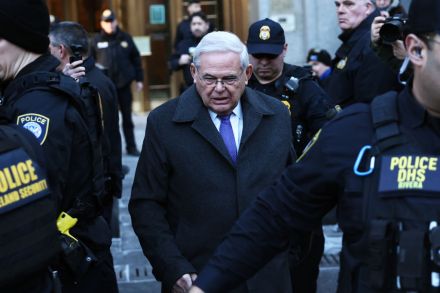
Former senator Bob Menendez was sentenced yesterday to eleven years in prison on charges of bribery, acting as a foreign agent and more. The sentence followed a nine-week jury trial, where it was shown beyond a reasonable doubt that Menendez, a Democrat from New Jersey, accepted bribes of cash, furniture, gold bars and a car to influence his role as a member of the federal legislature and chairman of the Senate Foreign Relations Committee on behalf of Egypt and other parties between 2018 and 2022. Menendez was prosecuted and sentenced alongside Wael Hana and Fred Daibes, who were sentenced to over eight years and seven years, respectively, for bribery and conspiracy.

Exclusive: Biden admin sending 500 USDA employees to assist with border crisis

The Biden administration is asking US Department of Agriculture employees to abandon their day jobs and volunteer for months-long stints at the US-Mexico border, despite repeatedly insisting that the influx of unaccompanied minors has not reached 'crisis' levels. The USDA's Natural Resources Conservation Service (NRCS) offered employees an 'informational unaccompanied minors' session last week 'to learn more about volunteer detail opportunities for employees', according to an email obtained by The Spectator. Volunteers would be responsible for working directly with migrant children to interview them for their legal cases and help connect them with adult sponsors residing in the United States.

usda