Usa

A renewed special relationship

From our UK edition

Freddy Gray, Paul Wood and Kate Andrews discuss Trump's arrival at the White House:   As president, Barack Obama was too cool for the special relationship. The romantic bond between the United States and Great Britain, which always makes Churchill fans go all soggy-eyed, left him cold. Obama was more interested in globalism, ‘pivoting’ to Asia and the European Union. Donald J. Trump is a very different creature. The new US President seems to cherish Great Britain, whereas the EU annoys him. Brexit is beautiful, he believes — and the EU is falling apart. Trump may or may not know the name of the British Prime Minister but, as he told Michael Gove this week, he is determined to strike a free trade agreement with Britain ‘very quickly’.

Hack of the century

From our UK edition

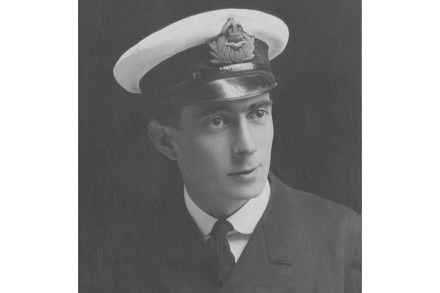
To all those computer hackers exulting in pizza-encrusted bedrooms across central Europe — the US presidential election was influenced! The CIA said so! — I would say this: yes, yes, perhaps. But listen: when it comes to altering the course of history through hacking, Britain is waaaay ahead. Indeed, if you want to hear about intercepted communications properly changing the world, there is one incident in particular, 100 years ago this week, that had a much more seismic effect. The hacker hero of this story is a witty Old Etonian, a young publisher with a love for amateur dramatics. And the secret message, obtained by tapping telegraph wires (the hacking of its day) and then subsequent decoding, was from the German foreign secretary to his ambassador in Mexico.

Star Wars is the perfect analogy for the decline of America

From our UK edition

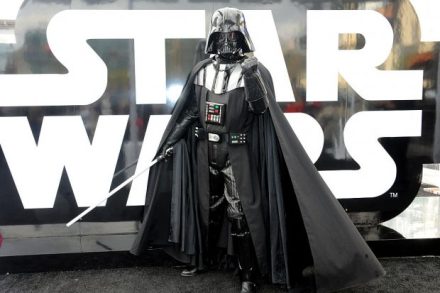
Star Wars is a generational thing and older people think my cohort are mentally subnormal for enjoying it, but it's been such a part of my childhood that I'm prepared to just set aside that voice in my head telling me it's nonsense. So I was sad when I came out of the cinema earlier this week, having watched the best Star Wars film in at least 36 years, to hear that Carrie Fisher had died. Rogue One is an interesting example of my theory of Ottomanism. In the most recent Star Wars films the human rebels have been overtly multiracial while the baddies are almost to a man of northern European appearance (including lots of Brits - I'm pretty sure the original started the craze for English baddies in Hollywood. Before 1977 they tended to be Russian or German).

Deplorable entertainment

From our UK edition

Buried Child is a typical Sam Shepard play. The main character, Dodge, is a brain-damaged alcoholic cripple stuck in a Midwest shack with a half-witted xenophobic wife shrieking at him from the coal cellar. The wife makes an early speech about her son who ‘married a Catholic whore’ and got stabbed to death by her on his honeymoon. This sets the tone for the play. Every character is a shrill, chippy barbarian and every speech is an exercise in tragicomic one-upmanship. The audience for Shepard’s work consists of social voyeurs who want to gawp at the underclass from a safe distance. The play purports to be a mystery but the family secret is revealed in the title. Even so, Shepard proceeds as if there were a puzzle to solve. He keeps offering us ‘clues’.

No peace, no pussy

From our UK edition

The bizarro concept of a ‘President-elect Trump’ came to pass despite the wishes, clearly stated on the stump, of the entertainment-industrial complex. They all came out for Hillary — Queen Bey, the Boss, Jay-Z, J-Lo, SJP, Kimye, Madge, Meryl, Gaga, Lena D, old uncle Team Clooney and all. How the alt-right cackled when this star-spangled nobility got in-yer-faced by a basket of deplorables from the West Virginia coalfield. In the circumstances, now is maybe not a propitious moment for Spike Lee (who felt the Bern) to unleash a finger-wagging homily about America and guns. Chi-Raq, you wouldn’t be alone in not knowing, takes its title from the alternate name lately given to Chicago in the state of ‘Killinois’.

Screen grab

From our UK edition

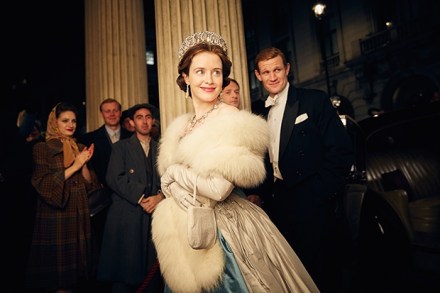
St James’s Palace. 1953. A dynamic Duke of Edinburgh is relishing a ding-dong with the antediluvian fossils of the Coronation Committee. He wants to embrace modernity by allowing the BBC to televise the ceremony. The ‘grey old men’ want to continue doing things in exactly the same way that they have been done since 1066. Modernity prevails and the coronation is the biggest television spectacular there has been. This episode, splendidly recreated with a little artistic licence in The Crown, Netflix’s epic about the Queen, was a tipping point in terms of the public’s acceptance of the medium of television. Many viewers acquired their first sets for the sole purpose of watching the coronation. Now, in the television world, the wind of change is rising again.

Full steam ahead

From our UK edition

To write, and indeed to read, a history of considerable range, both in terms of chronology and of subject matter, is a profound challenge. The fourth volume in Peter Ackroyd’s History of England starts with the Glorious Revolution of 1688 and ends with Waterloo in 1815. It was a period that laid the foundations of the modern British state and created the basis of its prosperity, and of its status as the world’s greatest power later in the 19th century. During the 130 years Ackroyd covers there were revolutions in attitudes too: though when he writes of the coarse humour of cartoonists such as Gillray, and the aggressive expressions of public opinion in incidents such as the Gordon Riots, one wonders whether the temper of the English people is so very different today.

The new first lady

From our UK edition

It was a race between the first dude — Bill — and the first nude — Melania. And in the end, the first nude won, appearing next to her husband in the early hours wearing a white jumpsuit straight out of Charlie’s Angels. It may seem unfair to judge Mrs Trump so early on, but judged she will be. She awaits her turn, just as Hillary Clinton once did. How will she fare? Well, liberal American voters will want targets, and she looks like one. People are already making jokes about Michelle Obama writing Melania’s first speech, to save her the trouble of plagiarising again. There is so much for her to live up to. She must be as elegant as Jacqueline Kennedy; as eloquent as Mrs Obama; as astute as Nancy Reagan; as political as Hillary Clinton.

Tongue twister

From our UK edition

Arrival is a big budget sci-fi film with a smaller, more pensive, cleverer film trying to get out, which has to be an improvement on a dumb film with an even dumber film trying to get out, as in the manner of Interstellar, say. So we have that to be thankful for, at least. The film stars Amy Adams, who appears to be everywhere these days. (Check your sock drawer and under the bed; you never know.) She plays Dr Louise Banks, a university linguist who lives in a beautiful, modernist lakeside house, as any academic in any American film always does. (Do such houses come with tenure?) As we see right at the start, she is mourning the death of her daughter.

Country music | 10 November 2016

From our UK edition

There was something unexpectedly moving about hearing not just one but several renditions of the somewhat naive and rose-tinted but always heartfelt ‘The Star-Spangled Banner’ when I switched on the radio after several days’ absence. America has been so much in our thoughts these past few weeks, but a distasteful, shameful version of itself. It was just so refreshing to hear something different, something meaningful, yet still so American, like a glass of ice-cold water after a long walk in the heat.

Notes on California

From our UK edition

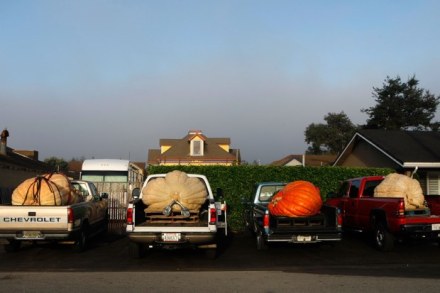
The mood in California was apologetic. Most people we met seemed embarrassed that their country’s dirty laundry was being aired quite so publicly. Hillary or the Donald? It will have to be Hillary, they sighed. Few seemed stirred by the prospect, but it was hard to avoid the subject. In Half Moon Bay in San Mateo county, we stayed at the Ritz-Carlton, perched on top of the cliffs. While salty mist drifted across the Pacific and pods of whales floated by, the second presidential TV debate rumbled on in the hotel bar. As the two candidates sparred, guests tut-tutted over their gin fizzes and tried not to look entertained. It was pumpkin season and the fields were dotted with swollen, pimply gourds.

The lying game | 27 October 2016

From our UK edition

‘Adam Curtis believed that 200,000 Guardian readers watching BBC2 could change the world. But this was a fantasy. In fact, he had created the televisual equivalent of a drunken late-night Wikipedia binge with pretentions to narrative coherence...’ You really must watch Ben Woodhams’s brilliant 2011 Adam Curtis-pastiche mini-documentary The Loving Trap, which you’ll find on YouTube. It’s so devastatingly cruel, funny and accurate that when I first saw it I speculated that Curtis would never be able to work again. https://www.youtube.com/watch?v=x1bX3F7uTrg But this was fantasy. Of course, I knew that Curtis would be back, not least because to be parodied in this way is not an insult but a sure sign that you’ve seriously made it.

Ziggurat of bilge

From our UK edition

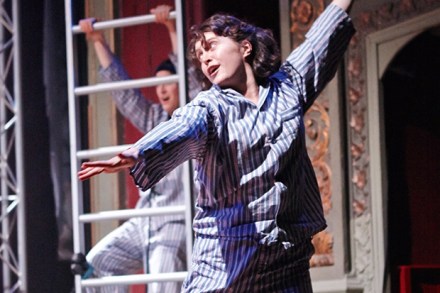
Ella Hickson’s new play analyses our relationship with oil using the sketch format. First, there’s a candlelit soap opera set in Cornwall, in 1889, with a lot of ooh-arr bumpkins firing witless insults at each other. Next, a bizarre Persian scene, set in 1908, where a Scottish footman (who uses the celebrated Edwardian colloquialism ‘OK’) rescues a ditzy waitress from a sex-maniac serving in the British army. Then we move to Hampstead, in 1970, where a female oil magnate is visited by a Libyan diplomat seeking to nationalise her wells by waving documents at her, in her kitchen, while teenage kids pop in and out performing oral sex on each other. (This is one of the most disorganised pieces of stage writing I’ve ever witnessed.

Going nowhere fast – and loud

From our UK edition

As a general rule, I would not wish to spend nearly three hours in a mini-van with young people who turn up the music real loud. As a general rule, being the age I am, I would go to any lengths to avoid such an experience. But American Honey is a film by Andrea Arnold and even though it does require you to spend nearly three hours in a min-van with young people who turn up the music real loud, you will not, in fact, regret it. Or at least not regret it entirely. A bit, perhaps, but you’ll get a good two hours regret-free. This is the first American film by Arnold, the British director who made Wasp and Red Road and Fish Tank — three brilliant films in the social-realist tradition, one of which happens to be among my favourite films of all time. (Clue: Red Road.

American beauty | 29 September 2016

From our UK edition

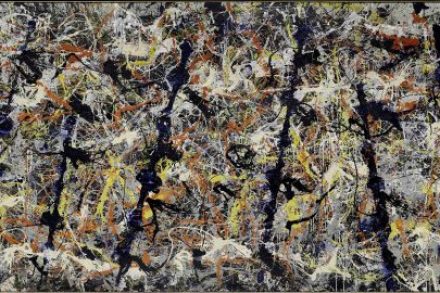
‘At last,’ wrote Patrick Heron, a British painter, in 1956, ‘we can see for ourselves what it is to stand in a very large room hung with very large canvases by Jackson Pollock, Willem de Kooning, Mark Rothko, Clyfford Still, Franz Kline and others.’ Just over 60 years later, we, too, can stand in a series of grand galleries at the Royal Academy’s Abstract Expressionism and see what Heron saw, and much more. He was at the (greatly anticipated) first showing of those fabled American artists in Britain. Since then, they have frequently been exhibited individually, but there has been just one collective show of the movement. Now Pollock, de Kooning and co. are back in town. Cumulatively, the result is majestic, exhilarating and visually overpowering.

One day in November

From our UK edition

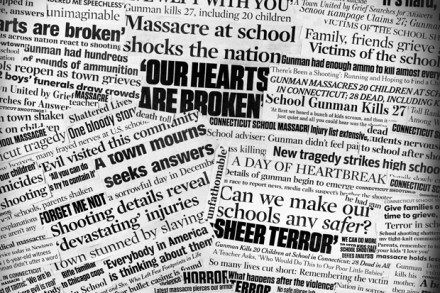
The weather was ‘treacherous’ on Saturday, 23 November 2013, the day chosen randomly by Gary Younge as the focus for his latest book, Another Day in the Death of America. As he described it, a ‘Nordic outbreak’ of snow, rain and high winds swept across the desert states and up into the northern plains. It was for many Americans a winter’s day like many others but for ten families a shot rang out sometime during those 24 hours and their lives changed for ever. Not that these ten disparate events made the national news. Death by gunshot is so commonplace in the USA that not even when those who died are so young is it considered worth highlighting, remembering, bewailing.

Making history | 22 September 2016

From our UK edition

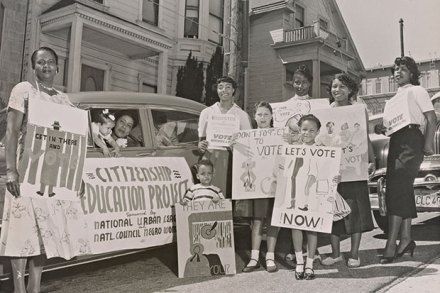
‘A fool’s errand’. That is how Lonnie Bunch, founding director of the Smithsonian’s National Museum of African American History and Culture, wryly characterises the decade’s work it took him to get the museum built. It opens in Washington DC this weekend. A talented fundraiser, he and his team matched the $270 million from the federal government (Oprah Winfrey donated $21 million, Michael Jordan $5 million), and travelled the country sourcing artefacts. Most difficult of all has been convincing critics that such an institution — devoted as it is to the history of black America — is necessary and not divisive, that it will tell a story, not of one culture for that culture, but of America.

Let the good times roll

From our UK edition

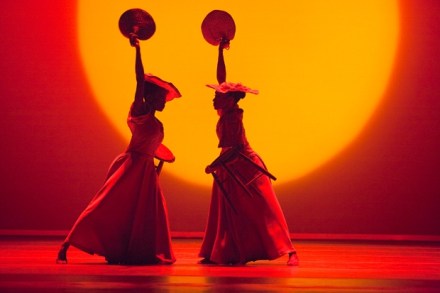
For a regular dancegoer in New York City, the Alvin Ailey American Dance Theater seasons arrive with the comforting predictability of a Christmas Nutcracker. Superb dancers, Ailey’s sublime Revelations, jubilant audiences, stirring evocations of African-American identity: it’s easy to begin to take these things for granted. When you haven’t seen the Ailey company for a while, a season packed with these riveting dancers is a newly wondrous thing, a fresh discovery of the particularity that makes the troupe both a cultural and historic phenomenon. The company’s Sadler’s Wells Theatre season, which opened on the 6 September and runs through to the 17th, is the start of a six-week UK tour.

Blair witch project

From our UK edition

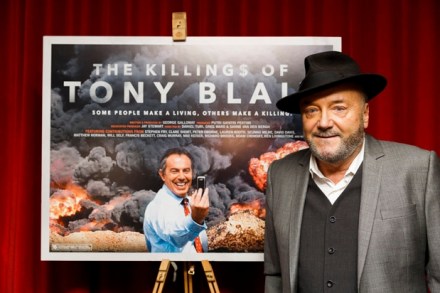
I had been wondering where Gorgeous George Galloway might pop up next. Defenestrated from his seat in Bradford West, humiliated in the London mayoral elections — where he received 1.4 per cent of the vote — and no longer apparently an attractive proposition to the reality TV producers, his public life seemed sadly to be drawing to a close. But nope, here he is with a film about the person all left-wing people hate more than any other, Tony Blair. It’s a good film, too, in the main. The Killing$ of Tony Blair was partly crowdfunded and it may well be that the only people who watch it will be those who forked out to have it made.

Why don’t black lives matter at the carnival?

From our UK edition

I do not get out very much these days, but the glorious weekend weather persuaded me that I should spend a pleasant afternoon watching people stabbing each other at our annual celebration of stabbing, the Notting Hill Carnival. I go most years and enjoy the street food, the music and the sight of white police officers with fixed rictus grins ‘getting down’ with some vast-mammaried semi-clad mama, their helmets askew and rivulets of sweat running down each crisp white shirt. And of course the violence, the violence. I am delighted to say that in this regard 2016 did not disappoint, with more than 400 people arrested and five stabbed — and all for the very reasonable cost of just £7 million to the taxpayer.