Usa

‘Global Britain’ should learn from New Zealand’s mistakes

From our UK edition

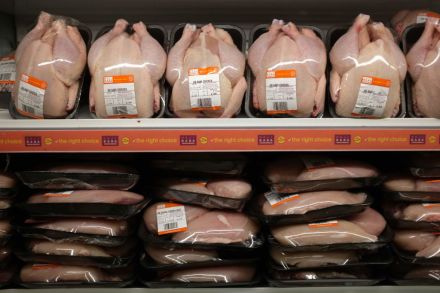
One of the greatest prizes from Brexit is the opportunity to make the Global Britain aspiration a reality. Included is a leadership role at the World Trade Organisation (WTO) where the UK, the fifth biggest economy in the world, could help drive much-needed progress to facilitate global trade. Leadership, however, requires respect to back it up. In trade terms, that means walking the talk of trade liberalisation at home. Once free of the EU, the UK knows that its thriving farming sector will therefore require access to global markets. But the trade agreements to deliver that access must be consistent with WTO rules. Recent talk of the UK adopting a tiered tariff system, based on perceptions of animal welfare and health standards, would be a direct breach of those rules.

Can America’s 2.5 million jobs miracle be replicated in Britain?

From our UK edition

The US economy created 2.5 million jobs last month – the biggest monthly jobs gain since records began a century ago, albeit only a partial recovery from the 22 million jobs lost during lockdown. These figures have blown expectations out of the water. Economists were predicting yet more unemployment: the consensus was unemployment reaching 8.3 million, or 20 per cent in May, up from 14.7 per cent in April. Defying the odds, unemployment actually fell to 13 per cent, signalling an unexpectedly early start in the rebounding of the American economy. The biggest winners were workers in hospitality, who made up almost half of the new jobs, followed by construction.

It is a pity both Trump and Twitter can’t lose

From our UK edition

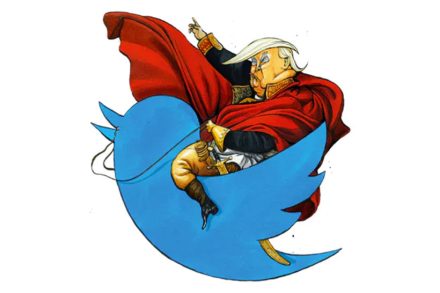
It may be the ultimate Kissinger Dilemma: Donald Trump versus the platform that helped make Donald Trump president. Contemplating war between Iraq and Iran, Henry Kissinger is said to have mused: ‘It's a pity they can't both lose.’ It’s a pity Trump and Twitter can’t both lose their current skirmish. On Wednesday, the social media publisher that pretends it’s not a publisher attached a fact-check to a Trump tweet. The President had posted: https://twitter.com/realDonaldTrump/status/1265255835124539392?ref_src=twsrc%5Etfw Trump is concerned that ballot impropriety might cost him re-election, rather than his Covid-19 response or the absence of a wall on the Mexican border.

The fanatical thinking that’s on its way to Britain

From our UK edition

For anyone who isn’t following the long march of racial self-flagellation through America’s institutions, last week’s revelations about the excesses of New York City’s education tsar will come as a shock. Schools chancellor Richard Carranza has introduced mandatory ‘anti-bias and equity training’ for the city’s 75,000 teachers at a cost of $23 million a year. During these ‘workshops’ the teachers are told that ‘worship of the written word’, ‘individualism’ and ‘objectivity’ are all hallmarks of ‘white supremacy culture’ and that it is better to focus on middle class black students than poor white ones.

The global politics of a pandemic

From our UK edition

The Great Game of the 21st century is upon us and as ever it’s a scramble for resources. This time, though, the thirst is not for land or diamonds or gold. Personal protective equipment has become the oil of the contemporary moment: desperately needed by a world that is strafed by coronavirus. Britain has its own urgent PPE supply problems. But what about the broader international struggle? The answer to this question offers the clearest glimpse of how our post-pandemic global politics is likely to look.   At the top of this scramble stands China. Ahead of the curve (for obvious reasons), it imported about 2.5 billion healthcare items between 24 January and 29 February, thereby denying vital equipment to other countries.

Unreal, uncertain and mostly silent: life in the centre of New York’s coronavirus storm

From our UK edition

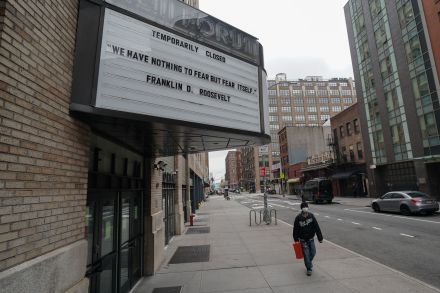
‘How are you bearing up?’ ‘Is everyone terrified?’ ‘What’s the mood?’ These are the questions concerned family and friends are kindly asking about New York City which, according to my armchair epidemiology, is about ten days behind Italy and ten days ahead of Britain. It would be reckless to describe things as calm, not with a New Yorker dying every seven (?!) minutes, and refrigerated trucks parked ominously outside hospitals. But I sense no mass panic. Life, of a sort, still goes on. People run, dogs are walked, post is delivered, Amazon arrives, and the shelves are stocked with food. The absence of cars without the presence of snow is a novelty, as are the nods of camaraderie.

How will the world be changed by the war against coronavirus?

From our UK edition

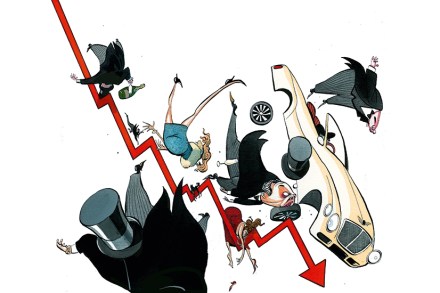
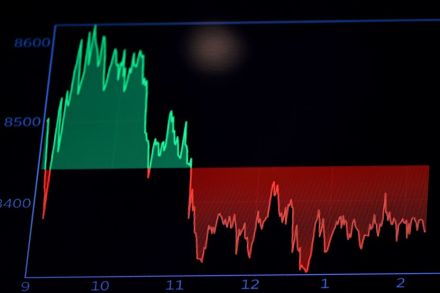
The world as we have known it for the past 40 years has come to a stop. We have a supply chain crisis, a demand crisis, a labour market crisis and an oil price crisis. The second crash that people were long predicting has arrived — but against the backdrop of the Covid-19 threat, it seems like a second-order story. The pound has already hit its lowest rate for decades, and more shocks may occur in the bond and currency markets. How long the disaster will last — or how much worse it will get — is anyone’s guess. Thanks to the virus, events which earlier this year would have been scarcely conceivable have come to pass.

Coronavirus has already caused a huge spike in unemployment

From our UK edition

In Britain and America, the employment news is grim. Nearly a million Brits – 850,000 more than usual – have applied for Universal Credit in the last fortnight. While in the United States, unemployment has reached an historic high. As of the end of last week, 6.6 million people claimed for out-of-work benefits. This is the highest increase in adjusted seasonal claims on record and is made even more astonishing when you consider that just four weeks ago fewer than 200,000 people applied for jobless benefits.  With every day that goes by, the health implications of Covid-19 are becoming clearer, as are the economic effects.

Surge in US welfare claims shows the devastating impact of Covid-19

From our UK edition

No one has modelled an economic lockdown before: no one knows what to expect. But the daily data is shocking, and points to a huge economic effect. In Britain, nearly 500,000 people applied for welfare (Universal Credit) over the last nine days. In America, the number of people applying for unemployment benefits surged to an unprecedented three million last week.  What has yet to be calculated (but urgently needs to be) is the human cost of all this We simply have not seen anything like this before, not even during the financial crash: the Covid crash has led to 3,283,000 claims - quadruple the previous record-high of around 700,000 in 1982.

The West is failing to rise to the challenge of coronavirus

From our UK edition

Having apparently shaken off the first phase of the coronavirus pandemic, the Chinese Communist Party’s propaganda machine is now in full swing. One of the more preposterous conspiracy theories they are peddling is that the spread of the disease was a deliberate attempt at subterfuge from the American government. As in the middle of the tragic Aids epidemic in the 1980s, geopolitical conspiracy theories are running rife, and overwhelmed national governments are desperate to find someone to blame for the crisis. The notion that the United States somehow contrived to unleash such a contagious and pernicious virus on its economic rival, however, is simply absurd.

What the UK wants from a trade deal with the USA

From our UK edition

On Monday, the Department for International Trade released its negotiating objectives for a UK-USA free trade agreement. The 184-page document explains in detail what the UK wants to get out of a trade deal with America. The British government will try to angle the talks, which begin this month, towards securing a comprehensive arrangement - that is, a deal that covers a broad range of areas including digital, finance, tech, manufacturing and agriculture. If secured, it estimates this could translate into a £3.4 billion boost to the UK economy. The government has put its 'leveling up' agenda at front and centre of these trade talks, laying out how each region potentially stands to gain from securing a deal with the USA.

What is a ‘tergiversation’?

From our UK edition

Last year, someone at US dictionary Merriam-Webster noticed that lots of people were looking up the word tergiversation online. It was because Washington Post columnist George Will had used it in a piece about the US senator Lindsey Graham. ‘During the government shutdown,’ he had written, ‘Graham’s tergiversations — sorry, this is the precise word — have amazed’. It might have been the precise word, but it has two meanings: one is ‘desertion or abandonment of a cause, apostasy’; the other is ‘shifting, shuffling, equivocation, prevarication’. Both are pejorative, taking the idea of turning one’s back on a principle, since the Latin for ‘back’ is tergum. From the context, Mr Wills meant the latter.

Is there method – or madness – behind Trump’s actions in Iraq?

From our UK edition

Leaders are often accused of escalating a conflict abroad in order to distract from headaches at home. On Tuesday, before Iran’s missiles were fired, Donald Trump seemed to be doing the opposite. He and his media surrogates started their now all-too-familiar yabbering about impeachment and the Democrats. It felt as if they were trying to move the news cycle away from the Iran crisis. We’re in an election year after all, and the polls suggest a large majority of American voters don’t want more war. Then Tehran launched what it is calling ‘Operation Martyr Soleimani’, which at first prompted a rare nervous silence in Washington. The White House led reporters to believe the President would gravely address the nation that night, but he postponed.

Iran’s generals are weeping for Qasem Soleimani. But soon they will prepare to fight

From our UK edition

It has been 24 hours since America droned Qasem Soleimani near Baghdad airport. Now both Iran and the United States are getting ready to deal with a new reality in the Middle East that has (quite literally) exploded into being. There is a mutual recognition that when Soleimani died, the old rules of the game died alongside him. What is instructive about his assassination is not that it happened, but that it took so long. After all, this was a man whose carefully posed portrait spread across Twitter every time he visited yet another of Iran’s many wars in the region. If I knew when Haji Qasem was in Syria, then the Americans surely did too.

Full of fascinating data and excellent comedy: Messiah at Stratford Circus reviewed

From our UK edition

I’ve joined the Black Panthers. At least I think I have. I took part in an induction ceremony at the start of Messiah at Stratford Circus. ‘Stand up,’ said the actor Shaq B. Grant to the predominantly white crowd. ‘Raise your right fist and repeat after me: “I am a revolutionary.”’ Everyone obeyed and chanted his mantra, some with more sincerity than others. Then the show began. The subject is a notorious police raid on a Panther hideout in Chicago in 1969 which resulted in the death of Fred Hampton, a 21-year-old activist nicknamed ‘the Black Messiah’. The police alleged that the Panthers opened fire first. The Panthers claimed that Hampton sustained survivable wounds during the raid and was later executed by unnamed police officers.

Scorsese at his most leisurely, meandering and engrossing: The Irishman reviewed

From our UK edition

The Irishman is Martin Scorsese’s three-and-a-half-hour epic — a mobster-a-thon, you could say — starring Robert De Niro, Al Pacino, Joe Pesci and a light sprinkling of Harvey Keitel (he’s only in a couple of scenes). It’s based on the true, late-life confession of Mafia hitman Frank ‘The Irishman’ Sheeran and, while gangster flicks can often leave me cold and sometimes baffled — he was dispatched to sleep with the fishes for why? — this is magnificently engrossing. I wasn’t bored for a single minute which, given there are 210 of them, has to be a triumph, surely.

The story behind Donald Trump’s fake withdrawal from Syria

From our UK edition

That noise you can hear is Donald Trump flip--flopping in the sand. Last week, American troops and dozens of tanks and armoured vehicles moved to occupy oil fields in Syria. The escalation came just half an hour after Trump had tweeted that all US soldiers had left the country and would be coming home. As so often, the President says one thing, then orders the military to do the other. On Twitter, Trump is ending the endless wars. In the real world, he is perpetuating them. Trump’s focus is not really Syria, of course. It is the presidential election next year, and his precious voter base. But he can’t seem to decide if his supporters are peaceniks or bloodthirsty chauvinists. His problem is that they are both and neither.

Only fitfully funny: Chris Morris’s The Day Shall Come reviewed

From our UK edition

The Day Shall Come is a second feature from British satirist Chris Morris and like the first, Four Lions, it is a ‘comedy of terrors’, you could say. But this time, rather than a group of hapless home-grown Muslim suicide bombers we’ve decamped to America and it’s the FBI that will do anything to get their man even if that man is harmless and insists that God speaks to him through a duck. It is funny, fitfully, but it asks us to laugh at someone I wasn’t sure we should be laughing at, plus it is repetitive and acts like we didn’t get the joke the first time, when we did. Or, at least, I did. You may be slower-witted, of course.

An over-flogged horse

From our UK edition

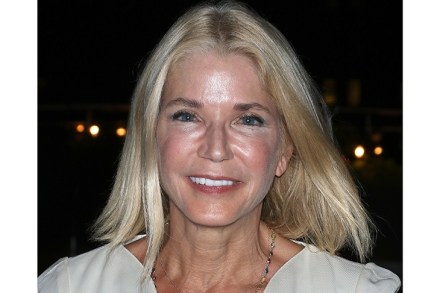
On paper, Candace Bushnell and the medieval warlord El Cid don’t have a lot in common. The first made a fortune from persuading a generation of women that brunch with a bunch of broads was something to aspire to. The second scrapped his way through Spain, eventually establishing an independent principality. But the thing film fans recall about the latter is that immediately after his death he was propped up on his noble mount one more time to inspire his weary troops into battle. The story may be apocryphal, but while reading Is There Still Sex in the City? I couldn’t get the image out of my head. It isn’t salubrious to see a fine writer strapped to the same old over-flogged horse and sent out once again as the standard-bearer for sexy sexagenarians.

A whole lotta shakin’ goin’ on

From our UK edition

Sometimes it’s hard to describe a play without appearing to defame the writer, the performer and the theatre responsible for the production. Here’s what I saw. A semi-naked woman lurks in a corner, with her back to the audience, shaking. Rap music pounds. The woman shakes and shakes. Then she shakes a bit more. And a bit more. As her weird spasms enter their 17th uninterrupted minute, the spectators glance anxiously at their watches. Finally the woman’s twitching ceases. Speaking in a New York accent, she recites a conversation between an inquisitive child and an older girl. The theme is explicit sex chat.