Usa

A smooth passage

From our UK edition

Jonathan Raban left Britain and moved to Seattle in 1990, when he was 47. He sold his Volkswagen on his way to Heathrow airport. He bought a Dodge with Washington state plates the next day, and in this second-hand car he would, over the years, travel through and write about his new country. ‘The Pacific Northwest continues to be a magnet — the strongest regional magnet in the country, I would guess — for hopefuls and newlifers of every imaginable cast,’ Raban wrote in the summer of 1993, in a piece that’s now republished in Driving Home: It feels like the last surviving corner of the United States to be widely promoted … as the one green spot in the moral sand-waste of the world.

“Henceforward all men everywhere will be living on the edge of a volcano”

From our UK edition

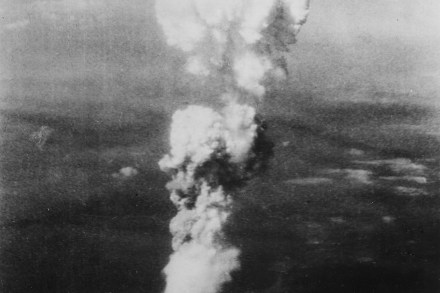
With today being the 65th anniversary of the bombing of Hiroshima, I thought I'd excavate The Spectator's leading article from the time:    A Crisis of Civilisation, The Spectator, 10 August, 1945 In Mr Churchill's statement about the atomic bomb issued by Mr Attlee on Sunday exultation at having anticipated the enemy gave way to awe. Mr Churchill spoke of this "revelation of the secrets of Nature" as one "long mercifully withheld from man." So terrific a power of destruction is now known to be in the hands of the Allies that in retrospect we can see that the race between the scientists threatened to be the decisive factor in the war against Germany.

US double talk on Megrahi

From our UK edition

If what the Sunday Times reports is true, then Kenny McAskill deserves an apology. ‘In the letter, sent on August 12 last year to Alex Salmond, the first minister, and justice officials, Richard LeBaron (deputy ambassador in London) wrote that the United States wanted Megrahi to remain imprisoned in view of the nature of the crime. The note added: “Nevertheless, if Scottish authorities come to the conclusion that Megrahi must be released from Scottish custody, the US position is that conditional release on compassionate grounds would be a far preferable alternative to prisoner transfer, which we strongly oppose.

King and his killer

From our UK edition

In the late days of the Bush administration, it was fashionable among liberals to call George W. Bush the ‘worst’ president since the founding of the republic and to suggest that under his leadership America experienced its own version of the Dark Ages. In the late days of the Bush administration, it was fashionable among liberals to call George W. Bush the ‘worst’ president since the founding of the republic and to suggest that under his leadership America experienced its own version of the Dark Ages. Even allowing for Bush’s considerable ignorance and malevolent world view, those contemporary doomsayers had forgotten recent history.

Schlock teaser

From our UK edition

The somewhat straightlaced theatre-going audiences of 1880s America, eager for performances by European artistes like Jenny Lind and solid, home-grown, classical actors such as Otis Skinner, were hardly prepared for the on-stage vulgarity that the (usually) Russian and Polish immigrant impressarios, with their particular nous for show-biz, were to unleash into the saloons and fleapits across the young nation.

Reds under the bed

From our UK edition

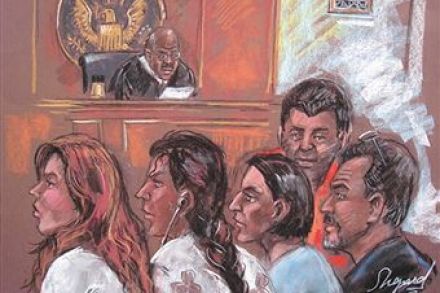
This Russian spy story just gets better and better. First a young, attractive Russian woman called Anna - with a penchant for uploading suggestive pictures of herself onto Facebook -- is seized in an FBI swoop for being at the centre of a Russian espionage network. Next, it emerges that the agents from Moscow had outwitted the FBI by going back in time. Aware that electronic messages — via mobile, or online -- are are an open book to any decent spook-catcher, they simply learnt from the past and used invisible ink and messages in buried bottles to send information their colleagues in South America. Some of the spies even are said to have been schooled in Morse code.

High priest of bop

From our UK edition

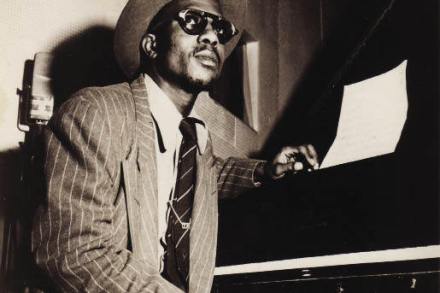
In the Rainbow Grill in New York one evening in 1971, according to Robin D. G. Kelley, Professor of History and American Studies at the University of Southern California, Duke Ellington  halted his band in mid-flow and announced: ‘Ladies and gentlemen, the baddest left hand in the history of jazz just walked into the room, Mr Thelonious Monk.' In the Rainbow Grill in New York one evening in 1971, according to Robin D. G. Kelley, Professor of History and American Studies at the University of Southern California, Duke Ellington  halted his band in mid-flow and announced: ‘Ladies and gentlemen, the baddest left hand in the history of jazz just walked into the room, Mr Thelonious Monk.’ In the code of jive talk, ‘baddest’ meant the best.

Whither America?

From our UK edition

At the beginning of The Ask, Horace sits with Burke and proclaims that America is a ‘run down and demented pimp’. At the beginning of The Ask, Horace sits with Burke and proclaims that America is a ‘run down and demented pimp’. Horace is not Quintus Horatius Flac- cus; and Burke is not Edmund Burke. The two men are employees of the fundraising department of a mediocre university in New York, whose job is to approach the rich families of former students and solicit donations. This is, of course, a peculiarly American job, where the super-rich are relied upon to finance academe in exchange for favours bestowed on their offspring. At least, that’s the version of private college funding put across by Sam Lipsyte.

Insufficiently honoured here

From our UK edition

‘Next time it’s full buggery!’ said Christopher Hitchens as I helped him onto a train at Taunton station after a full luncheon of Black Label, Romanée-Conti, eel risotto and suckling pig. ‘Next time it’s full buggery!’ said Christopher Hitchens as I helped him onto a train at Taunton station after a full luncheon of Black Label, Romanée-Conti, eel risotto and suckling pig. His jaunty remark was overheard by a little old lady standing next to me on the platform. ‘Gentlemen, honestly!’ she said, reaching for the train door. But it was locked. Hitchens stuck his torso out of the window and called to the platform manager to let her in. ‘Too late’, said the uniformed attendant in a flat voice.

Trans-Atlantic  powwow

From our UK edition

I’m in Washington DC at a high-level seminar on trans-Atlantic relations with the “who is who” of Europe and the US, talking about issues of common concern. The Germans are here in force, as are the French, with high-ranking officials speaking about topics like Russia and Iran. Interestingly, the Brits are notable in their absence. It is probably a sign that the British government is still in transition mode, unable to explain any new policies, unready to stake out new positions. Or they may not be bothered with unofficial events such as these given the privileged access they have. But it is worth noticing nonetheless.

Climate kamikaze

From our UK edition

Several months ago, European leaders went to Copenhagen to save the planet. China, India and Brazil on the other hand went to the climate negotiations in Denmark to showcase the changed distribution of power in the world. Unsurprisingly, the Europeans came home empty-handed, shut out of the key negotiations and powerless despite what was meant to be a standard-setting promise of 20 percent cut in the EU's greenhouse gas emissions. The US and the rising powers struck a non-binding deal, the value of which is still being determined.

Building on the coalition’s good start

From our UK edition

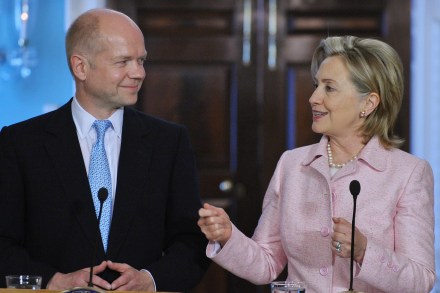
A week in, and I am loving the Conservative-led government. The new line-up of Secretaries of State is very impressive and, though a few solid Tory politicians missed out on Cabinet posts, the inclusion of the Liberal Democrat bench has swelled the government’s talent quota. David Cameron has infused No 10 with energy and purpose. You can just feel the umpf. As the former MP John Gummer said, there is now “smile on the face of Britain”. Foreign Secretary William Hague’s trip to the US set the right tone by calling the UK-US link “an unbreakable alliance”.

A girl’s best friend

From our UK edition

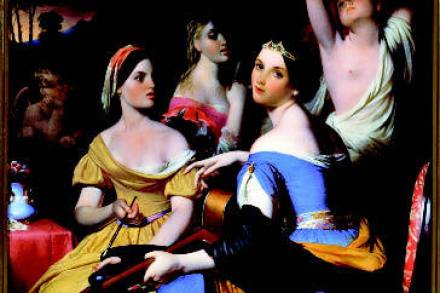
If you wanted to write about Marilyn Monroe, how would you go about it? The pile of biographies, memoirs and novels about poor, sad Marilyn is already teetering. How could you make something new of her life? Clever Andrew O’Hagan has come up with an answer: by writing as her pet dog. How the hound came to be in her possession is a terrific story in itself. Maf, a Maltese terrier, was given to Marilyn by Frank Sinatra (the dog’s name was her sly reference to Sinatra’s alleged mafia connections). Sinatra got the dog from Natalie Wood’s mother, who regularly travelled to Britain to scoop up puppies, in much the way that contemporary Hollywood stars now trawl the globe for orphaned children.

The G-men or the Granola Army

From our UK edition

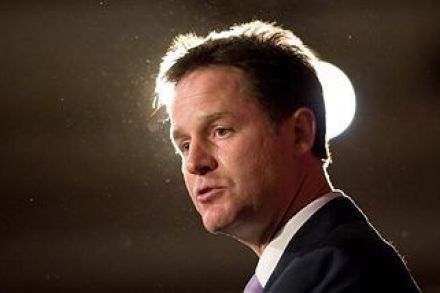
In the last stretch of political campaigns, things tend to get ugly as the real cost of winning and losing becomes clear. This one is no different, with its suggestions of tactical voting and disagreements about tactical weapons. The latter has become particularly viscious with a former spymaster, an ex-general and a former CT chief calling into question the securty and defence policies Nick Clegg and the Liberal Democrats. In their defence, the Lib Dems have positioned their biggest weapon, Paddy Ashdown, who fired a volley against Richard Dearlove, the former head of MI6, saying that "things had changed since he supplied intelligence to Tony Blair about Iraq and WMD". Bull's eye! But who is right - Britain's G-men or the Granola Army?

The map turns red

From our UK edition

Norman Stone forsook the chair of modern history at Oxford university for Ankara after realising that the ‘conversation at high tables would generally have made the exchanges in the bus- stop in the rain outside seem exhilarating’. Norman Stone forsook the chair of modern history at Oxford university for Ankara after realising that the ‘conversation at high tables would generally have made the exchanges in the bus- stop in the rain outside seem exhilarating’. Dur- ing an earlier incarnation at Cambridge, Stone taught a galaxy of historians. His protégés include David Blackbourn, Harald James and Richard Overy, followed by Niall Ferguson and Andrew Roberts, all bar two now working at Harvard or Princeton.

Serving God and Mammon

From our UK edition

People have written books about America long before the United States declared itself, and we may be forgiven for asking if we really need another. Doesn’t America already loom large enough in our world; hasn’t it all been said before? Well, yes and no. There’s a sense in which we’re all Americans now because that country is ourselves writ large or — as America might see it — set free. And although much of what is said here may have been said before, it’s rarely been said as concisely and well. Nor have the paradoxes that divide, and unite, that great country been so carefully and sympathetically delineated. Tristram Riley-Smith takes his title from the famous Liberty Bell, allegedly rung when the Declaration of Independence was read out.

Refusing to play the game

From our UK edition

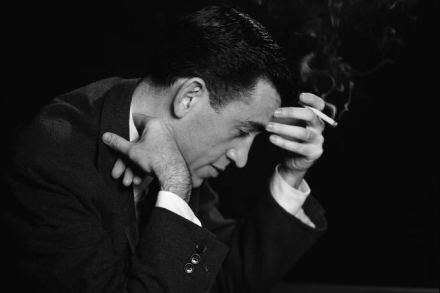
What sort of person would you expect to be bringing out a life of J. D. Salinger two months after his death, bearing in mind that Salinger was more obsessive about his privacy than any other writer in human history and fought the publication of the last biography all the way to the US Supreme Court? You might not expect the answer to be Kenneth Slawenski. Who, you may ask, is he? Well, he is a pretty private person too. I pummelled the web and the only meagre intelligence I could extract is that he was born and raised in New Jersey and has worked in computers. This may be his first book, for he mentions no other on the dustjacket, and tells us only that he runs the ‘definitive Salinger website’, deadcaulfields.com. So he is not by trade a biographer or a critic.

The whirlwind and the saint

From our UK edition

Dave Eggers is the very model of the engaged writer. Since publishing his first book, the memoir A Heartbreaking Work of Staggering Genius, he has branched out into all kinds of philanthropic literary activity. His organisation, McSweeney’s, has become a major imprint, championing emerging writers. In San Francisco, he has set up a community writing project, called 826 Valencia, which now has branches in six other cities. In 2004, he created Voice of Witness, ‘a series of books that use oral history to illuminate human rights crises around the world’.

Annals of war

From our UK edition

‘I was not an enthusiast about getting US forces and going into Iraq,’ Dick Cheney said in 1997, looking back on the First Gulf War. ‘I was not an enthusiast about getting US forces and going into Iraq,’ Dick Cheney said in 1997, looking back on the First Gulf War. ‘I felt there was a real danger that you would get bogged down in a long drawn-out conflict, that this was a dangerous, difficult part of the world.’ How, half a decade later, was that prescience brushed aside by governments on both sides of the Atlantic in the rush for regime change? The Chilcot Inquiry, whose committee of the great and the good has teased out much about the musings of politicians and mandarins in once smoke-filled rooms, may or may not find the answer.

Yanukovych – Ukraine’s Nixon?

From our UK edition

It is easy to paint Ukraine’s new leader, Viktor Yanukovych, as a pantomime monster, Russian stooge and businessman’s puppet. Last month I suggested his electoral victory over namesake Victor Yushchenko may not be as bad as people think. Now Andrew Wilson, Britain’s foremost Ukraine expert, argues the same. In a briefing paper, he notes that elections in Ukraine open up new opportunities for the EU: 'Paradoxically, Yanukovych’s quest for good relations with Russia could also make it easier for EU member states to reach a consensus about how to deal with Ukraine. Too often in the past, the EU has been unable to develop a coherent policy on Ukraine because some member states fear offending Russia.