Usa

Good cop, bad cop

From our UK edition

One of the most shocking items of recent news has been the bald statistic that the number of people shot by law enforcement officers in the United States last year was 1,136. Not died by gangland shooting, domestic violence or terrorist attack. But killed by those who are meant to be preventing such deaths. Many of them are black or Hispanic. As if on cue, the World Service this week launched a documentary series to find out why this is happening. What are the deep structural issues that give rise to such inequalities of experience and opportunity in the (supposed) Land of the Free?

Sticking to his guns

From our UK edition

Whenever there’s another mass shooting in America, like the massacre in San Bernardino last month, I think immediately of my Uncle Bill in Texas, a retired military man, practising Catholic, Republican, NRA member, community volunteer and civil libertarian who lives in a gated community with my Aunt Bev (a retired nurse) on the outskirts of Houston. Uncle Bill likes to email me redneck jokes in the hope of getting my progressive Canadian dander up. Here’s a recent one: The premier of Ontario is jogging with her dog along a nature trail. A coyote jumps out and attacks the premier’s dog, then bites the premier. She calls animal control. Animal control captures the coyote and bills the province $200 testing it for diseases and $500 for relocating it.

Aural wonderland

From our UK edition

My resolution this New Year is to get to grips with podcasts, to brace up and embrace this new aural wonderland stuffed full of sound stories, experiments, features, adventures. They’ve been around for a decade, and there’s now hundreds of thousands of them, lurking in the web, hoping for someone to stream or download them. But where to start? What will be worth listening to, and not a waste of time, or just a bore, or even worse nightmare-inducing (there’s nothing like stories told on radio for creeping insidiously into the mind)? How do you find just what you want to listen to amid this babel? The easiest place to begin is the BBC’s own podcast site, Seriously... which gathers together its own selection of BBC programmes in specific categories.

It is time to join the fight against IS in Syria

From our UK edition

The Islamic State is as monstrous an enemy as we have seen in recent history. It crucifies and decapitates its victims, holds teenage girls in slavery and burns captives alive. It is wrong to call it a medieval force, because such institutionalised barbarity was seldom seen in medieval times. As far as five centuries of records from the Ottoman Empire can establish, stoning was authorised only once. Isis now regularly stones suspected adulterers to death. It is not seeking inspiration from the Middle Ages. We are witnessing a modern form of evil — and it is spreading fast.

Long life | 12 November 2015

From our UK edition

It is hardly uncommon for politicians to lie, especially when their careers are threatened by a sexual transgression — John Profumo about Christine Keeler, for example, and Bill Clinton on not having had ‘sexual relations with that woman, Miss Lewinsky’. But there is a particular kind of distortion of the truth that is rare over here but almost routine among American presidential candidates; and this is the way they embellish their personal histories to maximise their appeal to voters.

‘Death to America’ is more diplomatic than you think, says Iran’s supreme leader

From our UK edition

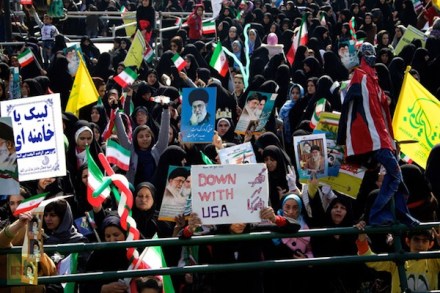
When the Iran nuclear deal was debated in Washington, the popular Iranian chant 'Death to America!' was a regular point of contention. According to the New Yorker, on one occasion the Texan republican Ted Poe asked John Kerry if the slogan meant that Iran's supreme leader Ayatollah Ali Khamenei wanted to destroy the United States: 'I don't believe they've said that,' the Secretary of State replied. 'I think they've said 'Death to America' in their chants.' 'Well, I kind of take that to mean that they want us dead,' Poe quipped. So happily today, Khamenei has stepped in to clarify just what is meant by the now infamous chant, which first arose in 1979 at the beginning of the Iranian Revolution.

I’ve never thought much of John Lennon’s music – until now

From our UK edition

It’s probably blasphemous to admit that I’ve never thought very much of John Lennon’s music. Common sense tells me it must be good but it’s never made much of an impact on me no matter how hard I’ve tried to appreciate it. If I like a Beatles song, I usually discover it’s by George. But the discovery from a radio trailer (reluctantly, I’ll have to admit they do sometimes work) that Lennon would have been 75 this week was shocking enough (how could he ever be that old?) to make me tune in on Thursday night to John Lennon’s Last Day.

Long life | 1 October 2015

From our UK edition

When Robert Peston, the economics editor of the BBC, interviewed George Osborne on television in an open-necked shirt with collar awry and a wisp of chest hair on display, he was subjected to a barrage of criticism to which he responded with vigour. It was ‘bonkers’ to suggest that wearing a tie made a journalist serious, he said, or that a tie should be worn out of respect for the interviewee. ‘I didn’t not wear a tie out of disrespect for the chancellor,’ he said. ‘I just didn’t wear a tie because I don’t really like wearing a tie. I think these TV conventions are nuts.

Home is where the heart is | 24 September 2015

From our UK edition

99 Homes is an American drama about house repossession. Bummer, you might think, but here is what you don’t yet know: films about house repossessions can be electrifying. Or at least this one is. Set in 2008 or thereabouts, against the backdrop of the real-estate bust and ensuing foreclosure crisis, this has much to say about a system that allows the rich to get richer while the poor get shat on (basically), but, above and beyond that, it is also nail-bitingly tense, as gripping as any thriller, and it will totally tear your heart out. In terms of impact, it may even be the Cathy Come Home of our times.

A hero of our time

From our UK edition

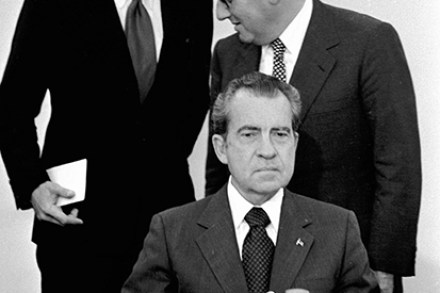
I have met Dr Kissinger, properly, only three times. First, in Cairo, in 1980, when, as a junior diplomat escorting Edward Heath, I had to secure for an almost desperate former British prime minister a meeting with the former US secretary of state, also in town. Once with Kissinger, Heath promptly subsided into a deep slumber. I had the alarming experience of trying to keep the conversation going. The other occasions were more recent, but almost as scary. My hostess at the ‘secret’ (but much publicised) transatlantic talkfests which Kissinger (92 this year) still attends twice summoned me to sit beside the great man at dinner. On each occasion I felt like the luckless passenger in the Economist’s vintage television commercial.

Drone assassination is addictive. Is Britain now hooked?

From our UK edition

With the drone killing in Syria of Reyaad Khan and Ruhul Amin, Britain joins an exclusive club. Only Israel and the United States publicly admit to carrying out targeted killings – assassinations – away from the hot battlefield. Yet as both of these nations have already found, a single killing today can lead to a conveyor belt of death further on. The challenge for the UK is whether it can do things differently. Israel targeted and killed hundreds of alleged militants in the West Bank and Gaza during the Second Intifada using snipers, booby-traps and drones. Indeed it was Israel which coined the term ‘targeted killing’ – a more palatable euphemism for state-sanctioned hits. Tel Aviv had always clandestinely assassinated its enemies.

Long life | 3 September 2015

From our UK edition

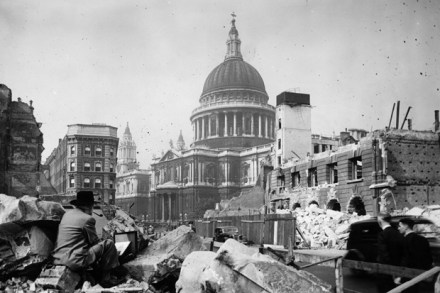
While the Germans were raining bombs on London during the second world war, the architects’ department of London County Council was busy colouring in Ordnance Survey maps of the city to record which buildings had been destroyed and which had not. These maps have now been published as a book by Thames and Hudson, The London County Council Bomb Damage Maps, 1939-45. Those buildings that had been totally destroyed were coloured black on the maps; those that had been damaged beyond repair, purple. And a review of this book in last Saturday’s edition of the Times was accompanied by a reproduction of one map covering the area around St Paul’s Cathedral, which is exactly where I was residing as a baby during the autumn of 1940 when the Blitz of the City began.

The sooner the Republicans stop Donald Trump, the sooner they can beat Hillary Clinton

From our UK edition

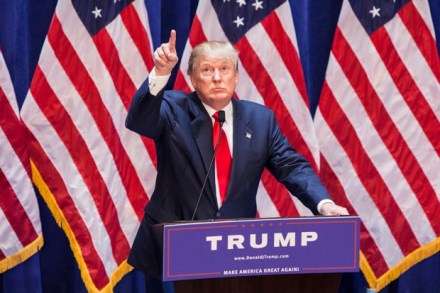
Lunatics with money are never 'mad', only eccentric. In America, they can also class as Republican presidential candidates. Hence Donald Trump – a barmy billionaire with a mouth bigger than his bank balance – is currently leading the race to be the party’s next nominee. It’s a sad indictment of the American political process. And it disguises how strong American conservatism could be if it only tried harder. So far, more than a dozen major Republicans have declared their candidacy. Jeb Bush stands out for his establishment support, Scott Walker for his credentials as a conservative governor who took on the unions, Marco Rubio for his charisma and ethnicity… and so on. In a field so incredibly wide, however, polling points are spread thin.

Anniversary fatigue

From our UK edition

There’s a part of me that thinks OK, we’ve heard enough now, one year on from the beginning of the centenary commemorations, about the first world war. Do we really need any more programmes (on radio or television) about Ypres, Gallipoli, Akaba, Versailles, and the Western Front? Or are we wallowing in history’s horror stories rather than trying to learn from them? There’s a danger that anniversary fatigue will set in and stop us pausing to think, to really contemplate, the reality of that terrible, catastrophic war and whether there is any way it can be prevented from happening again.

The real theatre of war

From our UK edition

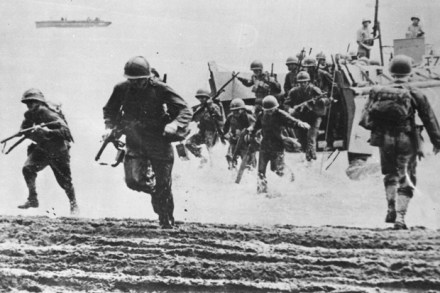
The history of ‘great events’, Voltaire wrote, is ‘hardly more than the history of crimes’. Physically, the war in Asia was the second world war’s greatest event. The Asian theatre, much of it water, was seven times larger than the European theatre. America’s mobilisation was the most complex in history, Japan’s crimes among the most sadistic. Metaphysically, the atomic consummation altered our relationship to our habitat. Yet only three comprehensive, single-volume accounts of the war in Asia have appeared — until now the most recent being Ronald Spector’s Eagle Against the Sun in 1985.

Nicola Sturgeon puts (lung free) haggis on the menu in America

From our UK edition

Steerpike has long been a champion of the fight to get America to lift the ban on Scottish haggis being imported into their country. So Mr S was cheered to hear that Nicola Sturgeon has been doing her bit to fly the flag for the national dish on her trip to America. The New York Post reports that Sturgeon's team made some last minute menu requests ahead of a work lunch at Incognito Italian bistro in New York, following her appearance on Jon Stewart's Daily Show. The Scottish-Italian proprietors Paolo Montana and Adriana Moretti reportedly proposed an all-Italian menu, but Sturgeon’s team asked them to also include Scottish classics 'like highland haggis and smoked Scottish salmon'.

A course in Dangerous Ideas would be the perfect tonic for our dull universities

From our UK edition

There have been a number of articles recently by American liberals warning about the intolerance of academia, in particular pointing to the dangers of a generation who’ve never had their views challenged. The latest is by an academic using the pseudonym Edward Schlosser, who writes in Vox last week: Things have changed since I started teaching. The vibe is different. I wish there were a less blunt way to put this, but my students sometimes scare me — particularly the liberal ones. I once saw an adjunct not get his contract renewed after students complained that he exposed them to 'offensive' texts written by Edward Said and Mark Twain. His response, that the texts were meant to be a little upsetting, only fueled the students' ire and sealed his fate.

Sepp Blatter falls foul of the world’s CCTV system

From our UK edition

 ‘In matters of criminal justice,’ said NatWest Three defendant David Bermingham after a London court extradited him and his co-defendants to face Enron-related US fraud charges even though nothing they were accused of looked like a crime under UK law, Britain was becoming ‘the 51st state of America’. Many Swiss citizens must have felt they were living in the 52nd  when Department of Justice agents decided, as I put it in 2013, to ‘topple a whole bowling alley of gnomes of Zurich’ in an assault on Swiss banking secrecy that forced the closure of the country’s oldest bank, Wegelin.

Mass surveillance is being undermined by the ‘Snowden effect’

From our UK edition

We are in the middle of a Crypto war again. Perhaps we have always been in the middle of a Crypto war. Since the 70s, the right and ability to encrypt private communications has been fought over, time and again. Here in the UK, Cameron’s re-election has prompted reports of a 'turbo-charged' version of the so-called ‘Snoopers’ Charter’, extending further the powers of surveillance that the whistleblower Edward Snowden described as having 'no limits'. Two nights ago, the US Patriot Act expired. With it, at least officially, elements of the NSA’s bulk surveillance programme expired too.

One human right should not be able to extinguish another human right

From our UK edition

The Human Rights Act (1998) has a big fan base. In legal, political and celebrity circles there is much enthusiasm for it. Yet the law is not giving us the rights and freedoms we need, because each right can be played off against another. We’ve been losing our human rights in the name of human rights. In the mid-nineties I began chronicling and campaigning for a right to free speech while challenging the Human Rights Act. I couldn’t understand why Britain, a country renowned for its tolerance, was clamping down on the right to free speech (Article 10) including what newspapers published, in the name of a right to privacy (Article 8).  The reason was said to be the rise of stories concerning the private lives of public figures.