Us politics

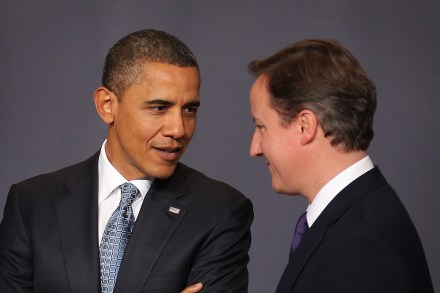
Obama backs Cameron on no-fly zone

From our UK edition

Everyone knows that a media narrative is a difficult thing to change. So No.10 must be annoyed that so many newspapers, from the Telegraph to the Independent, are suggesting that David Cameron’s response to the Libya crisis has been “embarrassing,” and rejected by the US. But the Prime Minister would do well to stay the course and ignore the media for a number of reasons. First, just because US Defence Secretary Robert Gates is sceptical about a policy does not mean it is wrong. Somehow, the US Defence Secretary’s words are now taken as gospel in the British media and the PM is meant to repent immediately. Why? So what if the Pentagon chief has a view? While Robert Gates is rightly respected, he is not infallible.

Harriet ‘shambolic’ Harman

From our UK edition

I've spent ten minutes reading the same passage and still don't understand what it means. It comes from Harriet Harman, quoted in the Independent, criticising the government's Libya strategy: "The response to the terrible events in Libya has been a shambles. The key to their shambolic response lies in their ideology. If your perspective is that government is a bad thing and you want less of it, you're not going to be on the front foot when the power of government is exactly what is needed." Do you get it? Is the Labour MP saying that her party would have harnessed the power of the state, principally the military, and ordered the bombing of Libya?

British foreign policy needs to promote democracy

From our UK edition

After a week of hesitation and well-publicised problems evacuating British citizens from Libya, the government has led the international community's response to the crisis. The decision to move HMS Cumberland into position was astute, as was the authorisation to rescue the people stranded in the dessert. At the UN, British diplomats have been drafting most of the key resolutions and now David Cameron has out-hawked everyone by saying he'd be willing to contemplate a no-fly zone. US lawmakers have asked the Obama administration why they have not been as swift as the UK. As a Bosnian-born friend of mine said last night: "If only David Cameron and William Hague were around in 1992, so many of my friends would have been alive today!

What difference will sanctions make?

From our UK edition

Slowly, haltingly, the West decides what to do about Gaddafi. The latest news is that, having broken his silence over Libya a few days ago, Barack Obama is now imposing sanctions against its despicable regime: freezing assets, blocking transactions, that sort of thing. It follows a package of sanctions, including an arms embargo, that Britain and France have proposed to the UN. Although these sanctions are better than nothing – the West shouldn't house Gaddafi's slush funds, nor transfer weapons in his direction – they are of limited actual worth. Yesterday, the Mad Dog was parading the parapets once again, promising death for the protestors. You suspect he is unlikely to be put off by restrictions to his and his country's finances.

That Petraeus story

From our UK edition

Rumours abound that General David Petraeus will leave his post as commander of NATO forces in Afghanistan. Early editions of The Times quoted Pentagon press secretary Geoff Morrell saying that “General Petraeus is doing a brilliant job but he’s been going virtually non-stop since 9/11 [and] he can’t do it forever”. According to The Times, President Barack Obama and Defense Secretary Robert Gates are searching for a replacement. And, says the newspaper, there has apparently even been talk of Petraeus succeeding Gates as Defense Secretary. Really?

Obama’s budget proposes cuts

From our UK edition

President Obama’s new budget proposal is an interesting moment as Obama is now admitting that the time for fiscal stimulus has passed and that cuts needs to be made. As one administration official tells The New York Times, “The debate in Washington is not whether to cut or to spend… The question is how we cut and what we cut.” Interestingly, Obama has proposed a ratio of two third spending cuts and one third tax rises. By contrast, the bi-partisan Simpson Bowles commission on the deficit proposed something very similar to the 80 percent spending cuts, twenty percent tax rises model that Osborne is using.

Coffee House interview: Paul Wolfowitz

From our UK edition

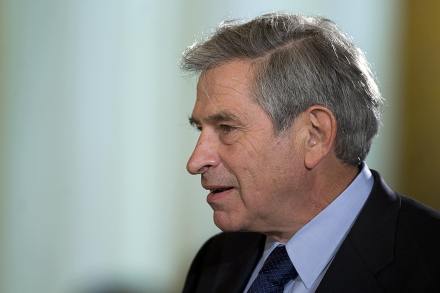
Nobody is as associated with George W Bush's drive to promote freedom and democracy in the Middle East as former US Deputy Defence Secretary Paul Wolfowitz. His role in the Iraq War, and belief that the US should promote democracy in a part of the world better known for authoritarian rulers, remains controversial to this day. But now that the Middle East is being rocked by pro-democracy protests – as people demand freedom, employment, and an end to tyranny – is this advocate of democracy finally being proven right? And what does he think about the dangers of democratic transitions?

The neoconservatives were right

From our UK edition

The last six years have been fallow ones for the neoconservatives. From around 2005, when Iraq began its descent into chaos, the ideology that did so much to shape US foreign policy became marginalised as, first, George W Bush turned increasingly realist and, then, Barack Obama continued where his predecessor left off. While ideas are not responsible for the people who hold them, it did not help that, after President Bush left office, those who espoused a neoconservative outlook included the likes of Sarah Palin. Funding for democracy-promotion was slashed, and the focus for aid programmes became "accountability" – with the word "democracy" banished from sight.

A businesslike State of the Union address

From our UK edition

https://www.youtube.com/watch?v=nZ5DMpNznlA Jobs, people, work, new, years, make. You can get a good sense of Obama's State of the Union address purely from its most frequently used words. Yes, this one was all about the future, and – another popular word – "investing" in it. As the President himself put it, sounding like some freakish amalgam of David Cameron and Gordon Brown, "If we make the hard choices now to rein in our deficits, we can make the investments we need to win the future." The President wasn't short of ideas for the investment half of that equation, even if – as others have noted – there was an absence of specifics.

“Our democracy to be as good as she imagined it”

From our UK edition

President Obama rode to power on his rhetoric. Yesterday, for the first time in months, he rekindled that initial spark to speak to the nation – and the world – about loss, democracy and the compassion that is needed for a society to work. You can watch the full speech above. To me, though, this passage was particularly affecting: "I believe we can be better.  Those who died here, those who saved lives here – they help me believe.  We may not be able to stop all evil in the world, but I know that how we treat one another is entirely up to us.  I believe that for all our imperfections, we are full of decency and goodness, and that the forces that divide us are not as strong as those that unite us.

Theatre to mark Western decline

From our UK edition

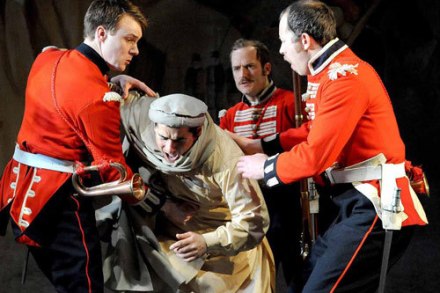
USO is not what it once was. The days of Bob Hope’s wisecracking have receded into the past, and ogled Playmates no longer sex their way across stages. The Pentagon has commissioned British theatrical talent to educate its troops about Afghanistan’s political culture and history. Performed by the Kilburn Tricycle Theatre, The Great Game is a 7 hour show about Afghanistan’s cycles of invasion, struggle and victory. Presumably if the grunts can withstand that, they can withstand anything. As Ben Macintyre notes in the Times (£), there is neither greatness nor beauty in the games that Western powers have played in Afghanistan.

Will he be back?

From our UK edition

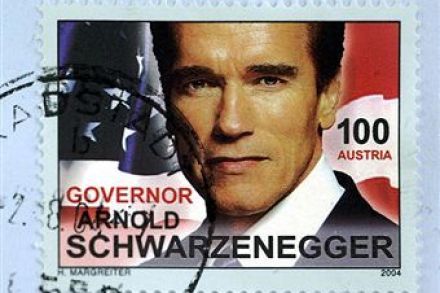
Clichéd, for sure, but it is the line that's tagged every story about Arnold Schwarzenegger's departure from office. Will Arnie return to the political fray or enjoy a sun-kissed retirement? The odds of a return to office are long. California, the state that did most to shape America's self-image in the 20th century, is now like former movie stars who eke out an existence in Hollywood's run-down parts - they once had it all but have since lost both looks and love. Fair or not - the Californian governor doesn't have as much power as his peers. Voters give Schwarzenegger part of the blame for the state's mess; his approval ratings on his last day in office were as bad as those of the governor he defeated in a recall election, Gray Davis.

Top Republican prepares to leave Obama’s big tent

From our UK edition

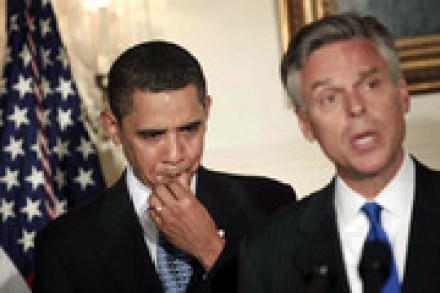
When John Huntsman, the Republican governor of Utah, accepted Barack Obama’s offer of the ambassadorship to China it seemed to be further evidence that Obama was going to be a two term president. The ambitious Huntsman, who would stand a good chance in a Republican primary, appeared to have decided that the nomination in 2012 wasn’t worth having. So it is a sign of the shifting political tide that Huntsman is now indicating that he may resign as ambassador to China soon and run for the Republican nomination. With Obama’s approval rating now significantly below 50 percent, the Republican nomination is now a far more appealing prize. There is, unusually for the Republicans, no clear front-runner.

A handful of predictions

From our UK edition

Here we go. Spurred on by Pete earlier, it's time for that essential, although often regrettable, end-of-year ritual. Not the prosecco-fuelled partying, but rather something with far more embarrassment potential: predictions for next year. That's right, amateur guesswork dressed up as serious-ish journalism. Some scribes are better at this than others. Ex-blogger Iain Dale hit the nail on the head by predicting the election of Ed Miliband as Labour leader. In a German aquarium, Paul the Octopus nailed all eight of his predictions for the 2010 World Cup in South Africa. By contrast, Mike Adams from NaturalNews probably ought to stop trying to channel Nostradamus. Last year, he predicted that nuclear weapons would be unleashed in the Middle East.

Obama STARTs anew

From our UK edition

Barack Obama has had a great couple of weeks. First DADT was repealed and then START was ratified by the Senate, safeguarding a major Obama foreign policy initiative In truth, both issues are peripheral to voter concerns. To them, the jobless recovery is what matters. New figures show that the unemployment rate in the US has jumped to a seven-month high of 9.8 per cent. Nor did the White House get all it wanted from Congress recently. As the Senate was debating DADT, the House of Representatives killed a provision in a defence bill to transfer detainees from Guantanamo to the US. But in politics having momentum - the Big Mo - is one of the most important, if intangible, factors. Recently, Obama could not even find Lil' Mo, Big Mo's smaller brother.

Gay America rejoices

From our UK edition

This week will give Barack Obama's liberal credentials a significant boost. On December 18th, the Senate had a  successful cloture vote in favour of a bill to repeal "Don't ask, don't tell". DADT as it is commonly known restricts the US military from trying to discover or reveal closeted gay, lesbian, and bisexual service members, while it bars those who are openly gay, lesbian, or bisexual from military service. The bill has now passed in both Houses of Congress and it only awaits President Obama's signature. As my friend R.

Holbrooke’s war ends

From our UK edition

He was known as brash and abrasive. A gale force wind. The "bulldozer" some called him based on his time bullying Slobodan Milosevic during the Dayton negotiations to end the Bosnian War in the 1990s. However, veteran US diplomat Richard Holbrooke, who died last night, had a far greater register. When he visited London before assuming his latest post, as President Obama's AfPak envoy, he surprised the US embassy staff by travelling alone, with no bag-carrying entourage, and exhibiting none of the airs he was expected to have. His first experience of the Balkans was not as the all-mighty diplomatic trouble-shooter, but as a normal citizen eager to highlight the plight of the refugees. He braved sniper fire and dangerous roads to document Yugoslavia’s tragedy.

US Middle East initiative takes early holiday

From our UK edition

When the Obama administration started its latest Middle East initiative, it was amid great fanfare. I blogged – sceptically -- about the optimism exuding from the State Department at the time. Now, however, the US government has given up its push for a freeze in Jewish settlement construction as quietly as possible. As Martin Indyk of the Brookings Institution puts it: “The Middle East peace process just died, but nobody seems to be in mourning. Twenty months of U.S. efforts to freeze Israeli settlement activity to create a conducive environment for negotiations have produced only deadlock.

Wiki-danger

From our UK edition

Now the Wikileaks are beginning to become dangerous. Before, the leaks contained high-level tittle-tattle, confirmation of existing analyses and embarrassingly accurate portraits of world leaders. I still thought it wrong to regurgitate this data, as it will lead to more secrecy, bilateral problems and potentially even conflicts – the things that Julian Assange claims he is seeking to avoid. Yet I told NPR that the idea of prosecuting the Wikileaks founder for treason was far-fetched; he is not a US citizen and it was not clear to me what kind of charges could be brought against him in the US courts. Now, however, with the publication of data which will be useful background reading for any would-be terrorist, the situation has changed.

Will the US become more isolationist in the years to come?

From our UK edition

Isolationist sentiment seems to be on the rise in the United States. At an annual foreign policy event in Halifax in Canada, US Senator Lindsay Graham warned about the risk of an "unholy alliance" developing between the far left and far right that calls for greater US retrenchment from the world – and, potentially, a new era of isolationism. Or neo-isolationism. Such an inward focus is likely sound meet with the approval of an increasingly domestically-occupied public. Last year, 49 percent of Americans told Pew Research that they believed the US should "mind its own business" and let other nations get along on their own.  That was up from 30 percent in 2002.