Us politics

The House of Representatives passes the debt deal, as Giffords returns

From our UK edition

After all that, the House of Representatives has passed the bill to raise America's debt ceiling, by 269 votes to 161. But, for all the economic significance of last night, it was the vote of one woman that really set proceedings alight. Congresswoman Gabrielle Giffords returned to the floor of the House for the first time since surviving an assassination attempt in January, to vote 'yes': And in less heartening news, Vladimir Putin has described America as a "parasite" on the global economy.

Apocalypse averted?

From our UK edition

At last, signs that Washington's lawmakers may have scrabbled together a debt deal after all. According to the overnight wires, the White House and Congressional leaders have alighted on a package that would raise the ceiling by $2.4 trillion, so long as the deficit is reduced by at least the same amount over the next ten years. There are more details here, but the key claim is that around $1.2 trillion of immediate spending cuts have already been agreed upon, with a Congressional committee to recommend further deficit reduction measures by the end of November. And although these proposals will still have to pass through the corridors of Congress, leaders from both sides sound increasingly optimistic that it will do just that.

America’s debt crisis fuels Obama’s political crisis

From our UK edition

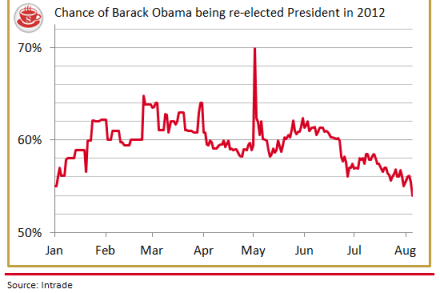
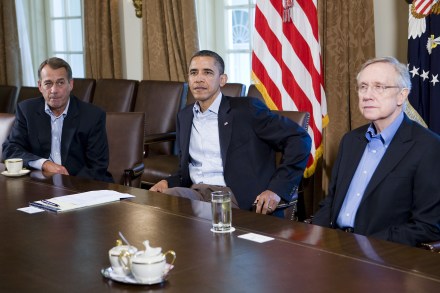
Momentousness without momentum. That's what we're getting from America at the moment, as this all-crucial debt deal continues to stutter and stall. The main development in Washington yesterday was John Boehner securing enough Republican votes to pass his bill in the House of Representatives — only for it to be summarily tabled by Democrats in the Senate. What will follow over the weekend is yet more frantic negotiation between the Democrats and Republicans in Congress, as each tries to make their various plans more acceptable to the other, while also keeping their own die-hards on side. Meanwhile, the clock keeps on ticking down towards default: three days, 13 hours, 35 minutes...

What happens if the US defaults?

From our UK edition

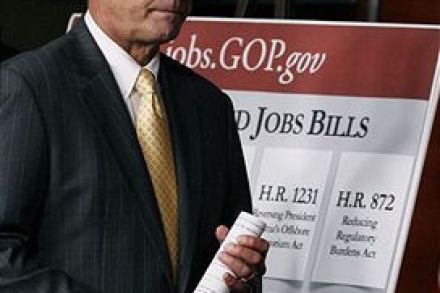
The homepage of the Washington Post has a clock ticking down to America's debt-ceiling deadline: four days, 14 hours, and a fast-declining number of minutes and seconds. It also has details of the events, last night, that upset the prospect of a deal being reached yet again. The Republican Speaker of the House of Representatives, John Boehner, had been frantically trying to corral support for a bill that would raise the ceiling in exchange for $billions of extra spending cuts. He only needed 216 of the House's 240 Republicans to vote with him. But it wasn't to be. The vote was called off, postponed until at least later today, as it became clear that Boehner couldn't immediately persuade those in his party who want further cuts still.

New favourite emerges to challenge Obama

From our UK edition

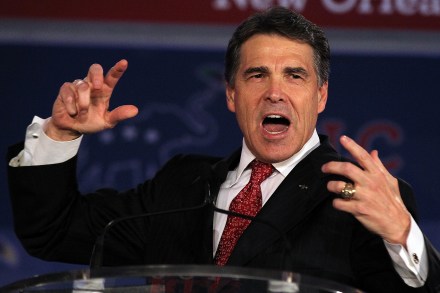
There's a new favourite in the race for the Republican nomination to take on Barack Obama in 2012. Yesterday saw Mitt Romney hobbled from his number one spot - on betting website Intrade at least - by Texan Governor Rick Perry. Romney had been seen as the candidate most likely to secure his party's nomination next year ever since he finished second to John McCain in the 2008 primaries. However, support for Romney has never reached the levels expected of frontrunners, with many Republicans keen to vote for someone more conservative. Rick Perry may just be that man. Perry's position as (narrow) favourite is somewhat surprising when you consider that he's not officially running yet.

Murdoch prepares to fillet Brown

From our UK edition

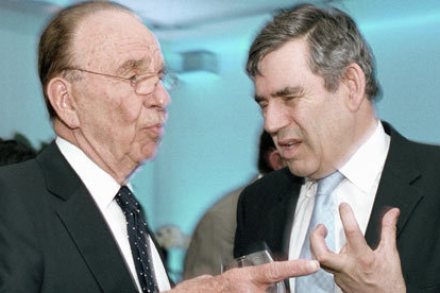
“He got it entirely wrong.” That is Rupert Murdoch's response to Gordon Brown’s singular account of his relationship with the Murdoch press. "The Browns were always friends of ours,” Murdoch added in an interview with the Wall Street Journal, in which he promised to set the record straight on the “lies uttered in parliament” when he appears before a select committee next Tuesday. It is going to be a moment of the most gripping political theatre. Murdoch also uses the interview to defend News Corp’s handling of the phone hacking crisis. He concedes that ‘minor mistakes’ have been made, but, fundamentally, all is well with the Kingdom.

Parliament prepares to take on Murdoch

From our UK edition

Politicians are swarming all over the phone hacking scandal today, in even greater number than during the past week. If it isn't the main topic at PMQs at noon, then it certainly will be immediately afterwards; when David Cameron delivers his statement on an inquiry into the whole mess. And then there's Labour's Opposition Day motion, urging Rupert Murdoch to withdraw his bid for BSkyB. By the end of the day, our parliamentarians will surely have delivered an official reprimand to the News Corp boss and his ambitions. The news that the government will vote in favour of Ed Miliband's motion has sucked some of the vicious factionalism out of today's proceedings. But, never fear, there will still be plenty of political one-upmanship to go around.

Where next for the US and Pakistan?

From our UK edition

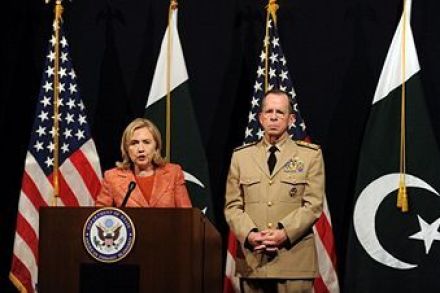
The US-Pakistani relationship is fast deteriorating. In May, I argued that unless President Asif Ali Zardari took decisive action against the ISI, the country's military would continue to undermine relations with the West. Last week, the New York Times reached the same conclusion, calling for the removal of Lieutenant-General Ahmed Shuja Pasha. As President Zardari did nothing — probably fearing a military coup if he did act — the situation has merely been aggravated. What's more, Secretary of State Hillary Clinton has warned that the US could suspend military aid to Pakistan unless it took unspecified steps to help find and fight terrorists. And the White House has since confirmed that it is doing just that.

Boehner’s concession exposes the GOP’s divisions

From our UK edition

The New York Times reports that House Speaker John Boehner has urged his colleagues to reach a deal with President Obama over raising the ceiling on the national debt. So far, Republicans have been resisting Obama, fearful that tax rises and compromise would damage the party’s chances in next year’s election, which is expected to hinge on restoring America’s public finances. Boehner’s retreat has incited the presidential candidates, who have been campaigning this weekend. The New York Times has the full details, but here's a brief summary. Michelle Bachmann and Tim Pawlenty averred their opposition to raising the debt ceiling; a stance designed to court the party’s purists. Predictably, Mitt Romney adopted a more conciliatory position.

Obama draws down his forces

From our UK edition

It is as Matt Cavanagh predicted in his article for Coffee House, a few weeks ago. Barack Obama has decided to pull 10,000 of the 30,000 American "surge" troops out of Afghanistan this year. The remaining 20,000 will be outtathere by next summer. "Drawdown," is the word that the US President used in his address last night, and it is happening at quite a pace. He presented this approach as a victory, suggesting that America has already achieved most of its goals in the country, and that "the tide of war is receding". But there were one or two revealing notes of concession. "We will not try to make Afghanistan a perfect place," quoth Obama. And he nodded towards the fiscal cost of the war, as much as its human cost.

America and Britain turn their minds to the (fiscal) cost of war

From our UK edition

Five-thousand, ten-thousand, or fifteen-thousand? That's the question hanging in the air as Barack Obama prepares to clarify his withdrawal plan for Afghanistan this evening (or 0100 BST, if you're minded to stay up). And it relates to how many of the 30,000 "surge" troops he will decide to release from the country this year. Washington's money appears to be on 10,000, with half of them leaving this summer and half in December. But no-one outside of the President's clique really yet knows. His final decision will say a fair amount about his intentions in Afghanistan, or at least about just how fast he wants to scram out of there. What's really striking, though, is the emphasis being placed on the bill for Afghanistan.

Republicans pull their punches against each other, but not Obama

From our UK edition

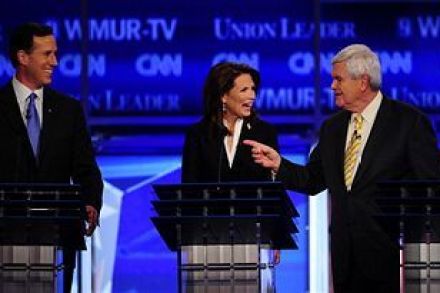
So it turns out the candidates vying for the Republican presidential nomination don’t like Barack Obama, his health care reforms, government bailouts, unions or abortion rights. Who knew? But it seems they do like tax cuts, states’ rights and... each other. The beleaguered Newt Gingrich didn’t even wait for the first question in last night’s debate to commence the Obama-bashing. “We need a new President to end the Obama depression”, he opened. And the others soon piled on. Mitt Romney said that “This President has failed” on jobs and the economy.

Gates’ flawed valedictory

From our UK edition

Robert Gates may be one of the best defence secretaries the United States has had in modern times. But in slamming European allies, like he did in Brussels on Friday, he was wrong. I have since long upbraided Europeans for under-investment in defence capabilities and making the wrong kind of investments. And defence expert Tomas Valasek published a fine pamphlet a few weeks ago, showing how European governments could do more for less, including by cooperating better. But they chose not to. This is not only foolish — as we live in an uncertain world where the ability to defend territory, trade, principles and people is paramount — but it also puts at risk Europe's greatest defence mechanism: the goodwill and cooperation of the United States.

The decline and fall of Newt Gingrich

From our UK edition

A couple of days ago, Newt Gingrich's campaign for the US presidency imploded when the leaders of his campaign team quit en masse. The exodus — which included his campaign manager, spokesman and senior strategists — came after an awful month for Gingrich, and looks like it might seal the fate of his already flagging campaign. Just a month ago, when the former Speaker of the House officially declared that he was seeking the Republican nomination, his fundamentals looked fairly strong. He has very high name recognition (a result of the four years he spent leading the Republicans in Congress in the late 1990s) and was polling fairly well.

Policing the local and the national

From our UK edition

Today’s announcement on a proposed new National Crime Agency (NCA) is a key element in the government’s ambitious police reform agenda.  Recent political attention has focused on changes to police pay and conditions and budget reductions, but the structural reforms that Theresa May and Nick Herbert are pursuing matter more in the long-term.  And before it is dismissed as another attempt to create a “British FBI”, the background and rationale for the NCA is worth exploring. The NCA is much more than a rebranding of the Serious Organised Crime Agency (SOCA) – the troubled organisation set up by Charles Clarke.

Thatcher snubs Palin?

From our UK edition

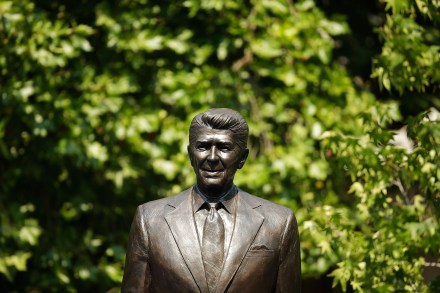
Sarah Palin will be in town soon and she hopes to meet Mrs Thatcher. She told the Sunday Times: “I am going to Sudan in July and hope to stop in England on the way. I am just hoping Mrs Thatcher is well enough to see me as I so admire her.” However, it seems that the admiration is not mutual. The Guardian’s Wintour and Watt blog reports an old ally of the Lady’s saying: “Lady Thatcher will not be seeing Sarah Palin. That would be belittling for Margaret. Sarah Palin is nuts. “Margaret is focusing on Ronald Reagan and will attend the unveiling of the statue (in Grosvenor Square). That is her level.

Whether she runs or not, Palin won’t be President

From our UK edition

Mitt Romney may be announcing his candidacy today, but the real buzz still surrounds Sarah Palin. Will she run for the Presidency or not? She's certainly keeping us guessing. Alex has already written about the crazy media circus surrounding Palin's "One Nation" bus tour, which she launched on Sunday. But looking at the polls, she is unlikely to win the nomination — let alone the election — however much hype she can muster. First up, here's the state of the race, according to the national polls conducted in the last fortnight: As you can see, Palin is currently running a clear second, trailing Mitt Romney by around 3 to 4 points, but 4 points ahead of the rest of the field.

From the archives: Bush in London

From our UK edition

You may have noticed that Barack Obama came to the country on a state visit this week. But he wasn't the first US President to be extended an invitation from the Queen, oh no. George W. Bush beat him to that particular honour in 2003. Here are a couple of Spectator pieces from the time, the first the magazine's leader column, the second by Peter Oborne: Don't burn Bush, The Spectator, 15 November 2003 The Queen's state carriage has carried some pretty rum types over the years. Nicolae Ceauscescu took a break from murdering his countrymen to take a ride down the Mall in June 1978. In 1994 it was Robert Mugabe's privilege and in 1979 Kenya's President Daniel arap Moi - at a time when Moi's corrupt administration was bleeding his country of £00 million a year.

Big gain for Cain

From our UK edition

Remember Herman Cain? The former CEO of Godfather's Pizza who scored a surprise win at the first Republican presidential primary debate earlier this month? Well, the latest Gallup poll is out today, and shows him on 8 per cent amongst potential primary voters: essentially tied for third behind Mitt Romney and Sarah Palin. This is the first poll conducted since Mike Huckabee, Donald Trump and Mitch Daniels all declared that they would not seek the nomination, and is also the first of Gallup's to include Cain's name. 8 per cent may not sound all that impressive, but it is when you consider that just 33 per cent of respondents know who he is. In other words, 24 per cent of those who've heard of Cain have him as their number one choice to be the nominee.