Us politics

Labour are drawing the wrong lessons from America

From our UK edition

The global debate about how we live within our means is moving fast. I spent a week in Washington while Congress and the President hammered out their deal on this year’s budget. The deal was significant because all sides agreed on the need to cut spending now. After days of brinkmanship, they agreed to £38 billion in-year cuts. Significant, perhaps, because America has now started to tackle its huge deficit. But everyone agreed it is a small downpayment ahead of a much bigger debate to come.   What’s fascinating for us here is that President Obama’s proposals are to cut the deficit slightly faster than we are here. Congress would go faster still.
Standard & Poor’s bombshell

From our UK edition

A mute, almost disbelieving response (except on the Markets) has met Standard & Poor’s announcement that the US government’s fiscal profile may become ‘measurably weaker’. The credit rating agency has put a ‘negative outlook’ on the US’s AAA rating; the accompanying report said:    “We believe there is a material risk that U.S. policy makers might not reach an agreement on how to address medium- and long-term budgetary challenges by 2013. If an agreement is not reached and meaningful implementation does not begin by then, this would in our view render the U.S. fiscal profile meaningfully weaker than that of peer ‘AAA’ sovereigns.

Balls in fiscal isolation

From our UK edition

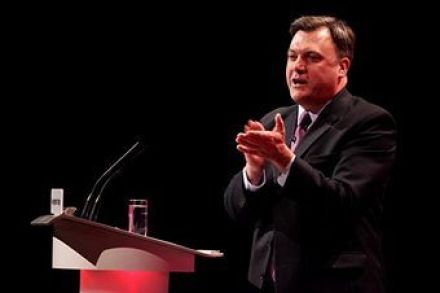
Ed Balls has long said that America is the right comparison for Britain when it comes to how to deal with the deficit, contrasting the Obama administration’s fiscally loose policies with Osborne’s plan for fiscal tightening. This comparison has always been flawed; the dollar is the world’s reverse currency which gives Washington far more fiscal flexibility than HMG. But, even leaving that aside, the Obama administration is now — albeit under Congressional pressure — about to start cutting.   By 2015, Obama’s plan will have reduced the US deficit by 8 percent of GDP. Osborne’s plan sees Britain reduces its deficit by 8.4 percent by 2015. Indeed, from next year the US will be tightening at a faster annual rate than Britain.

A word for Mitch

From our UK edition

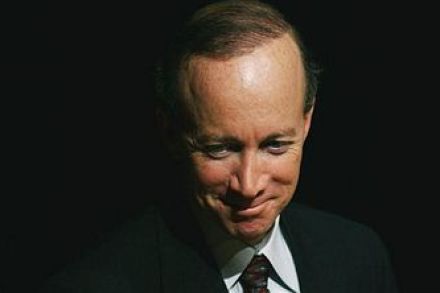
In the magazine’s cover piece this week (read it here or subscribe from just £1/issue), Richard Littlejohn described the rather feeble assortment of Republican contenders for next year’s presidential elections. But he left out Mitch Daniels, the Governor of Indiana, who seems to be emerging as a favourite among American conservatives.   Daniels hasn’t yet declared his candidacy, and at first glance he comes across as a dweeb. But it would be foolish to underrate him. In 2008, against a tide of Obama-mania, Daniels won the Indiana governorship with ease. He got more votes, in fact, than any candidate in the state’s history. The secret of Daniels’s success is his winningly awkward Pennsylvanian manner.

Meanwhile, in America…

From our UK edition

We really oughtn't let the weekend pass without some mention of political events across the Atlantic. As you've probably heard, a US government shutdown was avoided on Friday evening, and all thanks to a budget compromise which saw Barack Obama slash a cool $38 billion from his spending plans. Although the debate over who has credited or discredited themselves is still ongoing, it's striking that the Republicans — urged on by the Tea Party corps — achieved around two-thirds of the cuts that they demanded. Yet disaster, or at least the prospect of it, has still not been averted. The Tea Party has already claimed several fiscal scalps along the way — and the next target for their administrations is the impending debate over America's debt ceiling.

Obama sketches out the limits to American involvement in Libya

From our UK edition

There was one aspect of Barack Obama's Big Speech on Libya last night that was particularly curious: for a President who is trying to downplay American involvement in this conflict, he sure went in for good bit of self-aggrandisement. The amount of references to his and his government's "leadership" — as in, "At my direction, America led an effort with our allies at the United Nations Security Council to pass an historic Resolution" — was really quite striking, at least to these ears. I suppose it's all about mollifying those voices who argue that the US Pres hasn't done enough, quickly enough. But it's hardly going to endear him to some of his more proactive partners in this fight.

Obama’s nervousness makes life difficult for him and his allies

From our UK edition

Gingerly, gingerly — that's how the Americans are approaching the presentational battle over Libya, if not the actual campaign itself. There is no bombast in the official broadcasts from Washington, nor categorical intent. Instead we have Robert Gates emphasising, as he did yesterday evening, that the US will soon handover "primary responsibility" for the mission to us or the French. Or there's Mike Mullen, the Chairman of the Joint Chiefs of Staff, saying that "potentially one outcome" is for Gaddafi to stay in power (see video above). The idea of regime change, or of deeper US involvement, is being downplayed all round. What's clear, perhaps even understandable, is that Obama & Co. are eager not to exhume the ghosts of Iraq.

Hillary the hawk

From our UK edition

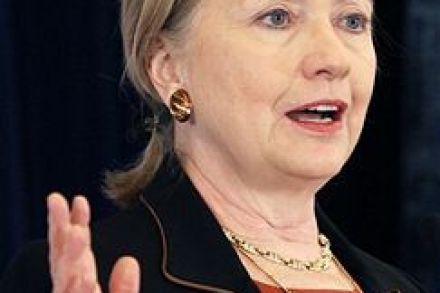
Intervention it is then. Cue lots of politicians walking around with rousing West Wing music in their minds' ears. This is the part where they get to play the good guys. Until something goes wrong, and they are bungling idiots again. Of course, it's good for everyone to feel that a bombing campaign in Libya is a multi-lateral, UN decision – not an Iraq. But if this turns into a long campaign, American airpower will be expected to do the vast majority of the work. And while Obama may be reluctant to engage on a third front, there are plenty of enthusiasts in Washington – none more so than Hillary Rodham Clinton. It is becoming increasingly obvious that Clinton has been using Obama's indecision over Libya to promote herself.

Obama backs Cameron on no-fly zone

From our UK edition

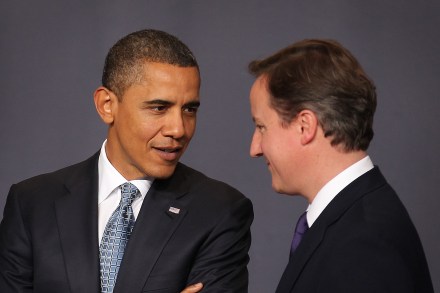
Everyone knows that a media narrative is a difficult thing to change. So No.10 must be annoyed that so many newspapers, from the Telegraph to the Independent, are suggesting that David Cameron’s response to the Libya crisis has been “embarrassing,” and rejected by the US. But the Prime Minister would do well to stay the course and ignore the media for a number of reasons. First, just because US Defence Secretary Robert Gates is sceptical about a policy does not mean it is wrong. Somehow, the US Defence Secretary’s words are now taken as gospel in the British media and the PM is meant to repent immediately. Why? So what if the Pentagon chief has a view? While Robert Gates is rightly respected, he is not infallible.

Harriet ‘shambolic’ Harman

From our UK edition

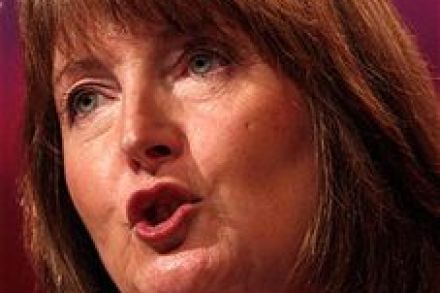
I've spent ten minutes reading the same passage and still don't understand what it means. It comes from Harriet Harman, quoted in the Independent, criticising the government's Libya strategy: "The response to the terrible events in Libya has been a shambles. The key to their shambolic response lies in their ideology. If your perspective is that government is a bad thing and you want less of it, you're not going to be on the front foot when the power of government is exactly what is needed." Do you get it? Is the Labour MP saying that her party would have harnessed the power of the state, principally the military, and ordered the bombing of Libya?

British foreign policy needs to promote democracy

From our UK edition

After a week of hesitation and well-publicised problems evacuating British citizens from Libya, the government has led the international community's response to the crisis. The decision to move HMS Cumberland into position was astute, as was the authorisation to rescue the people stranded in the dessert. At the UN, British diplomats have been drafting most of the key resolutions and now David Cameron has out-hawked everyone by saying he'd be willing to contemplate a no-fly zone. US lawmakers have asked the Obama administration why they have not been as swift as the UK. As a Bosnian-born friend of mine said last night: "If only David Cameron and William Hague were around in 1992, so many of my friends would have been alive today!

What difference will sanctions make?

From our UK edition

Slowly, haltingly, the West decides what to do about Gaddafi. The latest news is that, having broken his silence over Libya a few days ago, Barack Obama is now imposing sanctions against its despicable regime: freezing assets, blocking transactions, that sort of thing. It follows a package of sanctions, including an arms embargo, that Britain and France have proposed to the UN. Although these sanctions are better than nothing – the West shouldn't house Gaddafi's slush funds, nor transfer weapons in his direction – they are of limited actual worth. Yesterday, the Mad Dog was parading the parapets once again, promising death for the protestors. You suspect he is unlikely to be put off by restrictions to his and his country's finances.

That Petraeus story

From our UK edition

Rumours abound that General David Petraeus will leave his post as commander of NATO forces in Afghanistan. Early editions of The Times quoted Pentagon press secretary Geoff Morrell saying that “General Petraeus is doing a brilliant job but he’s been going virtually non-stop since 9/11 [and] he can’t do it forever”. According to The Times, President Barack Obama and Defense Secretary Robert Gates are searching for a replacement. And, says the newspaper, there has apparently even been talk of Petraeus succeeding Gates as Defense Secretary. Really?

Obama’s budget proposes cuts

From our UK edition

President Obama’s new budget proposal is an interesting moment as Obama is now admitting that the time for fiscal stimulus has passed and that cuts needs to be made. As one administration official tells The New York Times, “The debate in Washington is not whether to cut or to spend… The question is how we cut and what we cut.” Interestingly, Obama has proposed a ratio of two third spending cuts and one third tax rises. By contrast, the bi-partisan Simpson Bowles commission on the deficit proposed something very similar to the 80 percent spending cuts, twenty percent tax rises model that Osborne is using.

Coffee House interview: Paul Wolfowitz

From our UK edition

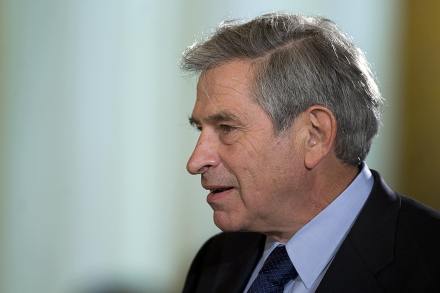
Nobody is as associated with George W Bush's drive to promote freedom and democracy in the Middle East as former US Deputy Defence Secretary Paul Wolfowitz. His role in the Iraq War, and belief that the US should promote democracy in a part of the world better known for authoritarian rulers, remains controversial to this day. But now that the Middle East is being rocked by pro-democracy protests – as people demand freedom, employment, and an end to tyranny – is this advocate of democracy finally being proven right? And what does he think about the dangers of democratic transitions?

The neoconservatives were right

From our UK edition

The last six years have been fallow ones for the neoconservatives. From around 2005, when Iraq began its descent into chaos, the ideology that did so much to shape US foreign policy became marginalised as, first, George W Bush turned increasingly realist and, then, Barack Obama continued where his predecessor left off. While ideas are not responsible for the people who hold them, it did not help that, after President Bush left office, those who espoused a neoconservative outlook included the likes of Sarah Palin. Funding for democracy-promotion was slashed, and the focus for aid programmes became "accountability" – with the word "democracy" banished from sight.

A businesslike State of the Union address

From our UK edition

https://www.youtube.com/watch?v=nZ5DMpNznlA Jobs, people, work, new, years, make. You can get a good sense of Obama's State of the Union address purely from its most frequently used words. Yes, this one was all about the future, and – another popular word – "investing" in it. As the President himself put it, sounding like some freakish amalgam of David Cameron and Gordon Brown, "If we make the hard choices now to rein in our deficits, we can make the investments we need to win the future." The President wasn't short of ideas for the investment half of that equation, even if – as others have noted – there was an absence of specifics.

“Our democracy to be as good as she imagined it”

From our UK edition

President Obama rode to power on his rhetoric. Yesterday, for the first time in months, he rekindled that initial spark to speak to the nation – and the world – about loss, democracy and the compassion that is needed for a society to work. You can watch the full speech above. To me, though, this passage was particularly affecting: "I believe we can be better.  Those who died here, those who saved lives here – they help me believe.  We may not be able to stop all evil in the world, but I know that how we treat one another is entirely up to us.  I believe that for all our imperfections, we are full of decency and goodness, and that the forces that divide us are not as strong as those that unite us.

Theatre to mark Western decline

From our UK edition

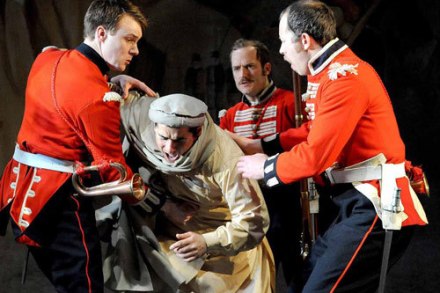
USO is not what it once was. The days of Bob Hope’s wisecracking have receded into the past, and ogled Playmates no longer sex their way across stages. The Pentagon has commissioned British theatrical talent to educate its troops about Afghanistan’s political culture and history. Performed by the Kilburn Tricycle Theatre, The Great Game is a 7 hour show about Afghanistan’s cycles of invasion, struggle and victory. Presumably if the grunts can withstand that, they can withstand anything. As Ben Macintyre notes in the Times (£), there is neither greatness nor beauty in the games that Western powers have played in Afghanistan.

Will he be back?

From our UK edition

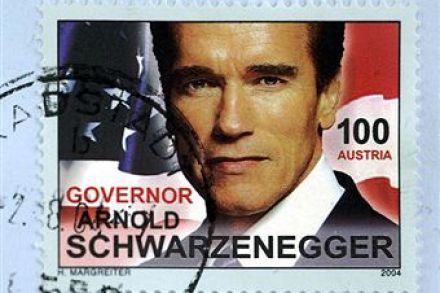
Clichéd, for sure, but it is the line that's tagged every story about Arnold Schwarzenegger's departure from office. Will Arnie return to the political fray or enjoy a sun-kissed retirement? The odds of a return to office are long. California, the state that did most to shape America's self-image in the 20th century, is now like former movie stars who eke out an existence in Hollywood's run-down parts - they once had it all but have since lost both looks and love. Fair or not - the Californian governor doesn't have as much power as his peers. Voters give Schwarzenegger part of the blame for the state's mess; his approval ratings on his last day in office were as bad as those of the governor he defeated in a recall election, Gray Davis.