Us military

The sufferings of Okinawa continue today unheard

From our UK edition

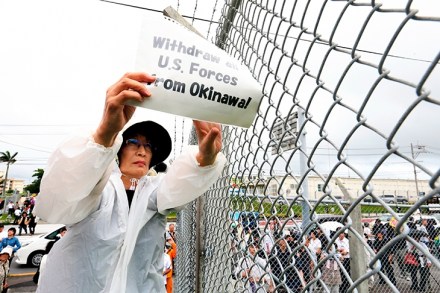
Okinawa is having a moment. Recently a Telegraph travel destination, to many in the west it’s still unfamiliar except as a location of the Pacific theatre. To Elizabeth Miki Brina, the author of Speak, Okinawa, it was also unfamiliar until she was 34 — though her own mother is Okinawan, and she had spent time there as a child. Not until the break up of a relationship which played out the toxicities of her own family relations did she attempt to unravel her mother’s heritage: Okinawa’s brutal history, not Japanese, yet owned by, and at the mercy, of Japan; its persecution by America; its current state of suffering and her father’s role in that, as part of the US occupying forces that still run it as a garrison island.
Space is the place — for war

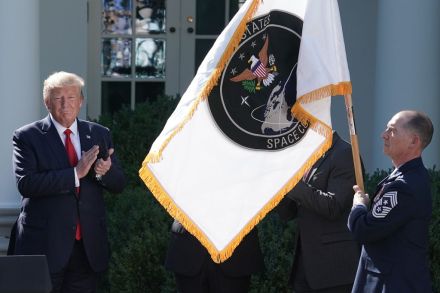
This article is in The Spectator’s inaugural US edition. Subscribe here to get yours. You have no phone service, no television, no GPS for the car and no road atlas because you threw it out in 2009. Planes aren’t flying, and that spinning sound you can’t hear is the sound of space hardware floating out of our control. So dependent have we become on satellites for everything from communications to traffic control that a day without them would mean catastrophe. In the new space race, victory won’t mean landing on the moon or sending a rocket to Mars, but developing a new arsenal to wage and win war in space.

space force

Making Centcom great again

Back in October 1983, the US invaded the tiny Caribbean island of Grenada. American medical students had been taken hostage by a Cuban-supported military junta, and Ronald Reagan ordered the US military to rescue the students, defeat Grenada’s small militia, depose the junta and put the island in the hands of its Governor-General. The intervention, Operation Urgent Fury, was an overwhelming victory for the United States – and the Reagan administration. But the Grenada operation was a mess. As the story goes (albeit, through many iterations), during the intervention an Army commander needed support from offshore Navy assets. The soldier could see the ships but had no way to reach them.

centcom

How would America really ‘end’ Iran?

Donald Trump says that America could ‘end’ Iran, and no doubt we could. The US could launch an air campaign that would destroy the Islamic Republic’s most important military assets. But it’s hard to see exactly how. With a diminishing number of useful allies, not to mention a military exhausted from 18 years of war on terror, America is not in the position it once was to exert great force in the Middle East. Ever since the push to invade Iraq, the US has been shedding allies. We have become increasingly dependent for help on an unimpressive handful of wannabes. Turkey sat out the Iraq War: so did France, Germany and Canada, three of our most potent military supporters.

iran bark bite