Universities

The Lib Dems walk through the fire

From our UK edition

Brace yourselves, CoffeeHousers. Today is the day of the tuition fee vote, along with all the froth and fury that will attend it. The government's motion will most likely pass through the Commons – yes, even without the support of Simon Hughes – but the wider repercussions are, as yet, uncertain. The main question is what the Lib Dems will achieve by walking through the fire, as Nick Clegg puts it. Will they emerge from the other side, a more credible party of government in the public's eyes? Or will they just get burnt to ashes? At the very least, the yellow bird of liberty is stuttering this morning. As Anthony Wells reports, the latest YouGov poll has them at 8 percent – what appears to be their lowest level of support for 20 years.

Labour stumble into tomorrow’s tuition fee vote

From our UK edition

Oh look, Alan Johnson has performed a hasty Reverse Cable. Only a few days ago, the Shadow Chancellor suggested that he didn't believe a graduate tax – Ed Miliband's chosen policy – could work. Yet, in a wilting Thunderer column (£) for the Times today, he now claims that "there is a very strong case for a graduate tax." From unworkable to strong, in only four days. Sounds like a disclaimer for Ikea flatpack furniture, not a policy position. In a separate article, the Times characterises this as a minor victory for Ed Miliband – and so, in some respects, it is. He has managed to rein his Chancellor on this issue, if not on 50p tax, and the Labour leadership are now backing the same policy, albeit a misguided one.

Is Oxford University Racist?

From our UK edition

That's the question asked by David Lammy and the Guardian today. According to the paper 21 Oxford and Cambridge colleges made no offers to black, British students last year. At Oxford just one student of self-described "Black Caribbean" background won a place. Only 35 applied. The headline figures are pretty terrible and enough to give anyone pause. But they are only headline figures. Virtual Economics argues that they don't tell the full story, not least because the sample sizes are often so small. He has a point: if just 35 Black Caribbean students applied to Oxford last year that's not much more than one per college. I'm not sure this is a large enough sample from which to draw too-firm conclusions.

Clegg will vote for fees hike

From our UK edition

The wait is over. We have just been told that Nick Clegg will definitely vote for the coalition’s policy on tuition fees. Clegg announced this, according to his spokeswoman, at the meeting of the Lib Dem parliamentary party that is currently going on. He told the meeting that to govern is to choose, and that the coalition had to chosen to invest in early years education rather than in scrapping fees.   Clegg’s spokesperson said that he had urged the party to ‘walk through the fire together’ but that he accepted and respected that not every Lib Dem MP would vote with him. We will, apparently, be told this evening whether or not Lib Dem ministers and PPS will be able to defy the whip and retain their jobs.

Compromise time for Nick Clegg?

From our UK edition

Where are we with the tuition fee rebellion? Nick Clegg has an article in the FT claiming that the coalition's policy is fairness codified, but he is running out of time to persuade his own MPs either way. Barring various unlikelihoods, the crunch vote will be held on Thursday. Before then, a handful of PPSs could well resign their bag-carrying roles. And, judging by today's Sun, a few ministers might even join them (Norman Baker, of course, as well as Steve Webb and Lynne Featherstone). The plan to present a "united front" has already crumbled to naught. What's left for Clegg, ahead of his meeting with MPs later today, is to prevent some of the more toxic fallout from this vote.

The Lib Dem rebels make themselves heard

From our UK edition

Here in Westminster we are all brushing up on the names of Lib Dem PPSs, as we try and work out who might quit the payroll vote over fees. The latest is that Michael Crockart, PPS to Michael Moore – who is himself the most anonymous Lib Dem Cabinet minister – looks set to walk. But one of the better known Lib Dem ministers has now put his head above the parapet. Norman Baker has told the BBC that quitting over fees is one ‘option’ but he hasn’t yet made up his mind. (Oddly enough, these comments seem to have been made on the South East edition of the Politics Show on Sunday, but only just reported).   Baker has always been a maverick.

The Passion of Nick Clegg

From our UK edition

You almost feel sorry for Nick Clegg this week, with the tuition fees vote in prospect. Being hated is difficult for LibDems because they didn’t expect it. Not so with the Tories. As a conservative, you usually realise early on that you're going to be a small fish swimming against the current of fashionable received wisdom – and that will involve various tribulations. Like having to persuade your non-political friends that you do not advocate slaughter of the firstborn, and that there is a difference between believing in empowering people, and wanting to let the devil take the hindmost. If you turn up to the Islington Conservative Carol Concert (as Eric Pickles is doing), then you brace yourself for protesters outside it (as there will be).

Alan Johnson’s degree in making life difficult for Ed Miliband

From our UK edition

There he goes again. Another Alan Johnson interview, another reiteration of his differences of opinion with his leader and another Tory press release claiming Ed Miliband’s writ doesn’t even run in his own shadow Cabinet. This time, Johnson has told Mary Riddell, “Well, I don’t think [a graduate tax] could [work]. Frankly, there’s a difference of view.” If this was not enough he continued to say, “I feel it’s going to be very difficult to make a graduate tax a workable proposition.” This must be so frustrating for Ed Miliband. First, it takes some of the heat off the Lib Dems who are all over the place this weekend on the whole university funding question.

The Lib Dem tuition fee confusion continues

From our UK edition

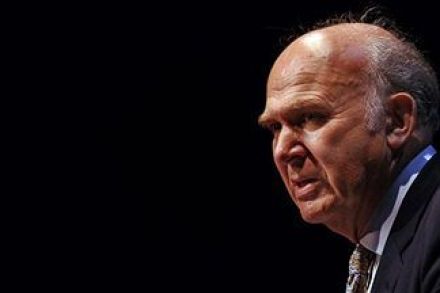
Who knows how, and whether, Vince Cable is going to vote in next Thursday's tuition fee decider? Not even the man himself, it seems. A few days ago he suggested he might abstain for the sake of party unity. Yesterday, he told his local paper that "I have a duty as a minister to vote for my own policy – and that is what will happen." And yet this morning's Guardian has a "party source" saying, "a final decision has not been made. It is still possible Vince could abstain." At least we haven't heard that he might vote against the proposal – although, at this rate, I wouldn't be surprised. To my mind, the most likely outcome – and one mooted in the papers today – is a three-way split.

The Lib Dems need to get their act together on tuition fees

From our UK edition

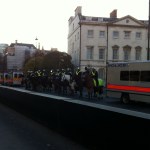
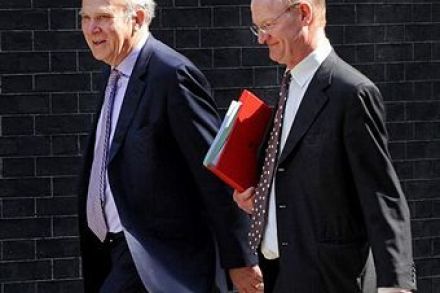
There have been a huge amount of police out in Westminster today. After being caught off-guard by the student demo a few weeks back, the cops are now leaving nothing to chance.   But if the police have now got their act together, the same cannot be said of the Liberal Democrats. They are currently considering whipping their MPs to abstain on tuition fees despite the fact that the government’s policy is one that has been crafted by a Lib Dem Secretary of State, Vince Cable, and a Tory Minister of State, David Willetts.   If the Lib Dems were to abstain, it would play to the worst stereotypes of the party. They would be derided as ditherers of the first degree, incapable of taking a tough decision.

Dave Spart Returns to the Guardian

From our UK edition

Well, perhaps he's never left. There's much to enjoy in - and something nostalgic about - this piece by Michael Chessum and Jonathan Moses in today's Guardian. Apparently "politics as usual has failed" so, naturally, alternative methods must be sought. Now, as it happens, one can understand why students are disappointed by the Liberal Democrats' flip-flop on university funding. But this is bunk: And mobilise we must. The coalition's proposals represent a nigh irreversible transformation of higher education, and the commodification of knowledge and learning. Mobilise all you like, comrades. But while there's an intrinsic value to knowledge and learning they are also, quite evidently commodities.

A model for coalition policy-making

From our UK edition

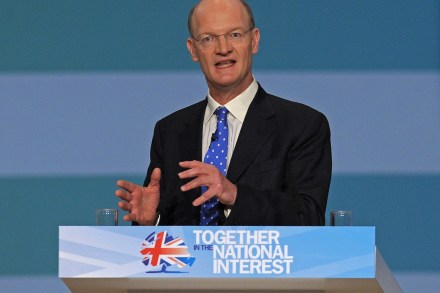
David Willetts and Vince Cable deserve huge credit for coming up with an impressive agreement on higher education funding that both the Tory and Liberal Democrat leaderships can live with. They have taken the coalition beyond the coalition agreement and shown that it can make sound policy on even the thorniest of political issues. But as important as the agreement is the way that it was hammered out. The discussions were civilised and empirical. There was—in stark contrast to the ‘blue on blue’ debates over defence and welfare—no negative briefings or anything like that. My main quibble with it is whether the £9,000 cap on fees is set too low to allow our universities to both maintain the excellence of their teaching and their global standing.

The tuition fees compromise

From our UK edition

Away from the mid-terms, we have the little issue of tuition fees. David Willetts will today set out the government's response to the Browne Review, and it's expected to look something like this: a £9,000 cap on fees, but universities will have to show that they are making extra provisions for poorer students if they charge over £6,000. Students would effectively be loaned the money by the state, and would start paying it back once they earn £21,000 after graduation. It's certainly a compromise arrangement, constructed with one eye on the Lib Dems and another on the universities. For Clegg's backbenchers, there's a rejection of the unlimited fees advocated by Browne, and an overall emphasis on "fairness" and on helping the less well-off into university.

The universities strike back

From our UK edition

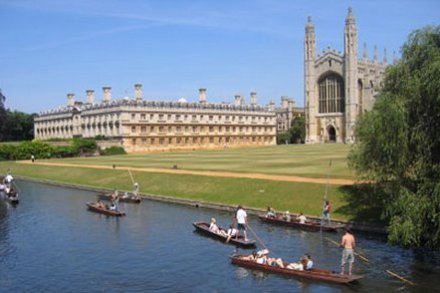
A wander through to p.14 of the Sunday Times delivers one of the most eyecatching political stories (£) of the day. The headline: "Cambridge may go private in fees row". And the content: that officials at Cambridge Uni are dissatisfied with the findings of the Browne review, which they see as too restrictive. Their issue is with the fees that are imposed by the government should a university charge above £6,000 for a year's tuition. This, they claim, prevents them from pulling in the kind of Big Bucks that Ivy League institutions have in their bank accounts - and could lead to British universities falling behind.

Winning over the squeezed middle

From our UK edition

Politically, one of the key questions about Lord Browne’s suggestion that tuition fees should be raised is how the tribunes of the middle classes react. Will a rise in fees be seen as another burden on those who work hard, play by the rules and are already bearing more than their fair share of the costs of the state? If the argument is to be won, the coalition will have to show that students will now get more out of their university experience. There’ll have to be an emphasis on how these changes will make universities improve the quality of the teaching that they offer. It’ll be worth watching to see if the question of who can increase the interest rate flares up over the next few weeks.

Making the case for further tuition fees

From our UK edition

Ever the opportunist, Ed Miliband recognised that university funding could be the coalition’s first test of resolve. Opposing a tuition fee hike has given him the chance to serenade disgruntled Liberal Democrats and to discard New Labour’s sheen (which so incensed Alan Johnson, the minister who introduced the fee in such difficult circumstances). Miliband is determined to mould the Labour party in his image. Speaking on the Politics Show yesterday (16:20 in), he said that the party, Johnson included, will strive to deliver a graduate tax. After a summer’s procrastination, the government has run out of time. The substance of Lord Browne’s recommendations is in the public domain and it has caused disquiet on government benches.

The decline of the Gap Year

From our UK edition

When I say that I doubt that I will take a Gap Year, many adults are surprised. “Why”, they say, wide-eyed, “it's such a wonderful growing experience / important rite of passage / chance to save the world.” Hm. All this may be so, but I am by no means alone in dismissing a year spent abroad. I can see many reasons for this. The first comes from the infamous video “Gap Yah.” Everyone has seen it. My grandmother has seen it. If you haven’t seen it, then you can find it here. In addition to being very funny and easily quotable, it does highlight a significant reason for the decline of the Gap Year. The Gap Year is now commonly known as the Gap Yah, and with this new branding comes an unshakeable social stigma.

David Miliband and the graduate tax

From our UK edition

As James Kirkup notes, it looks as if David Miliband supports a graduate tax – only ‘looks’ mind, we can’t be sure. The university funding debate is now captive to ill-defined terms – is what is being proposed a tax, a fee or a contribution? David Miliband is hard enough to comprehend as it is, but is he talking about a graduate contribution or a graduate tax? How would either be assessed? Also, does David Willetts make any more sense?

The return of traditional subjects

From our UK edition

Today’s A-level results once again see the pass rate continuing to rise, in this instance for the 28th year in a row, with 97.6% of entries gaining an E or above, up from 97.5% in 2009. While not wishing to detract from the efforts of students and teachers, unfortunately such a rise has become all too expected, to the point where there would almost have to be a public inquiry if it were not to happen. Nor should the introduction of the A* at A-Level warrant particular attention, except perhaps to say that it serves as a symbol of how far we have allowed grade inflation to go.     Crucially, however, this year’s A-Level cohort have distinguished themselves in one particular regard.

What you need to know ahead of the Spending Review

From our UK edition

This is the second of our posts with Reform looking ahead to the Spending Review. The first, on health, can be found here. What is the budget? Education is the biggest area of government spending after welfare and health, totalling £89 billion in 2010-11. This budget increased by 64 percent in real terms between 1999-00 and 2010-11. Total, per-pupil school spending doubled in real terms over the same period. Where does the money go? Expenditure on schools was £46 billion last year. The vast bulk of school spending goes on people: the average school spends 78 percent of its budget on staff.