Universities

Graduates struggling to get graduate jobs

From our UK edition

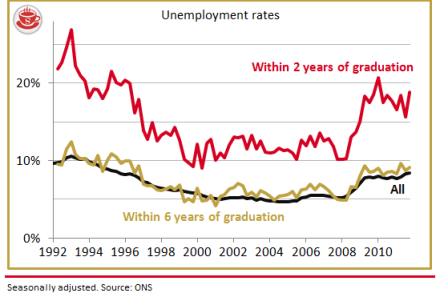
Today’s ONS release will make pretty grim reading for students and recent graduates. It shows that the unemployment rate among recent graduates — those who graduated in the last six years — stands at 9.1 per cent, higher than the overall unemployment rate of 8.4 per cent. It’s even worse for those who graduated in the last two years — the unemployment rate among them is 18.9 per cent, up from 10 per cent before the recession. But there’s an even more worrying trend among those recent graduates who do find employment. In 2001, three-quarters of them were in ‘higher skill’ jobs — those requiring more than GCSEs. Now, less than two-thirds of them are: So what does this mean?

Willetts tries to dampen the flames around Ebdon

From our UK edition

Siphoning the contents of two brains through one mouth and on to a single page will generally produce eclectic results. And that's certainly the case with David Willetts' interview with the Times (£) this morning. The universities minister manages to range across subjects that include Robert Falcon Scott, climate change, the Falklands and universities access. He even reheats one of his old theories about Feminism and social mobility in a way that (coupled with the interview's headline: ‘Moving on and up is very hard — and feminism is partly to blame’) makes it sound far more provocative than I think it's meant to be, and much weaker for it.

The Tories desert Cable in the Commons

From our UK edition

When a Secretary of State is in trouble, it is traditional that his governmental colleagues rally to his side. But as Vince Cable defended overruling the Business Select Committee’s objections to Les Ebdon, there was but one Tory Cabinet minister on the front bench. This despite Cable having rung round private offices in search of support, as Patrick Wintour reports. In total there were three Tories on the front bench for most of the statement, Cable’s junior minister Mark Prisk, the whip Mark Francois and the Leader of the House Sir George Young in his normal seat. The absence of Tory ministers combined with 13 hostile questions from Tory backbenchers shows just how uncomfortable the Tories are with this appointment. By contrast, the Lib Dems are delighted.

The depressing appointment of Les Ebdon

From our UK edition

Today brings confirmation that No.10 has not stood in the way of Vince Cable appointing Les Ebdon as the new director of fair access. Ebdon’s appointment is depressing for several reasons. First, Cable has ridden roughshod over the objections of the BIS select committee to his choice. So much for all of the coalition’s talk about respecting parliament — this is executive arrogance at its worst. Second, Ebdon represents the mindset that has done so much damage to British education in the past 50 years. It is worrying that he does not seem to appreciate that the biggest ‘root cause’ of poorer pupils not getting into top universities is the quality of state schooling in deprived areas.

At least it won’t go to penalties…

From our UK edition

Who's winning in the latest match between Vince Cable and the Conservatives? The Business Secretary did take an early lead, with the news that No.10 had grudgingly yielded to his demand to appoint Professor Les Ebdon to the role of ‘university admissions tsar’ — a man who has hardly been kind about the coalition's universities policy in the past, and whose appointment had been blocked by the business select committee. But, according to the Telegraph this morning, the Tory leadership appear to have scored a goal of their own: Cable's proposal for imposing penalties on graduates who pay off their student loans early is to be dropped. We can, and should, cheer the wheezing demise of that policy.

The tuition fee effect, revealed

From our UK edition

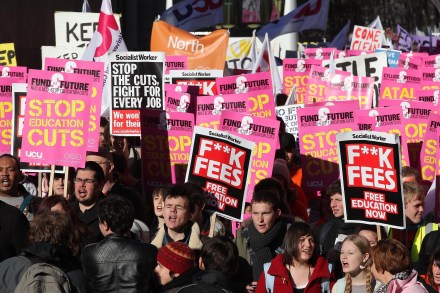
The coalition’s tuition fee rise will put young people from poor backgrounds off applying to university — or so we were told by Labour and the National Union of Students. But now we can actually put that claim to the test. UCAS today revealed how many of that first year group to be affected by the rise have applied to university. So what does those number tell us? Looking at the headlines resulting from the release, you’d be forgiven for thinking that Team Miliband have been vindicated. ‘University applications plunge 9% after tuition fees are trebled,’ proclaims the Daily Mail. ‘Thousands give up on university because of tuition fees,’ says the Telegraph. And the BBC: ‘UK university applications down as fees rise’.

Why the state should take charge of examinations

From our UK edition

Michael Gove has said that ‘nothing is off the table’ when it comes to dealing with the revelations in today’s Telegraph that a chief examiner of the Welsh examination board, WJEC, steered teachers attending his board’s fee-paying advice session so flagrantly in the direction of what was likely to feature in the next examination, it amounted, as the man said, to ‘cheating’. The irony of the thing is that those teachers who did not pay £230 a session for his assistance are likely to do much better by their pupils: the obliging examiner was telling the teachers about the cycle of examination questions — in other words, which bit of the syllabus was not going to feature in the questions.

The End of a Delusion

From our UK edition

The sight of Colonel Muammar Gaddafi blood-stained and bewildered, pulled around by a crowd in the final moments of his life is not a sight that will cause much pity. For more than four decades he had none for those Libyans whom he repressed and killed — anymore than he had for the victims on Pan Am Flight 103, his other multiple acts of terrorism, or his pointless and bloody interventions across Africa. Yet there is something pitiful about it: perhaps most obviously because watching his end is to watch the end of a delusion. Even more than Saddam Hussein crawling out of a hole in the ground and saying that he wanted to negotiate, the sight of Gaddafi coming out of a soil-pipe armed with a golden gun seems the perfect example of reality catching up with the autocrat.

Ed’s “something for something” society

From our UK edition

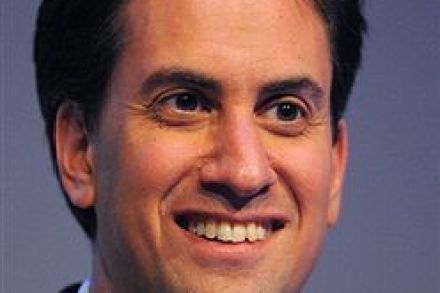
Fraser’s already commented on the welfare angle of Ed Miliband’s keynote speech to the Labour party; the welfare proposals are part of a broad analytical sweep that can be reduced to the catchphrase, ‘the something for something society’. Miliband’s vision of society will reward those who work and abide by the rules at the expense of those who do not – those who loot, who fiddle expenses, those who pursue short-termism in business. According to the Guardian, he will also emphasise the importance of social mobility and equality. To that end, he will encourage universities to take more people from disadvantaged backgrounds.

Labour’s tuition fee gambit

From our UK edition

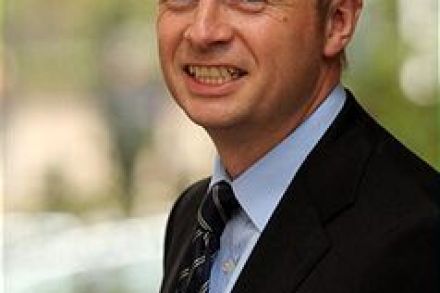
As James noted earlier this morning, Ed Miliband said that Labour may go further with its policy capping tuition fees when it reveals its manifesto later this parliament. Shadow universities minister John Denham has since said that a graduate tax remains the party's long-term aspiration. Denham's comments muddies the already dark waters on the issue: first Miliband opposed a hike in fees, now he seems to recognises that they must rise but should be capped, and at the same we're told that the aspiration is a graduate tax. Liam Byrne has added a further confusion by saying that the top 10 per cent of graduates will pay "a little more" to meet the costs of the cap.

Willetts’ musings

From our UK edition

Coffee House has already touched on David Willetts’ interview with the Times (£), highlighting his view that the 50p tax rate is important to prove that "we’re all in this together". Willetts does not limit his words to the top rate of tax. In addition to his universities brief, he discusses equal pay issues, social reform and the recent riots. Willetts confesses to being a “muser”, never happier than when applying his renowned brain to the broad sweep of government policy. “I wouldn’t be able to function properly as a politician unless I was able to range across some of these wider issues. It just wouldn’t be worth it,” he says.

The annual A-levels helter-skelter

From our UK edition

The Gap Year has been declared dead. It’s A-levels day today, and the annual scramble for university places has been intensified ahead of next year’s tuition fees rise. According to this morning’s Times (£), the last count had 669,956 pupils sprinting after 470,000 vacancies. An estimated 50,000 students with adequate grades will not enter higher education this year as many universities have raised entry requirements to manage increased demand. This means that competition during clearance will be even more stiff than usual, particularly as universities will offer many fewer clearing places according to various surveys. Needless to say, UCAS’ website appears to have collapsed under the weight of this unparalleled interest.

Ed Miliband needs David Miliband if he’s to make proper headway

From our UK edition

Are the seeping knife wounds healing at last? This morning's Guardian reveals that Ed Miliband has offered his older brother a role as Labour's "unofficial ambassador on university and college campuses", and that David Miliband has accepted. Although party sources tell the paper that "this should not be seen as a sign that [MiliD] is being lined up for an early shadow cabinet return," it surely is a sign that the two brothers are repairing their damaged relationship. From barely speaking to each other to mutually preaching the Labour gospel to a bunch of students. It's progress.   Putting aside the fraternal aspects of the story, it is also an encouraging political development for Ed Miliband.

An American view of tuition fees

From our UK edition

When I visited the US recently, I got talking to some American teenagers about university. They (like me) had just left school and were trying to decide where to go next. I explained that in the UK, the Government's plan to raise tuition fees to £9,000 a year had led to riots. Their jaws dropped. They couldn't understand what the fuss was about. In the US, fees can reach $40 000 a year for the private Ivy League colleges. The reaction in the UK seemed ridiculous to them. They felt we should be grateful that we didn't have to pay $40,000. [Although, to be fair, some state universities only charge around $5000].

The coming battle over university places

From our UK edition

Until now, the debate over universities has dwelt inevitably on how much students need to stump up in tuition fees. With the release of today's White Paper, the government will hope that the emphasis shifts to what students receive in return for that cash. Basically, it is all about fixing a subverted market by making it more transparent. With universities good, bad and indifferent rushing to charge the maximum possible amount for fees, the idea is that forcing them to release more information about their courses — about teaching standards, job prospects and the like — will help students decide which are offering value-for-money. Who knows? It might even shame one or two institutions into lowering their asking prices.

In defence of the Oxbridge interview

From our UK edition

Simon Hughes’ desire (£) to stop Oxbridge academics interviewing potential students is muddle headed as well as an attack on the right of these universities to run their own affairs. If the coalition wants universities to pick on academic potential rather than academic performance to date, then the interview is a crucial part of this process. Sitting down with an applicant gives academics a chance to assess how this student’s mind works, to ask questions that they haven’t been drilled for. It allows them to use their professional discretion in choosing to make, say, a lower offer to a pupil from an underperforming school who in the interview demonstrates that they have huge amounts off potential despite not having stellar exam results.

Who’s Afraid of Grayling Hall?

From our UK edition

Or, as it is to be known, the New College of the Humanities? I must say that the prospect of a dozen or so celebrity dons attaching their names to a new private college in London has provoked rather more outrage than might be thought necessary. It is not, after all, as though it is going to be a major enterprise. On the contrary, most of its applicants seem likely to be from overseas or public-school types who fail to win places at Oxford or Cambridge. If that proves so then Grayling Hall will benefit students from less affluent backgrounds by freeing up places at top tier universities that might otherwise have been taken by the NCH's students. This seems a reasonably worthy cause.

The vanguard of the universities revolution?

From our UK edition

One new institution does not a revolution make. But there's still something a little revolutionary about the New College of the Humanities that is set to open, in London, in September 2012. Perhaps it's the idea behind it: a private university that charges fees of £18,000 a year (with bursaries available to those who can't afford that). Or perhaps it's the names who are fronting it: AC Grayling, Richard Dawkins, Niall Ferguson, etc. They will, apparently, be conducting tutorials themselves. The public academics, it seems, are pitching their tents on the private sector. Mary Beard lists some reasons no to get too excited here. This is, she says, little more than a US-style liberal arts college that won't offer science courses or post-graduate qualifications.

Today’s lesson for David Willetts

From our UK edition

What a knotty problem David Willetts has created for himself today. Speaking to the Guardian this morning, he floated an idea to help the universities make a bit of cash: they could, he suggested, sell extra places to students who were prepared to pay exaggerated fees up front. This isn't yet government policy, and the students needn't do the paying themselves (they could be sponsored by charities or employers, for instance), but the Guardian pounced nevertheless. "Extra places at university for rich students," blared its front page headline. Not a good look for the coalition, at a time when access to university is such a general concern. Not a good look for David Willetts, who might have avoided the pitfall before him.