Universities

Labour's tuition fee gambit

As James noted earlier this morning, Ed Miliband said that Labour may go further with its policy capping tuition fees when it reveals its manifesto later this parliament. Shadow universities minister John Denham has since said that a graduate tax remains the party’s long-term aspiration. Denham’s comments muddies the already dark waters on the issue: first Miliband opposed a hike in fees, now he seems to recognises that they must rise but should be capped, and at the same we’re told that the aspiration is a graduate tax. Liam Byrne has added a further confusion by saying that the top 10 per cent of graduates will pay “a little more”
Willetts' musings

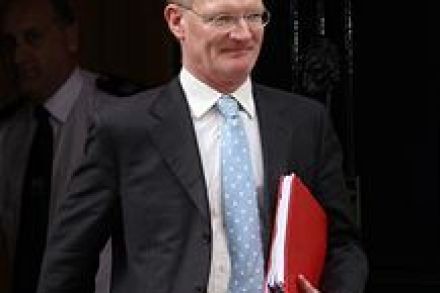
Coffee House has already touched on David Willetts’ interview with the Times (£), highlighting his view that the 50p tax rate is important to prove that “we’re all in this together”. Willetts does not limit his words to the top rate of tax. In addition to his universities brief, he discusses equal pay issues, social reform and the recent riots. Willetts confesses to being a “muser”, never happier than when applying his renowned brain to the broad sweep of government policy. “I wouldn’t be able to function properly as a politician unless I was able to range across some of these wider issues. It just wouldn’t be worth it,” he says.

The annual A-levels helter-skelter

The Gap Year has been declared dead. It’s A-levels day today, and the annual scramble for university places has been intensified ahead of next year’s tuition fees rise. According to this morning’s Times (£), the last count had 669,956 pupils sprinting after 470,000 vacancies. An estimated 50,000 students with adequate grades will not enter higher education this year as many universities have raised entry requirements to manage increased demand. This means that competition during clearance will be even more stiff than usual, particularly as universities will offer many fewer clearing places according to various surveys. Needless to say, UCAS’ website appears to have collapsed under the weight of this unparalleled

Ed Miliband needs David Miliband if he's to make proper headway

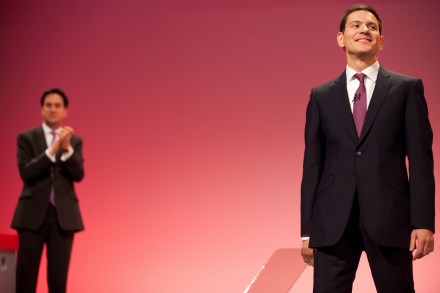
Are the seeping knife wounds healing at last? This morning’s Guardian reveals that Ed Miliband has offered his older brother a role as Labour’s “unofficial ambassador on university and college campuses”, and that David Miliband has accepted. Although party sources tell the paper that “this should not be seen as a sign that [MiliD] is being lined up for an early shadow cabinet return,” it surely is a sign that the two brothers are repairing their damaged relationship. From barely speaking to each other to mutually preaching the Labour gospel to a bunch of students. It’s progress.   Putting aside the fraternal aspects of the story, it is also an

An American view of tuition fees

When I visited the US recently, I got talking to some American teenagers about university. They (like me) had just left school and were trying to decide where to go next. I explained that in the UK, the Government’s plan to raise tuition fees to £9,000 a year had led to riots. Their jaws dropped. They couldn’t understand what the fuss was about. In the US, fees can reach $40 000 a year for the private Ivy League colleges. The reaction in the UK seemed ridiculous to them. They felt we should be grateful that we didn’t have to pay $40,000. [Although, to be fair, some state universities only charge

The coming battle over university places

Until now, the debate over universities has dwelt inevitably on how much students need to stump up in tuition fees. With the release of today’s White Paper, the government will hope that the emphasis shifts to what students receive in return for that cash. Basically, it is all about fixing a subverted market by making it more transparent. With universities good, bad and indifferent rushing to charge the maximum possible amount for fees, the idea is that forcing them to release more information about their courses — about teaching standards, job prospects and the like — will help students decide which are offering value-for-money. Who knows? It might even shame

In defence of the Oxbridge interview

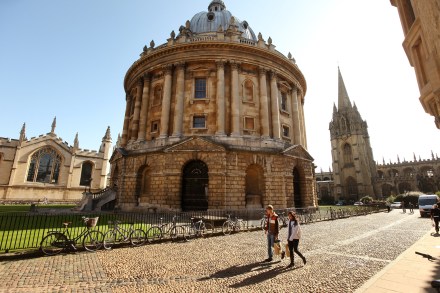
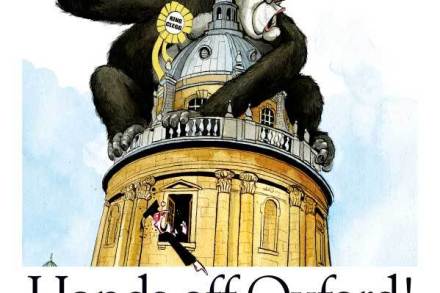
Simon Hughes’ desire (£) to stop Oxbridge academics interviewing potential students is muddle headed as well as an attack on the right of these universities to run their own affairs. If the coalition wants universities to pick on academic potential rather than academic performance to date, then the interview is a crucial part of this process. Sitting down with an applicant gives academics a chance to assess how this student’s mind works, to ask questions that they haven’t been drilled for. It allows them to use their professional discretion in choosing to make, say, a lower offer to a pupil from an underperforming school who in the interview demonstrates that

Who's Afraid of Grayling Hall?

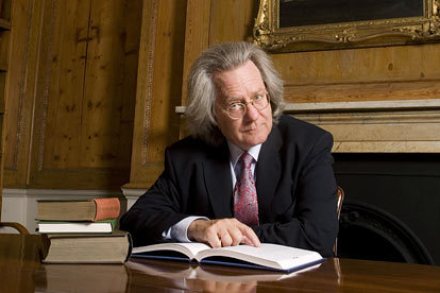
Or, as it is to be known, the New College of the Humanities? I must say that the prospect of a dozen or so celebrity dons attaching their names to a new private college in London has provoked rather more outrage than might be thought necessary. It is not, after all, as though it is going to be a major enterprise. On the contrary, most of its applicants seem likely to be from overseas or public-school types who fail to win places at Oxford or Cambridge. If that proves so then Grayling Hall will benefit students from less affluent backgrounds by freeing up places at top tier universities that might

The vanguard of the universities revolution?

One new institution does not a revolution make. But there’s still something a little revolutionary about the New College of the Humanities that is set to open, in London, in September 2012. Perhaps it’s the idea behind it: a private university that charges fees of £18,000 a year (with bursaries available to those who can’t afford that). Or perhaps it’s the names who are fronting it: AC Grayling, Richard Dawkins, Niall Ferguson, etc. They will, apparently, be conducting tutorials themselves. The public academics, it seems, are pitching their tents on the private sector. Mary Beard lists some reasons no to get too excited here. This is, she says, little more

Today's lesson for David Willetts

What a knotty problem David Willetts has created for himself today. Speaking to the Guardian this morning, he floated an idea to help the universities make a bit of cash: they could, he suggested, sell extra places to students who were prepared to pay exaggerated fees up front. This isn’t yet government policy, and the students needn’t do the paying themselves (they could be sponsored by charities or employers, for instance), but the Guardian pounced nevertheless. “Extra places at university for rich students,” blared its front page headline. Not a good look for the coalition, at a time when access to university is such a general concern. Not a good

Tuition fees set to spoil summer

Tuition fees are lowering in the distance, threatening the stability of the coalition. A straw poll by the BBC suggests that a majority (two-thirds) of institutions are planning to charge the full whack of £9,000 a year. It’s unclear which universities the BBC contacted, but the results follow a developing trend. 39 universities have stated that they want to charge the full amount on all of their courses, which prompts the Guardian to claim that the potential average tuition fee currently stands at £8,679.20, well above the £7,000 predicted by the government, which has led to fears of a black hole in the universities budget. Above all, this threatens to

A question of access

When a Prime Minister gets his facts wrong as spectacularly as David Cameron did yesterday with his comment that  ‘only one black person went to Oxford last year’ everyone wonders why. Now, the simplest explanation is that it was a straight cock-up. One of the pitfalls of these Cameron Direct events is that errors can come out. Another theory doing the rounds this morning is that Cameron is giving a speech on immigration later this week, with some tough language in it, and so was trying too hard to show that he is anti-racist. But whatever the explanation, Cameron needs to be careful about how he approaches the university access

Blame the schools system, not Oxford

The most extraordinary row has broken out after the Prime Minister appeared to suggest that Oxford University has a racist admissions policy. He today said that, “I saw figures the other day that showed that only one black person went to Oxford last year. I think that is disgraceful.” But the university has since hit back, pointing out that, “the figure quoted by the Prime Minister is incorrect and highly misleading — it only refers to UK undergraduates of black Caribbean origin for a single year of entry, when in fact that year Oxford admitted 41 UK undergraduates with black backgrounds.” Laura Kuenssberg tweets that No10 is nevertheless sticking to

Short term solutions to Britain’s long-term education problem

The most important planks of the coalition’s social mobility strategy are its education and welfare reforms. Raising the standards of state education in this country will give far more children a chance to get on in life. While reducing the number of children brought up in workless households will, hopefully, halt the development of a hereditary non-working, benefit-dependent class.   But these measures will take time to work. Which raises the question of what should be done in the meantime?   One thing would be allowing academics to use discretion in admissions. We don’t expect the England cricket selectors to pick the side based solely on county averages and we

Shaky dealings are damaging the reputation of Britain’s universities

A delegation from Durham University flew to Kuwait in February to build what it termed ‘academic partnerships’. They succeeded. On Monday afternoon, Durham University announced the formation of the ‘Al-Sabah Programme in International Relations, Regional Politics and Security.’ In an internal document sent to academic staff, the Vice-Chancellor, Professor Chris Higgins, revealed that that this seat had been ‘funded personally by Sheikh Nasser Al-Sabah of Kuwait’, the Kuwati Prime Minister, and that the ‘£2.5million endowment will support the Al-Sabah Chair, associated research and two PhD studentships in perpetuity’. Al-Sabah has made what is politely termed a singular contribution to democratic traditions. He was appointed in 2006 by his uncle, the

The grade inflation scam

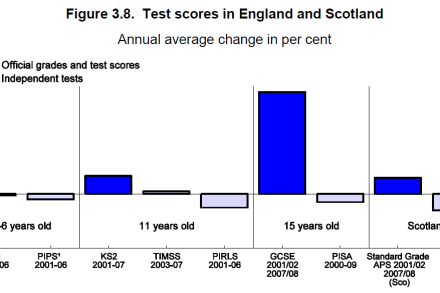
Today’s OECD Economic Survey of the UK (download the complete pdf here ) contains some devastating passages about our education system. As it’s 148 pages in size, we thought CoffeeHousers might appreciate some highlights. Here’s your starter for ten: “Despite sharply rising school spending per pupil during the last ten years, improvements in schooling outcomes have been limited in the United Kingdom.” This is rather a staggering indictment of Tony Blair’s “education, education, education” policy. But what about the ever improving exam results that we hear about each summer? Again, the OECD:   “Official test scores and grades in England show systematically and significantly better performance than international and independent

Clegg's cure for the tuition fee trauma

The Liberal Democrats are still traumatised by what happened over tuition fees. Nearly every fringe meeting contained a long discussion of the issue and how the party could have handled it better. Clegg’s plan to heal the wound is to show that the new system will go hand in hand with a broadening of access to the best universities. The deputy prime minister seems to be straining for a fight on this issue. In his speech, he laid into those at Oxbridge ‘who shrug their shoulders and say: That’s just the way things are’ about how dominated these institutions are by the children of the well-off. He demanded, ‘fair access

Levelling higher education's playing field

Last summer I was showing some 17 year olds around the House of Commons. They were bright and engaged and all wanted to go to university. But as they told me what they were doing for A-Levels my heart sank. They were all doing subjects that were going to put them at a massive disadvantage in applying to a top-rank university. The most worrying thing was that they were completely unaware of this. So it is welcome news that the Russell Group, made up of the 20 best universities in the country, has now published a guide advising students on which A-Level subjects are held in the highest regard by

Hughes' social engineering crusade

No wonder some backbench Tory MPs are apoplectic: courtesy of David Cameron, Simon Hughes has been elevated from soapbox to pulpit. Hughes’ first statement as the government’s university access adviser is to suggest that universities should limit their intake of students from private schools. He told the Guardian: ‘I think my message to the universities is: You have gained quite a lot in the settlement. Yes, you’ve lost lots of state money, but you’ve got another revenue stream that’s going to protect you. You now have to deliver in turn. You cannot expect to go on as you are. It has failed miserably.’   Hughes’ appointment was controversial, another instance of