Ukraine invasion

Poland is Europe’s next great military power

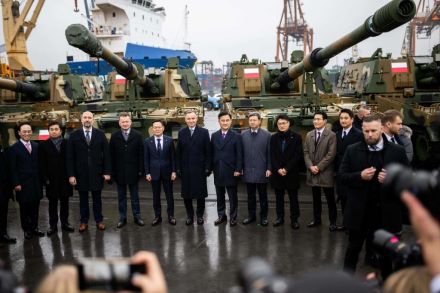
As Russia’s war in Ukraine rages into its eleventh month, there is one country that can truly be said to have learned its lesson: Poland. By the mid-2030s, when the majority of its equipment purchases have been delivered, Warsaw will command one of the most modern, well-equipped armies in Europe. It’s not cheap, but Poland is taking decisive action to be able to face the threats of tomorrow. Poland's $20.5 billion 2023 defense budget is a huge increase over the previous year, and is over 3 percent of gross domestic product (well above the NATO-suggested 2 percent). Aside from equipment, this money will be used to help expand the manpower that Poland can bring to bear, upping its active-duty forces from 140,000 to 300,000 troops.
Putin mentions the war

So much for "don’t mention the war!" Russian president Vladimir Putin has called the conflict in Ukraine a war for the first time on Thursday. Cockburn is quite flummoxed — this is the same Putin who has made an industry out of locking people up who refused to call the war a “special military operation”. On December 22, while addressing the situation in Ukraine, Putin said, “Our goal is not to spin the flywheel of military conflict, but, on the contrary, to end this war.” The irony alone of this statement is too much to handle. The man who invaded his neighbor and disregarded the laws of war is now saying he does not want to “spin the flywheel of military conflict”?

nuclear tactical putin war

Zelensky spoke to the American soul

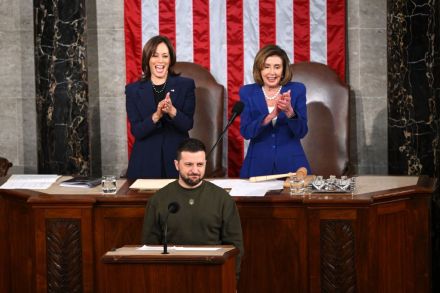
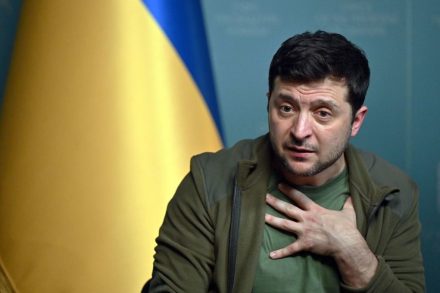
When Volodymyr Zelensky entered the chamber to address Congress, the applause and cheers took on a particularly emotional character. It was not the stilted, forced applause that the president receives at the State of the Union; it was an affectionate show of admiration for a man who has come to embody the twenty-first century struggle for freedom. Though delivered to Congress, the opening words of the Ukrainian president’s speech revealed his true audience: “Dear Americans... all those who value freedom and justice.” It was a speech for all of us. He pulled the dusty tarp off of America’s deepest identity as the shining light of liberty in a world of tyranny.

volodymyr zelensky

Biden needs to stop ceding the initiative to Putin

Washington will provide Patriot missiles to Ukraine, bolstering Kyiv's air defenses in the new year. This is welcome news — but it should have happened a long time ago. One word best characterizes the Biden administration’s response to the war in Ukraine: reactive. The president’s lack of proactive measures both gives Putin an edge and prevents Ukraine from achieving a swift victory. US weapons began arriving in Ukraine in December 2021 from a $60 million package approved in August, with another package worth $200 million being approved in December and arriving in January. Both lacked the firepower needed to deter Moscow. The administration knew by October 2021 that Putin might invade — and that Russia had been building up forces around Ukraine since the spring.

putin

Ukraine is ready to keep fighting

Lviv, Ukraine I write by candlelight from a centuries-old coffeehouse on a snowy day, even though the electricity is working. Lviv is a history-loving city that likes to live by candlelight, so they are not panicking about sporadic power losses. But today, when my apartment here had no heat, it was clearer than ever to me: Russia is seeking to break the Ukrainian people this winter. Why? Because the Kremlin knows that in Ukraine: the people and not the government are in charge. I wish those people in the West, especially in America, who talk about freedom realized the radical nature of Ukrainian democracy. Influential Americans in media and politics often talk about how “the Kyiv regime” needs to negotiate in order to bring about peace.

lviv

The coming turbulent times in the oil market

When the Wall Street Journal reported on November 21 that OPEC, the oil cartel dominated by Saudi Arabia, was planning to increase production by 500,000 barrels per day in December, the crude market immediately reacted. Oil prices plunged by 6 percent, bringing the Brent benchmark close to $80 a barrel. Saudi energy minister Prince Abdulaziz bin Salman, the older brother of king-in-waiting Mohammed bin Salman, immediately went to work disputing the report. No decisions at OPEC had been made, he said, and it was possible the cartel could even proceed with further production cuts if needed to maintain balance in the market (for the Saudis, "balance" is usually defined as padding the kingdom’s balance sheet). Abdulaziz’s intervention helped make up most of those earlier losses.

oil

How to survive the ‘permacrisis’

Are we in a permanent state of crisis? The Britain-based lexicographers at the Collins Dictionary think so. Last month they chose “permacrisis” as their word of the year. Defining the neologism as “an extended period of instability and insecurity,” Collins explained that their selection “sums up quite succinctly how truly awful 2022 has been for so many people.” It’s easy to see why the word has particular resonance for the Brits, now onto their third prime minister this year. But the sense that we are stuck in an endless cycle of crises is a global one. As 2022 draws to a close, the world faces a daunting set of overlapping disasters.

permacrisis

WATCH: Germans are dancing to stay warm this winter

The world's eyes have been on America this week, thanks to the midterms. Cockburn, however has been gazing across the Atlantic with amusement. A new dance class is being offered in Germany called "Let’s Move — Tanzt Euch Warm," or "dance yourselves warm," to combat rising energy costs as the temperature falls. https://twitter.com/reuters/status/1590588816716242944 Watching the footage of the chilly krauts cha-cha-cha-ing, Cockburn can’t help but recall former president Donald Trump’s speech to the United Nations back in 2018, where he warned that "Germany will become totally dependent on Russian energy." At the time, the German delegation laughed and shook their heads at what they considered yet another absurd broadside from the American president. https://twitter.

tanzt euch warm

America and Russia are finally talking to each other again

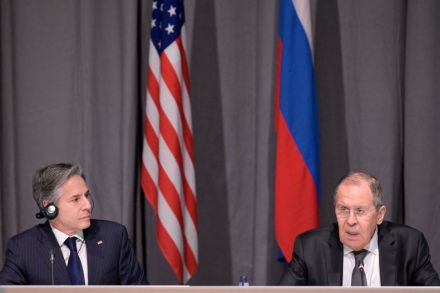
Defense Secretary Lloyd Austin and Russian Defense Minister Sergei Shoigu haven’t really been on speaking terms. That is, until last weekend, when the two defense chiefs conversed with each other twice in three days. The readouts released by the Defense Department are about as brief as brief can get. They don’t tell us much about what was said, other than the general observation that Austin, a former four-star army general, swatted away Moscow’s explanations for the war in Ukraine. What the conversations illustrate more than anything is just how rare they've been. Indeed, the reason why so many news outlets wrote about the Austin-Shoigu calls was because they were extraordinary.

Why Israel won’t give lethal aid to Ukraine

Israeli defense minister Benny Gantz announced this week that Israel would maintain its policy of not supplying weapons to Ukraine. This drew criticism, including charges that Israel has a moral obligation to help Ukraine and is instead foolishly prizing its relations with Russia. Critics also note that Israel’s archenemy Iran is providing weapons and advisors to Russia. They further point out that Israel’s Ukraine arms embargo puts it out of step with Israel’s most important partners in the West, especially the United States. Yet aiding Kyiv is a far riskier bet for Jerusalem than for most Western capitals. This is no easy call, and the one Israel made is probably the right one.

Homage to Kyiv

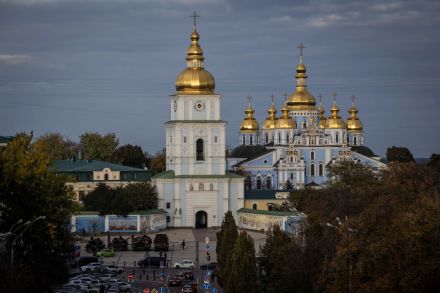
It was 11:15 p.m. in Kyiv, just after the curfew, and the military had set up its checkpoints on the city streets. Finding your way home after hours can be a hazardous business. The city is paranoid about assassins and saboteurs, and in wartime few are above suspicion. Things were looking ominous until my friend Sasha declared: “we are late for breakfast.” The guards waved us through. This was the daily password, shared with those important enough to move around after curfew. Checkpoints and curfews were a few reminders of the war in Kyiv, where I was just before last week’s deadly air strikes. In the capital city, life was approaching some form of normalcy.

kyiv

How long can Europe’s support for Ukraine last?

Can Ukraine sustain a war effort that is proceeding far better than most military analysts ever expected? Part of that answer, of course, depends on the extent to which the Ukrainian army can keep their troops in the field equipped, supplied, and motivated. That challenge comes as the Russian military increasingly relies on so-called “kamikaze drones” to strike deep into Ukrainian territory (on October 17, a Russian drone attack killed four people in Kyiv during the morning rush hour). But another factor that will determine success or failure is whether Europe remains onboard — or, more to the point, whether Europe’s support to Kyiv will continue as the war enters a dreary, unforgiving winter.

Russia’s brutal strategy of war is failing

Ukraine’s devastating attack on the Crimean Bridge and Russia’s sickening response — deliberately targeting civilians — perfectly encapsulate how these adversaries are fighting this war. Ukraine has a coherent strategy, effective operational design, and close coordination among its forces. Russia is failing because it has none of this. The centerpiece of Ukraine's strategy is eviscerating Russian combat power without getting into a raw slugfest that would sacrifice its own troops. That means knocking out Russian combat power without a head-on battle, wherever possible. How does Ukraine do that?

Europe is more bark than bite on Ukraine

Last Friday, President Biden signed a spending bill that will keep the government’s lights on until December 16, when lawmakers will have to cobble together a funding resolution to avert a shutdown. Tucked into that law was another tranche of security and economic assistance to Ukraine, to the tune of $12.3 billion. The signing came two days after the Defense Department announced the release of an additional $1.1 billion military package for Kyiv, which will include 18 more HIMARS systems, 150 armored vehicles, and ammunition of various calibers. The Biden administration has provided the Ukrainians with over $16 billion in security assistance since Russia’s invasion in February. Washington’s hands have been cramping up from writing so many checks.

macron europe blame

The UN gets ready for hell week

Every year in late September, the east side of Manhattan morphs into a giant sea of immovable cars. The culprit: the annual United Nations General Assembly debate, where diplomats from around the world fly to New York to shake hands, give speeches, and participate in dozens of side meetings and events throughout the city. This week’s UN General Assembly debate, however, is unique. For the first time since the UN was established after World War II, the meeting is occurring amid a large, deadly, conventional conflict in Europe. The war in Ukraine, which will cross its eight-month mark this Saturday, will dominate the session from beginning to end.

The age of American unexceptionalism

Our administration would have us believe that Joe Biden is the leader of the free world. But he isn’t — and our relative inaction on Ukraine should firmly put to rest the idea of “American exceptionalism.” While Ukrainians were heartened by British prime minister Boris Johnson’s April trip to Kyiv, our commander-in-chief has adopted a different strategy for this active war zone: send in the women. Security concerns are ostensibly to blame for Biden being MIA, but sending in three of the country’s most important ladies — Speaker of the House Nancy Pelosi to Kyiv, First Lady Jill Biden and Vice President Kamala Harris to neighboring countries in Eastern Europe — seems an odd way to demonstrate that the administration is worried about security.

unexceptionalism

What Ukraine means for Asia

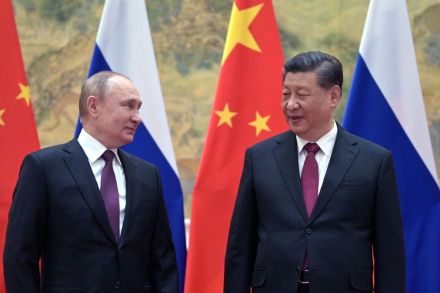
If Asia has entered the debate over the war in Ukraine, it is primarily through questions over the role China is purported to be playing in supporting Russia. Given the now-infamous declaration of a “partnership without limits” by Vladimir Putin and Xi Jinping during the Beijing Olympics just weeks before the invasion, many observers have searched for signs of Chinese aid, military or economic, to Russia in the conflict. The scope of devastation in Ukraine and the probable war crimes being committed by Russian troops understandably mean less attention has been paid to how the conflict might affect geopolitical stability in the Indo-Pacific region. The exception is Taiwan — there has been considerable speculation over the influence of Ukraine on Beijing’s calculations there.

asia

Don’t blame the West for its Ukraine hesitance

As Ukrainian President Volodymyr Zelensky addressed the UN Security Council today with all the anguish you would expect from a wartime commander-in-chief, he could nonetheless be relatively pleased about several things. Sure, Zelensky and his advisers are constantly making the point that Ukraine needs bigger and better weapons to resist Russia’s invasion, but the West has been quite responsive to Kyiv’s requests. The Biden administration’s latest weapons shipment, announced last week, adds to the $1.6 billion in military aid the US has sent to the Ukrainian military since the war broke out on February 24.