Uk politics

Obama and Cameron: who thought what about whom?<br />

From our UK edition

Remember that New Statesman article about Obama calling Cameron a "lightweight"?  Well, the Journalist Closest to Obama, Richard Wolffe, has a different take.  Here's what he told the Today programme this morning, courtesy of the ever-alert Andrew Sparrow: "He had a strong impression, a strong reaction, to both Cameron and Brown. It was right at the end of his foreign trip. And he was really taken with Cameron. He and his aides thought that he had energy and verve, a dynamism that suggested he was a good candidate – remember this was a candidate at the time, not a president. And there was bonding that took place which you might not expect of two people at the opposite ends of the political spectrum.
Why Britain needs to stay in Afghanistan

From our UK edition

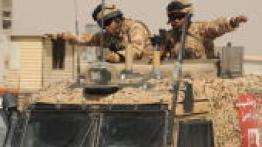
With the resignation of Eric Joyce as PPS to the Defence Secretary Bob Ainsworth, the question of why Britain is part of the NATO-led Afghan mission has taken on new force. No doubt the Prime Minister will explain what he sees as the reasons when he speaks at IISS later today. But just because Gordon Brown supports a policy does not make it wrong. Here are the reasons why we should remain engaged: 1. To deny Al Qaeda a safe-haven from which to train and organise attacks on the West. Though terrorism can be organized in Oldham, Hamburg and Marseilles, Al Qaeda still believes it needs safe-havens in places like Afghanistan. 2. To prevent a new generation of terrorists and insurgencies of getting the mother of all propaganda coups by having routed NATO.

Who really freed Megrahi?

From our UK edition

Who really freed the Lockerbie bomber? The question cannot be answered by deliberately looking in the wrong place. And for the fortnight since Kenny MacAskill, Scotland’s Justice Secretary, announced Mr Megrahi’s release that is what journalists have been doing, obsessively. Reporting with the pack mentality that often misdirects them, British newspapers have tried to prove that Gordon Brown authorised the release. Instead they have demonstrated only that the Prime Minister wanted Megrahi to be transferred to Libya under the prisoner transfer scheme, and that he had no power to make it happen. Granted, Mr Brown and the British Cabinet desired a result that would have appalled Americans nearly as much as the actual outcome has. But their view did not prevail.

Discontent is in the air

From our UK edition

This morning's political firecracker comes courtesy of Martin Kettle in the Guardian, who claims that a group of Labour figures are moving to oust Brown in October: "An active network of MPs and peers now exists, involving some names you might expect, but also others – including big ones – whose participation would surprise you. This group, like probably the majority of Labour MPs, accepts that Brown is a liability to his party's election prospects. Unlike the majority, though, they claim to think something can be done about it. They believe the window of opportunity, if it comes, will be in the two or three weeks after October 12. If Brown can be pushed, then this is the time. They say they are ready to try.

If Britain hasn’t returned to growth by the end of the year, will it still be ‘no time for a novice’?

From our UK edition

Looking at the OECD’s latest economic forecast it seems that the UK—unlike the US and the Euro-Zone--will not return to growth by the end of this year. (Although, one can’t help but wonder if Brown will start heralding zero percent growth in the fourth growth). Indeed, the OECD projects that the UK economy will shrink by 4.7 percent over this year as a whole—although the worst appears to be behind us with the rate of shrinkage slowing since the last quarter of 2008 and the first quarter of this year.   As Kevin Maguire suggests today, Labour’s election strategy is likely to be that Britain is not out of the woods yet and so it is still no time for a novice.

Getting to grips with spending

From our UK edition

This news in today's FT makes you wonder whether we might see some kind of spending review in the next few months, after all: "A massive data collection exercise across many hundreds of public bodies has been ordered by the Treasury to determine expenditure on IT, human resources, finance and procurement, in a bid to wring better value for taxpayers out of the billions of pounds spent. ... All government departments, agencies and hundreds of other public bodies that employ more than 250 people are being asked to provide the data by the end of next month for publication ahead of the autumn pre-Budget report. In time, the data are to be collected each year and will cover the entire public sector.

Brown’s misplaced hope

From our UK edition

In his insightful article on Brown and the forthcoming G20 summit, Francis Elliot writes a sentence which should terrify Labour supporters: "[Gordon Brown] has already decided that his only hope of a comeback in the polls lies with the economy." Sure, we all know that Team Brown has been putting a lot of hope in a green shoots strategy.  But, as we've pointed out on Coffee House before, there's little reason to believe that an economic recovery will deliver a significant boost for the Government.  If that's all that the PM has, then his situation is looking more hopeless than ever.

Farage to stand against Bercow

From our UK edition

The Telegraph’s Andrew Porter reports that UKIP leader Nigel Farage will stand against Speaker Bercow in Buckingham at the next election. Farage explained his decisision: “This man represents all that is wrong with British politics today. He was embroiled in the expenses saga and he presides over a Parliament that virtually does nothing.” Farage has more than an outside chance of winning this very safe Tory seat. It’s fair to say that Bercow’s expense claims and his election as Speaker, facilitated almost exclusively by Mr Brown’s MPs, have not endeared him to the party faithful – even Tim Montgomerie confides he’d be tempted to vote UKIP if he were registered in Buckingham.

Why did the SNP do it?

From our UK edition

Looking through correspondence published yesterday, it is clear that Alex Salmond and Kenny MacAskill understood immediately that they would be “left to deal with the consequences” of releasing a convicted mass-murderer. But, after Mr Megrahi had dropped his appeal, and therefore became eligible under the PTA, I can’t comprehend why the Scottish government took it upon itself to release al-Megrahi on compassionate grounds, especially given the identity of the beneficiary of this decision. The 1998 Scotland Act binds Scotland to all UK treaties. Honouring the UK Libya PTA commitment would not have impinged upon the due processes and jurisdiction of Scots law, and would have shifted the public’s ire onto Mr Salmond’s political enemies: the Labour government.

Brown’s fightback is hampered by the negative stories that hover over him

From our UK edition

So Brown has said more about the al-Megrahi case, although he hasn't said anything particularly new.  Speaking at an event to mark the government's new "Backing Young Britain" project, the PM claimed that, "There was no conspiracy, no cover up, no double-dealing, no deal on oil, no attempt to instruct Scottish ministers, no private assurances to Colonel Gaddafi".  Which is exactly the message we've heard from a string of ministers, and which has been thrown into doubt by all those published letters.  No word yet on whether Brown agreed or disagreed with Megrahi's release, when it finally came. All this exemplifies the problem that Labour have had for months now, and will continue to have for months to come.

Can Cameron learn from Wilson?

From our UK edition

Few Tories will enjoy looking back on 1974, but they may find it useful to study the second Wilson government and its successor, the Callaghan government, when it comes to the question of Europe.  Back then, we had a government coming to power in the midst of a severe economic climate, and which sought to change the pro-European course that its predecessor had set, including by re-negotiating Britain’s relationship with the EU and by appealing to fraternal parties in France and Britain. However, it ultimately ran into blades of domestic discontent and international indifference. The question is: could this end up being the story of a Conservative government from the middle of next year? Sure, there are key differences between then and now.

The Sky debate could be a lifeline for Brown

From our UK edition

As the Megrahi case grows more serious by the day, one thing should be cheering up those in the Brown bunker: Sky’s plan to host a debate among the party leaders. Now, Brown might be the only party leader yet to have agreed to the debate but he is the one with the most to gain from it. If Brown is to have any hope of stopping David Cameron from winning the next election outright, he needs a game changing moment—and a debate might just produce one. The first televised leaders’ debate will be a hugely hyped event. One has to imagine that it would draw a huge TV audience and a ton of media coverage. It would provide the clunking fist with the perfect platform to land a blow on David Cameron.

The Lockerbie papers

From our UK edition

Bill Rammell’s admission that the Prime Minister and the Foreign Secretary told the Libyans that they ‘did not want al-Megrahi to pass away in prison’ is the bombshell the government hoped to avoid. And, together with Jack Straw’s sudden decision not to exclude al-Magrahi from the PTA to protect ‘wider negotiations with the Libyans”, this disclosure requires answers from the government. David Miliband heightened the chaos the government now finds itself in on the Today programme when he very foolishly remarked: “We did not want him to die in prison”.

Sarkozy revs up Franco-German motor, leaving Britain behind

From our UK edition

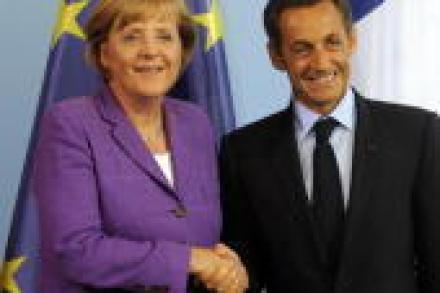
Last week, French President Sarkozy spoke to the annual gathering of his country’s ambassadors. Since he came to power, the French leader has used the annual event to welcome his countrymen back from their holidays and garner a few headlines. This year proved no different with an attack on the Iranian regime receiving the most attention. In a powerful line, the French president pointed out: "It is the same leaders in Iran who say that the nuclear programme is peaceful and that the elections were honest. Who can believe them?" He went on to say that he thought tougher sanctions would have to be discussed if Tehran does not change its position. But the speech was boilerplate Sarkozy – expansive, energetic, and ambitious.

Brown’s new dividing lines are merely muddled hypotheticals

From our UK edition

Reading the transcript of Gordon Brown’s interview with the FT one is struck by how little of a domestic policy message Brown has. Say what you like about Labour’s mantra in 2001 and 2005 of Labour investment versus Tory cuts but it was clear. By contrast, Brown’s attempt to explain his new dividing lines to the FT is distinctly muddled. Brown’s main line is that things could have been a lot worse without the government’s action. But that is, of course, a hypothetical. It also seems doubtful that the public will share this view or forget who was Chancellor in the decade before the crisis. Brown then moves on to what he thinks will be the battleground for the next election.

Cameron should be wary of taking the moral high ground in opposition

From our UK edition

I’ve just re-read Cameron’s article in the Times and it contains one section that might come back to haunt him, should he become Prime Minister. He writes: ‘Many will be disgusted by the suggestion that ministers in Whitehall encouraged al-Megrahi’s release — and did so for commercial reasons. Diplomacy often involves hard-nosed backroom deals. It would be naive to think otherwise. But there need to be lines you are not prepared to cross; values you will not compromise, whatever deal you broker. I believe even to hint that a convicted terrorist could be used as makeweight for trade is a betrayal of everything that Britain stands for.’  I agree with Cameron.

Cameron is the winner of the al-Megrahi scandal 

From our UK edition

It is clear that the al-Megrahi release has damaged Labour, not least because their collective refusal to condemn, or at least have an opinion on, the release of the Lockerbie bomber has confirmed that the government is totally out of touch with public opinion. On the other hand, David Cameron has played a blinder. In stark contrast to the Prime Minister’s Trappist monk act, Cameron has led this issue, voicing considered condemnations of Kenny MacAskill’s decision, the government’s reticence and the its supposedly ethical foreign policy. Cameron writes a piece in today’s Times branding the entire affair a ‘fiasco’ and a ‘failure of judgement by the Scottish government...the British government...and the Prime Minister’.

But he did for the both of them with his plan of attack

From our UK edition

The tension between defence ministers and senior officers has been a running story throughout the summer, perhaps at the expense of the opinions of troops on the ground. The Times’ war correspondent, Anthony Loyd, wrote a piece today describing soldiers’ views in the wake of the Prime Minister’s visit: ‘One can only hope that if Mr Brown had braved the journey northwards from Bastion to Sangin (he didn’t), where British infantrymen are getting killed or wounded at a rate directly comparable to that of their predecessors in Western Europe in 1944, his media men would have first whitewashed the graffiti in the latrine third from the left on the northern wall. '“I dropped a Gordon” a rifleman has scrawled beside the seat.

Labour’s new dividing line is a gamble

From our UK edition

Alistair Darling has long suggested that the original dividing line between the Tories and Labour concerned Labour spending, which will stimulate growth, versus Tory inaction. And last week, Darling was quoted in the Mail on Sunday setting out a new dividing line between the parties by framing the “debate in terms of our cuts being better than their cuts”. It is a stance that presupposes Britain is returning to growth thanks to the government’s strategy. And that is the message of an opinion piece, titled ‘The cure is working’, penned by Darling in this morning’s Guardian. Here’s the key section: ‘The Tories have opposed our measures every inch of the way, but I make no apology.