Uk politics

A chance for parliament to re-assert itself

From our UK edition

This afternoon, I had the great privilege of hearing Geoffrey Robertson QC and Sir Ken MacDonald QC argue why English libel law must be reformed. Up to this point I had, along with most of the audience I suspect, assumed that reform would only benefit journalists. I suppose that illustrates just how narcissistic the profession is because now I see that libel reform is essential for the preservation free speech and the sanctity of English law. As Geoffrey Robertson put it, “We do not have free speech in this country, we have expensive speech.” English libel actions cost several million pounds to fight – 140 times more than the European average. Libel is the preserve of the rich, the ultimate private members’ club.

One Nation

From our UK edition

David Cameron received a standing ovation after he proclaimed “Don’t dare lecture us about poverty”,  illustrating that compassionate conservatism is a central issue to the Conservative party. Today, David Cameron will set out his blueprint to eradicate poverty, which, together with education reform and the promotion of the family, form the compassionate case. Cameron is expected to say: “Our alternative to big government is not no government. Our alternative to big government is the big society, but we understand that the big society is not just going to spring to life on its own: we need strong and concerted government action to make it happen. We need to use the state to remake society.

The pressure’s on Osborne

From our UK edition

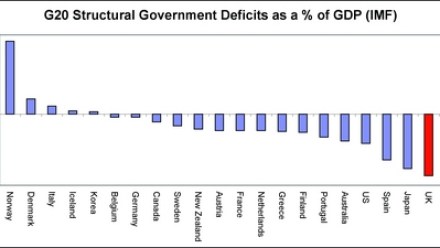
The Times tempted fate today with its splash boasting about the confidence and the strong pound. Fitch Ratings has today said that Britain’s AAA debt rating is more at risk than that of any other major nation because it needs “the largest budget adjustment” - ie, the most cuts - because Britain has the largest fiscal mess, and by some margin. (Sterling is off today on the news). But then Fitch says, more or less, that it’s banking on George Osborne’s first budget to sort the mess out. “Our stable rating outlook reflected our expectation that the U.K. government will articulate a stronger fiscal consolidation program next year.” The Conservatives should be proud of that verdict, but also anxious.

Keeping the lights on

From our UK edition

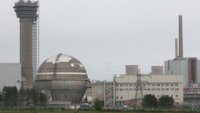
It may have come ten years late, but Ed Miliband’s decision to bypass planning processes for nuclear plants is welcome. Britain faces unprecedented energy insecurity, with widespread power cuts predicted from 2017. Rather than trust Vladimir Putin not to turn the top-off whenever he’s feeling piqued, or to rely on the totally unreliable Colonel Gadaffi, or import energy, the government will increase nuclear output to 25 percent of national production. To achieve this, government will act with almost dictatorial reach to circumvent local communities and their right to determine the scale and scope of local construction. Expense has long been an argument against nuclear power and each of the ten proposed reactors will cost £5bn.

Can Clarke serve in a Cameron government?

From our UK edition

Despite his pronounced Europhile views, a Politics Home insider poll suggests that Clarke can remain in the Shadow Cabinet and join a prospective Euro-sceptic Cameron government. As Clarke is signed up to the Cameron plan, I doubt that Europe is necessarily the problem. Concern arises from Clarke's apparent unwillingness to fulfil the duties of his brief. One think tank supremo is quoted by Pol Home saying: “No. It isn’t just Europe, it’s his non-fondness to work hard, master a brief, do the hard slog. He likes being on television, but there’s more to being a Secretary of State than that, and plenty of current non-frontbenchers who would work.” This objection relates to Clarke’s age as well, but is age necessarily a problem?

Raving lunatic hails Major Hasan a ‘hero’

From our UK edition

It’s worth noting this find that Harry’s Place has made. Anwar al Awlaki describes Major Hasan’s atrocity as ‘the right thing to do’. Al Awlaki is the former Imam of Dar al-Hijrah mosque in Great Falls, Virginia, where Hasan was a congregant. I maintain that it is too early to assert whether Hasan is or is not a ‘jihadist’ in the strict sense, but that his rapid freefall into homicidal madness would suggest that that he is a lunatic who happens to be a ‘devout’ Muslim; although in no way does that make him a victim.  Al Awlaki’s spiel highlights the absence of any moral objectivity to archaic, intolerant and hateful Islamism. It raises wider questions.

Electoral wipe-out

From our UK edition

The extremely well-connected Jackie Ashley makes this astonishing prediction in this morning’s Guardian: ‘Some Labour people may think I'm sounding too gloomy, but those who have been privy to recent private polling are a lot more than gloomy. This suggests that Labour could return to the Commons with just 120 MPs or thereabouts, taking the party back to 1930s territory. As ministers look for jobs to keep themselves going after politics, a Miliband move to Europe looks sensible.’ Surely it can’t be that bad? Surely? I would discount this prediction entirely but for the fact that Ashley is the best connected centre-left writer around. The figure is probably exaggerated, but even so.

Renewed tension between Brown and Darling

From our UK edition

Alistair Darling did look slightly apprehensive when Gordon Brown gatecrashed the G20 finance meeting on Saturday. And how right Darling was: the Prime Minister’s Tobin tax proposal was met with gawping disbelief; it was as if Bernie Madoff had strolled into the room as the new head of the IMF. It is very telling that only the disingenuous French, who can’t believe their luck, support the proposals. The FT reports that Darling is livid that Brown would risk alienating the UK by announcing a policy that he knew the US and others would publicly oppose. The ploy may have been a desperate vote grab, but the Global Statesman of the Year is now a Global Figure of Mirth - Groucho Marx with the ability to raise tax - and he’s back-peddling furiously.

From maladroit to managed

From our UK edition

Labour has at last acknowledged the damage the BNP’s rise has caused them. Interviewed by Andrew Neil, Peter Hain admitted that government failure on housing and migration had heightened the BNP’s appeal, and, in an interview in this morning’s Independent, Alan Johnson elaborates on his claim that successive governments have been “maladroit” in handling immigration. “Part of its (the BNP’s) attraction is that it is raising things that other political parties don't raise. It would take the absence of a national debate as the green light to distort the debate. It has absolutely no inhibition about lying about these issues.

If you must deceive, deceive competently

From our UK edition

On 15th September, Gordon Brown finally uttered the word ‘cuts’, but he diluted the shock by pledging that frontline services would be protected. He told the TUC: “But when our plans are published in the coming months, people will see that Labour will not support cuts in vital frontline services on which people depend. Labour will not put the recovery at risk, protect and improve your frontline services first and make the right choices for low and middle income families in the country.” Today, some of those plans are published, albeit inadvertently in a document leaked to the Observer. Cuts are being planned in next year’s skills budget.

Rank desperation

From our UK edition

Gordon Brown’s suggestion for a Tobin tax would, if implemented, crucify the City of London. We are the largest foreign exchange centre in the world and that Brown is seriously suggesting hitting this industry is a sure sign he does not expect to be in government after the election. It is the proposal that a British prime Minister should be dying in a ditch to kill off given that the City generates about a tenth of Britain’s economic wealth. The kind of proposal that might be aired by a Frenchman, purely to outrage Britain. It is, of course, a trick: Brown knows it won’t be agreed because it requires the approval of every major currency-trading country – and that will never be secured.

Scorching the earth

From our UK edition

Tim Montgomerie is right; Peter Oborne is at his best in the Mail today – a mix of relevant history and sharp analysis of current affairs. Like Callaghan and Major before him, Gordon Brown faces electoral defeat. Brown’s predicament is deep – consistently loathed by the electorate and the target of unhatched coups and constant intrigue. How does a prime minister defend a hopeless position? Does he govern in the best interests of the country, his party, or himself? Oborne remarks about the magnanimity of Callaghan and Major and notes that Brown has not followed their example. ‘The truth is that Gordon Brown is now governing Britain purely for partisan or even personal advantage rather than in the national interest.

Hain’s hollow rhetoric 

From our UK edition

This week’s interviewee on the BBC’s Straight Talk with Andrew Neil is Peter Hain. One of the topics for discussion is Labour’s disengagement with its core vote and the rise of the BNP. Hain admits that this can be ascribed to Labour’s failings and Westminster’s disengagement with voters. Certainly, Labour’s failure on housing and migration has been a major factor in Griffin’s rise. But there is nothing to suggest that Labour has the political strength to re-engage. Even after the recent furore, there have been no new initiatives on housing or migration, just pitiful contrition in the place of action. Hain’s outright refusal to share a platform with the BNP and engage with its arguments is a case in point.

A careful believer

From our UK edition

Is David Cameron religious? In the course of his interview with the Evening Standard he provides a clear glimpse of his attitude to religion. He sees it as something that should be advocated with the utmost care, if votes are not to be squandered. He is asked if faith in God is important to him. "If you are asking, do I drop to my knees and pray for guidance, no. But do I have faith and is it important, yes. My own faith is there, it's not always the rock that perhaps it should be.” Hmmm. Surely praying for God’s guidance is a basic part of Christian faith, and nothing to be ashamed of. He is trying hard to sound pro-God but not in a Blair-like way.

Quantatitive Easing is an affront to democracy

From our UK edition

Readers of the Spectator will know George Trefgarne’s work, and today he delivered an important report on the dangers of Quantitative Easing. I urge Coffee Housers to read the speech. It provides an interesting and relevant insight into historical precedents for the policy and how to manage it, and gives a balanced analysis of the current policy’s pros and cons. Trefgarne concurs with Mark Bathgate’s critique. There is little evidence that QE has stimulated money supply, as banks are using the cash to re-balance their lop-sided books. QE is funding the government’s debt habit. The IMF estimates that QE has reduced the benchmark 10-year interest rate on government debt by up to 1%, currently standing at 3.5%.

Positive polls for Cameron’s European policy

From our UK edition

So, has he got away with it? The press reaction to the Tories’ new European policy has been generally positive, or at least understanding that Cameron did the best he could in impossible circumstances. Only the Daily Mail and Melanie Phillips voiced ideological objections. More importantly, Messrs Davis, Redwood, Cash et al have not broken ranks – this reflects the policy’s essential euroscpeticism as much as it does party discipline. Most important of all, the above Politics Home poll suggests that the public back the long-term policy, adapted to new circumstances, and do not think that Cameron has broken a promise.   But, the overwhelming majority want a referendum on renegotiating Britain’s engagement with the EU.

The fierce urgency of education reform

From our UK edition

Michael Gove is giving a speech tonight reaffirming the Tory plans for radical education reform. In it Gove deploys a battery of statistics to show just how comprehensively the current system has failed. The one that stood out most dramatically to me was this one: “Out of 75,000 children eligible for free school meals only 5,000 were even entered for A level. Of that 189, only 75 were boys.  Yet in the same year Eton had 175 boys who got 3As at A level.  One school with almost two and a half times as many boys getting 3As as the entire population of our poorest boys on benefit.” If this doesn’t persuade you of the urgent need for education reform, then I don’t know what will.