Uk politics

Cameron and Ashcroft should come clean

From our UK edition

David Cameron’s ‘nothing to do with me guv’ response to the Ashcroft tax question on yesterday’s Politics Show has not put the issue to bed. In fact, his obfuscation has the reverse effect. The Independent runs an article today describing how little is known about individuals and authorities. ‘The House of Lords Appointments Commission says that it does not know whether Lord Ashcroft is UK resident. The Cabinet Office and HM Customs and Revenue have declined to answer questions about his status, on grounds of privacy.

A tax Blitz that reveals Labour’s mistakes in full

From our UK edition

The rumour mill is pulling 24/7 shifts. In recent days, newspapers and newswires have turned into gossip columns devoted exclusively to Alistair Darling’s Pre-Budget Report. If the rumours are true, which is a huge assumption, Darling will not offer the taxpayer a pre-election lolly-pop besides deferring the Age of Austerity until 2011, by which time he will probably be out of office. If Labour’s 1992 manifesto was a tax bombshell, then by all accounts this PBR will be like Dresden. Everyone, both rich and poor, is in the firing line, and there is no space here to analyse every alleged proposal.   Darling looks likely to prolong the VAT cut until at least February, but Smith and Williamson expect VAT to rise to 20 percent in 2011.

Brown waits to strike

From our UK edition

Things are shaping up nicely for Gordon Brown ahead of the Pre-Budget Report next week. The Tories were 17 points ahead on ICM in October – now it’s 11. Cameron would have a narrow majority on this basis but, given the margin of error, we’re back into hung parliament territory. And this has a self-reinforcing effect on the Tories. A shrinking opinion poll means they tend to get paralysed, avoid arguments, play it safe, wait for Labour to screw up again. As I say in my News of the World column today, the voters who are looking for leadership then don’t really see it. This, of course, softens the Tory vote further. So the stage is set for Labour to get away with murder next week.

Recognising the best

From our UK edition

On Thursday night Michael Gove announced that a Conservative government would pay off the student loans of those with good science degrees from quality universities. The move, paid for by cutting out a level of bureaucracy in teacher development, would help address the shortage of science and maths specialist in state schools. It was a smart piece of policy that even Ed Balls didn’t attack. But the Telegraph reports carping amongst various unions that the scheme does not go far enough. The NUT says that, “It is a real mistake to think that they can designate small number of universities as being better than the others.” This quote sums up so much of what is wrong with the British edcucational establisment.

The correct decision but a tactical blunder

From our UK edition

The Telegraph reports that Alistair Darling will allow married couples to continue to pool their inheritance tax allowances. Downing Street has pressed the Treasury to abolish pooled allowances in order to demarcate between Labour, the party that promotes fairness, and the Tories, the party that entrenches privilege.   For all the recent polls and bravado, the near-bankrupt Labour party is still fighting an intensive rearguard. If it is avoid annihilation, the party has to hold on in Scotland, Wales and urban Northern England. Darling’s pledge illustrates that there is more than one way to fight a defensive battle.

Saving the world | 5 December 2009

From our UK edition

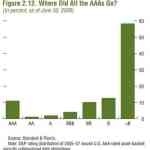
The further revelations about the astonishing costs of the bank bailouts so far indicate just how much taxpayers’ money is now being used to plug the holes in the banking system.  A key cause of the bank crisis is explained by the above IMF graph, charting the decline of some of the trillions of AAA structured credit assets created during the boom.  AAA means “extremely strong capacity to meet financial commitments”, but now over 80% of the US AAA Collateralised Debt Obligations (CDOs) created between 2005 and 2007 are rated BB or lower, somewhere between junk bonds and default (and in some cases almost entirely worthless). In terms of getting things totally wrong this is hard to beat.

What happens when you try to debate climate change…

From our UK edition

Sky News invited me around for what I expected would be a civil debate on climate change at 2:30pm today - but for people like Bob Ward, there’s no such thing. He is policy director at the Grantham Research Institute on Climate Change at the LSE. The debate proceeded along the bizarre path that these types so frequently tread. I was asked about what the climategate emails mean: I said it shows people putting spin first and science second. And raised the prospect of data manipulation. Hope replied by saying, “it's remarkable about how the so-called sceptics have been using this as a propaganda tool to promote political end...

Bernanke trashes Brown’s tripartite system

From our UK edition

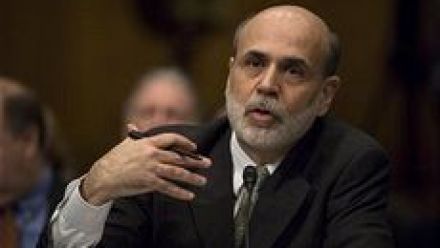
Gordon Brown’s much heralded tripartite regulatory system failed the first time it was faced with a financial crisis, proof that taking away regulatory powers from the Bank of England was a massive mistake. Now, Ben Bernanke — who is trying to secure a second term as Fed Chairman and keep the Fed’s regulatory powers intact — is citing the Brown model as what not to do, telling the Senate banking committee: "[O]ver the past few years the government of Britain removed from the Bank of England most of its supervisory authorities.

Balls: ‘I have resisted moving’

From our UK edition

Ed Balls has given an interview to The Times Educational Supplement which contains a comically audacious attempt to rewrite history. When asked about whether he really wants to be in his current job, Balls tells the interviewer, “I have resisted moving”. Now, I suspect this will come as a bit of a shock to Alistair Darling who fought off an effort by Balls to take his job.

What possible justification can there be for this?

From our UK edition

From The Guardian’s write up of the latest TPA report on public sector pay: “Those earning more than the prime minister include Professor Salman Rawaf, the director of public health in Wandsworth, who has a package of up to £370,550” I can accept that some people in the public sector with certain particularly valubale skills might have to be paid more than the PM. But I find it hard to see why Wandsworth is offering its director of public health a package worth more than a third of a million pounds. One hopes that the Tory policy which will see the Chancellor having to sign off on any public servant being paid more than the PM will put an end to this kind of excess.

Don’t give us your unwashed masses

From our UK edition

Downturns turn people against immigrants. That’s normal. But even according to the statistical average, Britons are particularly unhappy about the state of immigration these days. In a new survey undertaken by the German Marshall Fund, seventy-one percent of Britons polled disapproved of Labour’s immigration policy. Spaniards (64%), Americans (63%), Italians (53%) are also sceptical of government action.  In contrast, 71% of Germans, 59% of Canadians and 50% of French approved of the steps their countries had taken. In fact, Britons are the most sceptical about immigration, with 66% seeing it as more of a problem than an opportunity – a jump of seven percentage points on 2008 figures.

Collective failure exposed

From our UK edition

The National Audit Office’s report into the government's handling of the banking crisis and taxpayers’ continued exposure is a pandora’s box of financial horrors. The NAO estimate that taxpayers are underwriting liabilities exceeding £850bn and, buried in the document, is the revelation that the FSA and the Treasury gave RBS “a clean bill of health” in October 2008, days before the bank nearly collapsed. Details are scarce and I haven’t seen the relevant Treasury document to which the NAO refers; but this disclosure is astonishing, even by the standards of Fred the Shred, the FSA et al. This crisis was caused not by market failure but by systemic incompetence within the banking’s sectors most regulated arm – the commercial.

Who cares about the playing fields of Eton?

From our UK edition

The Eton question came up on Question Time – is Labour right to use class in the run-up to the election? I have a piece in The Guardian tomorrow on this theme. The answer should be that which Andrew Lansley read out on Question Time:  that this shows Labour is living in the past, what matters is where you’re going to not where you came from. He’s right. But I do wish the Tories would believe it. The Eton taunt is still taken far too seriously by the Cameroons: it hurts them. It’s a piece of verbal kryptonite. They go to great lengths to defend themselves from such an attack: the 50p tax, for example, is embraced by the Conservatives just so Brown can’t say “Cameron’s looking out for rich folk, just like him.

Could Brown go for a March 25th election?

From our UK edition

The conventional wisdom in Westminster is that the election will be on May 6th. But a few shadow Cabinet members have told me that they think Brown will actually go in March, an idea that they have been pushing for a while. Their argument is that this quarter’s GDP figures will be quite good, boosted by the Christmas rush, and Brown would want to go to the country before, another more disappointing set of numbers came out. Second, Brown will want to avoid people seeing the effects of the new tax arranegements which will come into force in April. Finally, if the election was on May 6th, the first week of the campaign would be lost to the school holidays.

“A Hero for Europe”

From our UK edition

This video, which some UKIPers have put together in honour of their former leader Nigel Farage, is comedy gold.  Problem is, I suspect it's unintentionally so...

How will Labour try to soak the rich?

From our UK edition

Brace yourselves.  According to today's Daily Express, Alistair Darling is under pressure to introduce a new 70 percent tax rate for high-earners in next week's Pre-Budget Report.  I repeat: s-e-v-e-n-t-y percent. To be honest, I can't see the Chancellor doing it.  Leaping from 50p to 70p would be regarded as far too incendiary, not to mention fiscally insane, even for this government.  But I can still see them introducing a fair handful of soak-the-rich measures, if only to strengthen their reinvigorated attack line against the Tories. In which case, I refer you to Polly Toynbee's column from a few months ago, in which she recommended that the 50p rate start at £100,000 instead of £150,000.

Sarko pulls it off

From our UK edition

The news that Nicolas Sarkozy has cancelled a proposed flying visit to London, in order to smooth over the fall out from his attack on the City, has got tongues wagging. Adam Boulton reports: ‘It's claimed Sarkozy asked for this week's meeting to patch things up. So by implication their (his Westminster sources) argument goes - if it isn't happening it’s because Brown is snubbing Sarko and not the other way round.’ This line doesn't convince. According to the Elysee's diary, Sarkozy is otherwise engaged tomorrow, so the finance cordiale will now take place at…wait for it… the European Council meeting in Brussels next week. Why would Brown give away a vital meeting on home soil in favour of one held during the Franco-German Euro-circus?

Risky business | 3 December 2009

From our UK edition

With the largest transfer of liabilities in British history – the insurance of the risk of loss on £240 billion of toxic RBS assets by taxpayers – proceeding, there is worryingly little information being given about either what these assets may be or what risks there are to the taxpayer. Rather than the parliamentary enquiry and detailed disclosure Swiss parliamentarians demanded when UBS needed similar assistance, a small press release noting such exotics as “structured credit assets “ has been issued. The spin continues to be that there is nothing to worry about and all this money will come back fine. Bank of England data shows that UK bank exposure to the US increased increased by over half a trillion dollars between 2004 and 2007 to 1.2 trillion.