Uk politics

No Christmas cheer in the Mail for Cameron

From our UK edition

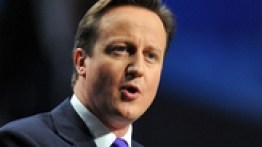
The Daily Mail sets about David Cameron in its editorial today. It accuses him of “insulting voters’ intelligence”, tells him to “avoid the PR men, spivs and trashy celebrities with whom he has taken to mixing” and advises him to “spend less time with his spin-doctors, worrying about his image and trying to be all things to all men.”   The Mail matters. Privately Tory strategists admit that its savaging of Cameron’s shift in European policy played a considerable part in depressing the certainty of Tory supporters to vote, one of the reasons for the party’s lead narrowing in the polls. If the Mail was fully on board with Project Cameron, it would shore up the Tory base and leave Cameron freer to concentrate on wooing swing voters.
Will this be the game-changer that Brown needs?

From our UK edition

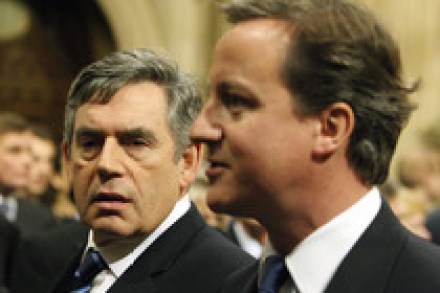
So there we have it.  There will be televised election debates between the three main party leaders during the next election campaign, after all.  The first will be on ITV, then there'll be one each on Sky and the BBC.  Talk about good TV for political anoraks. Like Tim Montgomerie and Mike Smithson, I suspect that Gordon Brown and Nick Clegg will be happiest with the news.  Both of them, particularly Brown, need potential game-changing events like this to make some progress in the polls.   As for Cameron, he'd probably be better off not giving his opponents a chance to make inroads into the Tories' poll lead.  But he could hardly have resisted live debates in the current political climate.

Is the EU not glamorous enough for Lord Mandelson?

From our UK edition

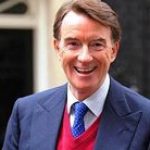
James Macintyre is well connected among Mandelson’s associates and he discloses that Gordon Brown agreed to back Mandelson if he chose to board the Eurotrain once more. Macintyre describes the revelation as a ‘demonstration of the supportive dynamic between what were at one time bitter enemies’, that’s true, though Brown would scarcely brand his right hand man an overrated liability. What’s more intriguing is why Mandelson chose not to apply for the job of EU foreign minister, which he considered for a time. Baroness Ashton can only expect to exercise ‘quiet diplomacy’ at best, which is unlikely to appeal to a man of Mandelson’s tastes.

Simple but effective?

From our UK edition

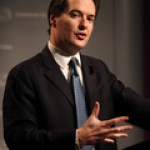
It's the most straightforward dividing line the Tories could draw: "Tories good, Labour bad".  But it's still striking to see it deployed quite so bluntly as in George Osborne's Telegraph article this morning.  His point is that four more years of Labour will lead us to ruin, whereas a Conservative government would pull us out of the mire.  Here are some snippets: "Down the path of least resistance lie economic decline, higher interest rates, high unemployment, and more social breakdown. This is the path down which a cynical and exhausted Labour Government tempts us. But there is another path that leads to lasting recovery, rising prosperity, social responsibility and a new way of doing things. ... If Labour get in again, that won't happen.

It’s the economy, isn’t it?

From our UK edition

The Tories' 17 point  lead in this morning's Observer Ipsos-Mori poll has got tongues wagging. The headline figure is that confidence in the economy, and by extension the government's management of it, has collapsed since the PBR. Just 32 percent of voters believe the economy will improve in 2010, compared to 46% last month. The politics of debt and the public finances appear to have swung decisively in favour of the Conservatives, and the leadership must press that advantage all the way to the ballot box. But the economy represents only part of the explanation. Anthony Wells' digest of the poll is a must read, and he notes that the 'lack of political weighting' has 'produced such extreme switches in support'.

Labour calls cease-fire on binge drinking

From our UK edition

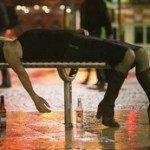
The government has sued for peace. The Observer reports that in the face of lobbying from the drinks industry, the government has dropped its mandatory code on the sale of alcohol, which Gordon Brown first brewed-up during the local election campaign. Labour excuses the u-turn on the grounds that vulnerable pubs and drinks retail industry must remain viable during this fragile economic situation. On the face of it, that is sensible; delve deeper and that excuse does not hold. Of course, there’s no sense in endangering businesses by punishing all drinks deals and ‘happy hour’ promotions. However, aspects of the code would have outlawed promotions such as ‘all you can drink for a tenner’ or ‘have a quart of vodka poured directly down your throat’.

Mayor Mandelson?

From our UK edition

When Mandelson said in his Spectator interview that he plans another 15 to 20 years in politics, what could he have meant? Now that his European career is over, there is only one decent post coming up for a Labour figure in the first half of the next decade – and I float the latest theory in my News of the World column today: that Mandy might stand as Mayor of London in 2012. A bizarre notion, I grant you, but no less bizarre than his CV to date – and Ken Livingstone is certainly taking the prospect seriously. Whoever the Labour candidate, they have a pretty good chance given that, by 2012, Cameron should be knee-deep in cuts and being very unpopular if he’s doing his job properly. Saying ‘vote Tory’ in London in 2012 will be no sure way to be elected.

The pessimism of the left

From our UK edition

Like David, I’m a fan of Polly Toynbee. Every compass needle needs a butt end, after all. She is 180 degrees wrong on most things: but splendidly, eloquently, passionately wrong. I’d like to pick up on one aspect of her column. “Social democrats are the world's optimists, knowing human destiny is in our own hands if we have the will to change. Leave pessimism to the world's conservatives, ever fearful of the future and yearning for a better yesterday.” Now, I have also seen this as a fundamental difference between left and right but (needless to say) the other way around. And it all comes down to your views of human nature. Do you think people are inherently kind, wise and compassionate? I do, which is why I describe myself as a conservative.

Cameron plans to lighten up

From our UK edition

David Cameron’s interview with Tim Shipman suggests that the Tory leader is about to undergo a course correction. The Tories have, rightly, begun to be frank with the public about the cuts that will need to be made and have, again rightly, refused to rule out a short-term rise in VAT. But the ‘we’re all in this together’ rhetoric has only been applied to the tough measures that are needed now not the prosperity that might follow in years to come. If Cameron is to start showing the public more of his vision of where he wants to take Britain then that is to be welcomed. But he also needs the rest of his top team to communicate to the public what the consequences of carrying on spending massively more than the country earns would be.

Slightly surprising stat of the day

From our UK edition

According to a YouGov poll in tomorrow's People (reported by the paper's political editor, Nigel Nelson, on Twitter): "1% more people would rather have G.Brown than D.Cameron round for Christmas dinner." There's better news elsewhere in the poll for the Tories: the gap between them and Labour is back in double digits.  It's the Tories on 40 percent, Labour on 28, and the Lib Dems on 18.

The dangers with a Tory policy blitz

From our UK edition

Sounds like the Tories are going to go policy-heavy in the New Year.  According to this morning's Times, Team Cameron are going to publish a "draft election manifesto" around 4 January, which will – as James revealed in his political column this week – set up a "policy-a-day blitz" throughout the rest of the month.  There will also be a separate policy release "showcasing the party’s commitment to the NHS".  The thinking is that all this will regain some momentum for the party, as well as answering the charge that the Tory operation lacks substance. Question is: will it work?

The case for John Hutton as a New Labour hero

From our UK edition

Ok, so identifying the heroes of the New Labour era may not sit well with CoffeeHousers - but I'd still recommend you read through the latest Bagehot column in the Economist, which does just that.  It identifies five figures from the past 12 years who have "done the state and country some serious and lasting service," and whose "virtues [are] not be clouded or cancelled by grave mistakes or misdemeanours".  They are: Lord Adonis, Donald Dewar, Lord Mandelson, Sir William Macpherson and Robin Cook.  James Purnell, Alistair Darling and, strikingly, Bill Clinton finish in the runners-up list. You can debate the merits and demerits of those names all day long, but I'd rather suggest another person for the list: John Hutton.

Cutting the deficit sooner won’t risk the recovery

From our UK edition

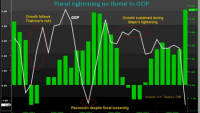
Would cutting spending “risk the recovery?” This claim is, literally, Gordon Brown’s re-election manifesto. He is hoping that the Tories haven’t learned to use numbers as weapons – so any economic message he has will not be effectively countered. In fact, his claim is very easily exposed as being bogus by a simple look at recent British economic history. Bloomberg’s Chart of the Day shows that economic growth in the past two recessions (white line) was not at all threatened by fiscal tightening (green graph). Even Goldman Sachs – which is acquiring a reputation as the Labour Party’s house broker – is conceding the central point.

Festive cheer

From our UK edition

Well, Nick Clegg's reponse to the Labour chief whip's Christmas card made me smile: "Both myself and Nick Brown have good reason to be embarrassed. I posed for pictures in ridiculous fancy dress 20 years ago - and he is an MP for the Labour Party.

And so it rumbles on…

From our UK edition

Expenses, expenses, expenses.  This morning's Telegraph splashes with the news that the junior culture minister Sion Simon paid over £40,000 in taxpayers' cash to his sister.  How so?  Well, he rented a London flat from her between 2004 and 2008, and claimed against it as his "second home".  Problem is, the practice of renting a property from a family member at taxpayers' expense was banned in 2006.  Simon has since said he'll pay back the money that he "inadvertently" claimed. Aside from the fact that it's yet another example of, at best, gross error on a politician's part, two other details stand out.

What happens when quantitative easing stops?

From our UK edition

Where the Gilt market goes in coming months is going to be very important for the UK economy and politics. There is little history of countries being able to sustain deficits of the UK's magnitude, for very long, without serious market problems. At the moment, we're getting by thanks the sticking plaster approach of quantitative easing. The Bank of England has purchased £186bn of gilts so far this year, almost perfectly matching the £179bn the Debt Management Office has needed to sell so far. As long as the Bank is willing to support the market with a fast-rolling printing press, government funding at attractive rates is assured.

Timing contrition

From our UK edition

James Crabtree, a Labour SPAD turned managing editor of Prospect, has a good piece in the new Prospect about how the first step to recovery for Labour after the next election, assuming they lose, will be saying sorry. Crabtree argues that even if the Tory majority is small, Labour would be ill-advised to move straight into oppositional mode, attacking every Tory cut. Rather, he argues, the party needs to understand that its "brand is now nearly as contaminated as the Tories before it."   One of the challenges for the Tories should they win the next election will be bringing home to the public just what an appalling state Labour has left the public finances in.

Brown’s class war could doom Labour for years

From our UK edition

A lot of pixels have been expended on Labour's new class war and soak-the-rich strategies, so it's worth highlighting the in-a-nutshell argument which Tom Harris deploys against them on his blog: "Rather than using opinion polls as a basis on which to judge the wisdom of class politics, let’s take a rather different measure: general election results. In 1979, 1983, 1987 and 1992, Labour promised tax increases (but only for the wealthy) and got hammered. In 1997, 2001 and 2005, we pledged not to increase the basic or higher rates of tax. And golly! Look what happened!" Ok, correlation and cause aren't necessarily the same thing.

Pre-empting Chilcot

From our UK edition

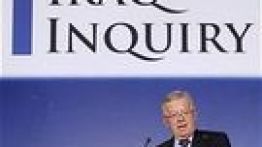
Sir John Chilcot’s Iraq inquiry has begun honing in on failures of US and British post-conflict planning. As General Sir Frederick Viggers told the inquiry, problems arose from “not having defined the ends, ways and means of how we were going to deliver this phase of the campaign.” None of this is particularly new. As further evidence is provided to the inquiry, it will become even clearer how unprepared the British state – the Government, civil service and military - were for the task at hand, and how soldiers, diplomats and development workers were expected to deliver near-miracles with limited resources, limited backing, limited security and limited public support. I was there and it was not very pretty.