Uk politics

Change we must believe in

From our UK edition

Both James and Tim Montgomerie felt that William Hague must be more prominent during this campaign and Cameron has reached the same conclusion. Hague opened the spring confernece with a stark, bleak message: "And I say it is that most crucial election because I believe the choice for Britain is as stark as this: it is change or ruin." He then detailed the easiest illustration of Brown's appalling economic stweardship: a 13 year statistical progress of regression for which Brown, and Brown alone, is responsible. 'When Gordon Brown took over, this, our great country, was the 4th largest economy in the world. Now it is falling behind and forecast within 5 years to be the 11th, behind not just growing giants like China, but behind our neighbours France and Italy.


Let us help plucky Moldova

From our UK edition

Now that the post-Cold War era has ended it is hard to find small, inspirational states who seek to cement a new-found independence and yearn for what the West has to offer. Georgia looked like such a state until Russian aggression and Tblisi's behaviour put an end to the country's westward journey. Ukraine is too big, and too bolshy to count. Belarus is happy in Moscow's embrace.  But one country still fits the bill - Moldova. Sandwiched between Ukraine and Romania, Europe’s absolute poorest country is undergoing a new political spring after the recent elections. A new, Western-minded, youthful coalition government has replaced the old-style communists.

The Tories need to hammer home that tax cuts will stimulate growth

From our UK edition

George Osborne saved the 2007 Tory conference with a tax cut. He’s recalling that mood today, elaborating on the plans to cut corporation tax which – as James detailed a while ago – will be the backbone of his first budget. Now, you may think: we know all this. Osborne has said he’d cut corporation tax from 28p to 25p and cutting the small companies rate to 20p. He had promised to go lower still, telling the CBI  last April that Britain “will need to go further if we are to keep pace with an increasingly competitive global economy” - and we have heard no more of this since. But the difference is emphasis. They are saying this will happen early (unlike inheritance cut, which has been pushed back to the end of the first parliament).

The election speculation has given Cameron an opening

From our UK edition

Tory spring forum gives David Cameron a chance to regain the momentum. The media will be there in numbers and I suspect that the rumours of an early election mean that it will get more attention than it otherwise would have done. Cameron’s speech is a real chance to show what the Tories are going to fight the election on. The speech isn’t as important as the one he gave at the 2007 conference when Brown appeared set to call an election, but Cameron would be well advised to reprise a couple of tricks from it. He should speak without a text—Cameron is just such a better speaker that way. He also needs to show—as he did in that 2007 speech—that he is up for an election.

An interview packed with Brownies

From our UK edition

Brownies galore in our PM’s interview with the Economist. So many, in fact, that I thought I do a quick Fisk:   The Economist: The big worry seems to be the deficit—the deficit. What should the message should be? Gordon Brown: I actually think that the first thing that we’ve got to do as a global community—and I said it this morning and I’ll say it again—is that the reforms of the global financial system are not complete. As far as Britain is concerned, we are dealing with a one-off hit as a result of globalisation. FN: Let us pause, here, to consider the brazenness. Brown’s policies pumped the UK economy up with the steroids of debt. The banking collapse hit us harder than any country because he took the wildest risks.

The Tories need to talk about immigration

From our UK edition

As the Tories prepare to head to the seaside, Tim Montgomerie has published a ten point plan to get the Tory campaign back on track. The plan is already causing much discussion in Tory circles. His main points are that the Tories need to sharpen their economic message, use William Hague more, sort out the structure of the campaign, warn of the dangers of a hung parliament and ram home to voters just how badly Labour has failed.   What is getting the most attention, though, is Tim’s suggestion that the Tories should talk about immigration. I tend to agree with Tim on this point. It was a strategic mistake in 2005 to talk about immigration so much but it would be an equally large mistake not to talk about it at all this time round.

A tyrant surrounded by cowards no longer

From our UK edition

Well, the Chancellor’s not for budging. Alistair Darling stands by not “some of” but “all of” his “forces of hell” comments. Martin Bright wrote the politics column in this week’s mag, arguing that opponents are intimidated by the political mobsters surrounding Brown, and who Brown encourages a la Henry II. Martin names Charlie Whelan and Damian McBride as the goons, and Ed Balls is rumoured to be the consigliere.   Peter Watt claimed that Douglas Alexander admitted that most senior Cabinet ministers loathed Brown and his vicarious emotional terrorism, a sense reinforced by Darling’s comments. If that’s the case, why has Brown not been removed? Cowardice is an unpleasant but apt word.

Is Brown about to call the election?

From our UK edition

Guido’s got the inside track that the Beeb have been told not to take the weekend off, and the Tory lead has been cut to five points in the Telegraph’s Ipsos Mori poll. A five point lead is hung parliament territory and Labour could win the most seats - further evidence, as if any were needed, that the force is with Labour. There are a couple of other reasons he may go now. Peter Hain has written an article for the Guardian, wooing Lib Dem voters (more on that later) – could that article be a prelude to the big announcement? Fourth quarter growth figures have been revised upwards, to a staggering 0.3 percent, which is encouraging but still low enough for Labour to run on a ‘Not The Time For Cuts' ticket.

Cutter Brown

From our UK edition

Gordon Brown’s interview with the Economist is completely brazen. With a fine disregard for facts, and subsumed amid specious waffle, Brown declares that he’s been consistent on cuts. ‘I believe if you look at my interviews there’s absolute consistency in what I’m saying. We were saying right through the early stages of the crisis that it was important for there to be fiscal stimulus. And so the clear message was about fiscal stimulus. We said that at a certain point we would have to come in and announce our public spending plans for future years, but this was not the right time to do it. And it still isn’t the right time to have a full public spending round, because of the uncertainties.

Getting the Tories back on track

From our UK edition

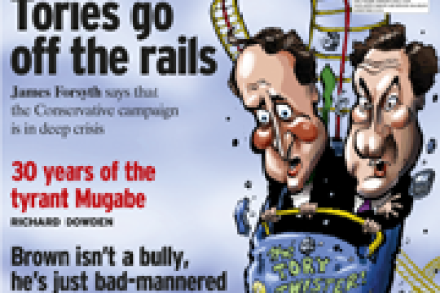
At the beginning of this week the key figures in the Tory election campaign gathered together in Notting Hill to try and work out what was going wrong with the Tory campaign, why the Tory lead has halved since December. Our cover this week attempts to answer this question. My take is that the problem is largely caused by the structure of the campaign. Successful campaigns tend to have a chief strategist and a campaign manager. The strategist's job is to work out what the election is about and the campaign manager's role is to implement that vision and take charge of day to day tactics. The Tory problem is that they have no campaign manager and four men - Steve Hilton, George Osborne, Andy Coulson and George Bridges - who appear to be vying to be chief strategist.

God stand up for bankers

From our UK edition

He’ll have to because nobody else will. As Robert Peston says ‘Poor RBS, poor Britain’ – today’s figures are catastrophic. Peston’s been digging and the news gets worse: ‘But perhaps the most chilling numbers are these: we as taxpayers put in £25.5bn of new equity into this bank last autumn, the second instalment of the £45.5bn we have invested in total; but over the past year, the equity of this bank has increased by less than £16bn to £80bn. So almost £10bn of the £25.5bn we've only just put into RBS has already been wiped out by losses. Which, I think, is probably the best measure of the degree to which RBS is still haemorrhaging.

Brown v Blair: a comedy

From our UK edition

First the tragedy, then the farce: if there was something dark, perhaps shocking, about last weekend's bullying allegations, then the latest Rawnsley revelations veer towards the hilarious.  They're centred around Brown's efforts to oust Tony Blair, and the Guardian covers them here.  I won't pre-empt your enjoyment of them, except to highlight this passage from the report: "Rawnsley reveals that Brown rang Blair while he was staying with the Queen at Balmoral. He was furious that Alan Milburn, Blair's close ally, had written a piece supporting the prime minister's right to stay at No 10. Rawnsley writes: 'The chancellor's fury was titanically demented even by his standards. 'You put fucking Milburn up to it,' Brown raged down the phone. 'This is factionalism!

How British: a tea party

From our UK edition

Don’t you think that ‘The Ship Money Movement’ is a more appropriate name for a British anti-tax forum? You know, given the connotations of ‘Tea Party’ in these climes? Titles are instructive, and, as James wrote yesterday, the British right has a growing fascination with its American counterpart. Perhaps I’m over doing it, but it seems a testament to the State’s dominance in post-war Britain that the country’s libertarian tradition, extending back through Burke, Bolingbroke, Locke, Milton and to Hampden himself, is no longer the right’s primary inspiration. Putting my slightly absurd ruminations aside, the coming of the Tea Party Movement to Britain is significant.

Back with a vengeance | 25 February 2010

From our UK edition

All of a sudden, the Big Banks are Big Politics again.  And who'd have it any other way, on the day that the 84 percent taxpayer-owned RBS announced losses for 2009 of £3.6 billion?  And that's alongside a bonus pool for its staff of £1.3 billion.  Yep - however hard they try, the exorcists of Westminster just can't shift the ghost of Fred the Shred. In which case, there'll be plenty about bankers' pay, and about getting taxpayers what's owed to them, over the next few days.  And rightly so.  But I often feel that these issues detract from even bigger ones, such as how to ensure that there aren't similar shocks in future.  After all, the financial furniture is arranged pretty much identically to how it was a couple off years ago.

Worse off than you were in 2005

From our UK edition

The obsession of British politicians - and political journalists - with American politics is often mocked. But there's a clarity to American political messages that is often missing in this country. So it is good to see George Osborne borrowing a line from the Reagan playbook, and pointing out that people are now worse off than they were at the last election. The Tories desperately need to shift the focus of the campaign back onto Labour's failures and this is a start to that process. Osborne is delivering the Mais lecture tonight, one of the prestige dates in the British economic calendar. He's the first shadow Chancellor to deliver it, a sign of how much the markets and everyone else are waiting to see what Osborne does.

ISAF = I Saw Americans Fight?

From our UK edition

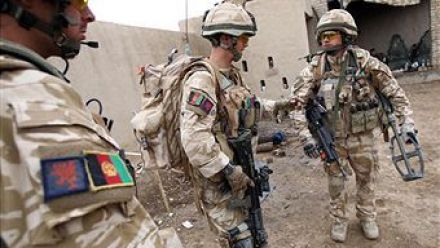
The imminent Dutch withdrawal from NATO’s Afghan mission will ignite the question of allied troop contributions. But what are the real numbers and how do they compare to past missions? In a new article for the Spanish think tank FRIDE, I have done the sums, as part of a broader analysis of transatlantic “AfPak” policy since President Obama came to power. The contribution of EU member states to NATO’s ISAF has grown from 16,900 soldiers in 2007 to 22,774 in 2008, 25,572 in 2009 and 32,337 in 2010. Soldiers from EU countries have until this year made up 45–53 per cent of the total force and for three consecutive years.

Many BNP voters’ concerns are legitimate and should be recognised as such

From our UK edition

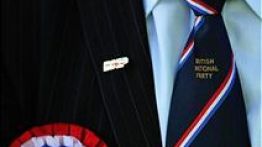
Frank Field was characteristically forthright on the Today programme this morning. “I don’t believe, given the strains (on the economy), we will be able to maintain an open door policy without serious unrest on the streets,” he said, and this brings me to a Sunny Hundal article on the media’s approach to the BNP. Hundal is extremely eloquent but his premises are ill-conceived. He aligns the BNP exclusively with racism and immigration, because it follows that a racist is illegitimate and can be consigned to irrelevance. He writes: ‘If you want to vote BNP and think people of different cultures and races are scary, why not just say so? Every modern interview with a BNP voter is prefaced with: "I vote BNP, not because I'm racist but ...

True romance

From our UK edition

‘Any closer and they’ll start kissing,’ said Cameron. The PM and his beloved chancellor were seated side by side at PMQs today, chatting showily throughout. Their rhubarb-rhubarb conversation was intended to quell the rumours of civil war in Downing Street. The ploy misfired. Two men conversing don’t both speak at each other simultaneously. But that scarcely mattered. The session was the rowdiest and least illuminating of the year so far. At times it was noisier than the Pamplona bull-run. Cameron began by trying to elicit answers about the appalling mortality rates at Staffordshire Hospital. Brown adopted his cenotaph grimace and reeled off a list of inquiries, investigations and disciplinary sanctions which parked the issue in neutral territory.