Uk politics

How the Tories are decontaminating their associations with Big Business

From our UK edition

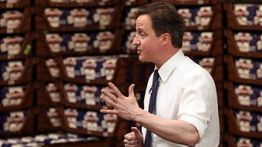
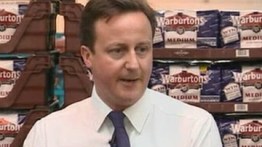
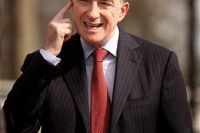
Over the past couple of years, Big Business (as in, "being in hock with...") has been deployed almost as an insult against the Tories.  But they've now used their campaign on national insurance to turn their business associations into an advantage.  Exhibit A: the above picture (via PoliticsHome) of Cameron's visit to the Warbutons HQ in Bolton, where the company owner has come out in support of Tory proposals.  It sends the message that Big Business doesn't just mean the financial services, and a lot of people, in a lot of regions, rely heavily upon it for their livelihoods.  And too right, too.  Expect plenty more like this from the Tories over the next few weeks.

A picture of innocence?

From our UK edition

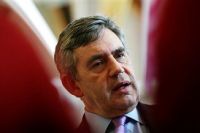
Gordon Brown's visit to the Innocent smoothie HQ in London today is the subject of a great post from Paul Waugh, who reveals how close the PM came to a photo-opp nightmare.  But it also reminded me of this insight from Jonathan Freedland a few months ago, which I blogged at the time: "[The Labour campaign team have] taken a look at the branding of Innocent smoothies, hoping the authentic, unspun look might fit their own 'unairbrushable' product, G Brown." I wonder whether Innocent picked up any branding tips from Brown earlier, in return...

The context defeats Brown

From our UK edition

So, mending our broken politics has been shoved to the forefront of the election campaign - at least for the time being. Brown has just given a speech on the issue, which - if you divorce it from all context - was actually fairly effective. Sure, things like reducing the voting age to 16, or a referendum on the alternative voting system, may not be your - or many people's - cup of chai. But there were several proposals which, taken in isolation, will probably be as popular as they are sensible: banning MPs from working for lobbying comapanies, for instance. Or giving the voters the ability to recall MPs who are guilty of gross financial misconduct. But Brown's problem is that his offer isn't divorced from all context.

Last orders | 7 April 2010

From our UK edition

The choppers, and the whoppers, were flying at Westminster today. David Cameron invited the prime minister to try a spot of accountability at PMQs. Would he admit that he scrimped on transport aircraft in Helmand? Brown, with breathtaking cheek and not a little rhetorical dexterity, flipped the question upside down. ‘I do not accept that our commanding officers gave the wrong advice,’ he said and insisted that he never sent underequipped troops into battle. He clarified this with a smokescreen. ‘I take full responsibilitiy but I also take the advice of our commanding officers.’ Here was the morality of the restaurant freeloader, accepting the food but passing the bill down the table. Cameron leapt on it. ‘That answer sums up this premiership.

Straight out of the Brown textbook

From our UK edition

What was probably Brown’s last PMQs performance as Prime Minister was classic Brown. He answered questions that hadn’t been asked, dodged ones that had, rattled off list after list of tractor production figures and mentioned Lord Ashcroft at every opportunity. But, as he has in recent months, he had some one liners to get off including the jab that Cameron ‘was the future once’, an echo of Cameron’s put down of Blair.   But that line couldn’t disguise the fact that Cameron got the better of Brown. Cameron’s speed on his feet just makes him better in this setting. His response to the heckle that the business leader he was quoting was a Tory will look great on the news tonight: ‘Not a Tory but one of his [the PM’s] advisors.

PMQs live blog | 7 April 2010

From our UK edition

Stay tuned for live coverage of PMQs. 1200: We're about to start.  Brown is flanked by Harriet Harman and Jim Murphy.  Douglas Alexander, Alistair Darling and Alan Johnson are also on the front bench.  The heavy hitters are out in force... 1201: And here we go, for what could be Brown's last ever PMQs as Prime Minister.  He starts, as usual, with condolences for fallen soldiers. 1202: The first question is as plantlike as they come: will Brown take £6 billion "out of the economy"?  Brown spins the usual dividing line about investing in frontline services, adding that the Tories would risk a "double dip" recession.  Hm. 1204: Massive cheer from the Tory benches as Cameron stands up.

The scene is set for a bust-up

From our UK edition

PMQs today is going to be the last time that Gordon Brown and David Cameron face-off against each other before the debates. Both men will be keen to score pyschological points against the other and to send their troops off in good heart. This means that PMQs will be an even noisier affair than usual. But both leaders will have to remember that if they behave in the debates as they do in PMQs it would be a disaster for them. The aggressive, shouty nature of PMQs would not translate well to the debates. One thing to watch today is what Nick Clegg does. He’s racheting up the rhetoric again, repeating his claim that the other two parties are corrupt.

British jobs for British workers…

From our UK edition

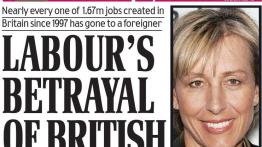
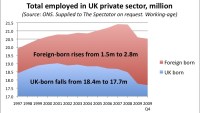
Did you know that there are fewer British-born workers in the private sector than there were in 1997? I'd be surprised if so: these official figures are not released. The Spectator managed to get them, on request from the Office of National Statistics. We use the figures in tomorrow's magazine, but I thought they deserves a little more prominence here. See the graph above, which shines a new light on the boasts Gordon Brown has been making. He said his Glasgow speech last month that: "If we had said twelve years ago there would be, even after a global recession, 2.5 million more jobs than in 1997 nobody would have believed us.

Goodbye world, see you in a few weeks (for a proper EU dust-up)

From our UK edition

With plenty of domestic issues to debate, the election campaign promises to see little intrusion from the outside world - barring Russia invading a small neighbouring country, a terrorist attack or another financial meltdown. Nor will Britain say much to the world in the next couple of weeks; ministers will be be represented at international meetings, for example in NATO, by senior officials, and Britain's diplomats have been told to keep quiet. As soon as the election is over, however, there will be plenty of action. The Cabinet Office is busy planning a quick update of the National Security Strategy, and then will come a slightly longer Security and Defence Review.

Clegg blows a golden opportunity

From our UK edition

Nick Clegg won't get many opportunities to sell himself to voters and he has just been demolished on the Today programme. All things to all men, Clegg was all over the place. He couldn't give an exact answer when questioned about the size of the deficit, and the Lib Dems' shifting position on the depth of cuts was exposed once again, recalling his autumn wobble on 'savage cuts'. He also refused to rule out a VAT rise. Similarly, he could not expand on his plans for parliamentary reform beyond labels such as 'radicalism', 'renewal' and 'the old politics'. Caught between defending himself from the Tories and attacking Labour, Clegg panicked. The Lib Dems oppose Trident, surely?

Inauthenticity, meet skewer

From our UK edition

We're not even one day into the election campaign proper, and already the internet is fulfilling its role as the Exposer-in-Chief of spin, deceits and slip-ups aplenty.  I direct you towards Guido's post on Brown's – ahem – impromptu support at St Pancras station earlier.  Or Left Foot Forward's account of the omissions from Cameron's list of The Great Ignored.  Or Sam Coates's tweets about the #stagemanagedelection.  And there's plenty more where they came from. In a campaign where inauthenticity is going to get skewered at every turn, politicians clearly need to go about things differently.  But there are all too many signs that they're stuck in the old, familiar grooves of elections past.

A burnt out case

From our UK edition

Freeing Manchester United from the Glazers is not what I envisaged when Ed Miliband promised ‘a radical manifesto’. But the Guardian reports that a fourth Labour government will legislate so that football fans can buy their beloved clubs. Clearly Brown's granite is plastic to the touch. I’ll reserve judgement until the manifestos are published, but, as Alex notes, the feeling is that New Labour's zeal is exhausted. Budget initiatives on stamp duty and the retirement age originated in Tory press releases and the Queen’s Speech regurgitated policies dating back to the 2007-08 sitting. I suspect the manifesto will offer the same gristle. We should be thankful for small mercies because so few bills have made it onto the statute book.

The Tunnel Ridge Fault election

From our UK edition

At times the chasm between Britain’s political parties is as great as the San Andreas Fault. Sometimes the difference is more like a small rift, a matter of tone not policy. In this year’s election, the difference between the parties is somewhere in between, like the lesser-known Tunnel Ridge Fault in Eastern California. In part, the appearance of only minor differences may explain why the polls are showing such different things; some predict that Labour will hang on to power, others that the Tories will be able to win.

Behind enemy lines

From our UK edition

Well, well Gordon Brown has started his election campaign in a constituency that is notionally a Tory seat. Rochester and Strood is being fought for the first time at this election but the invaluable UK Polling Report tells us that the Tories would have just won this seat in 2005. I suspect that Brown has headed to Kent on the first day of the campaign in an attempt to show that Labour haven’t written off the south east despite coming fifth there in the European elections and that Labour is still a national party. David Cameron is off to Birmingham and Yorkshire and the shadow Cabinbet are fanning out across the country in an attempt to hit every TV region in Great Britain, evidence that for all the talk of this being the first internet election TV remains the dominant medium.

Oh, and the Lib Dems too…

From our UK edition

Nick Clegg – who he?  According to a poll this morning, that's what two-thirds of the country will be thinking when they see the Lib Dem leader on their screens over the next few weeks.  But, regardless, he and his party are worth paying attention to.  Most importantly, of course, because of the possibility of a hung parliament.  But there's also the matter of the leaders' debates, in which Clegg will have a bigger platform than he's ever had before.  You sense that Lib Dems activists think they really matter this time around. So all eyes on Cowley St, where Clegg kicked off his party's election campaign earlier.  Two things came out of it.

Cameron launches the ‘modern Conservative alternative’

From our UK edition

Reaganesque was the word that sprang to mind watching Cameron’s launch event. Standing on the terrace of County Hall with Parliament behind him, providing the snappers with some great images, Cameron spoke about the ‘modern Conservative alternative’ to five more years of Gordon Brown. The implicit message was youth and vigour. This was one of those occasions where the visuals matter more than what was actually said. The no-notes speech contained a string of attacks on Labour’s waste and the prospect of five more years of Brown. But Cameron was careful to sandwich this with some optimism. At the start he said that a vote for the Tories was a vote for hope, optimism, change and a fresh start.

The parties tussle for media attention

From our UK edition

Westminster today is dominated by the sound of helicopters hovering over head, waiting for Brown to set off from Downing Street to the Palace. This morning is the last time that Brown will have the full political advantage of his office, the ability to set the news agenda. The Tories are attempting to step on this by scheduling their campaign launch for bang in the middle of the time when Brown is expected to be at the Palace requesting a dissolution of parliament. I suspect that we are in for a game of media chicken with Brown trying to rush back to Downing Street and announce that the election is called so that the broadcasters cut away from the Cameron event. One surprise today is that Labour put up Lord Kinnock for the 8.10 slot on the Today Programme.

Now’s the time

From our UK edition

If there's anything we don't already know about today, then I'm struggling to find it.  The election will be declared for 6th May.  Brown will make a pitch which bears close resemblance to his interview in the Mirror today: "We have come so far. Do we want to throw this all away?"  Cameron will say that the Tories are fighting this election for the "Great Ignored".  Clegg will claim that the Lib Dems represent "real fairness and real change".  A hundred news helicopters will buzz around Westminster.  A thousand blog-posts (including this one) will have headlines to the effect of "And so it begins...".