Uk politics

D-Day (plus one)

From our UK edition

Cuts are here. The most important news of the weekend was the G20’s official backing for spending cuts. It was a significant volte face, and doubtless the sight of violent uprisings in Greece concentrated minds. Finally, George Osborne has been vindicated; but having convinced finance ministers, he must now carry the coalition and the country with him. The first thing to do is ignore Nick Clegg and his claim that cuts will not be savage. Cuts will re-configure government in Britain, the current invasive Leviathan will be dismantled; but the process will be painful in the short-term, it must be.

Balls: we have to be more bigoted

From our UK edition

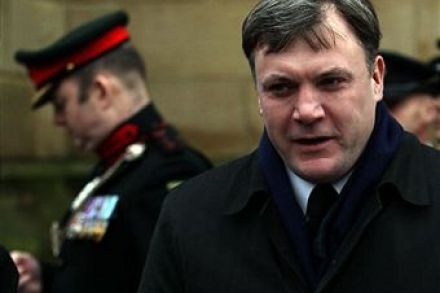
Meet Ed Balls, the candidate for Mrs Duffy. As the race for nominations closes, the Labour leadership candidates are beginning to focus on party members. With varying degrees of conviction, the contenders have identified immigration as the issue the party must address if it is to reconnect with those voters who spurned it. Ed Balls is that analysis's most fervent advocate. He devoted an article in the Observer to the subject.  Balls argued that there has been too much migration from Eastern Europe, and it has caused economic and social ills in communities such as the one he represents. In hindsight, Britain should have accepted the transitional controls during the eastern bloc’s accession in 2004.

Cable, the free radical, dreams of a grand future

From our UK edition

What is Vince Cable up to? He is on manoeuvres, keeps making attempted power grabs from George Osborne. Barely a week passes without him rattling the cage to which Cameron and Clegg have confined him  - that is, the unwieldy and yet fairly powerless Department for Business, Innovation & Skills. For all its bulk, the department doesn’t really do anything. It has the universities brief, which is important, but it is certainly not an economics department as Cable was pretending last week. “It is a bit like the German economics ministry and the finance ministry,” he claimed. “Two departments, working in parallel.” As if.

Lord Ashdown’s the right man for the Balkans

From our UK edition

Last week, Europe’s foreign ministers gathered in Sarajevo under much fanfare – and did very little except issue a repetitive press release about the region’s future in the EU. The only highlight of the event was William Hague’s speech, which was excellent.   Enlargement, however, is deeply unpopular among European elites, and the gathered foreign ministers seemed to be acutely aware of how little the market will bear by way of new ideas and initiatives.   So the ideas I put out in a brief in the run-up to the summit for improving the EU’s accession process went nowhere. Only Austria and Estonia openly defended proposals at the meeting. Germany joined France as a major opponent of any change in enlargement policy.

The other Rachel

From our UK edition

The boat the Israelis peacefully intercepted was called Rachel Corrie  - named after a young American protester accidentally killed when  offering herself as a human shield in Gaza. Her name became immortalised, some 30 songs have been written for her, a London play named after her and a film last year. But another Rachel, completely forgotten, is Rachel Thaler - a 16-year-old British citizen murdered by a Palestinian suicide bomber in 2002. Only one British publication has ever mentioned her: The Spectator.

Labour leadership contenders eyeing the past, not the future

From our UK edition

I wonder if the Labour leadership contenders worry that the previous generation’s forthcoming memoirs have created more excitement than them? I would be. The insipid campaign has laid bare the paucity of talent on Labour’s benches, and the party’s ideological exhaustion. No serving Cabinet minister lost their seat at the election; Tony Blair aside, the Milibands and Ed Balls are the best Labour has. That’s a grim prospect if your colour’s red. Ed Balls has the panache of a Vauxhall Zafira; and the two Milibands are trapped in a Beckettian whirl of meaningless jargon, convinced that using abstract nouns is a mark of vital intelligence. It isn’t; it’s irritating, and voters spurn it.

Politicize aid? It already is – and good too

From our UK edition

On Thursday, Andrew Mitchell rolled out the government’s first overseas aid initiative – a transparency watchdog – and took to the airwaves to explain the idea. It makes particular sense in a downturn to ensure that taxpayer’s money is well spent but also to give voters the feeling that independent assessments are carried out to guarantee value for their money.   On Newsnight, the International Development Secretary ran into a criticism, often voiced by the aid community – that the Conservatives are too willing to “militarise” aid or to “politicise” it. He dealt with the criticism  robustly – but I want to have a go too. Because while these are snappy sound bites they miss a number of fundamental points.

New Labour, a question of dates

From our UK edition

Ed Balls makes an interesting definitional point in his interview with The Times. He says that to him “new Labour was 1994 to 1997, us translating from being a party of opposition to a party of government, understanding that our radicalism had to be based on credible foundations, that no one would trust you on public services unless you were trusted on interest rates and inflation.” What many other people mean by New Labour is the public service reform agenda. But that didn’t really kick into gear until after 2001. Balls claims that, that was when New Labour lost its way. Balls is trying to argue that it was the ’94 to ’97 period that was responsible for the three election victories and that the party can, therefore, move left.

Post-2011 Afghanistan: Plan B

From our UK edition

Having returned from Washington DC, where I spoke to a range of senior policy-makers about Afghanistan and Pakistan, I am struck by how much confusion there is about what President Obama meant when he said that he wanted US combat troops return home in 2011. Did he mean that 2011 would allow the first assessment of the progress and his strategy and a tokenistic reconfiguration or forces? Or did he genuinely mean that the date would see the beginning of a real, if drawn-out withdrawal? For what it is worth, I am convinced the US president meant the former. This is crucial to the UK, since so much of what the Britain does – and presumably much time was spent on this at the recent Chequers discussion – is about staying close to the US.

The transparency revolution is this government’s immediate lifeblood

From our UK edition

Transparency is the government’s immediate obsession. It costs nothing to enact and gives power to the people. In an excellent post for Con Home, Stephan Shakespeare explains why publishing the COINS database is a revolutionary, seminal moment in British politics. The whole piece is worth reading, but here is an excerpt: ‘It is one of those moments that changes things for ever. When people can’t see where their money goes, they can make no comment, they can have no influence. Governments live and die by public approval; and once you can link spending decisions to identifiable civil servants, their careers will also live or die by our approval; so this kind of openness to scrutiny is utterly revolutionary.

Wrong kind of sex in the City

From our UK edition

By far the most surprising twist in the sorry tale of the demise of David Laws, is that it has yet to unleash another round of banker bashing. There is plenty potential for it. Why, it might be asked, would such a confident and accomplished MP refuse to admit to being gay? Why in this day and age, when so many have paved the way before him, couldn’t he have just come out? The answer may well lie in his career background. Laws came from one of the very hardest places for gay man to be open about their sexuality: the City of London. As I know from my own time among them, the world of financiers is one in which turning up at work wearing a pink shirt prompts a relentless barking chorus of ‘bender!

Red Vince sips clear blue water

From our UK edition

Deprived of the comforts of third party opposition - the ability to say and do as he pleased – Vince Cable has had to put away childish things. Of necessity, the business and enterprise secretary cannot be a socialist. And Cable used yesterday’s speech at the Cass Business School to prove he’s no socialist.   He convinced. Cable will enact the coalition’s plans to reform regional development agencies, cut preferential micromanagement grants that supersede the judgement of markets, demolish stifling small business regulation, curtail short-term speculation on company takeovers to protect shareholders, cutting the deficit early and the part-privatisation of the Royal Mail.

Flotilla follies

From our UK edition

Two groups in the Conservative party that have worried most about Con-Lib government are the social conservatives and the neo-conservatives. The latter have been particularly worried about UK relations with Israel. There is a real concern in parts of the Conservatives Party that three factors would come together to sour Anglo-Israeli relations: what the neo-conservatives see as the Foreign Office’s knee-jerk Arabism, the presence of many supposed Arabists in Cameron-Hague’s teams, and the anti-Israel bias exhibited by many leading Liberal Democrats. Whatever the truth of these allegations, they are held with considerable fervour.

The gun control question

From our UK edition

Inevitably, the horrendous tragedy in Cumbria has led to calls for gun control to be reviewed.  An already sensitive issue is complicated by philosophical differences between those who argue that safety lies in tightened controls and those who believe it's ensured by relaxed controls, or no controls. So, a political minefield, and the government and opposition are as one today: a premature reaction would be irresponsible, let’s have a review. That seems sound to me. Thankfully armed rampages are rare in Britain partly because gun control is tight, as anyone who’s bought a shotgun will attest – hours of paperwork and endless recommendations and character assessments. A review is likely to maintain that status quo for the most part.

The case for Carswell

From our UK edition

Douglas Carswell has an outside chance of becoming the chairman of the Defence Select Committee. I hope MPs take a punt and elect him because his ideas on defence procurement deserve regular airings. The festering sore of defence procurement went septic under Gordon Brown. The Nimrod Inquiry and the Gray Report concluded that contractors and the defence establishment operate a ‘conspiracy of optimism’ which disregards the requirements of specific theatres, causing casualties and diminishing military capability. Soldiers in Helmand cannot subdue Helmand with Viking trucks that were designed for arctic warfare (why the hell would we be fighting there anyway?).

Harman’s schtick

From our UK edition

Harriet Harman is irresistibly attracted to the absurd. This morning, she has decreed that the shadow cabinet be split 50:50 between men and women. Naturally, she would pervert Labour party rules to ensure the quota was a statutory requirement. To be honest, I’ve lost track of Harman’s myriad ruses to increase the female presence in high politics; and to be equally honest I’m no longer interested. It’s Harman’s schtick, leave her to it. Speaking to the national Unite conference, Harman made some sensible points about Labour’s electoral failure.

The Third Man for the third way

From our UK edition

Peter Mandelson’s Machiavellian streak runs deep. Like the wily Florentine, Mandelson wants to retire to the country to farm and be close to the earth; but first, there is the small matter of a book for political princes. In this morning’s Times, Mandelson has written an exhaustive plug for his forthcoming book, The Third Man: Life at the heart of New Labour.   In the course of writing his publisher’s press release, Mandelson makes two important points: one historical and one current.   He admits his greatest mistake was to broker Blair and Brown’s deal in 1994; the soap opera that followed, Mandelson argues, would never had occurred had they fought it out there and then.

Minimum unit pricing: NICE, but wrong

From our UK edition

So, NICE, the body charged with ensuring cost-effectiveness in the NHS, says that alcohol minimum unit pricing is the most effective way to tackle excessive drinking and its impact on the NHS and society.  Interesting, and certainly a challenge to the new Health Secretary and his alcohol taxation review, but ultimately misguided.     Where NICE have got it right, is that there is a clear and consistent relationship between the price of alcohol and its level of consumption.  Indeed, the effects of price changes on alcohol consumption are more effective than other alcohol policy interventions, such as restricting the number of outlets, or bans on advertising or price promotion.