Uk politics

Spending cuts must start with welfare

From our UK edition

The new and independent Office for Budget Responsibility estimated that interest payments on public debt are set to rise to £67 billion a year by 2014-15. The hole in the public finances is so deep that every cut in spending that can be made should be made. Few commentators have grasped that tinkering around the edges, such as with “efficiency gains,” will not be enough. The only way to eliminate the deficit and to begin the task of repaying public debt is through making deep cuts in spending and for people to take more responsibility for themselves.   Cuts must start with welfare. The UK government spends more on welfare than on anything else.
The Labour leadership contest waltzes onto Newsnight

From our UK edition

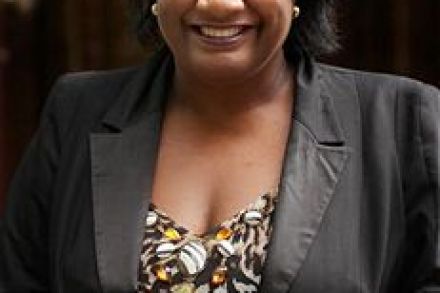
With ill-repressed horror, James Macintyre reports that the remnants of New Labour fear that Diane Abbott might win the Labour leadership, courtesy of the preferential vote. Mildly amusing I suppose. If Ed Balls would be a catastrophe of Footian proportions as leader what would Abbott be? There are no historical parallels.   I can’t see this latter day Rosa Luxemburg enticing Labour members. But if she does, then David Miliband, that auteur of absurdity, is to blame. Abbott’s weapon is communication. Unlike her four opponents, she doesn’t sound like an under-manager at Furniture Village. She is accessible, particularly on television – and the hopefuls will be up before Paxman tonight.

Lord Saville eviscerates the British army

From our UK edition

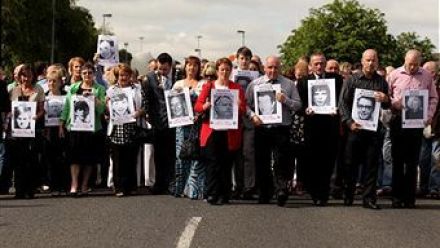
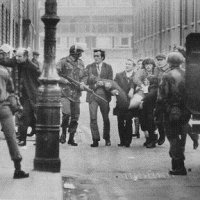
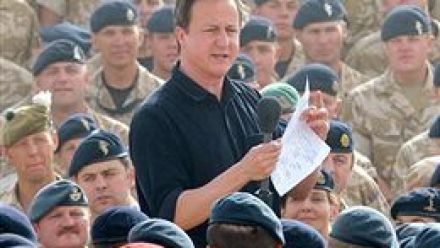
David Cameron has just told the House of Commons: ‘There is no doubt, there is no equivalence. The events of the 20th January were in no way justified…You do not honour the British army by excusing the unjustifiable.’ He apologised for the atrocity and the Wigery report. According to Lord Saville, there was no conspiracy or pre-meditation, but soldiers of Support Company 1 Para entered Bogside in Derry and opened fire without provocation from the victims or nationalist paramilitaries – though Martin McGuiness ‘was present, probably armed with a Thompson sub-machine gun’. Lord Saville concludes that the testimony of many soldiers was false.

How Hughes will play the coalition

From our UK edition

Simon Hughes is an experienced campaigner, whose reputation is deservedly blemished by a handful of duplicities – Peter Tatchell, denying a referendum on the Lisbon Treaty and the like. Hughes has just appeared on the Daily Politics and, very subtly, split the Lib Dems from the Tories. It was very simple: the Tories are responsible for all that’s bad and the Liberal Democrats are benevolent. First, Hughes dissociated the Liberals from tax rises: "I hope that the chancellor's hearing the voices that says VAT is not the right tax to change in the budget next week." Those voices are, of course, his ‘colleagues in the Treasury’ – an enlightened check on George Osborne’s excess.

McGuiness, culpability and atonement

From our UK edition

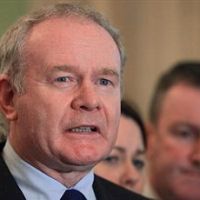
I wish that every time Martin McGuinness offered commentary on the Saville Inquiry, it was pointed out that he admitted to the inquiry that he was the IRA’s second in command in Derry. We should never forget that the IRA has more to apologise and atone for than any other group that played a role in the Troubles. The idea that the RUC or the British military and the IRA are all equally guilty is the worst kind of simplistic moral relativism. McGuinness is now deputy first minister of Northern Ireland and drawing a handsome salary as part of the peace process.

Sacking the nanny

From our UK edition

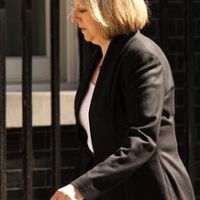
Theresa May has halted the national database of adults who come into contact with children. The innocent and law abiding majority can now volunteer without having to complete an extensive anti-pervert course – a heavy-handed and expensive bureaucratic requirement, typical of New Labour’s ‘nannying’ days. May acknowledges that acquiring the ‘Not A Known Pervert Badge’ discouraged vital volunteer work, which could effect social dislocation. May pledges to remodel the scheme, which is presumably why the Independent Safeguarding Scheme remains in place. Writing for ConHome, Alex Deane calls for the abolition of this scheme.

A day that re-opens old wounds

From our UK edition

Building on a peace process of compromises, Tony Blair called the Bloody Sunday inquiry to placate nationalists in Northern Ireland. But I wonder if he ever intended its findings to be published? The Saville Report was only ever going to re-open old wounds. With the greatest respect to Lord Saville, who is a distinguished lawyer, this report cannot dispense justice. Establishing the facts is impossible 30 years after the tragedy, and the punishment can only be collective. Yet the political dictates of peace mean that the British army must be blackened. The soldiers who beat both sets of paramilitaries to the negotiating table will be branded as criminals. Whatever their impulse, British officers took a disastrous decision to disobey orders and open fire.

Trimble frozen out of government

From our UK edition

The announcement that Lord Trimble will join the Israeli review into the flotilla incident is a reminder that he has no role in the current government. Trimble takes the Tory whip and given that the party is not overly supplied with Nobel Prize winners, it is a bit of a surprise that no role has been found for him. In opposition, the word was always that relations between him and the new leadership of the Ulster Unionists, the Tories’ electoral allies in Northern Ireland, were not great. But the UUP leader has resigned since the election. Now, it may well be that Trimble himself is the obstacle. Even his admirers admit that he is not the easiest man in the world to get along with. Or, it might be that Trimble is a victim of the Coalition.

Naughty Nokes

From our UK edition

Life has imitated art – or Jilly Cooper in this case. The former chief executive of the National Pony Club, Caroline Nokes MP, 37, has been having a three year affair with a Tory toy boy, Councillor James Dinsdale, 27. Theirs was an affair of hotel-room assignations and steamy conference meetings - Bournemouth has little else to commend it. They were outed by the Sunday Mirror. Mrs Nokes, a married mother of one, was photographed entering the Kensington Close Hotel last Monday night. Minutes later, Mr Dinsdale arrived, casually dressed in a blue hoodie. Taking a ‘Hug a Hoodie’ to extremes, Mrs Nokes checked out at 8:30 the following morning. All Labour governments bankrupt themselves; the Tories often collapse under the weight of their own hypocrisy.

Defence matters

From our UK edition

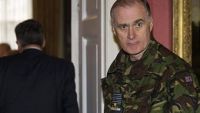
Sir Jock Stirrup’s early departure was one of the worst kept secrets in Westminster. But the ‘resignation’ could have been better handled. The coalition has created a lame duck in Stirrup. And, rightly, Con Coughlin asks why Stirrup is overseeing the strategic defence review if he was sufficiently inept as CDS? It makes no sense, as removing Stirrup and Sir Bill Jeffrey (the MoD’s permanent secretary) is clearly about preparing the way for spending cuts and a new model of UK military intervention. Liam Fox gave a speech this morning promising a ‘clean break with the Cold War mindset’. He emphasised the importance of maintaining counter-insurgency spending and training; presumably, that will come at the expense of conventional warfare.

The debate opens as Darling is vindicated and condemned

From our UK edition

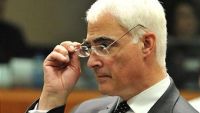
As Fraser observed at the weekend, Alistair Darling has a point: it is not as bad as was feared. The new Office for Budget Responsibility agrees, reducing estimated public borrowing to £155bn 2010/11. Still, it’s hardly a picnic is it? And I wonder what response Darling will get if he presses Cameron and Osborne for an apology. His growth forecasts have been downgraded to 2.6 percent and the structural deficit is greater than he admitted to – Paul Mason reckons it’s about £5bn more than was forecast. Osborne’s hands are tied by these figures; his calculations will be based on them. There is, of course, the possibility that the OBR's predictions are no more accurate than the Treasury’s soothsayings.

Darling has a point

From our UK edition

I had expected Alistair Darling to have slumped off to spend more time with his memoirs after the election, but here he is, fists aloft, fighting the government. About the only member of the Labour front bench effectively doing so. He has a point. The economy is looking better than expected, not worse - as David Cameron has been pretending. Each new forecast for the deficit seems to give a less ghastly picture. British house prices are on the rebound. And when the Office of Budget Responsibility announces its forecasts on Monday, it is likely to give a better picture than that in Darling's budget. Already Darling is telling the Guardian that he wants "an apology" if this is so.

Should Cameron mention McKinnon?

From our UK edition

Lord Tebbit poses the question on his latest blog, pointing out that Nick Clegg campaigned against Gary McKinnon’s extradition, and urged the government ‘to do the right thing’.   Well, now he can and it would be a popular decision in the current circumstances. The US-UK extradition treaty should be unacceptable to any government that considers itself sovereign, but this is no time for bluster and confrontation. Barack Obama has leapt about with shrill adolescent abandon; it would be hypocritical for Cameron to return fire in kind. Despite what Obama protests, BP is not solely liable (Halliburton and TransOcean have a case to answer).

Darling: it’s not as bad as all that

From our UK edition

Alistair Darling is about to retire to the backbenches, though he stresses (and hopes) that it's a brief stint in obscurity. ‘I get bored,’ he tells the Guardian in an interview today. Darling is remarkable. He emerged from 13 years in cabinet and a hellish tenure as Chancellor with his reputation enhanced. There were rumours of a leadership bid, but those were fanciful. Darling was not an architect of New Labour, but he certainly laid the odd brick. Darling could not break the legacy of Blair and Brown, and reveals as much in his Guardian interview.

Ed Balls and the art of campaigning

From our UK edition

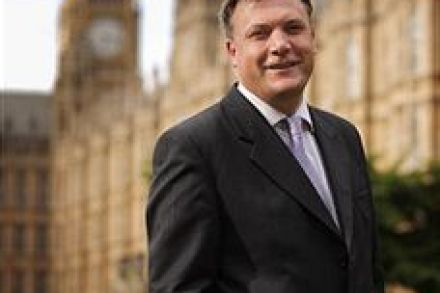
I thought that Ed Balls would be a natural for opposition politics. But I’ve been struck by the naivety of some of his recent interventions – notably the Duffy-wooing immigration proposal. As James has argued, Balls’ plan to limit freedom of movement within the EU ia classic opposition politics. They are eye-catching, populist and but completely unworkable in practice. But Balls isn’t really in opposition yet: the Labour party is caught in a kind of limbo whilst it determines its future, a future that Balls wants to control. Advocating the unimplementable looks conniving rather than statesmanlike, naïve rather than astute.

Hain: the Liberals demanded that we cut now

From our UK edition

Andrew Neil interviews Peter Hain for this week's BBC Straight Talk. Mastering the obvious, Hain argues that Duffygate cost Labour dear: 'PH:  The damaging incident of course was the Duffygate incident. AN:  In Rochdale, the old aged pensioner? PH:  In Rochdale, and that had a palpable effect.  I think we were just beginning to get a bit of traction - not necessarily to win but possibly to be the biggest party in the election - and that was a real hammer blow, and everybody knew it. AN:  You really think that affected the public’s perception of the then Prime Minister?

David Davis is the darling of the Tory right

From our UK edition

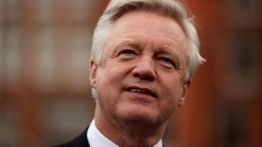
ConservativeHome conducted a poll into prominent, right-wing Tory backbenchers. Unsurprisingly, David Davis topped the poll. 70 percent of respondents hold that David Davis represents their views and 54 percent believe he articulates those views effectively. John Redwood and Daniel Hannan were some way behind as DD’s closest rivals. Davis’s chief weapon is communication. Plain speaking and from a working class background, people easily identify with him; and he expresses an acute intelligence in simple terms, something that John Redwood has failed to do. And whilst Hannan has charisma, Davis has more - the fruit of a decade at the forefront of British politics.

RAB

From our UK edition

ABC was the acronym used for meetings of Madeleine Albright, Sandy Berger and William Cohen when they all worked for the President Bill Clinton. RAB will hopefully in future be an American-style acronym for the cooperation of the three people voted to chair the parliamentary committees for foreign affairs, defence and international development: Richard Ottaway, James Arbuthnot and Malcolm Bruce. If the government succeeds in welding together the different perspectives of the FCO, DFID and the MoD – a prerequisite of modern crisis management - then the three MPs will have to find new ways of working together too as parliament will have to scrutinise this new dynamic.