Uk politics

No tax cuts in England’s green and pleasant land

From our UK edition

Danny Alexander has told the Observer that substantial tax cuts are highly unlikely for five years. Alexander argues that ‘the tax burden is necessary as a significant contribution to getting the country's finances in order. So it will have to stay at that level for quite some time.’ Given that the income tax threshold will rise to £10,000 over the course of the parliament, designed to help lower earners, we can take it that there will be no tax cuts for the well-off and hard pressed middle classes. So the 50 percent rate stays, which is not wholly foolish strategically as Labour would preserve it. The squeezed middle classes pose more of a problem for the coalition.

New Labour’s psychodrama went global

From our UK edition

Not as thick as he looked, Dubya. The Sunday Telegraph reports that the Bush administration urged Tony Blair to remain in office because it had ‘big concerns’ about working with the monomaniac Gordon Brown.  Here are the details: ‘Senior officials in the US administration sounded the alert after a meeting between Mr Brown and Condoleezza Rice, Mr Bush’s secretary of state, in which Mr Brown “harangued” her over American policy on aid, development and Africa. After the uncomfortable session, sources said she reported her misgivings to the White House, and they were sent on in turn to Mr Blair.

Bad news for Clarke

From our UK edition

Professor Ken Pease, the renowned criminologist, has written a report for the think-tank Civitas which rubbishes Ken Clarke’s plan to reduce prison numbers by extending community sentencing. Pease is of the Howard school: prison works. The key is that community sentences do not reduce reoffending. Pease estimates that 13,892 convicted offences could have been prevented by incarcerating prisoners for one extra month. The crimes for which offenders are convicted are a fraction of what they author. Pease quotes one estimate that there are 130 burglaries per conviction. Money is not saved by reducing incarceration because the costs associated with the victims (police time, NHS treatment, increased insurance premiums) increase.

Cameron: I fear David Miliband most

From our UK edition

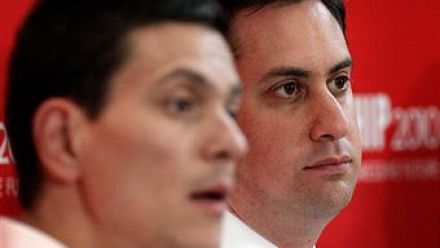
Strange but true: the Cameroons are wary of a Labour Party led by David Miliband. The Guardian's Nick Watt has been eavesdropping and he's gathered a few choice quotes. Kool-aid drinking Tories say: "David Cameron said the candidate he hoped for was Ed Miliband, and the candidate he most feared was David Miliband."  "On the whole we would prefer if Ed Miliband won. His analysis that Labour has to go for a traditional Labour vote, rather than the middle classes, is absolutely wrong. The Ed Miliband analysis will lead them into big trouble." In spite of his best efforts, David Miliband is likely to win.

Who governs Britain? | 28 August 2010

From our UK edition

CoffeeHousers may like to see the full leaked letter (pasted below) to which I referred in The Spectator's cover story this week. It shows how the NUT is using Freedom of Information to try and force school heads to hand over a list of names of anyone who might support a campaign to opt out of local authority control and become quasi-independent Academies. We have blacked out any information that may reveal the source. This letter helps explain why Michael Gove will have so few names next week, when he lists the list of schools who have succeeded in their fast-track application. Out of the 3,000 eligible, a few dozen will have made it.

The legacy of a century of vain politicians

From our UK edition

Monday is the August Bank Holiday – at least in England and Wales, where it is the last weekend before the schools go back. In Scotland, the schools break up earlier (traditionally, so the kids could join in the work of lifting potatoes in the fields) but have already gone back. The August Bank Holiday is just one of eight permanent bank holidays in England and Wales (along with New Year, Good Friday and Easter Monday, the Early May Bank Holiday, the Spring Bank Holiday in late May, Christmas Day and Boxing Day). In Scotland there are nine – an extra day at New Year and St Andrew's Day to replace the August holiday). Northern Ireland has ten, which include St Patrick's Day and the anniversary of the Battle of the Boyne in 1690.

From the archives: The Chatterley trial

From our UK edition

It’s 50 years since the case of Lady Chatterley’s Lover was declared sub judice, so commenting on the trial amounted to contempt of court. Here’s how the Spectator circumvented the order at the time: The Prosecutors, The Spectator, August 26, 1960 As Penguin Books Ltd. have been summoned under the Obscene Publications Act, the case of Lady Chatterley’s Lover is now sub judice; and this means… But what does it mean? The trouble with the law of contempt in this country is that because defendants are allowed neither trial by jury nor the right of appeal it tends to be more arbitrary, and more capriciously exercised, than any other law.

Burnham goes blue in the face

From our UK edition

Whilst Ed Balls descends into bellicose self-caricature, Andy Burnham, the quiet man of this campaign, has written an incendiary article for the Guardian. It is subtly constructed: behind the veneer of his folksy idiom, Burnham proclaims a self-conscious radicalism. He has sharpened some of the ideas expressed so loosely in his pamphlet Aspirational Socialism. He advocates the adoption of land value tax, the abolition of inheritance tax and a very tough Blairite stance on crime and the causes of crime. He angrily dismisses the Milibands as thoughtless ‘comfort zone’ politicians, both stuck dumb in a trance to the mantra of ‘tax and spend’. Burnham’s aides must be as aghast as me because they are incapable of answering the phone.

Balls’ pitch for the shadow chancellorship

From our UK edition

If there's one observation to make about Ed Balls's speech this morning it's that it's punchy stuff. His main point is that the coalition are "growth deniers" – not only do their "austerity and cuts" risk a slide back into recession, but they're also unnecessary. He explains: Attlee didn't make his "first priority ... to reduce the debts built up during second world war," and he left us with the welfare state – so why should we cut spending now? Et cetera, et cetera. These are, more or less, all arguments that we've heard from Balls before. But this is definitely the most concentrated form they have ever taken. It's an unrelenting barrage of Brownite economics. As always with Balls, there are exaggerations, inconsistencies and half-truths aplenty.

What you need know ahead of the Spending Review – Civil Service

From our UK edition

This is the fifth of our posts with Reform looking ahead to the Spending Review. The first four posts were on health, education, the first hundred days and welfare.   What is the budget? The Civil Service accounts for 527,000 out of the total 6.1 million people employed in the public sector (as at March 2010).  The total annual cost of employing these civil servants is approximately £13 billion.   Where does the money go? Mostly on people. The Civil Service headcount has grown by nearly 5 per cent in the last decade from 504,000 in 1999.

Tipping the scales against legal aid

From our UK edition

Britain’s legal aid system continues to fail, and should be abolished for virtually all compensation claims. Reformed Conditional Fee Agreements (CFAs for short) should take its place. Those are the headline recommendations of the Adam Smith Institute’s latest report, written by legal expert Anthony Barton.   It’s not difficult to point to problems with legal aid, but the main one is that it encourages risk-free, speculative litigation, and fuels a costly compensation culture. The fact that claimants receiving legal aid are not responsible for defendants’ costs if their case is unsuccessful essentially puts them in a no-lose situation. Defendants, on the other hand, just can’t win – they’re going to be out of pocket whatever happens.

Revealed: the secret school wars

From our UK edition

Britain’s state school system is a national disgrace. Not because we don’t have excellent schools: we do. But only for those who can afford to move to the good catchment areas. The comprehensive system gives the best service to the rich, and the worst to the poor. It is a system which harbours bad teachers – only 18 have been struck off for incompetence in 40 years. Compare this to the USA where 252 bad teachers were sacked in one day last week. Our world-class private schools show that England can be a world leader in education. But we have one of the biggest gaps in the world between attainment in private and public sector.

The man who would be shadow international development secretary

From our UK edition

Guido says that Gordon Brown wants to become shadow international development secretary. This rumour is uncorroborated, as far as I can gather, and I’m sure it’s a joke. But I can believe that Brown might seek election to the post – he cares deeply about African development and loves the thrust of frontline politics, such is his self-regard. But, surely, the next Labour leader would do everything to block Brown’s return to high-profile politics. Both Milibands have stated that Labour lost in May because the public rejected the government’s personalities, which implies that Gordon was the major problem. Their analysis is absurd, but I concede that Labour’s renewal would by polluted by the spectre of Brown gurning at the dispatch box.

MPs in four-letter tirades against IPSA staff

From our UK edition

The new parliament has drawn its teeth but the MPs’ expenses scandal continues. Throughout June and July, Westminster rumbled with aggravation about IPSA. There were whispers of MPs flying off the handle at IPSA staff; yesterday brought concrete reports of outright threats and intimidation. The accounts in this morning’s press are shaming, even by the standards of this saga of pornos and sugar-daddies. IPSA’s staff have been reduced to tears by raging MPs, they have been sworn at and told that the system they operate is a ‘fucking abortion’. Owing to legislation introduced during the previous parliament, I’d be prosecuted if I informed the guard on a delayed train that he and the system he ran were ‘fucking abortions’.

Clegg leads the fightback

From our UK edition

On Monday, I wrote that the question of whether the Budget is fair or not will "pursue the coalition more doggedly than any other". Yesterday, we saw just how dogged that pursuit will be. But there's no need for the coalition to panic as Mark Hoban did on the Today Programme yesterday. Instead, with policies from welfare reform to low taxes for low-income earners, they have built a firm redoubt from which to stage a counterattack. They can put the chase to their opponents. It is encouraging to see Nick Clegg do just that with an effective article in the FT today. He was bluntly dismissive of the IFS report yesterday, calling the organisation's work "partial".

Five lessons for the coalition from today

From our UK edition

The coalition has had a bad day today. It has been knocked all over the park following the IFS report that labeled the Budget regressive. Now, I’m sure the coalition will say that if it had to pick a day to take a hammering, one towards the end of August would be what they would have chosen. But I think there are five lessons that the coalition needs to learn from today if it is to navigate successfully through the political shoals of the next few months. 1). It needs a stronger narrative about what it is doing. Mark Hoban was woeful on the Today programme this morning. He had no come back to Justin Webb’s lines. The coalition needs to say that it is giving everyone a chance to get on, making working pay and restoring fiscal sanity. 2).