Uk politics

The ballot closes

From our UK edition

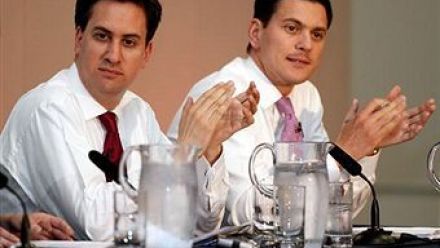
"Quietly confident." That's how Diane Abbott felt as the Labour leadership ballot entered its final hours today. I can only assume that she meant "…of victory," but the bookies, and all sensible observers, are telling a different story. With the polls now closed, Ladbrokes has David Miliband as the 4/7 favourite, Ed Miliband is on 5/4, Ed Balls and Andy Burnham are both 100/1 shots – and Abbott? Well, Abbott is wheezing along at 150/1. Whoever wins, one thing is for certain: we are about to enter a new cycle in British politics, and one which should clear up a few itchingly persistent questions. How will the coalition fare against an opposition which actually has a proper leader in place? Who will be shadow chancellor? What will become of the losing Miliband?

Vince’s land tax land grab

From our UK edition

There was one notable bit of kite flying in Vince Cable’s speech earlier, an indication that he wants the next Liberal Democrat manifesto to contain a commitment to a land tax. This would give the party a distinctive policy going into the next election. With the proceeds of a land tax, they could abolish stamp duty and still have a lot of fiscal wriggle room allowing it to propose increasing the income tax threshold or spending more on certain public services. There's already work going on in Lib Dem circles on how to model a land tax and to find how much revenue it would raise.

Bonuses: a question of political economy

From our UK edition

There is a reason why the coalition has used the Lib Dem conference to step up its rhetoric about the bankers and their bonuses. The coalition believes, rightly, that balancing the budget is a matter of political economy. It is acutely aware, and has been for some time, that the sight of banks paying out huge bonuses later this year just as the public sector begins to lay people off and cut services would be disastrous. This view is shared by everyone in the coalition from Cable to Osborne. Bumper bonuses would increase calls for new punitive measures against the banks and produce precisely the kind of political atmosphere that the more aggressive trade union leaders want.

Building more for less

From our UK edition

There’s no way round this: housing in this country is in a pretty awful state. Waiting lists for the shrinking number of “affordable” or social homes are rising, while fewer people can afford to buy their own home. That would be the case even if the banks were able to lend – which they can’t because of the credit crunch.   Fewer than 100,000 new homes are currently being built per year, when 200,000 - 300,000 are needed.  The number of new mortgages being arranged is at its lowest level since 1975, while housing waiting lists have risen from 1 million in 2000 to 1.75 million today. The number of social homes has fallen by 250,000 in the last eight years.

Cable shows his true colours

From our UK edition

‘[Capitalism] takes no prisoners and it kills competition where it can’. ‘Markets are often irrational or rigged.’ A snob would describe those as the ravings of a chippy provincial university lecturer. In fact, they are the considered thoughts of Vince Cable, the business secretary, the very man tasked with selling Britain to international markets. Cable will address the Lib Dem conference later today, vowing to shine the ‘harsh light into the murky world corporate behaviour’. Limiting short-term speculation when linked to high pay is government policy, but Cable will go further than a spot of banker bashing. Much further.

Whither the Lib Dems?

From our UK edition

A striking aspect of the Liberal Democrat conference is how discussion of cooperation with Labour takes place in public while talk of any future work with their current coalition partner happens in private. Tonight, Paddy Ashdown told an Observer fringe meeting that the Liberal Democrats’ long-term goal should still be to become the dominant party of the centre-left in Britain. I must admit that I struggle to see how this is possible. The steps that the coalition needs to take to deal with what Nick Clegg calls the ‘invisible crisis’ of the deficit will alienate the party from the centre left. But then again, as one liberal Liberal Democrat said to me last night, of the party’s MPs only half a dozen are authentic liberals.

‘It’s a bit of a riddle’

From our UK edition

Perhaps Donald Rumsfeld was right: the Coalition should not have gone for the 'hard slog' in Afghanistan (or Iraq). Hindsight suggests that Rumsfeld had foresight in his desire that a shock and awe campaign be followed by a light presence and eventual withdrawal - the blood baths that have ensued from intense deployment might have been avoided.  I hope the two times Secretary for Defence Secrte addresses those issues in his memoir, Known and Unknown, due to be published in January three months after Bush’s.

Keeping the flame alive | 21 September 2010

From our UK edition

In the early hours of this morning, Lib Dem conference looked like any other party conference. A throng of people—mostly men in suits—standing around outside the conference hotel having come from the various media parties. Indeed, it is surprisingly hard to tell the difference between Lib Dem conference and the others now. There are a large number of lobbyists here and a whole host of corporate types.   But there are some activists trying to keep the flame of the traditional Lib Dem conference alive.

What you need to know ahead of the Spending Review: making the right defence cuts

From our UK edition

This is the latest in our series of posts on the Spending Review with Reform. A list of previous posts can be found here. The debate on the defence budget has become one of the most fiercely contested in recent days.  Over the weekend, editorials in both The Times and The Daily Telegraph agreed that defence was different because it wasn’t just a matter of cuts in the short term, it was also a matter of the UK’s strategic defence needs for years ahead.  Building on a report by the House of Commons Defence Select Committee, they raised concerns that the Government is forcing through the Strategic Defence and Security Review (SDSR) - and that and any cuts would be misplaced as a result.

A lot done – and a lot still to do – for Nick Clegg

From our UK edition

There’s always an after the Lord Mayor’s show feel at conference the today, after the leader’s speech. Adding to this feeling today is that the programme is relatively light; Simon Hughes and Chris Huhne are the star attractions.   Last night at the various parties one sensed a certain satisfaction among those close to Clegg at how the conference has gone. They feel they have got though it without any serious trouble and that the leader’s speech has warned the party of what is to come. But I do think that it is next year’s conference, when the cuts are biting, that will be the real test of what the membership is prepared to accept.

Why David Miliband is the most dangerous candidate for the coalition

From our UK edition

Now how's this for an opinion? Writing for Labour Uncut, Dan Hodges announces that David Miliband has won the Labour leadership contest. His piece starts: "This Saturday David Miliband will become leader of the Labour party. He will have won a majority of his Parliamentary colleagues and the wider membership, along with sufficient support from unions and other affiliates to secure not just victory but  an overwhelming mandate. The New Labour era will be over." To most other observers, myself included, it still looks too close to call. But the more I think about it, the more I feel that David Miliband is best equipped to win this contest. If the Labour party has its eyes on government, then the Hodges prediction should translate into reality on Saturday.

A tale of two statesmen and a wary industry

From our UK edition

The only readable part of Tony Blair’s Lawrentian romp of a memoir, is the epilogue. He explains why the state must be trimmed in the future and how globalisation is affecting global polities, and all expressed with languid charm and an air of self-deprecation which he has acquired on the road to riches. No wonder he’s the toast of Washington, the UN and Beijing – he’s the model of the Modern English Gentleman, a real pukka sahib. Gordon Brown, meanwhile, has travelled to the UN to attend a meeting on tackling poverty. After a decade of enduring Bono at his most self-righteous, poverty is not yet history. Aid agencies and campaigners, wary of aid fatigue, are asking what went wrong. It seems that humanity could not realise its expectations.

Is Laws writing himself out of a return to government?

From our UK edition

A noteworthy snippet in Andrew Pierce's column this morning: "[David Laws] is hard at work on a book. The title - 22 Days In May - is hardly likely to set pulses racing, but the book will be the first insider account of the negotiations which led to the coalition. Laws is also planning to cover the early days of the Government - days which, of course, include his downfall." Not that this would completely scupper his colleagues' plans to draft Laws back into government, of course. But, as we've seen with the spate of New Labour memoirs, insiders' accounts do tend to wait until the insider has left government for good.

Clegg’s little bit of political S&M

From our UK edition

Nick Clegg is making life horribly difficult for those of us on the right who spent the last few things portraying him as a figure of fun. He is now delivering the best speeches of anyone in the Cabinet, characterised by a quiet sense of urgency and direction. He’s in the business of making the case for cuts. He spoke to a party that spent much of the last decade attacking Labour from the left. For those delegates, it was a little bit of political S&M. It must have hurt - but they liked it. “We haven’t changed our liberal values,” he said - and then went on justifying Conservative policies in a classic liberal context. And he did it so much better than many Tories have been able to.

Clegg shades the coalition yellow for his Lib Dem audience

From our UK edition

It's hard to know quite what to make of Nick Clegg's speech just now. It never really soared as a piece of oration, but he skipped quite expertly across all the issues that might concern, delight and enliven a Lib Dem audience. And so we heard about how much the Lib Dems are contributing towards government; about how the cuts are a prerequisite for fairness; and about how the party will maintain its independence. On the whole, this was coalition politics shaded yellow. But Clegg managed to drop in a few unadulterated sweeteners for his audience – including a dig at the "still illegal" Iraq War.

What you need to know ahead of the spending review: deprived areas

From our UK edition

This is the next of our posts with Reform looking ahead to the Spending Review. Earlier posts were on health, education, the first hundred days, welfare, the Civil Service, international experiences (New Zealand, Canada, Ireland), Hon Ruth Richardson’s recent speech, selling the case for cuts to the public and how to deliver retrenchment.  (And the next subject, defence expenditure, can be found here) The debate over spending cuts was taken out of Westminster to the ex-mining constituency of Cannock Chase, Staffordshire on Friday. For “Can Cannock Cope? Showcasing local champions and public sector reform in Cannock Chase”, Reform assembled heads of local public services and business leaders in front of an audience of 100 Cannock residents.

A yellow spanner in the works

From our UK edition

The teaching unions, it seems, haven't been wasting their time in Liverpool: the Lib Dem conference has just passed a motion opposing the coalition's free schools agenda. Even though the result throws up the bizarre image of, as Guido puts it, "Lib Dems voting against liberalism," it comes as little surprise. As Fraser reported last night, there's a tidal opinion in Lib Dem circles that these school reforms are little more than an attack on hardworking local authorities. A pity that Sarah Teather's message about the "dead hand of local government" didn't filter downwards sooner.   The concern now is what this actually means for the free schools programme.