Uk politics

Cameron’s certainty contrasts with Miliband’s equivocation

From our UK edition

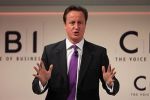
An opportunity to compare-and-contrast David Cameron and Ed Miliband outside the sweaty heat of PMQs, with both party leaders delivering speeches to the CBI this morning. Given the audience, both majored on business, enterprise, and all that – and it meant there was plenty of overlap on areas such as green technology and broadband. There were some differences, though, that are worth noting down. Cameron was first up, setting out a three-step plan for boosting British business. Broadly speaking, it revolved around what the government is trying to achieve in the Spending Review – and so the PM boasted that, "last week, we took Britain out of the danger zone.

A Conservative council joins the secret war against England’s schools

From our UK edition

For the parents where I live who are campaigning for a better local school, the Spectator's expose on 'the secret war over England's schools' - with its description of how groups like the National Union of Teachers are attempting to stymie Michael Gove's plans for making education better - was familiar territory. The only difference here in Bromley is that it isn't left wing activists who are standing in the way of Mr Gove's reforms for better schools: it is our Conservative-run Council.   Having said earlier this year that they wanted our local school, Kelsey Park Sports College, to become an Academy - a decision that was a welcome relief for many local families - the Council is now backpedaling like crazy.

The coalition’s feel-good factor

From our UK edition

Since last week's Spending Review – and even before – the government has been operating in a toxic news environment. I mean, just consider the three main news stories that have surrounded the cuts. First, the 500,000 public sector job losses. Then, the IFS report and that single, persistent word: "regressive". And today – on the covers of the Independent and the Times – warnings that we could be dipping back into recession. Set alongside that tidal swell, the outpourings of Simon Hughes and the polling companies register as little more than sour footnotes. Even if the coalition plans to hide some of its better news, there's a clear need for it to push back against the gloom – lest it erode both public and Lib Dem support for they are doing.

Why a LibCon coalition might last beyond 2015

From our UK edition

May 2015 is an age away in political terms. But the question of what happens to the coalition after the next election is too politically interesting to be able to resist speculating on; even if this speculation is almost certainly going to be overtaken by events. Over at ConservativeHome, Paul Goodman asks if Cameron and Osborne share Francis Maude’s view that the coalition should continue after the next election even if the Tories win an outright majority. My impression is that they do. If the Tories won a majority of between 10 and 30, I’d be surprised if Cameron didn’t try and keep the coalition going. There are four main reasons why I think the Tory leadership would want to keep the Liberal Democrats in the government in these circumstances.

Osborne’s Paul Daniels strategy

From our UK edition

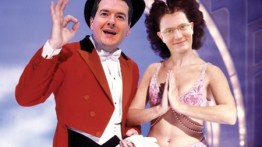
Is George Osborne the first British Chancellor to hide good news in the small print? I ask this in my News of the World column (£) today, and ask what he’s up to. Listening to Nick Clegg on Marr this morning, even he can’t quite say that the same forecasts that predict 500,000 public sector job losses also envisage three times as many jobs created in the private sector. Why so coy? I suspect because it would spoil the magic. That there is a deliberate gap between what this government is saying and what it believes it is doing.   James Forsyth was the first to write (in his political column, now available to non-subscribers) about ‘Gordon Osborne’, using Brownite tactics. But whereas Brown hid the bad stuff, Osborne is hiding the good stuff.

The IDS plan approaches consensus status

From our UK edition

Plenty of attention for Nick Clegg's listening, reading and smoking habits this morning, as well as his appearance on the Andrew Marr show. But it is another of Marr's guests who has made perhaps the most important intervention of the day: the shadow work and pensions secretary, Douglas Alexander. Here's how the Beeb website reports it: "Mr Alexander also said he backed 'in principle' the coalition's plan to replace all out-of-work benefits with a single 'universal credit' payment. He said such a move was 'sensible' but he would be 'scrutinising' the government 'very carefully' over its £2bn start-up costs." If true, then it leaves the the parties in a surprisingly similar position on welfare.

The government goes for growth, as Cable tackles takeovers

From our UK edition

As Benedict Brogan observes, the government's renewed emphasis upon growth is hardly deafening – but it is certainly echoing through this morning's newspaper coverage. Exhibit A is the Sunday Telegraph, which carries an article by David Cameron and an interview with Vince Cable – both of which sound all the same notes about enterprise, infrastructure, deregulation, tax and trade. There's a letter by George Osborne in the Sunday Express, which contains the word "growth" a half-dozen times. And then there's Cameron's claim that the next decade will be "the most entrepreneurial in Britain's history," in a podcast on the Downing St website. Welcome to two weeks devoted, apparently, to growth and reform.   This shift in emphasis is welcome, wise and well-timed.

Living costs – where the real threat lies

From our UK edition

Déjà-lu is a feeling that Spectator subscribers become familiar with. Part of the reason for subscribing (which you can now do from £12, including free iPad access) is to get ahead of the competition - and read today what the newspapers will be saying tomorrow. We’re delighted that the cover story of Thursday’s edition, by Allister Heath, is the main OpEd slot in the Daily Mail today - and with good reason. All of the focus has been on the cuts, 500,000 jobs to go etc. As CoffeeHousers know, jobs are not expected to be the issue over the next few years: the same forecasts suggest 1.5m jobs will be created. (This 3-1 ratio may sound optimistic, but it is what happened under Major.

Simpson and Bayliss are reading the Miliband creed

From our UK edition

Derek Simpson has had a Damascene conversion. The gnarled bruiser, famous for telling Alistair Darling to ‘tax the bankers out of existence’, has backed Les Bayliss, the moderate candidate in the race to lead Unite. According to Sophy Ridge at the News of the World, Simpson added: 'Ranting and raving from the side lines will only keep Labour in opposition for a generation. The cuts announced this week are the tip of a very nasty iceberg but the task of opposing them will be complex. Only one candidate standing in the Unite general secretary election has in my mind the skills for this difficult job.

Cameron’s morals

From our UK edition

By his own admission, to today’s Mail, David Cameron is not afraid of unpopularity. On hearing this, a few quizzical grins may break across his critics’ faces, but, undeniably, the government’s fate was cast this week: either its fiscal plan will work or it won’t. Cameron is unperturbed because he is sure that he is right - not only in his political and economic judgement, but also in terms of morality.

Sticking up for free schools

From our UK edition

I'm on the train back from doing Radio Four's Any Questions – broadcast live from Derby, repeated at 1.10pm tomorrow – where I had a bust-up with Christine Blower of the NUT. CoffeeHousers may recall she was the star of a cover story we ran a few weeks back, about the campaign of bullying and intimidation levelled against headteachers who are trying to seek Academy status. She raised that article during recording, and things kinda kicked off. I told her she should be ashamed of the way her union thugs try to intimidate young teachers who seek to break away from local authority control and reach independence. She denied writing the words ascribed to her, I sought to read them to her – and things descended from there. Anyway, a few thoughts... 1.

Now is the time for reform

From our UK edition

Throughout the country debates on the spending review have begun in earnest. Some of the most important questions in these debates will centre around the economics of consolidation, as I discussed on a recent radio show containing Professor Joseph Stiglitz. I also set out to discuss these issues at the launch of the Orwell Prize. In my remarks I focussed on the general case for eliminating the structural deficit within a Parliamentary term and less on the specifics of the approach that the Coalition has taken to achieving this goal (which I have outlined some thoughts on here). I made five key points.   First, consolidation is not based on extreme economic theory that has failed wherever it has been tried. This claim is not supported by the evidence in many countries.

George Osborne is making the going

From our UK edition

There are several interesting columns on George Osborne in the papers today. In The Times, Tony Blair’s former speechwriter Phil Collins warns Labour to stop underestimating the Chancellor, who is defining the political battle on his terms at the moment. Peter Oborne, by contrast, is highly critical of Osborne in his Telegraph column, warning that Osborne’s partisan presentation of the cuts risks undermining support for the whole project. For once, I find myself disagreeing with Peter. I think Osborne is doing some of the political heavy-lifting that Cameron could not do without undermining his standing as a national leader; Osborne’s praise for the 2004 Republican campaign is instructive in trying to understand what is going on here.

Labour’s Kill Clegg strategy

From our UK edition

One question swirling through the sea of British politics is this: how will Ed Miliband act towards the Lib Dems? The Labour leader certainly didn't flinch from attacking the yellow brigade during the leadership contest, at one point calling them a "disgrace to the traditions of liberalism." But surely he'll have to soften that rhetoric in case the next election delivers another bout of frenzied coalition negotiations. Which is why Andy Burnham's article in the Guardian today is worth noting down. In making his point – that the Lib Dems haven't won the pupil premium they sought – he does all he can to force a wedge between Nick Clegg and his party. It's "Clegg's failure". It's "Clegg's ideological journey". It's a "problem for Clegg," and so on.

Labour loses the last semblance of its economic credibility

From our UK edition

A quiet but important change to Britain’s political landscape took place in Brussels on Wednesday. The European Parliament passed a motion to increase the EU Budget by 5.9 percent, dashing, for the moment, government hopes that the EU might share in its citizens’ austerity. Labour’s MEPs were central to the motion’s success – 10 (one of whom glories in the name Michael Cashman) out of 13 voted against the Conservative-backed amendment to freeze the EU Budget.      As Alan Johnson took his feet and, like a gamey slim-line Falstaff, began to condemn public sector cuts, Labour MEPs saddled the over-stretched taxpayer with £900m in extra contributions – more than the odd nurse could have been saved with that tidy little sum.

Clegg hits back at the IFS

From our UK edition

It's fast becoming a tradition: when the IFS calls the government's work "regressive," send for Nick Clegg to take the think tank on. He wrote an article for the FT debunking their analysis back in August. And, today, he does the same via an interview in the Guardian. It's pretty forceful stuff from the Deputy PM, as this quote testifies: "I think you have to call a spade a spade. We just fundamentally disagree with the IFS. It goes back to a culture of how you measure fairness that took root under Gordon Brown's time, where fairness was seen through one prism and one prism only which was the tax and benefits system. It is a complete nonsense to apply that measure, which is a slightly desiccated Treasury measure.

International aid should be abolished

From our UK edition

The Comprehensive Spending Review was a step in the right direction, but I agree with Philip Booth and others when they say that there should be far more cuts down the line. But the biggest mistake was the announcement that the Department for International Development’s (DfID) budget will be increased by 37 percent by 2015. It undermines the narrative that the country will be suffering the cuts together and shows a tone-deafness in cutting spending at home while increasing it abroad. But worse, it exacerbates the problem that development aid does an immense amount of harm to the developing world, and this spending increase will only make things worse.

IFS: The Spending Review was regressive – sorta

From our UK edition

The second half of the IFS briefing was all about the distributional effect of the Spending Review. And you know what that means: decile charts – and lots and lots of them. As it happens, there were some areas of agreement between the IFS and the Treasury figures. Both, for instance, say that the welfare measures set out in yesterday's Spending Review will affect the least well-off the most. But there was one main area of disagreement. The Treasury says that its combined tax and welfare measures up to 2012-13 will be broadly progressive. The IFS says that they will be regressive. This is exactly the same issue that cropped up in August, when the IFS was commissioned to write a report by the End Child Poverty Campaign.

Nick Robinson earns his spurs

From our UK edition

Nick Robinson has won blogger of the year at Editorial Intelligence's Comment Awards. However, he deserves an award for this bit of heroism on College Green. Hat-tip: Will Heaven. UPDATE: Robinson has taken the time to pen an explanation for his sign rage, good on him. PS: Oh yes. To those of a sensitive disposition, please ignore the anti-war clips accompanying the footage.