Uk politics

Cameron emerges unscathed

From our UK edition

David Cameron’s statement on the European summit just now was an opportunity for pro-European politicians to tweak the Conservative party’s tail about the coalition’s stance on Europe. Ed Miliband told the PM that on Europe ‘we’re here to help him’ and ‘we’re prepared to ignore his previous convictions if he is too.’ Charles Kennedy welcomed the PM as a new pro-European. While Denis MacShane, the very communitaire former Europe Minister, said that there was nothing in Cameron’s statement he disagreed with. There was some grumbling from the Tory benches. Sir Peter Tapsell asked why if Merkel can get a Treaty amended can’t Cameron do the same and allow the country the referendum it was promised.

A harmful double standard

From our UK edition

Professor David Nutt, the former Chief Drugs Adviser to the Government, has sparked controversy again today by pronouncing that alcohol is more harmful than heroin, crack, powder cocaine and methamphetamine. His findings are based on a paper published today, which builds on a 2007 journal that explored the same issues. So, is Professor Nutt right? If he is, what should the consequences be for public policy and, in particular, our systems of drug classification and alcohol taxation?   To find out, it is worth returning to Professor Nutt’s 2007 academic paper.  The relative harm of drugs is measured according to nine meters, taking into account the various aspects of physical harm, dependence and wider social harms.

All is not quiet of the welfare front

From our UK edition

Welfare is fast becoming this parliament’s Ypres Salient - strategically critical, it is constantly contested. £20bn on social housing, £100bn on out of work benefits and £billions on universal benefits: welfare reform is where spending cuts are most conspicuous. A rhetorical confrontation is building and various tactical dispositions are being made. The Staggers’ George Eaton has an analysis that assumes that Labour’s current wedge-strategy (which I critiqued here) is not working because it is avowedly sectional, privileging those who might be caricatured as ‘undeserving’. Eaton argues that Labour must ‘launch a defence of the hard pressed majority’; those who work but still stand to lose, particularly families.

Confronting terror at home

From our UK edition

As Julian Glover notes, Jack Straw let the cat out of the bag. ‘Never, ever, downplay the possible consequences,’ he says. The coverage of the recent bomb plot has largely ignored that it was foiled. That, by any definition, is a success, a vindication of our security services. Independent inspector Lord Carlile is right that improvements can be made to the bomb detection apparatus in airports and targeting security at the source of a threat – i.e. packages from the Yemen rather than package holidays. The previous government would have used this plot to introduce another wave of invasive legislation – never, ever, downplay the possible consequences to justify I.D. cards, deeper control orders and further suspension of Habeas Corpus.

The Lib Dems, breaking doors in anger

From our UK edition

This one, from the Mail on Sunday, needs adding to the scrapbook: "Colchester MP Bob Russell’s fury over the Coalition’s housing benefit cuts boiled over at a stormy private meeting with the Deputy Prime Minister. To the astonishment of fellow Lib Dem MPs, it ended with Mr Russell storming out and slamming the Commons’ committee room door behind him. Witnesses said last night: ‘He took the door off its hinges.' In a bizarre twist, Mr Russell’s ally and fellow Lib Dem MP Mike Hancock - himself a fierce critic of Mr Clegg - tried to spare his colleague’s blushes by creeping back the following morning to repair the door before Commons authorities noticed it was even damaged.

The Tories rally after the Spending Review

From our UK edition

It's just one poll, but today's YouGov effort for the Sunday Times seems to underline many of the themes of recent weeks. It has the Tories on 42 percent, 5 points ahead of Labour on 37 percent, and with the Lib Dems on 13 percent. So the Spending Review – accompanied, as it has been, by rows over housing and child benefits – has not yet had a precipitous effect on the Tories' poll rating. If anything, YouGov have had the blue vote rallying since 20 October. As always we should be wary of drawing too many conclusions from the shifting landscape of opinion polls and surveys, but some of YouGov's subsidiary findings could help explain the Tories' position. First up, 72 percent of respondents back the coalition's plan to impose a cap on housing benefit.

The ginger rodent

From our UK edition

I wonder what they'll come up with for Uncle Vince? Nick Clegg is a closet Tory (nice homophobic overtone there), and Danny Alexander reminds anti-persecution supremo Harriet Harman of a ginger rodent. Alexander deigned to respond, saying:  'I am proud to be ginger and rodents do valuable work cleaning up the mess others lead behind. Red Squirrel deserves to survive, unlike Labour.'   Aside from being witless, the problem with Labour's assault  on senior Lib Dem politicians is that each one makes a future Lib-Lab pact ever more unlikely. After all, there aren't so many Lib Dems to insult.

Cameron’s euro battle is just beginning

From our UK edition

David Cameron sold himself a hospital pass in Europe this week. His failure to secure a budget freeze has revealed that Britain's clout has been wildly exaggerated. The likely 2.9 percent budget increase is mildly inconvenient for Cameron politically, but it is immaterial in the grand scheme of the next round of budget discussions and the mounting wrangle about the Lisbon treaty. He will have to compromise, as he did this week. He made some ground, finding allies to resist an untrammelled treaty change - the Irish, the Dutch, the Danes, the Czechs and the Poles. The biggest prize will be Sarkozy, whose antipathy towards Merkel is arch - the ongoing diplomatic and military discussions between Britain and France must be about more than sharing aircraftless carriers.

Housing benefit reform is a Good Thing

From our UK edition

Dressed with his effortless prose, Matthew Parris has a point (£) that proves why he is the leading commentator of the last two decades. Housing benefit reform is his subject and he urges his readers reject the legends that have accrued around the issue - not Boris, not Polly Toynbee, not shrill councils, not rapacious landlords and definitely not the government. No one, he says, has the numbers but there are several certainties: ‘The outcomes may not prove nearly as brutal as this week’s predictions. What (as I asked above) can we know? We know that comparisons with Paris are ludicrous. All of our big cities are speckled with very large-scale “social” housing of a type that is suited only to the income groups for which it was constructed.

The Miliband deception

From our UK edition

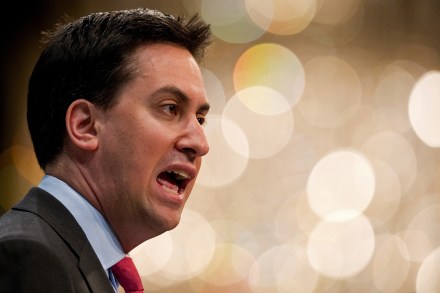
Ed Miliband's speech in Scotland this afternoon was a strange beast. So much of it was typical of the new Labour leader: for instance, the incessant stream of words like "optimism," "new" and "change". Some of it was rather surprising, such as the lengthy and warm tribute he paid to Gordon Brown at the start. One passage on the flaws of the Big Society (from a Labour perspective, natch) set out a philosophically intriguing dividing line. And his challenge over housing benefit was quite swashbuckling, in a Westminster-ish kind of way. But there's one line I'd like to focus on, because I'm sure it will come up again and again. Namely, this one: "Remember, our government paid down the debt before the crisis hit." Really?

Voters think the new generations look old and tired

From our UK edition

There’s an intriguing detail in the latest YouGov poll. The number of people seeing Labour as old and tired is back up to 44 percent, which is where it was before Ed Miliband became leader.   The concern for Labour must be that the youthful, vigorous optimism that Ed Miliband is trying to promote hasn’t cut through to the public yet. Admittedly it is early days. But first impressions do matter in politics. Indeed, I must admit to being slightly surprised that the Tories are still generally ahead in the polls. I thought that the spending review would push Labour into the lead.   Something that, contrary to the media perception, might be helping the Tories is the ongoing rows over housing benefit and child benefit.

More perspective on housing benefit

From our UK edition

A useful reminder of the opinion polls on housing benefit from ConservativeHome's Harry Phibbs: "...in coming out with such hyperbole Labour show themselves to be out of touch with the voters. An ICM poll in June asked: "Do you support or oppose imposing a maximum weekly limit of £400 on Housing Benefit." Support was 68% with 23% opposed. Even among Labour voters there was strong support - by 57% to 35%. A YouGov poll in August asked: "Here are some policies the coalition government have announced in their first hundred days. For each one please say if you oppose or support it?" Among them was: "Putting a limit on housing benefit." 72% expressed support. 17% said they were opposed.

Victory or defeat?

From our UK edition

What has David Cameron achieved in Brussels so far? In truth, it's fairly hard to tell. In a meeting with his European Council counterparts last night, our prime minister didn't get the "freeze or a cut [in the EU budget]" that he mentioned last weekend. But ten other countries, including France and Germany, have now allegedly hardened their resolve not to go beyond the 2.9 percent increase that they agreed back in August. A Downing Street spokesman explains that these countries will resist the usual compromise between their 2.9 percent and the European Parliament's demand for 6 percent, when the two sides meet over the next 21 days.

Some perspective on housing benefit

From our UK edition

Depending on who you read, the planned £400 a week cap on housing benefit is either comparable to Nazi concentration camps, death squads in Brazil, or ethnic cleansing in the Balkans Critics have ranged from the Mayor of London to the ultra Left. So it is worth taking a moment to get some perspective. Firstly, the general caps on housing benefit don't even impact on social tenants because they pay lower, subsidised rents, (though the £26,000 cap on the total amount of benefits per household might hit them). But for housing benefit claimants in the private sector outside London, less than 1% are affected by the cap. And even in London 9 out of 10 of private renters claiming housing benefit will be totally unaffected.

Question: how much do we contribute towards the EU budget?

From our UK edition

Answer: it depends on how you look at it. I've put together the chart below (click for a larger version), which sets how much money we've given the the EU since 1973. There are three lines for each year: i) our gross contribution, ii) our total contribution (which is the gross contribution minus the money we get back from the rebate), and iii) the net contribution (gross contribution minus both the rebate and the money that the Treasury gets to pay for various EU projects across the UK). In terms of how much the EU costs the taxpayer, then, I'd say the second line is the best one to follow:   As for the future, there are no comparable figures yet (as the Treasury works in financial years, whereas the EU works in calendar years).

Labour’s hypocrisy on the EU budget

From our UK edition

Labour’s Shadow Europe Minister, Wayne David, has been busy castigating David Cameron for his apparent failure to secure an EU Budget freeze. He says, ‘It is imperative that we do have a freeze on the EU budget’. Quite so, why then did Labour MEPs vote against an amendement to freeze it?

Cameron must play his cards well to win in Europe

From our UK edition

The British media woke up this week, realising that Europe still exists. As David Cameron travels to Brussels, questions loom over what, exactly, he can achieve in Europe – at this summit, and more importantly, moving forward.   Much of the commentary surrounding the summit has focussed on the increase to the EU’s 2011 budget, which Cameron is fighting.  And for good reason. It’s insane that Britain – or any other net contributing state – should be forced to accept any increase to the EU budget, at a time of tough austerity at home.   Cameron has spent considerable time talking up the negotiations on the budget increase, so he may have an ace up his sleeve to achieve a cash freeze tomorrow or in the coming weeks. But a 2.

Boris v Dave, this time it’s serious

From our UK edition

Make no mistake about it, Boris Johnson’s rhetorical assault on the coalition’s housing benefit plan is a direct challenge to David Cameron’s authority. The two best-known Conservatives in the country are now involved in a battle that only one of them can win.   Boris told BBC London this morning: "What we will not see and we will not accept any kind of Kosovo-style social cleansing of London. "On my watch, you are not going to see thousands of families evicted from the place where they have been living and have put down roots." What is infuriating the Tory machine is not only Boris’s criticisms, but the language that he is used—which makes Labour’s talk of social cleansing sound positively moderate.

Another fine mess | 28 October 2010

From our UK edition

You know that child benefit cut for higher-rate taxpayers? Yeah, well, it may not be quite as straightforward as the government have hitherto indicated. In an important post on his Wall Street Journal blog, Iain Martin sets out a problem that is exercising nerves and minds in the Treasury: simply put, there's no existing method for establishing whether mothers (who receive child benefit) are living in a household which pays tax at the higher rate.