Uk politics

A day of electoral positioning

From our UK edition

Away from turbulent priests and the welfare battle, there have been important changes to electoral politics today. The coalition partners will fight one another in Oldham East and Saddleworth. The seat is a three way marginal, which was number 83 on the Tories’ target list – precisely the sort of seat they’ll need to win in 2015. However, as James noted on Friday, the Liberal Democrats’ need is greater at the moment. Already, tongues are wagging that a pimpled Etonian is destined to journey north of the Watford Gap, safe in the knowledge that gallant defeat will ensure he is the next Prime Minister but three. Enter Nigel Farage, opportunistically.
Cameron the optimist

From our UK edition

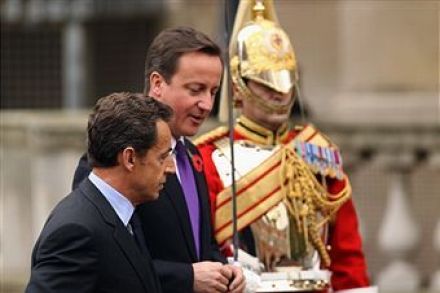
Is David Cameron just too nice? There are worse accusations to levy at a politician, but it's one I have heard suggested quite a lot recently - and I have written about it in my News of the World column today. He seems to have adopted the politics of wishful thinking. There is a "zip-a-dee-do-dah strategy" and precious little contingency if things go wrong. He makes defence cuts, because he doesn't intend to go on a massive deployment (neither did Woodrow Wilson). He will make prison cuts, because he thinks - bless him - that it won't increase crime. He signs a deal with French for military co-operation, thinking they will dump the habit of 500-years and actually agree with Britain on the next major foreign policy dispute.

Breaking dependency

From our UK edition

IDS has played the party politics of welfare reform adeptly. He has built a coalition beyond the government, convinced of the need for urgency and dynamic reform. Even Labour is on side, only criticising when valid and necessary. It has not proposed a comprehensive alternative because it is protecting its record in government - sensing, correctly, that it is vulnerable to its history. Douglas Alexander rallies to New Labour’s defence in the Independent on Sunday. Labour’s record on welfare was not uniformly baleful: Purnell, Hutton and Murphy did important work, on which IDS has drawn. But Alexander overlooks some inconvenient truths.

Diversity is the name of the game: different pupils have different needs

From our UK edition

The Times has a spread on free schools (p20-p21) today (£), focusing on the model of Kunskapskolan, one of the largest Swedish chains, who are setting up shop in Britain. "Pupils set their own homework, decide their timetables, set themselves targets and work at their own speed - oh, and they clock off at 2pm," says Greg Hurst, the paper's education editor. He visits one of their schools in Twickenham. "At the heart of the personalised learning", he says, lies a "one-on-one tutorial with a teacher for 15 minutes to review progress, weekly and long-term targets and timetables to meet them." A pupil, Lisa, is quoted saying: "You talk to the teacher and you cannot embarrass yourself. If you want to say something personal, you can say it to her.

The Coulson saga rumbles on

From our UK edition

Andy Coulson had a chat and a Bath Oliver with the Met recently. Rejoice! The News of the World phone tapping story continues. The allegations against Coulson do the government no favours. But, even if, in a hypothetical drama, Coulson were to be charged I doubt many would care. I don’t deny the seriousness of the offences already committed by employees of News International, but it’s a very tiresome story and saturation point has been reached. So the usual suspects make little impact when they call for Coulson to resign, fall on his sword, take the rap or whatever cliché they happen to adopt. Coulson needn’t resign because there is no case against him. The government’s inability to communicate a growth strategy is another matter.

Is Euro-pragmatism here to stay?

From our UK edition

I'm off to Brussels, capital of the superstate, home of the EUSSR, or whatever you might want to call it. It has made me re-engage with European issues for the first time in six months. If Europe is not dead as a political issue in Britain then it is at least firmly stored in a coalition freezer, which can only be unlocked in the case of a thumping electoral for the Conservatives. But if the Tories scrape in at the next election or come up short of an outright majority,  David Cameron is likely to want the Coalition to continue. That would mean another decade of euro-pragmatism. A decade is a very long time in politics.

The importance of teaching British values in schools

From our UK edition

One of the websites that the young Muslim woman, Roshonara Choudhry who stabbed Stephen Timms MP mentioned in her police interview was RevolutionMuslim, which now appears to have been taken down. Charles Moore turns his attention to the site in his column today: 'After Choudhry’s conviction, I had a look at RevolutionMuslim. It has put up a list of all MPs who voted for the Iraq war, details of their surgeries and even a link to a supermarket website where you can buy knives. I watched its video, in which a young man praised Choudhry for “taking the matter into her own hands”, and attacked Muslims who collaborate with the infidel. A similar-looking young man featured in press pictures of demonstrators outside the Old Bailey.

Waiting for welfare reform

From our UK edition

After a summer of sporadic announcements, IDS’ welfare reforms will be published in a white paper next week. As in 1997, when Tony Blair urged Frank Field to think the unthinkable, there is consensus on the need for radical welfare change. IDS has earned respect as a moral and pragmatic reformer, and he attracts goodwill from across the House. The Liberal Democrats, Nick Clegg and Steve Webb particularly, were ‘vital’ in securing a spending concession from George Osborne, whilst Douglas Alexander has described IDS’ plans and ‘noble’ and pledges to support principle that welfare should be a safety net, not a vocation. He warms to the theme in today’s Guardian.

Transparency: the government’s self-protection aid

From our UK edition

Monday is eagle day for the overhaul of government machinery. Ben Brogan explains how the publication of 20 departmental business plans will enable the public to chart the progress of government reform – inaugurating a revolution is transparency, that meme of the moment. I’ve always wondered why the Tories are so keen on touting ‘transparency’. One answer, it seems, is to expose those ministers and departments who are dragging their feet. This instrument of New Politics doubles as a self-protection mechanism, which is especially useful with those dastardly Lib Dems and the odd pugilistic right winger scurrying about. Brogan writes: ‘The plans will spell out the timetables for implementing every stage of the reforms promised this summer.

From the archives – striking matters

From our UK edition

This week, there have been calls for certain public sector strikes to be made unlawful, Tube strikes and, today, the firemen have called off their strike having ‘listened to the concerns of the public’. It is all so 2002. Go To Blazes, The Spectator, 26 October 2002 Any public sector union contemplating a strike is best advised to start by targeting children’s bookshops. It is remarkable how groups of workers who first impinge on the consciousness through the pages of nursery books manage to command greater public affection and higher wage settlements than those who do not. Nurses and train-drivers have done particularly well out of recent pay disputes.

Miliband’s colossal misjudgement

From our UK edition

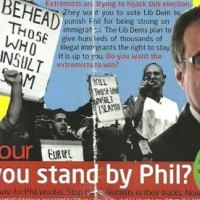
The question at the bottom of this shoddy leaflet must surely join John Rentoul’s famous list. Who on earth will stand by the egregious Phil Woolas now? As with the Tower Hamlets debacle, Ed Miliband is taking eons to make a straight forward statement: the Labour leadership condemns the actions of Phil Woolas and hopes that he will not be selected to stand again. George Eaton gives a reason for Miliband’s reticence: in a colossal error of judgement, Miliband selected Woolas as a shadow Home Office minister, reward no doubt for his deft expertise in race relations. The Oldham East by-election is a test for the coalition, but it is also the first major test of Miliband’s leadership qualities and his ability to fire-fight.

The coalition faces a by-election test

From our UK edition

The court’s decision that the Oldham East and Saddleworth election must be re-run because Phil Woolas was guilty of illegal practices under election law presents the coalition with a dilemma. Do both parties campaign fully in this three-way marginal? Oldham East and Saddleworth is number 83 on the Tory target seats list, it would require just over a five percent swing for them to win. But the Lib Dems are even closer, only a hundred odd votes behind Labour. If both of the coalition parties went all out for it, Labour would have a much better chance of holding on and winning the seat would be a welcome morale boost for the Lib Dems who were down at nine percent in one poll this week. I expect that the Tories will field a candidate.

Junior Games

From our UK edition

Government allows some top-tier politicians to shine, while others lose the sheen they once had in opposition. So it has been with this Government. It has mostly been Lib Dems who have gleamed. Much can be said of Nick Clegg, Vince Cable, and Chris Huhne, but nobody will ever question the party’s ability to govern, or dismiss its front-line politicians as back-bench critics. In fact, if the Coalition lasts until 2015, the Lib Dems will have more Cabinet-level experience than the majority of the Shadow Cabinet, most of whom entered Cabinet under Gordon Brown in 2007. That will be quite a turnaround.

Strike out

From our UK edition

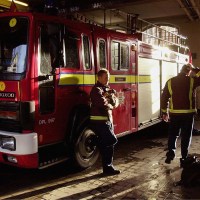
Spark up those Roman candles, the firefighters have called off their strike for today and tomorrow. According to the general secretary of the Fire Brigades Union (FBU), it's all because "we've listened to the concerns about public safety and we were extremely concerned about the capabilities of the private contractors being brought in to cover our strike" – which is awfully thoughtful of them, considering that they previously stoked those "concerns about public safety" by threatening to strike over Bonfire Night. Oh, and they appear to have won some concessions too: the London Fire Brigade will no longer sack any firefighters who refuse to accept contracts that include the disputed shift system.

In defence of UK-French defence cooperation

From our UK edition

The Entente Cordial Redux has generated a lot of commentary, most of it ill-informed, some of it ridiculous. Tory MP Bernard Jenkin, in particular, has singled himself out to be a perpetuator of stereotypes with his reference to the duplicitous nature of the French. But many historians, like the otherwise brilliant Orlando Figes, have not fared much better, talking about the Crimea War as if it had any relevance at all for modern warfare. It’s good fun to tease the French. That is what boozy lunches ought to be about. But it should not pass for serious commentary by MPs. Since the 1990s the French have worked very closely with UK forces, even when disagreements at the political level have been profound.

Europe hasn’t gone away

From our UK edition

The Tory party’s acceptance of a 2.9 percent increase in the EU budget has persuaded Steve Richards that ‘Europe has ceased to be a toxic issue in British politics.’ As Steve acknowledges, this is in part because the Euro-sceptics have won the argument over the single currency. But it is also because the Tory parliamentary party has accepted that the coalition means nothing positive is happening on the Europe front for the next few years. One thing, though, needs to be borne in mind: the Tory party is more Euro-sceptic than it has been in living memory.

Lessons from the midterms for the AV referendum

From our UK edition

Amid all the excitement of the US midterms, a small, local ballot took place which has important lessons for the UK’s referendum on the Alternative Vote – due to take place six months on Friday. Like us, America uses the straightforward first-past-the-post voting system for its thousands of elected offices – from local school boards and sheriffs to races for governors’ mansions and the White House itself. Their well-established primary system also gives voters a direct say in who the candidates should be – taking power away from the parties and making politicians more responsive to the demands of their local electorate.

In this week’s Spectator

From our UK edition

The latest edition of The Spectator is now out on iPad (click here for more info) and the newsagents (or £2, posted direct today). I thought CoffeeHousers may be interested in a small selection of the goodies we have in store.   1.  Andrew Neil on the conservative comeback in America. He spent the summer shadowing the Tea Party, and gives the best analysis you’ll read on what just happened - and what lies ahead. (You can read it here.) The Sunday Times’ Christina Lamb travelled across Nevada and California with the Tea Partiers, and tells tales from the campaign bus (one being that they only serve coffee). And Daniel McCarthy, editor of The American Conservative magazine, profiles yesterday’s big winner Rand Paul (“Mr Tea”) 2.