Uk politics

In defence of UK-French defence cooperation

From our UK edition

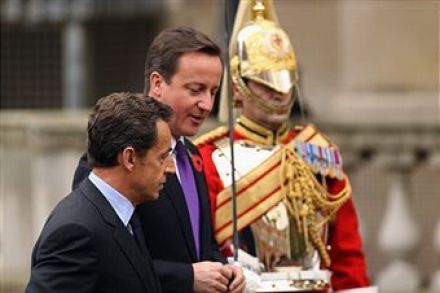
The Entente Cordial Redux has generated a lot of commentary, most of it ill-informed, some of it ridiculous. Tory MP Bernard Jenkin, in particular, has singled himself out to be a perpetuator of stereotypes with his reference to the duplicitous nature of the French. But many historians, like the otherwise brilliant Orlando Figes, have not fared much better, talking about the Crimea War as if it had any relevance at all for modern warfare. It’s good fun to tease the French. That is what boozy lunches ought to be about. But it should not pass for serious commentary by MPs. Since the 1990s the French have worked very closely with UK forces, even when disagreements at the political level have been profound.

Lessons from the midterms for the AV referendum

From our UK edition

Amid all the excitement of the US midterms, a small, local ballot took place which has important lessons for the UK’s referendum on the Alternative Vote – due to take place six months on Friday. Like us, America uses the straightforward first-past-the-post voting system for its thousands of elected offices – from local school boards and sheriffs to races for governors’ mansions and the White House itself. Their well-established primary system also gives voters a direct say in who the candidates should be – taking power away from the parties and making politicians more responsive to the demands of their local electorate.

In this week’s Spectator

From our UK edition

The latest edition of The Spectator is now out on iPad (click here for more info) and the newsagents (or £2, posted direct today). I thought CoffeeHousers may be interested in a small selection of the goodies we have in store.   1.  Andrew Neil on the conservative comeback in America. He spent the summer shadowing the Tea Party, and gives the best analysis you’ll read on what just happened - and what lies ahead. (You can read it here.) The Sunday Times’ Christina Lamb travelled across Nevada and California with the Tea Partiers, and tells tales from the campaign bus (one being that they only serve coffee). And Daniel McCarthy, editor of The American Conservative magazine, profiles yesterday’s big winner Rand Paul (“Mr Tea”) 2.

Alan Johnson: this time it’s personal

From our UK edition

Alan Johnson has been more comic than cutting during his spell as shadow chancellor. It's not so much that he's doing a bad job, but rather that he's taken a singular approach to the biggest political issue of the day. Where Labour MPs have wanted moral outrage, he has delivered easy quips. Where the public might expect self-confidence, he has chosen self-deprecation. It may be charming, but the question is: does it win votes? Which is why it's intriguing to see Johnson change course today, via a surprisingly spiky article in the New Statesman. There is, so far as I can tell, not one intentional gag in the entire piece – but a sizeable dollop of coalition baiting. Johnson calls for a new mantra from his party: "Labour's record was good".

The growing case for libel reform

From our UK edition

Policy Exchange’s work on Islamism has been some of the most important undertaken by a think-tank in recent years. It has influenced and bolstered the thinking of brave politicians in both the last government and the current one. That’s why it is so important that Policy Exchange came off best in the libel case brought against it by North London Central mosque. The case is now over and the mosque has made, what Policy Exchange calls, ‘a substantial contribution’ towards the think tank’s costs. Policy Exchange has stated that it never meant to suggest that extremist literature was sold or distributed on the mosque’s grounds with the consent of the trustees or staff of the mosque.

A model for coalition policy-making

From our UK edition

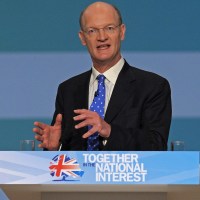
David Willetts and Vince Cable deserve huge credit for coming up with an impressive agreement on higher education funding that both the Tory and Liberal Democrat leaderships can live with. They have taken the coalition beyond the coalition agreement and shown that it can make sound policy on even the thorniest of political issues. But as important as the agreement is the way that it was hammered out. The discussions were civilised and empirical. There was—in stark contrast to the ‘blue on blue’ debates over defence and welfare—no negative briefings or anything like that. My main quibble with it is whether the £9,000 cap on fees is set too low to allow our universities to both maintain the excellence of their teaching and their global standing.

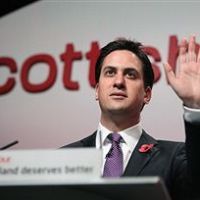
Why Ed Miliband was being deceptive over debt

From our UK edition

"Remember, our government paid down the debt before the crisis hit." That's what Ed Miliband said in a speech last Friday, and I took exception to it at the time. My point was, admittedly, quite blunt: how could the Labour leader make such a claim when debt was around £500 billion in 2006, and rising? So I'm glad that the excellent Full Fact blog has since looked into the matter, and come down broadly on my side – giving Miliband a 2-out-of-5 rating on their truth scale. But some of their wider points are worth developing, which is why I'm returning to the topic now. First, though, the observation that I made on Friday. Here's a graph which shows our national debt throughout the Labour years.

Music hall act fails to cut it next to suave Etonian

From our UK edition

Miliband’s in a mess. He makes it far too easy for Cameron to portray him as a hypocritical opportunist who sidles up to PMQs every week with lame soundbites and incoherent policies. How come? Perhaps because he sidles up to PMQs every week with lame soundbites and incoherent policies. Today he tried to unsettle the PM with the news that ‘members of his government’ (ie LibDems) ‘have given cast-iron guarantees that they would vote against a rise in tuition fees.’ This isn’t a Cameron problem. It’s a Clegg problem. Right issue, wrong tactics. Cameron had no difficulty adopting a noble but weary expression and praising his coalition partners for taking ‘courageous decisions’ in ‘difficult’ circumstances.

Hardly vintage stuff from Ed and Dave

From our UK edition

Neither Ed Miliband nor David Cameron had a good PMQs. Cameron let his irritation at questions about the appointment of his campaign photographer to a civil service post show. It was also a bit rich for him to criticise a Labour MP for asking a question scripted by the whips when Tory MPs ask patsy questions with monotonous regularity, I counted at least four in this session alone. But the regular shouts of ‘cheese, cheese’ from the Labour benches were clearly riling the Prime Minister. But it wasn’t a good session for Ed Miliband either. His delivery was rather halting and he stumbled on his words far more than he usually does. His jokes didn’t quite come off either.

The tuition fees compromise

From our UK edition

Away from the mid-terms, we have the little issue of tuition fees. David Willetts will today set out the government's response to the Browne Review, and it's expected to look something like this: a £9,000 cap on fees, but universities will have to show that they are making extra provisions for poorer students if they charge over £6,000. Students would effectively be loaned the money by the state, and would start paying it back once they earn £21,000 after graduation. It's certainly a compromise arrangement, constructed with one eye on the Lib Dems and another on the universities. For Clegg's backbenchers, there's a rejection of the unlimited fees advocated by Browne, and an overall emphasis on "fairness" and on helping the less well-off into university.

Victory, but there’s little triumphalism as Republicans look to court America

From our UK edition

Hysteria has lapsed into disaffection: it was a bleak night for President Obama. But, despite the apparent immediacy of a ‘conservative moment’, there is caution in Republican circles this morning: both Clinton and Reagan won from similar positions in 1982 and 1994. The G.O.P's leadership knows that elections are not won from the extremes, as Barack Obama has discovered to his cost, and it is trying to calm the party’s often excitable fringe, which will be no easy task if Rand Paul's 'Tea Party tidal wave' is anything to go by. Ben Brogan recently highlighted the G.O.P’s growing ‘Stop Palin’ campaign, and David Frum adds his voice again.

Prisoner voting rights are undemocratic

From our UK edition

It was unlikely that the Coalition could have played for any more time before lifting the ban on prisoner voting.  That was the tactic played by the previous Government, but now it seems the will of Strasbourg will prevail.  But the policy is wildly out of step with public opinion, hard to justify and difficult to administer – it is also another example of how our own Parliament and domestic courts have been undermined.     The public are opposed – usually on principle – to granting additional privileges to serving prisoners, especially when they have done little or nothing to earn it.  They are against voting rights in particular on the grounds that it is one of the rights that lawbreakers give up by virtue of their crime.

A day of Tory grumbles

From our UK edition

Today is one of those days when you can’t walk around the Palace of Westminster without bumping into a Tory with a grumble about the coalition’s polices. First of all, there’s massive irritation that the government has been forced into agreeing that prisoners should have the right to vote. It has revived Tory concerns about the ECHR and annoyance that the presence of the Lib Dems in the government means that nothing will be done about it. Then, there’s this Anglo-French defence agreement. Tories are, understandably, deeply suspicious of anything that smacks of giving the French a veto over the deployment of British forces.

A wasted opportunity for EU reform?

From our UK edition

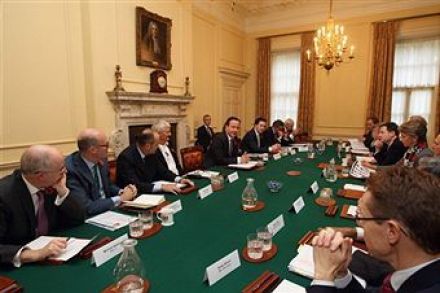
David Cameron made his statement on last week’s EU summit yesterday, answering a range of questions on the 2011 EU budget increase and future changes to the EU treaties. The Tory backbenchers appeared to be on their best behaviour, but Cameron did make an interesting admission. Asked by Ed Miliband if he would he be repatriating powers, he pointed to a reassurance that the UK’s opt out from economic sanctions remained intact, which was not really in question in the first place, and spoke of “progress on the EU budget”. It slipped through virtually unnoticed, but this second remark is actually quite worrying.

The inviolable right of prisoners

From our UK edition

After 6 years of resistance, the British government has submitted to the European Court of Human Right’s judgement that prisoners have the right to vote. It will use a case in the Court of Appeal to make the announcement and then prepare itself for compensation suits. Understandably, the government is furious that it has been forced to make a concession on law and order, an area where they are weak enough already. Even Dominic Grieve, a firm supporter of the ECHR, is understood to be exasperated. Straining to limit the political damage, Ken Clark hopes to limit the franchise to those prisoners sentenced to less than four years; judges may also be able to decide who to exclude.

In defence of Control Orders

From our UK edition

David Cameron currently thinks the coalition is heading for a ‘f***ing car crash’ on Control Orders. While the Home Secretary Teresa May is now convinced of their necessity, many Liberal Democrats and some Conservatives disagree. Everyone would prefer potential terrorists be prosecuted, but sensitive counter-terrorism evidence cannot always be used in a criminal court. In addition, the European Convention on Human Rights decrees that terror threats cannot be deported to states where they could be tortured. Hoping to circumvent these problems, the previous government attempted detention without trial. When this was struck out in the courts, Control Orders were the best viable option left.